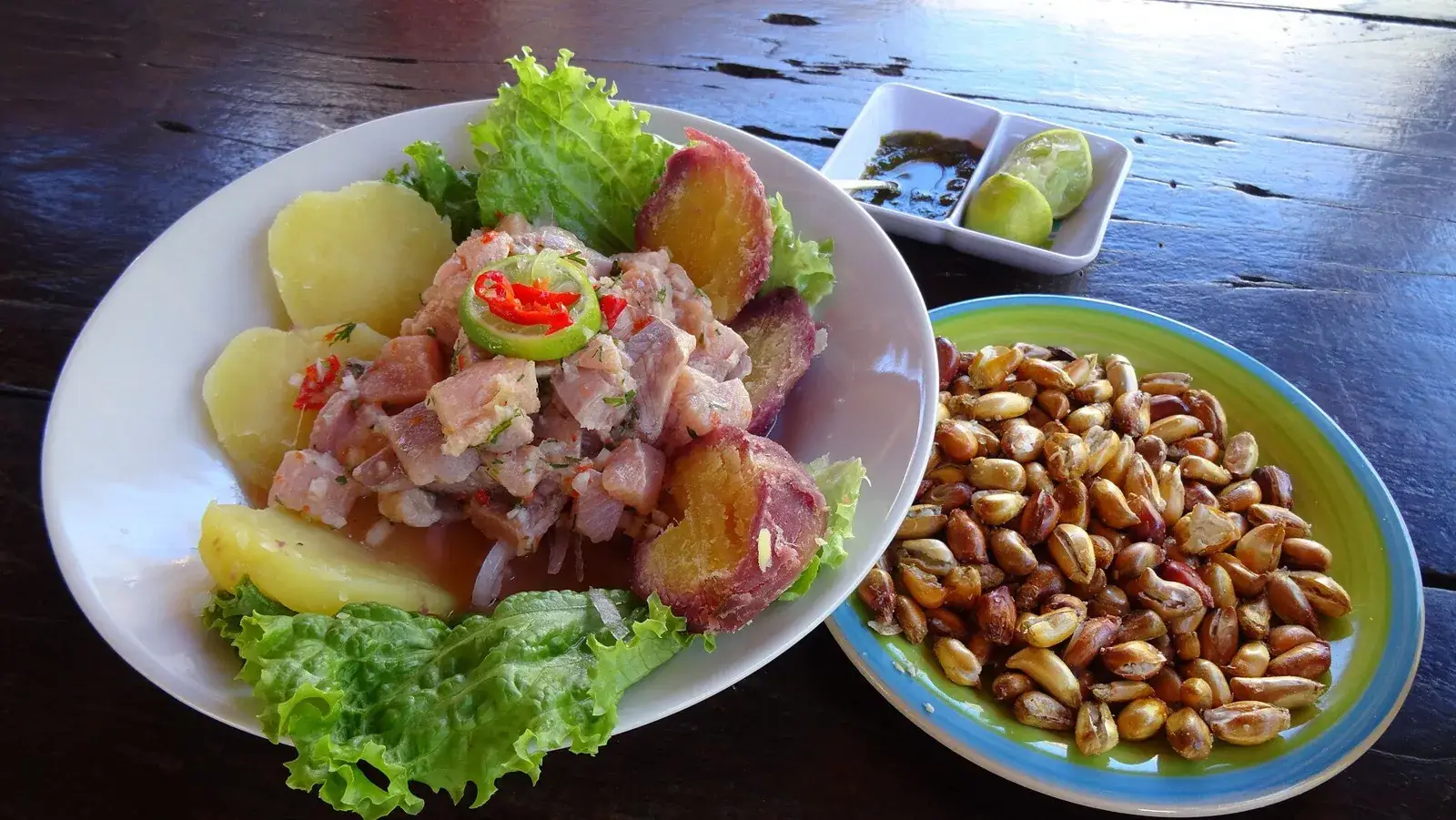
Peru is one of the world's great food destinations, and the best way to eat well is to follow the regions. Spend three or four days in Lima for ceviche, Nikkei and tasting menus, add Arequipa for its spicy picanterías, Cusco and the Sacred Valley for Andean produce and markets, and the north coast or the Amazon for different seafood and fish. Book the famous restaurants well ahead.
Lima: the main course
For many food lovers, Lima is the destination. It combines Pacific seafood, Chinese-Peruvian chifa cooking, Japanese-influenced Nikkei cuisine, creole home cooking and a high-end scene led by chefs who have put Peruvian cuisine on the global map. Ceviche, traditionally eaten at lunch, is the first dish to try, followed by lomo saltado, ají de gallina and anticuchos. Miraflores and Barranco have the most choice, while markets and small neighbourhood restaurants show everyday cooking.
The top tasting-menu restaurants take bookings well ahead and often fill for dinner, so reserve as soon as your dates are fixed. A food tour or a cooking class is a good way to learn the ingredients in a short time. See Lima food to understand what to order.
The regions beyond the capital
In Arequipa, picanterías serve hearty lunches such as rocoto relleno, a stuffed chilli pepper, and adobo, and the city's food has a robust character of its own. In Cusco and the Sacred Valley, you will find Andean staples such as potatoes in many varieties, corn, quinoa and alpaca, alongside a creative restaurant scene; see Cusco food. Markets such as San Pedro show the produce, fruit and juices at their freshest. The north coast, around Trujillo and Chiclayo, is known for its seafood, rice dishes and cabrito, and the Amazon offers river fish, tropical fruit and dishes cooked in leaves.
Cuy, or guinea pig, is a traditional Andean dish. It is served at celebrations and in some restaurants, and tasting it is a matter of curiosity and cultural interest.
Drinks and sweets
Pisco is the national spirit, and the pisco sour is the classic cocktail, but chicha morada, a sweet purple-corn drink, and Inca Kola are common soft options. Peru also produces good coffee and cacao, and there are craft beers in the larger cities. Desserts include suspiro a la limeña, picarones and alfajores.
Pisco is made around Ica and in the south, and some producers welcome visitors for tastings. A bar in Lima or Arequipa is an easier way to compare styles, from simple sours to more elaborate cocktails. Drink water between drinks, as altitude and alcohol combine badly.
Building a route around eating
A food-led route might give three or four days to Lima, a short flight to Arequipa for two or three days, then Cusco and the Sacred Valley for markets and Andean cooking. Add the north coast or the Amazon if you have more time and want different ingredients.
Plan one big meal a day rather than two, and leave room for market snacks and street food once your stomach has adjusted. Eating lightly on the first day at altitude helps, since digestion slows. For individual dishes, see food. See couples to understand how to pace a romantic food trip.
Eating well and safely
Stick to busy places with high turnover, particularly for ceviche, which should be made with very fresh fish, and be more cautious with street food in your first days. Use bottled or purified water and be careful with ice and raw salads if your stomach is sensitive. See water and food safety for general tips.
Vegetarians and people with allergies can eat well in cities but should be ready to explain their needs in Spanish, as fish and meat appear in many dishes. At altitude, appetite and digestion change, so eat lightly on the first day.
Markets, cooking classes and tours
Markets are the quickest way into Peruvian food. San Pedro in Cusco and neighbourhood markets in Lima show the variety of fruit, corn and potatoes, and many have counters serving breakfast and lunch. A guided market visit followed by a cooking class turns this into a hands-on lesson.
Food tours range from walking tastings to long day trips, and group size and quality vary, so read recent reviews and ask what is included. Choose classes that take you to the market and teach basic dishes, such as ceviche or lomo saltado, which you can cook at home.
Frequently asked questions
How many days in Lima for food?
Three or four days lets you cover ceviche, a tasting menu, a market and a food tour at a relaxed pace.
Is ceviche safe to eat?
Eat it at busy, reputable places at lunchtime, when fish is freshest. Sensitive stomachs should be careful, especially early in the trip.
Do I need to book restaurants?
For the best-known restaurants in Lima, yes, well ahead. For most others, booking a day or two ahead is enough.
What should I try first?
Ceviche at lunch is the classic start. Lomo saltado, ají de gallina and anticuchos follow, with a pisco sour and a glass of chicha morada.
Is Peruvian food spicy?
Chilli is used for flavour, and many dishes are mild, but some, especially in Arequipa, can be hot. Ask for sauces on the side and taste before adding more.
Can vegetarians eat well in Peru?
Yes, particularly in cities, where many restaurants offer vegetarian dishes. In smaller places, ask carefully, since broth and meat often appear in dishes that look meat-free.
Is eating guinea pig common?
It is a traditional dish for celebrations and appears in some Andean restaurants, but most Peruvians eat it rarely. Try it if you are curious, but do not feel obliged.