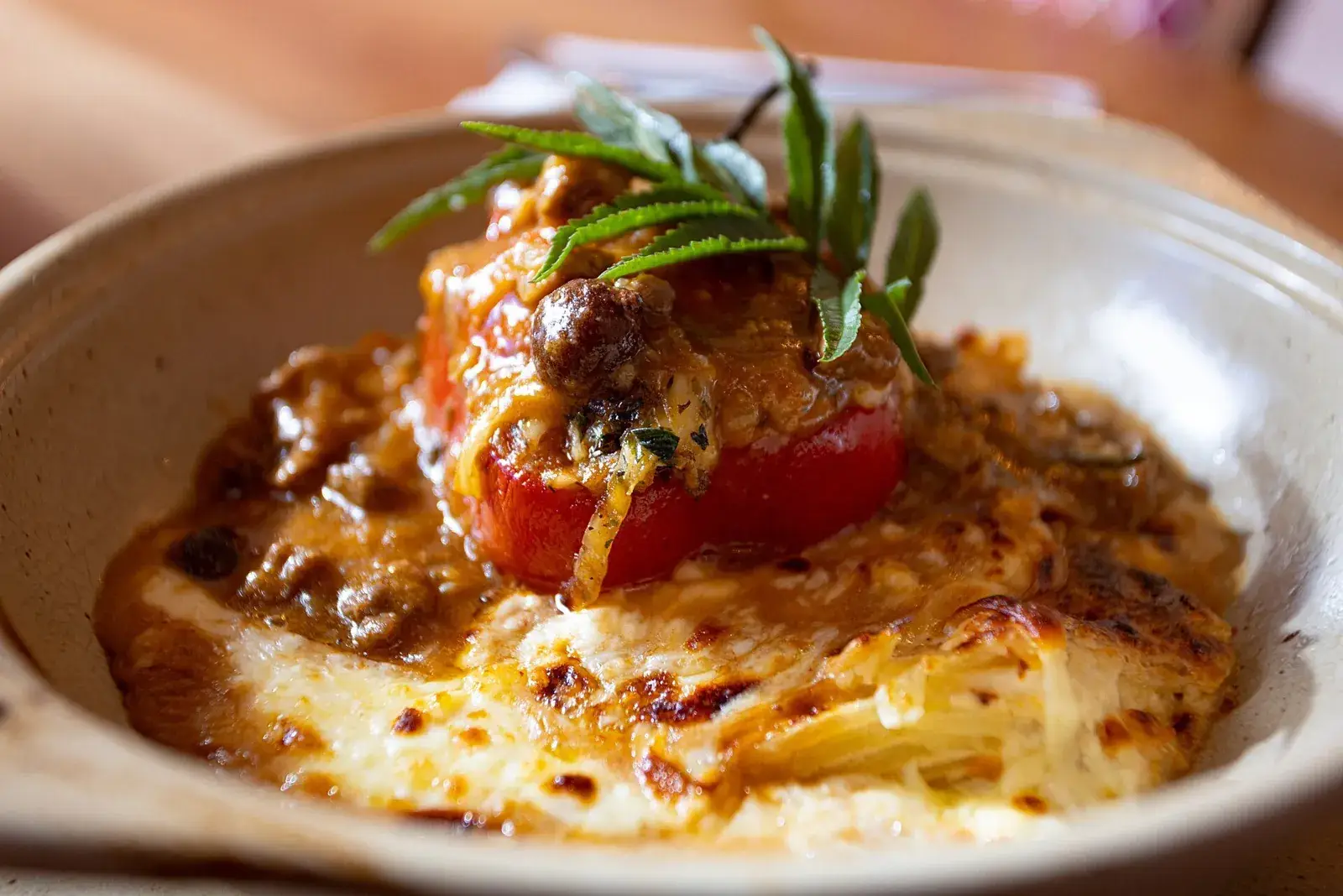
Rocoto relleno is a large, round, red rocoto pepper stuffed with minced meat, onion, peanuts, olives and raisins, topped with cheese and baked in a milk-and-egg custard. It is usually served with a slice of potato gratin, pastel de papas. It is the signature dish of Arequipa and can be seriously hot, though the pepper is often blanched to soften the heat.
The pepper and the filling
The rocoto is a pepper unlike the more familiar jalapeño or chilli. It looks like a small apple or tomato, usually red, with black seeds and thick flesh, and it is much hotter than most of the peppers used in everyday Peruvian cooking. Its flavour is fruity and bright, but the heat is real.
To make rocoto relleno, the cook cuts off the top, removes the seeds and the white veins where much of the heat sits, and often blanches the pepper in water, sometimes repeatedly, to reduce the fire. The filling is a savoury mix of minced beef, onion, garlic, peanuts, olives, raisins and herbs. The stuffed pepper is topped with fresh cheese and a mix of egg and milk, and baked until the top is set and golden.
Pastel de papas, a gratin of sliced potato with cheese and milk, is the standard side and also helps cool the heat on the palate.
Eating it with confidence
Do not be put off by the heat warnings. A well-made rocoto relleno is rounded and savoury, with sweetness from the raisins and a gentle bite. Cooks vary in how much heat they leave in, so you can ask whether the rocoto is mild. Eat a little pepper with a little filling and potato each time, rather than a whole forkful of pepper.
The dish is typically a lunch main, served in picanterías and restaurants in Arequipa and in many places in the southern highlands. It is rich, so one is enough for most people. If you are sensitive to chilli, order a different dish, or share one and ask for plenty of bread or rice.
Rocoto also appears as a fresh sauce, rocoto uchucuta, served in small bowls with grilled meat and other dishes. Taste a little first.
Tours and activities
Bookable online, chosen for their traveller reviews.
-
★ Top rated From €52 per person
-
★ Top rated From €23 per person
-
Day trip From €38 per person
-
★ Top rated From €85 per person
Regional notes
Rocoto relleno is strongly tied to Arequipa, and locals defend the local recipe. Versions appear in Cusco, Puno and elsewhere in the south, and they are sometimes slightly different, for instance with different fillings or sauces. The rocoto itself is an Andean plant of high-altitude origin, grown in many parts of the Andes, which is why the dish travels well along the highland routes.
In Cusco, the dish is a regular on restaurant menus, often with a slightly milder pepper and a more generous topping of cheese. Visitors who have eaten the Arequipa original may find it a gentler introduction.
Where to eat it in Arequipa
The best setting for rocoto relleno is a traditional picantería, where it is made in quantity and served at lunch. Many picanterías serve it as part of a combination plate, alongside pastel de papas and other regional dishes, which is a good way to try it without committing to a whole pepper.
The Arequipa and the Santa Catalina monastery can help you build a day around the city centre, with an early lunch to finish a morning of sightseeing. Picanterías usually close in the afternoon, so reserve the best part of the day for the meal.
Some restaurants in the centre cater to visitors and make a milder version. Local picanterías in the campiña, outside the centre, tend to make the traditional, fiery one. If you are curious about both, try the mild one first, then decide whether to step up.
The heat explained
The heat of a pepper comes from compounds in its seeds and veins, and rocoto has a lot of them. This is why cooks remove the veins and blanch the flesh: the hot water draws out some of the fire without ruining the flavour. It is also why a rocoto relleno made well tastes of fruit and spice rather than pure pain.
If the heat builds up, dairy helps. Cheese, milk-based sauces and the potato gratin all cool the mouth more effectively than water or beer. Bread and rice also soak up the spice. Avoid touching your eyes after handling raw rocoto, and wash your hands carefully if you prepare it yourself.
At altitude, a heavy, spicy meal can be uncomfortable, so you may want to save the dish for a day when you feel well. Arequipa itself is lower than Cusco, so it is a more comfortable place to experiment. The Colca Canyon, by contrast, is higher, so keep meals light before a trip there.
Rocoto beyond the stuffed pepper
Fresh rocoto sauce is common in southern Peru, where it appears with grilled meats, in soups and as a table condiment. Some restaurants offer rocoto cream, a milder version blended with cheese or mayonnaise, as a dip for potatoes and bread. These sauces are usually less fierce than the stuffed pepper, but they still deserve a cautious first taste.
Rocoto also appears in drinks and in modern restaurants, where chefs use it in cocktails, sorbets and tasting menus. The rocoto relleno remains the best way to meet the pepper in its traditional form, and the Arequipa food places it alongside the region's other classic dishes.
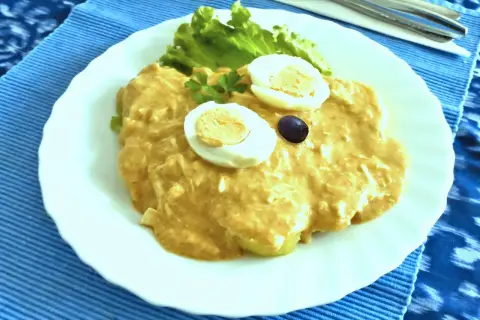
For a gentler chilli experience, ají de gallina uses the milder ají amarillo and shows the creamy side of Peruvian cooking. If you do not eat meat, see vegetarian food for dishes that suit you better.
Frequently asked questions
How hot is rocoto relleno?
It varies with the cook and the pepper. Blanching reduces the heat, so it can range from mild to very hot. Ask and take small bites.
What do I drink with it?
Something cold and mild: water, a soft drink or a sweet juice. Milk-based sides help more than beer.
Can I buy a mild version?
You can ask for a rocoto that has been blanched more, though not every kitchen will do it. Otherwise, choose a different dish.
Is rocoto the same as a jalapeño?
No. Rocoto is a different species with thick flesh and black seeds, and it is usually hotter than a jalapeño. The comparison is a rough guide at best.
Can I eat rocoto relleno if I am vegetarian?
The traditional filling contains meat. Some restaurants can make a vegetable version with advance notice, but it is unusual.
Does rocoto relleno contain nuts?
Peanuts are a standard ingredient in the filling. Anyone with a nut allergy should avoid the dish or ask carefully.
Is rocoto relleno served outside Arequipa?
Yes, in Cusco, Puno and other southern cities, though Arequipa is the home of the dish and the best place to try it.