Santa Catalina is a large Dominican convent in the centre of Arequipa, enclosed by high walls and arranged like a small town of streets, courtyards and cells. It opened to visitors in the 20th century and is still associated with a working religious community. Plan one and a half to two hours, go in good light, and note that opening hours may include some evening access.
Map
A city inside the city
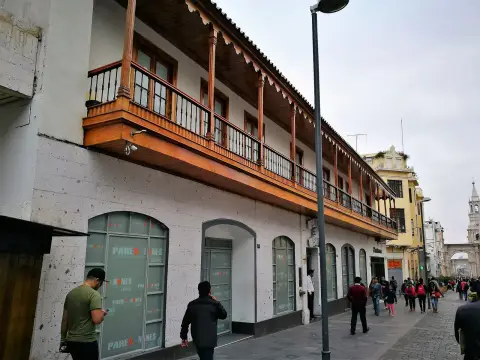
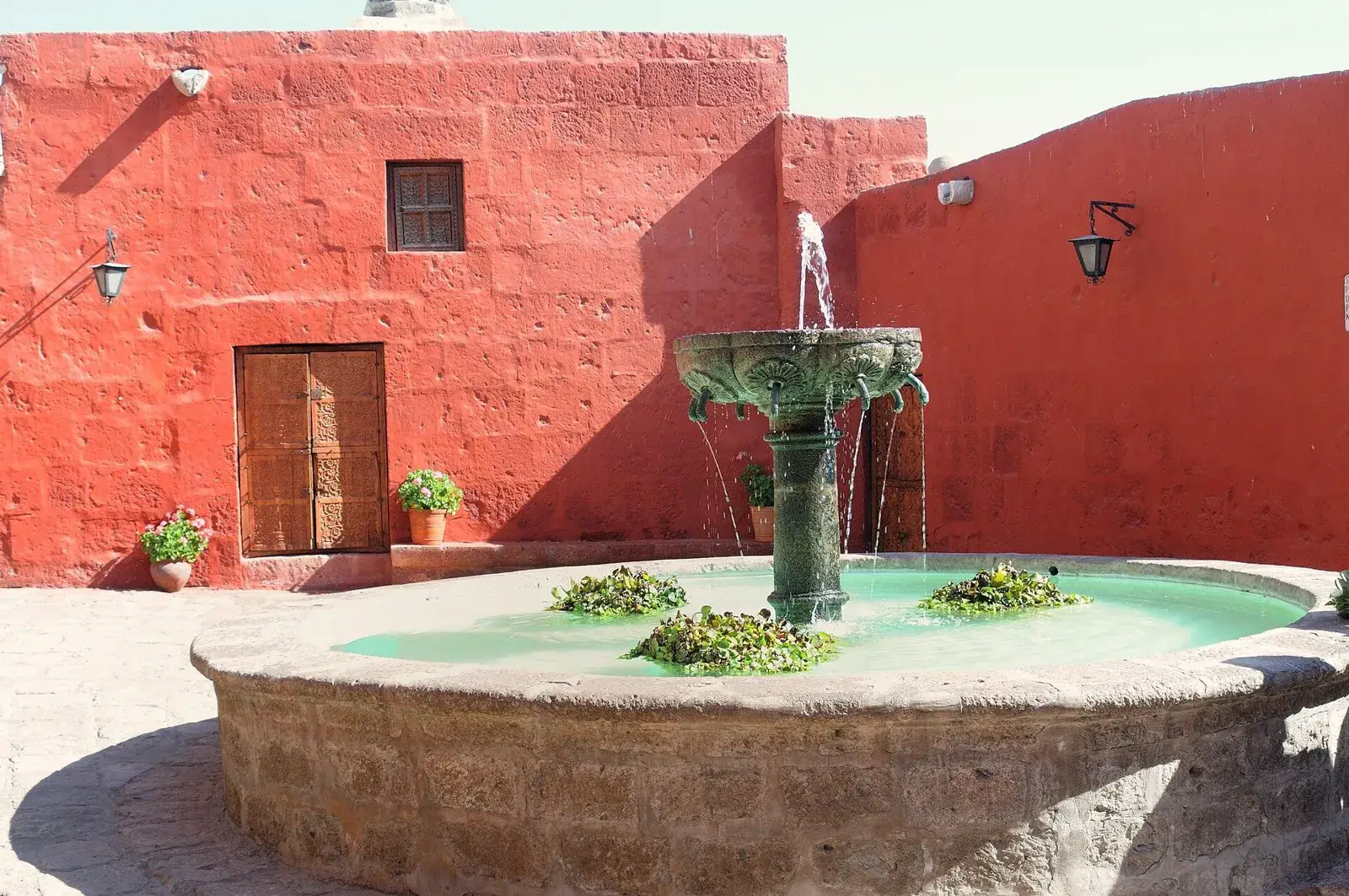
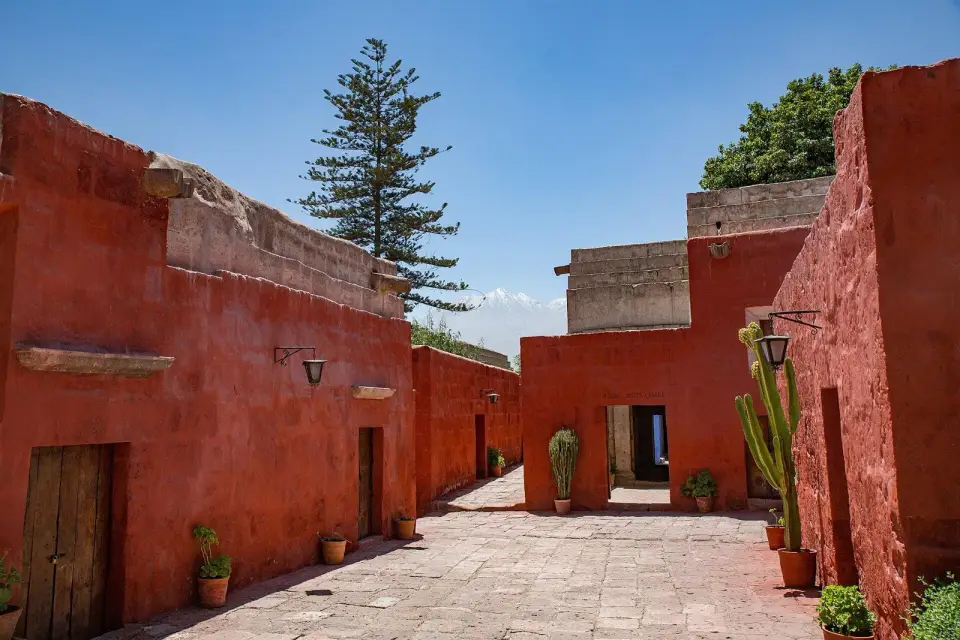
The monastery was founded in the 16th century, not long after the founding of Arequipa itself, and grew over time into a large walled complex. Behind the plain exterior, narrow streets are lined with walls painted in strong blue and terracotta, with arches, small plazas, fountains and gardens. Many of the buildings are made from the pale volcanic stone typical of Arequipa, which is why the city is nicknamed the "white city".
Daily life here is described through the cells, kitchens and communal spaces. Wealthy families once sent daughters to the convent, and some nuns lived with servants in comfortable apartments, a fact that surprises many visitors. The community eventually opened part of the site to the public while continuing to live in a separate section.
Walking the site
Follow the marked route through the main cloisters, the orange cloister, the laundry area with its large clay vessels and the old kitchens, then wander the side streets. Take time in the gardens, where small details such as old paintings and religious art decorate the corners. The art gallery in the complex shows colonial-era works from the Cusco school and other traditions, as well as objects from convent life.
The streets are named after Spanish cities, an unusual touch that adds to the town-like feeling. Photographers enjoy the interplay of coloured walls and sky, and the light is best in the morning and late afternoon.
A guide can be hired at the entrance and will explain the history, the daily routines and the architecture. This is useful because the signs are limited, and the stories behind the rooms are a large part of the appeal. Be prepared for some stairs and uneven stone floors.
Tours and activities
Bookable online, chosen for their traveller reviews.
-
Day trip From €38 per person
-
Day trip From €16 per person
-
Day trip From €58 per person
-
From €9 per person
Stone, colour and light
The look of the monastery depends on its materials. The pale volcanic stone used in Arequipa is light, easy to cut and well suited to arches and vaults, and it takes paint well. That is why the walls here are bold blocks of colour set against shaped stone, and why arched passages are such a feature.
Light does a great deal of the work. At midday, the colours are strong and the shadows hard. In the early morning and late afternoon the walls glow and the narrow streets are cast in softer shade. If you enjoy photography, plan to be inside during one of those periods and walk the side lanes at least twice, since the view changes with the angle of the sun.
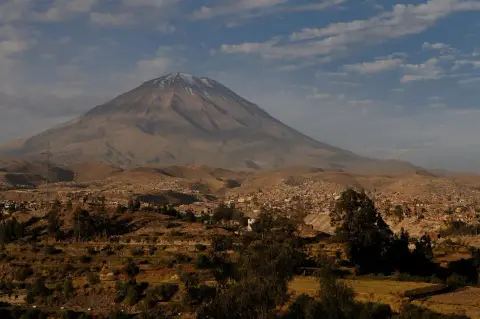
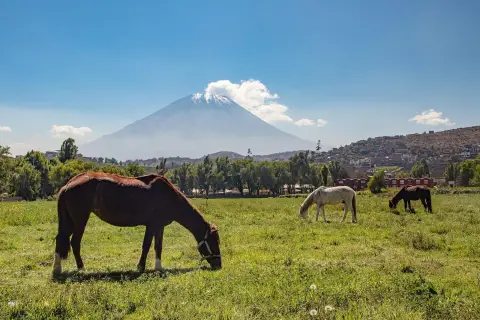
The surrounding region is volcanic, with peaks visible above the city on clear days. Arequipa's buildings have been damaged by earthquakes more than once, and parts of the complex have been restored after tremors, which explains why some sections look newer than others.
Timing and practical tips
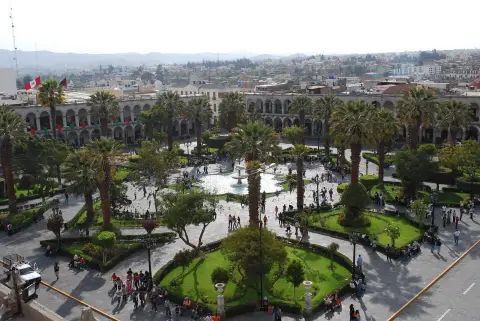
The monastery is in the historic centre, a few minutes from the Plaza de Armas on foot, which makes it easy to fit into a day of sightseeing. At Arequipa's altitude of around 2,300 m, the sun is strong during the day, so a hat and water are useful even though most of the route is in the open air.
Some visitors prefer to go in the evening, when the lanterns are lit and the complex has a different atmosphere. The convent has had extended evening hours on certain days in the past. Ticket price and opening times are among the details that change.
Dress modestly, as this is a religious site, and be aware that photography rules can apply in some rooms. If you have limited time in Arequipa, this is probably the most distinctive single sight in the city, alongside the main square and the cathedral.
Fitting it into a day in Arequipa
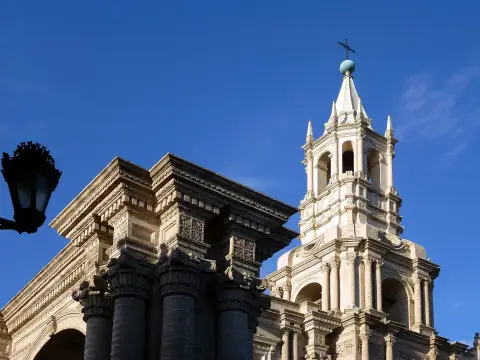
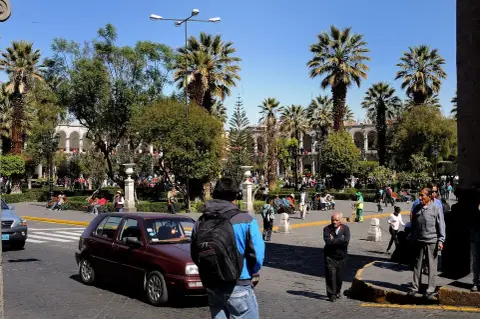
Santa Catalina pairs naturally with a walk around the main square, the cathedral and the nearby churches, and a lunch of local dishes in the centre. See things to do in Arequipa for other sights in the same area. Arequipa's food is a reason to linger. See eating in Arequipa to understand what to try.
Many visitors use Arequipa as a stop before or after the Colca Canyon. If that is your plan, put the monastery on the day you arrive or the day you return, when you are not on an early tour. See Arequipa tours to understand how city tours and canyon trips are usually arranged.
If you are deciding whether Arequipa deserves more than a night, the Arequipa worth it comparison helps weigh the city against other stops. A comfortable base in the centre keeps the monastery within a short walk. See Arequipa stay to compare areas.
Who will like it, and what to skip
The monastery appeals to visitors who enjoy architecture, photography and slow walking. It is also a good first sight in Arequipa because it involves little effort, which helps if you are adjusting from sea level. Travellers with limited mobility should ask about stairs and uneven floors before they go.
If you have little patience for historical detail, you can walk the route without a guide and enjoy it as a visual experience. If you want the stories, a guide is the better choice, since the signs give only part of the picture.
There is no need to rush through every room. A short pause in the main cloister, a look at the laundry vessels and a walk along the coloured lanes will give you the character of the place. People who find a visit to a religious site restrictive may prefer to go during a quieter hour and keep a respectful pace.
Compared with Cusco, Arequipa offers a lighter, more relaxed set of sights. See Cusco versus Arequipa to compare the two for travellers deciding where to spend their time.
Where to sleep
-
Find hotels
Plaza de Armas and historic centre
Colonial core within walking distance of the main sights
-
Find hotels
San Lázaro
Old narrow lanes close to the main square, with character and lower prices
-
Find hotels
Yanahuara
Residential quarter with views of the volcano and good restaurants
-
Find hotels
All of Arequipa
Compare every area and price level in one search
Frequently asked questions
How long does a visit to Santa Catalina take?
Plan about one and a half to two hours. Add time if you hire a guide or like to photograph.
Is Santa Catalina still a working convent?
A religious community has continued to live in a separate section of the complex, while the rest is open to visitors.
Is it worth going in the evening?
Evening visits show the site by lantern light and can be quieter.
Do I need a guide at Santa Catalina?
You can walk the route alone, but a guide gives the stories behind the rooms and explains the architecture, because signage is limited. Guides are usually available at the entrance, and prices should be agreed before you start.
Is Santa Catalina worth visiting if I am short of time in Arequipa?
Yes, it is probably the city's most distinctive sight. If you only have half a day, combine it with the main square and cathedral, and read about Arequipa for ideas on how to use the rest of the time.
Can I take photographs inside?
Photography is usually fine in the open streets and courtyards, but rules can apply in some rooms. Look for signs and ask staff if you are unsure. A tripod or flash may not be allowed.
What should I wear?
Dress modestly, since this is a religious site, and wear comfortable shoes for stone floors and stairs. Bring a hat and sun protection by day and a layer for the evening.
Is Santa Catalina suitable for children?
Many children enjoy the coloured lanes and the sense of exploring a small town. Younger ones may tire during a longer visit. A shorter route works well. See Arequipa things to do for other stops.