It depends on your route. Arequipa is worth it if you have ten days or more, enjoy cities with character and food, and want a lower-altitude pause between Cusco, Lake Titicaca and the Colca Canyon. It is not worth a detour on a short trip focused on Machu Picchu, where the time and the extra flight or long bus ride are better spent in the Cusco region.
The case for going
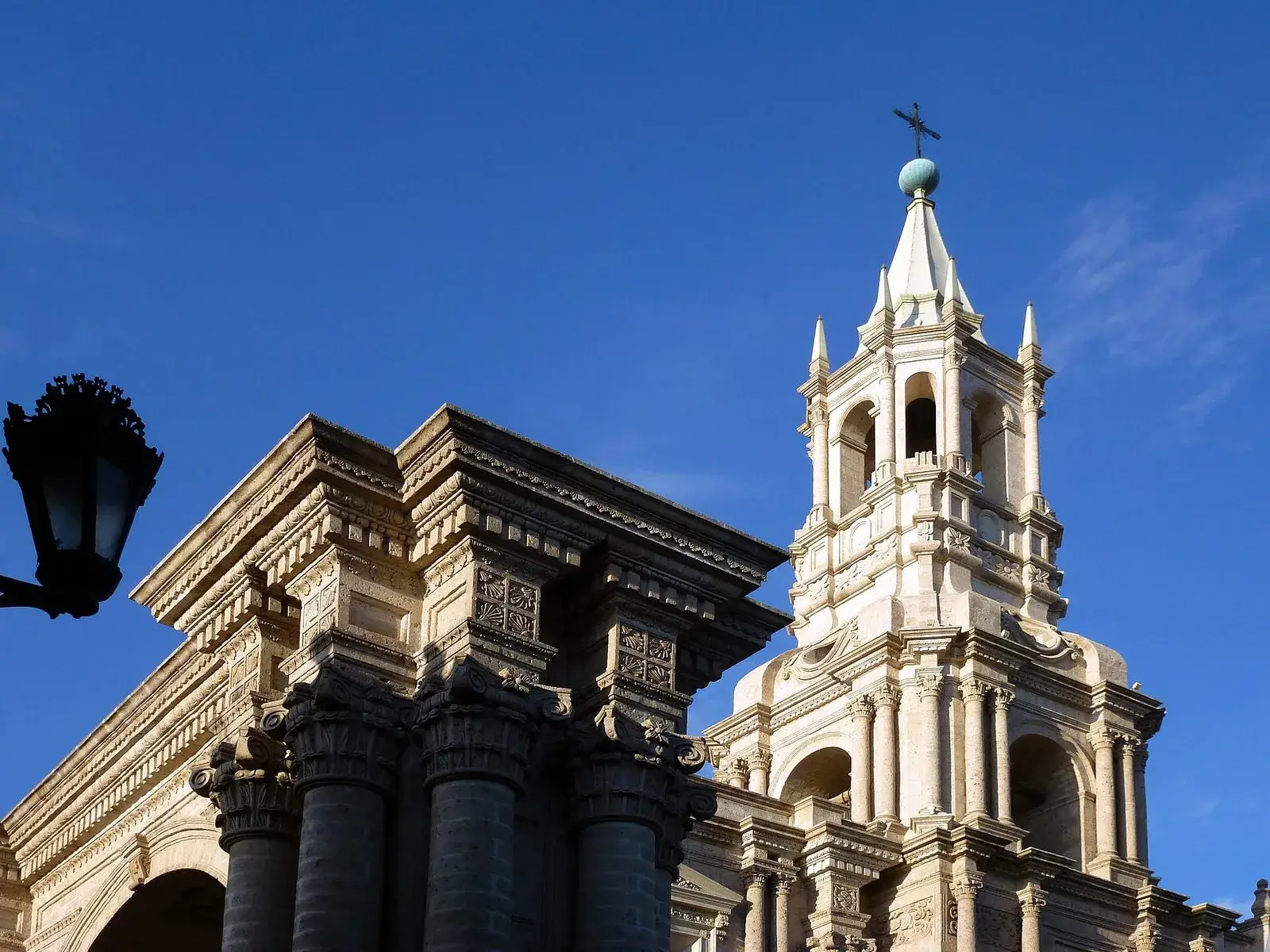
Arequipa is often called the white city because of the pale volcanic stone used in its colonial buildings, and its historic centre is one of the most attractive in Peru. The main square is lively without being overwhelming, and the large convent complex gives a vivid picture of colonial life. The surrounding volcanoes frame the skyline.
The city has a strong food identity, with regional dishes that differ from those you find in Lima or Cusco. It is also lower than Cusco and Puno, at about 2,350 m, so it is a comfortable place to rest if you have been struggling with altitude or need a slow day between treks.
Finally, it is the base for the Colca Canyon, one of the deepest canyons in the world and a popular place to watch condors. Without Arequipa, the canyon is hard to fit into a trip. For the city in full, see Arequipa.
The case against
Arequipa does not have a single must-see site that matches Machu Picchu. Its pleasures are cumulative: architecture, atmosphere, food and views. If those do not appeal, a day or two may feel thin.
Getting there is also a real cost. It lies far from Cusco and Lima, so it adds a flight or an overnight or daytime bus ride that eats into a short itinerary. Visitors on a first trip of a week or less should usually put that time elsewhere.
Finally, the city can be busy and traffic-heavy, and the area is seismically active. For what the journey involves, see Cusco to Arequipa.
What you would actually do there
A good first day starts at the main square and its cathedral, continues to the Santa Catalina Monastery, a walled convent of painted lanes and quiet courtyards that deserves a couple of unhurried hours, and ends with a long lunch in a traditional restaurant. In the evening, a viewpoint above the city gives a view of the volcanoes, and the arcades around the square are lively after dark.
A second day might include the covered market, a smaller museum, a walk through a quieter neighbourhood and a cooking class if you like food. For the options and how to group them, see things to do in Arequipa.
Do not expect to fill more than two days with the city alone unless you are interested in architecture, history or food. If you want more activity, a volcano climb or the canyon will provide it.
The food argument
Arequipa is regarded as one of Peru's strongest regional food cities. The cooking relies on local chillies, cheese, river shrimp and slow-cooked meats, and the best-known dishes are rich, spicy and filling, designed for a long lunch rather than a quick bite. The traditional restaurants known for these dishes often serve at midday and may close early in the evening.
If you like to eat your way through a country, Arequipa is a rewarding stop and a good counterweight to the Lima menu. For what to order and how to approach the menu, see Arequipa food.
Food alone is rarely enough to justify a long journey, but combined with the architecture and the canyon, it tips the balance for many travellers on a longer trip.
Who should skip it, and who should go
Skip it if you have under a week, if Machu Picchu and the Sacred Valley are your priorities, or if you dislike long transfers.
Go if you are travelling overland through the south, if you have already seen Cusco and want contrast, if you want to hike or see condors at Colca, or if food and architecture matter to you. It also suits travellers who need a gentler altitude for a few days.
Allow one to two days for the city, and add one or two more for the canyon. Longer is only justified if you plan to hike or climb nearby volcanoes with a qualified guide. The southern loop itinerary shows where Arequipa fits among Cusco, Puno and the lake.
How it compares with its neighbours
Against Cusco, Arequipa offers a calmer pace, a lower altitude and a stronger regional table, but it lacks the Inca sites and the gateway role. Our Cusco or Arequipa sets the two side by side.
Against Puno, Arequipa is the better city for a night, while Puno wins when the lake is the reason you are going; see Puno or Arequipa.
If your list also includes the coast and the desert, Arequipa competes for time with Paracas, Huacachina and Nazca on a southern route. A good rule is to choose by what you want to do: eat and wander in a city, or watch wildlife and sand dunes. In every case, add the Colca Canyon only if you are willing to spend at least two days on it, since a rushed day trip delivers less than a slower one.
The verdict
Yes for the second-week traveller, no for the first-week one. If you have to choose between Arequipa and the Sacred Valley, choose the valley. If you are choosing between Arequipa and nothing, Arequipa is a rewarding addition.
The best sign that Arequipa will suit you is that you enjoy slow days built around walking, long lunches and an afternoon in a courtyard. The best sign that you should skip it is that every day of your trip is already committed to a big sight.
Frequently asked questions
How many days do I need in Arequipa?
One to two days for the city. Add one or two more if you include the Colca Canyon.
Is Arequipa a good place to adjust to altitude?
It is lower than Cusco and Puno, so many travellers find it comfortable. It is not high enough to give full acclimatisation for a high trek.
Is Arequipa safe?
The central visitor areas are generally fine with the usual city precautions, particularly after dark. See safety for more.
What is the best time to visit Arequipa?
The city is sunny for much of the year, which makes it a good fallback when the highlands are wet. Colca and volcano excursions depend on the weather.
Can I climb a volcano from Arequipa?
Yes, with a licensed guide, and the climbs are high and demanding. Do not attempt one without acclimatising first, and see a doctor if you have health concerns.
Is Arequipa better than Cusco?
They are different. Cusco is the gateway to Machu Picchu and Inca heritage; Arequipa is a quieter colonial city with a strong food culture. Read the direct for details.
How do I get to Arequipa from Lima?
By flight or a long bus journey along the coast and up into the highlands. For the options, see Lima to Arequipa.