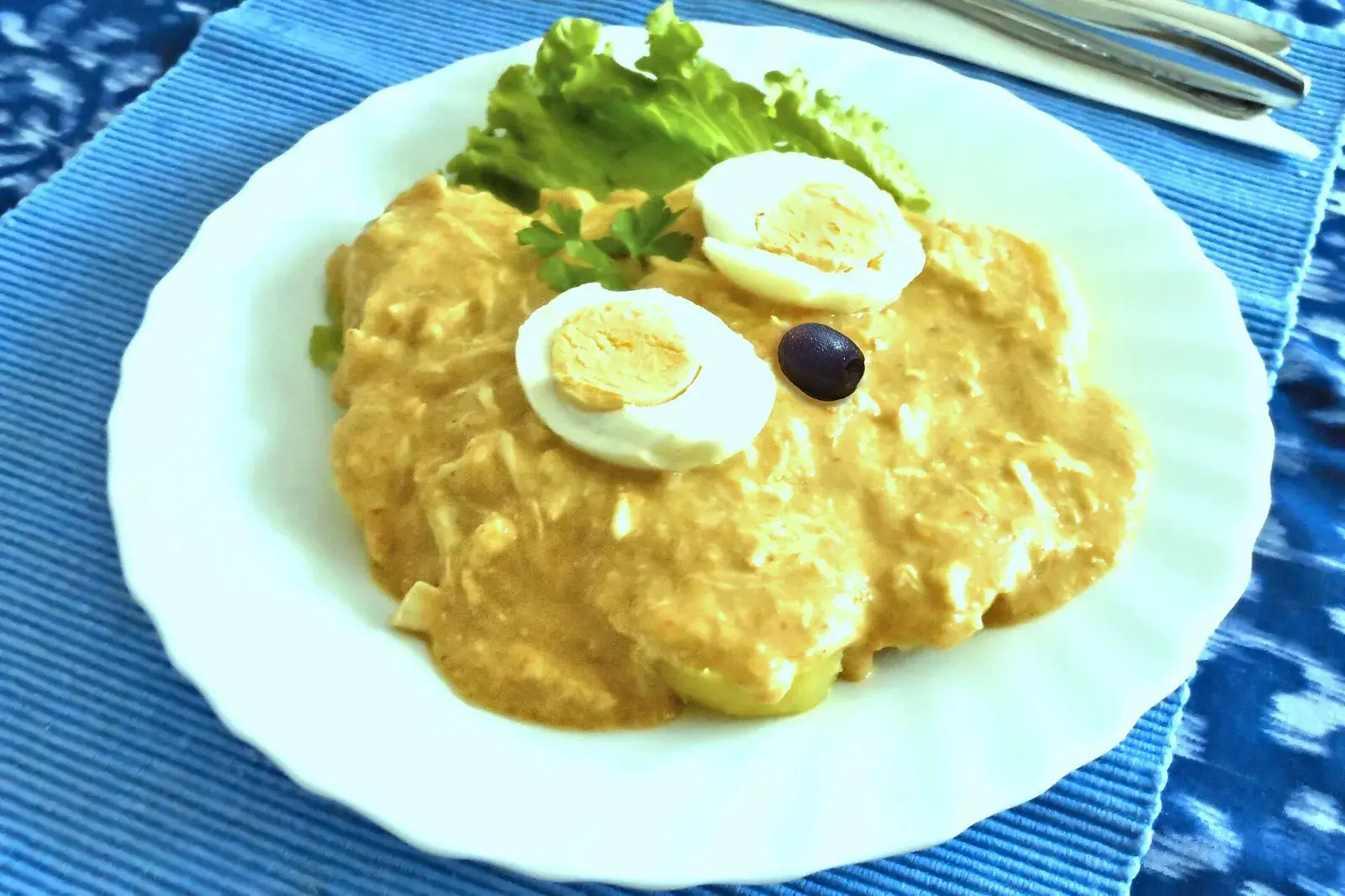
Ají de gallina is shredded chicken in a thick, creamy, bright yellow sauce made from ají amarillo chilli, bread soaked in milk, cheese and nuts or similar thickeners. It is served over boiled potato with white rice, a boiled egg and a black olive. It is mild rather than hot and is one of the easiest Peruvian dishes for newcomers.
What is in it
The name means "chilli of hen", and in the traditional recipe an older hen is boiled for its flavour, then shredded by hand. The stock cooks down with the sauce. The sauce itself is made by blending ají amarillo, the fruity yellow Peruvian chilli, with bread soaked in evaporated milk or stock, onion, garlic, grated cheese and ground nuts such as walnuts or pecans in some recipes. The result is thick and smooth, closer to a stew than a curry.
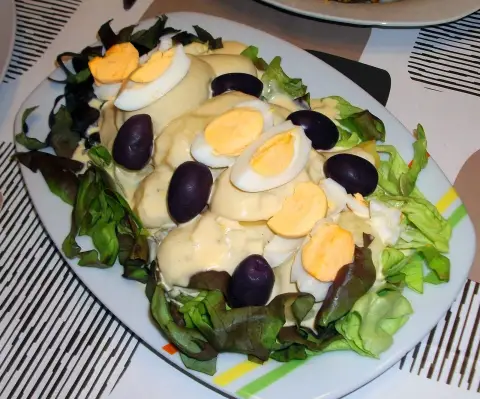
On the plate, ají de gallina comes over slices of boiled yellow potato with rice on the side, topped with a halved hard-boiled egg and an olive. Some cooks garnish with a little more cheese or with chopped nuts.
The heat depends on the cook, but the ají amarillo is used mainly for colour and fruity flavour, and the dish is usually mild to medium. Ask for a sauce on the side if you are sensitive.
Where it comes from
The dish is often traced to a colonial-era preparation, a sweet and savoury dish of shredded meat or fowl in a sauce thickened with almonds and milk that arrived with the Spanish and became manjar blanco. In Peru the almonds and sugar were gradually replaced by chilli, and the dish became savoury. The exact path is not well documented, and different writers tell it differently, so the history is best described as plausible and disputed.
What is clear is that it is now a staple of home cooking and of set lunch menus across the country, especially in Lima, and that it is one of the dishes Peruvians living abroad miss most.
Tours and activities
Bookable online, chosen for their traveller reviews.
-
★ Top rated From €52 per person
-
★ Top rated From €23 per person
-
Day trip From €38 per person
-
★ Top rated From €85 per person
How and when to eat it
Ají de gallina is a lunch dish and sits on almost every set menu, but it also appears on à la carte menus. It is filling, so a small portion is enough for many people. It is a gentle option for the first days of a trip, when your stomach may be adjusting to new foods, and a good choice at altitude because it is not fried or heavily spiced.
When ordering, look for a sauce that is thick enough to cling to the chicken, a bright but not neon colour, and chicken that is tender and shredded rather than cubed. It is not a vegetarian dish and cannot easily be made so, as the sauce is built on chicken stock.
The dish contains milk, cheese, bread (gluten) and often nuts, so anyone with allergies should check before ordering.
The ají amarillo behind the colour
The bright yellow of the sauce comes from ají amarillo, the most widely used chilli in Peruvian cooking. Despite its name, which means "yellow chilli", the fresh pepper is orange when ripe, and the golden colour comes out when it is cooked and blended. Cooks usually remove the seeds and veins, which reduces the heat, and fry the paste gently in oil with onion and garlic before adding the bread and stock.
The same chilli appears in causa, in many creamy sauces and in lomo saltado, so tasting ají de gallina is a good way to learn its flavour: fruity, slightly sweet and warm rather than fiery. If you like it, ají amarillo paste is a popular ingredient to buy and take home, though you should check your own country's rules on food imports before packing it.
For a contrast with a much hotter pepper, see rocoto relleno.
Regional and home variations
No two cooks make ají de gallina in the same way. Some use more bread for a thicker sauce, others rely on cheese, and some add a little mild cheese for sharpness. Home cooks often use leftover boiled chicken, which makes the dish an everyday meal rather than a special-occasion one.
Restaurants may serve a refined version with a smooth, glossy sauce and a neat arrangement of rice, potato and egg, while market counters offer larger, rustic plates. Both are valid, and the market version is often the more flavourful.
In Cusco the dish appears on most menus and is often among the cheaper set-lunch mains. Recipes there sometimes use local cheese and may be slightly milder than in Lima. If you want to compare, try it once in each city.
Pairings and practical notes
Ají de gallina goes well with a plain drink. Chicha morada, lemonade or water balance the creaminess, and a light beer is a common choice at lunch. A pisco sour is better kept for the evening.
Portions can be large, and the dish is rich. If you are travelling and want a lighter meal, order a half portion if offered, or share. Leftovers do not travel well, so eat what you order.
Because the sauce is mild, the dish is a good option for children and for visitors who are nervous about chilli. It also works as a gentle bridge to spicier regional food: after a few meals of ají de gallina, a taste of a stronger sauce such as uchucuta feels less daunting.
For more on Peruvian cooking in general, return to the food, and for chicken-and-rice combinations with a Chinese accent, see the chifa.
Frequently asked questions
Is ají de gallina spicy?
Generally mild. The chilli gives colour and flavour more than heat, and the creamy sauce softens it.
Does ají de gallina contain nuts?
Many recipes do, such as walnuts or pecans, and the bread contains gluten. Ask if you have allergies.
Can I order a vegetarian version?
Rarely. The sauce is usually made with chicken stock, and the dish is built around the chicken.
Why is it called ají de gallina if it uses chicken?
Gallina means hen, because the traditional recipe uses an older hen, which has more flavour than a young chicken. Today most cooks use ordinary chicken.
What do I eat with ají de gallina?
It comes with boiled potato, white rice, a hard-boiled egg and an olive. A plain drink or a light salad balances the creamy sauce.
Is ají de gallina eaten at breakfast?
Not normally. It is a lunch or dinner dish, and it often appears as one of the mains on a set menu.
Can I make ají de gallina at home?
Yes, and cooking classes in Peru often teach it. You will need ají amarillo paste, which is sold in jars outside Peru, but the rest of the ingredients are easy to find.