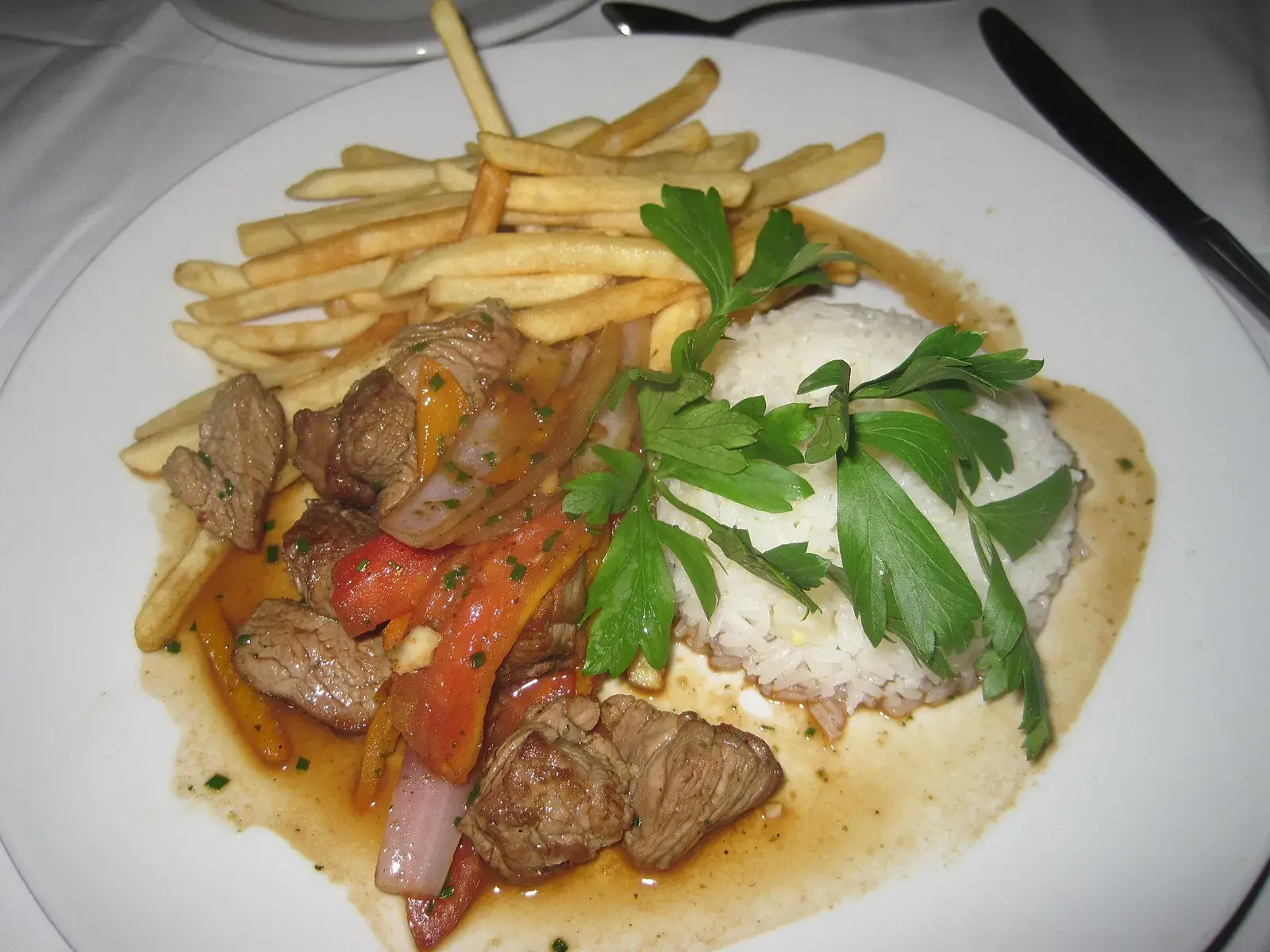
Lomo saltado is strips of beef stir-fried at high heat with red onion, tomato, chilli and soy sauce, then served with rice and fried potatoes on the same plate. It is a staple of Peruvian restaurants of every level, filling, savoury and rarely spicy. It comes from chifa cooking, the blend of Cantonese techniques and Peruvian ingredients.
What is in it
The core of the dish is beef, usually tender cuts sliced into strips, cooked very quickly in a very hot pan or wok. Red onion cut in thick wedges and tomato go in at the end so that they stay firm. The flavour comes from soy sauce, a splash of vinegar, garlic and cumin, and ají amarillo or similar chilli, and often a flame from the pan itself: cooks sometimes tip the pan so that the sauce flares briefly, which gives a smoky taste.
The dish is served with white rice and with fried potatoes, sometimes mixed into the stir-fry just before serving and sometimes placed on top. Having two starches on the plate surprises many visitors, but it is simply the standard Peruvian way. Coriander is a common garnish.
Where it comes from
Lomo saltado is usually linked to the Chinese immigrants who arrived in Peru from the nineteenth century and who adapted their cooking to local ingredients. The stir-fry method, the soy sauce and the speed of the cooking are Chinese in origin, while the potatoes, the ají and the beef-and-rice pairing are Peruvian. The exact story of who made the first one is not documented, so treat any single origin story with caution.
It is a good place to start with chifa, the broader tradition of Chinese-Peruvian restaurants, which deserves a closer look.
Tours and activities
Bookable online, chosen for their traveller reviews.
-
★ Top rated From €52 per person
-
★ Top rated From €23 per person
-
Day trip From €38 per person
-
★ Top rated From €85 per person
Variations and how to order
Pollo saltado uses chicken instead of beef, and there are seafood versions. Vegetarian versions made with mushrooms or vegetables exist in some restaurants, but they are not standard, so ask. Tallarín saltado, with noodles instead of rice and potatoes, is another common relative.
Lomo saltado is served at lunch and dinner and is common on the set lunch menu. Portions are generous, so it suits a hungry traveller. If you are just arriving at altitude, the dish is rich, and a smaller portion or a lighter option is a gentler choice on the first day.
Quality varies. Good versions are juicy rather than soupy, with onions that still have a little bite, potatoes that are crisp or at least not soggy, and meat that is tender. The sauce should coat the dish, not drown it. Because soy sauce and fried potatoes make the dish salty and rich, a plain drink such as water or chicha morada goes well with it.
The technique behind the dish
The secret of a good lomo saltado is heat and timing. The pan must be very hot before the meat goes in, so that the strips sear rather than stew, and the vegetables are added at the last moment so that they keep their texture. A restaurant that cooks the dish to order, in a pan that smokes, usually serves a better plate than one that reheats it from a large pot.
This is the wok cooking that Chinese immigrants brought, called "salteado" in Spanish, meaning tossed or sautéed. The same technique appears in other chifa dishes, such as fried rice and stir-fried noodles. A restaurant that makes one well will usually make the others well too.
The dish is also a lesson in how Peruvian cooking absorbs ideas. Soy sauce, a Chinese ingredient, sits alongside ají amarillo and tomato, and the result is no longer clearly Chinese or Peruvian but something that belongs to both.
Where to eat it
Lomo saltado appears in almost every type of restaurant in Peru, from market counters and set-lunch places to chifa restaurants and upmarket venues. In Lima, it is one of the dishes most often recommended to visitors, and a chifa restaurant is a reliable place to find a good version.
In Cusco, the dish is on most tourist menus, and it is often made with alpaca or with the same beef as in Lima. Menus aimed at visitors may be gentler on chilli and salt, while local restaurants are more robust.
On a budget, the set lunch at a neighbourhood restaurant often includes a smaller version of the dish as the main course, along with soup. If you want a full plate, order it à la carte and share if you are not very hungry.
Dietary notes and pairings
Lomo saltado is high in salt and fat, and it contains soy sauce, which means wheat. People with coeliac disease or gluten intolerance should avoid it or ask whether the kitchen can adapt it, which is not always possible. It is meat-based, and the sauce is often cooked with beef stock or beef fat.
A refreshing drink balances the richness. Chicha morada, lemonade or a cold beer all work well. A pisco sour before dinner is traditional but should be kept light if you are at altitude.
For a gentler first week, alternate lomo saltado with lighter dishes such as ceviche at lunch, soup or grilled fish. The dish suits cold evenings in the Andes, when the body wants warm, filling food, but it is heavy for a first night at altitude. Vegetarians should see vegetarian eating.
Frequently asked questions
Is lomo saltado spicy?
Usually not very. Chilli is used for flavour, and the dish is often served with a hot sauce on the side.
Is lomo saltado gluten-free?
Not normally, because soy sauce contains wheat. If you have coeliac disease, ask carefully and consider other dishes.
Why are there chips and rice on the same plate?
It is the traditional presentation. The potatoes soak up the sauce and the rice balances it.
What is the difference between lomo saltado and beef stir-fry?
Lomo saltado uses Peruvian ingredients such as ají amarillo and is served with fried potatoes as well as rice. It tastes closer to a savoury, tomato-and-onion stir-fry than to a Chinese one.
Can I get lomo saltado with chicken or vegetables?
Chicken versions, called pollo saltado, are common, and some restaurants offer vegetable or mushroom versions. Ask if you are avoiding beef.
Is lomo saltado safe to eat as a visitor?
Because it is cooked at high heat and served hot, it is one of the safer dishes on the menu. Choose a busy restaurant and avoid any plate that has been sitting.
Is lomo saltado a good first meal in Peru?
It is familiar to most palates, but it is rich. Many visitors find it easy to eat, and it is a safe choice if you do not like raw fish.