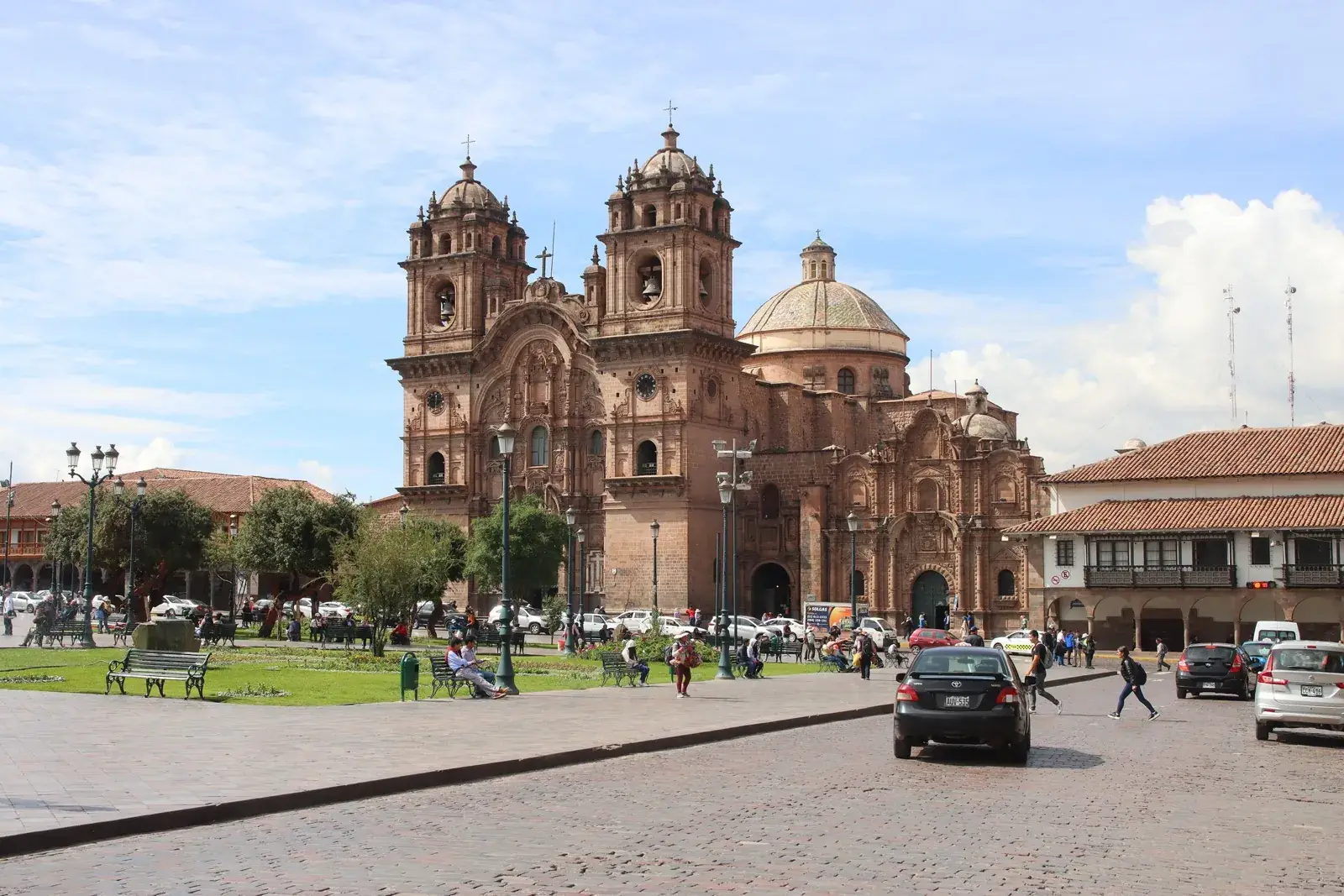
La Compañía de Jesús is the Jesuit church on the corner of Cusco's Plaza de Armas, rebuilt after the 1650 earthquake and finished in the 1670s. Its pink-stone baroque facade and twin towers are among the best-known sights of the square, and inside a gilded altarpiece and several Cusco School paintings repay a short visit. Allow 30 to 45 minutes, check opening hours and ticket rules locally, and see it in the late afternoon light or after dark.
Map
What the church is
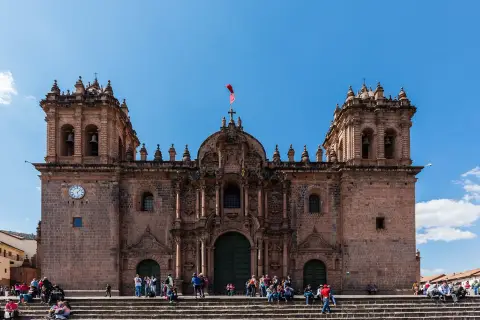
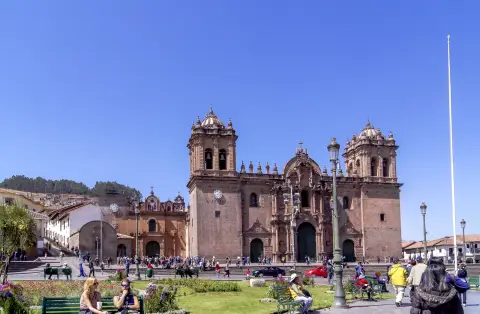
The Church of the Society of Jesus, always called La Compañía, stands on one corner of the Plaza de Armas, facing the cathedral across the square. It is a Roman Catholic church that was built by the Jesuit order, and it is still used for worship, which affects when and how you can look around. Its facade is carved from pink stone and flanked by two bell towers, with a dome rising behind, and it is one of the most photographed buildings in Cusco.
It is a good place to understand how colonial Cusco was built on top of the Inca city. The Jesuits did not choose an empty plot: they took a site in the middle of the old capital and raised a church designed to compete with the cathedral. The result is a building that is worth reading as well as looking at, and the short history in the next section explains why the square looks the way it does.
Inca palace site and Jesuit foundation
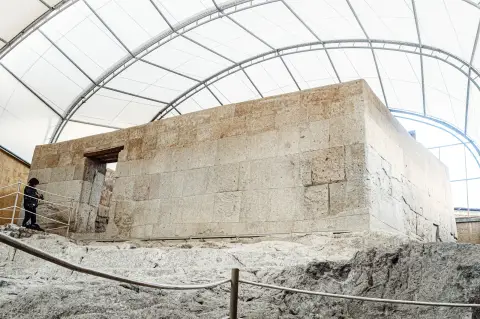
The land was Amarucancha, traditionally described as a palace compound of the Inca ruler Huayna Capac. After the Spanish conquest it passed to Spanish owners, and the Jesuits, who reached Cusco in 1571, obtained it for their college and church, with private donations helping to pay for the plot. The first church had a different facade, and its altarpiece was begun by the Italian Jesuit painter Bernardo Bitti.
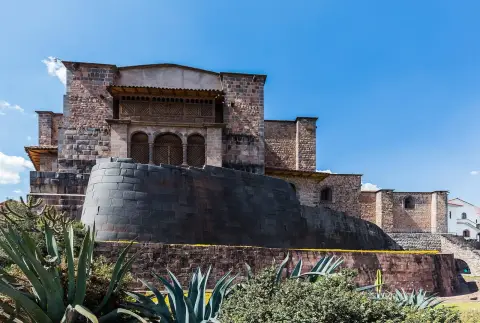
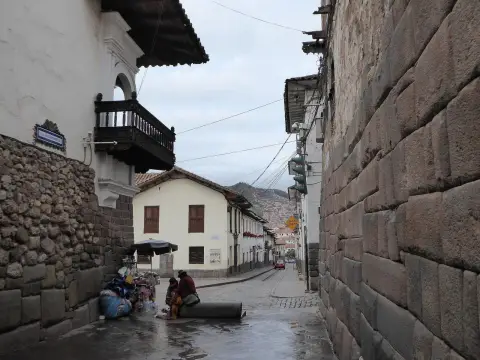
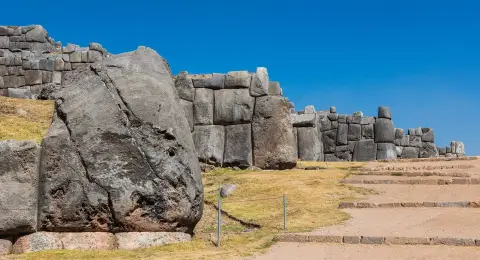
A good deal of Inca stonework survives around the site, which is one reason the area is worth a look from the street as well as from inside. For the wider story of the city that stood here before the Spanish arrived, read the Inca Empire and Spanish conquest pages. The Qorikancha, a few minutes away on foot, shows a more famous example of the same pattern, with a church built directly on an Inca temple; see the Qorikancha page.
Tours and activities
Bookable online, chosen for their traveller reviews.
-
★ Top rated From €23 per person
-
★ Top rated From €22 per person
-
★ Top rated From €23 per person
-
★ Top rated From €17 per person
Rebuilding after 1650 and the cathedral rivalry
The earthquake of 1650 badly damaged the first church, and the Jesuits rebuilt it, with work starting in 1651 and the church completed in the early 1670s. A Flemish Jesuit, Jean-Baptiste Gilles, is usually credited with the design, and the plan follows the model of the Jesuit mother church, the Gesù in Rome.
The best-known story is a rivalry with the cathedral. In 1656 a legal objection claimed that the new plans were so grand that they would diminish the cathedral, and the dispute went through colonial courts. Guides often add that the Pope settled it, or that the Jesuits secretly built higher than allowed. Treat those parts as local tradition: the documented record points to appeals in the colonial legal system rather than a ruling from Rome. The order's time in Cusco ended in 1767, when the Jesuits were expelled from Spanish territories, after which the building served as a parish church.
The facade and the dome
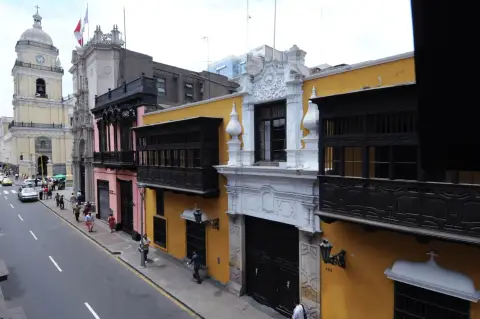
The exterior is the main reason most visitors stop. The facade is baroque, in pink stone, with a large arched doorway framed by columns, a niche holding a statue of the Virgin above it, and richly carved panels rising to a trilobed top. Two bell towers stand on either side and a dome rises behind them. It is a close relative of the churches built across the Spanish colonies, and the colonial architecture page puts it in the context of Cusco's other buildings.
Look at it twice. In the late afternoon the stone warms to a rosy colour, and after dark the facade is lit from below and the square empties a little. From the middle of the plaza you can compare its proportions with the cathedral, and from the side streets you can see how the building sits against the hills behind the city. A bench in the square, with the church in front of you, is as good a viewpoint as any.
Inside: altar and paintings
The interior has a single nave and a vaulted ceiling, and the focus is the main altarpiece, a carved and gilded cedar structure roughly 21 m high and 12 m wide, with twisted Solomonic columns, a central canvas of the Transfiguration and a figure of the Immaculate Conception. It is among the largest altarpieces in Peru, and the sheer scale is the point, so stand back from it before you move closer.
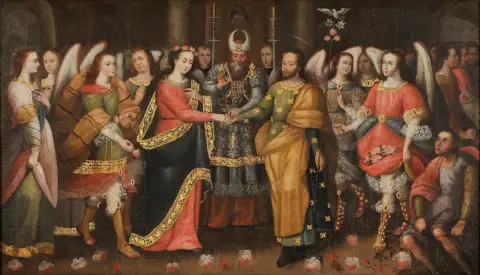
Smaller works are worth finding. A well-known painting of the marriage of Martín García de Loyola, nephew of Ignatius, to the Inca noblewoman Beatriz Clara Coya records an alliance between a Spanish family and Inca royalty, and a second wedding scene hangs on the opposite wall. They belong to the Cusco school, described on the Cusco School page, a local painting tradition that blends European models with Andean colours and details. Works by Cusco painters, including Marcos Zapata, are also associated with the church.
Visiting: hours, tickets and etiquette
Opening hours and entry rules at Cusco churches change with the season, the liturgical calendar and the way tickets are sold, so check them locally on the day, at the door or with your accommodation. Some churches are covered by a joint ticket and others charge separately, and the interior may be closed to visitors during Mass. Do not assume you can walk in at any hour.
Inside, follow the usual rules for a working church: modest dress, no flash and no photographs where signs forbid them, and quiet during services. Photography rules differ from church to church and are a common source of disputes with attendants, so ask when in doubt. The etiquette page has general advice, and a hat and sunglasses are useful in the sunlit square outside, where the sun at altitude is strong.
How long, when to go and getting there
Allow 30 to 45 minutes for the church, or an hour if you read the paintings carefully, and a little more if you combine it with the cathedral. The church is on the Plaza de Armas, so there is no transport to arrange: it is the centre of the walking city, and every route from the airport or from your hotel ends there. Cusco stands at about 3,400 m, so go gently on arrival day, and read altitude sickness before climbing the steps from the square.
Morning and the early afternoon are usually quieter inside than the hour before closing, when tour groups arrive. The best light for the facade is late afternoon, and the square is lively on feast days, which are listed on the festivals and holidays page. Check access locally if you travel with reduced mobility, since old churches often have steps and uneven floors.
What to combine it with
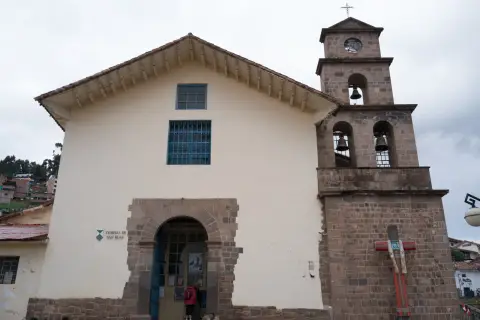
The natural pairing is the cathedral and the rest of the square, described on the Plaza de Armas page. From there, a ten-minute walk downhill leads to the Qorikancha, and a steep climb uphill reaches the craft streets and church of San Blas. Museums with colonial art, including the religious art museum, are covered on the museums page.
For a full day in the city, the things to do in Cusco page suggests an order, and an organised city tour usually includes the square and sometimes one of its churches. If you stay within a few streets, the where to stay page lists areas where this church is a short walk from your door, so that an evening visit costs nothing in transport.
Where to sleep
-
Find hotels
Plaza de Armas and historic centre
Everything on foot, at the price of noise and crowds
-
Find hotels
San Blas
Artisans' quarter with steep lanes and views, a short walk uphill
-
Find hotels
All of Cusco
Compare every area and price level in one search
Frequently asked questions
What is La Compañía de Jesús in Cusco?
It is a Jesuit baroque church on the Plaza de Armas, rebuilt after the 1650 earthquake and completed in the early 1670s. It stands on the site of an Inca palace called Amarucancha. See the Plaza de Armas page for the rest of the square.
Is La Compañía the same as the cathedral?
No. They are two separate churches on the same square, facing each other across the plaza. The cathedral is the larger and older institution, while La Compañía was built by the Jesuit order.
Is it true the Pope settled a dispute between the two churches?
That is a popular guide's story, but the documented dispute of 1656 went through colonial courts and appeals, not through Rome. It is best told as a local tradition about rivalry between the two buildings.
How long do I need at La Compañía?
Thirty to forty-five minutes covers the facade, the main altarpiece and the paintings. Add time if you plan to visit the cathedral on the same walk.
Do I have to pay to enter?
Entry rules for Cusco churches change and some are covered by combined tickets, so check at the door or locally. Do not rely on an old price or on a rule you read years ago.
Can I take photographs inside?
Rules vary and signs at the entrance decide. Flash is normally forbidden in colonial churches because it damages paintings, and photographing worshippers close up is poor manners.
What is the best time to see the facade?
Late afternoon, when the stone turns warm, and again after dark when it is lit. The square is also pleasant early in the morning, before tour groups arrive; see Cusco tours if you prefer a guided walk.