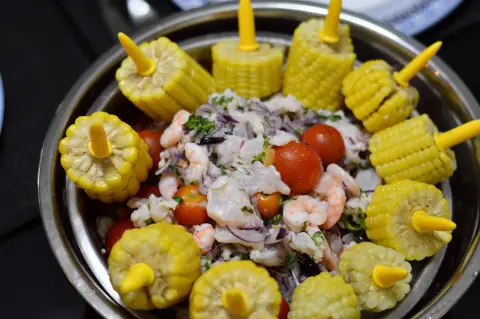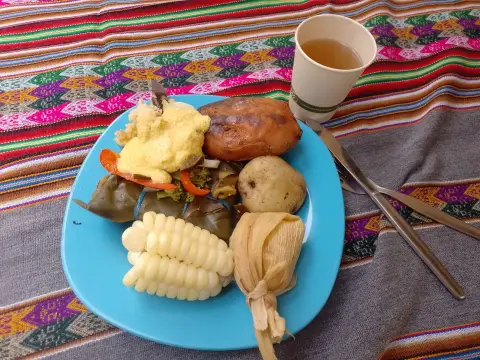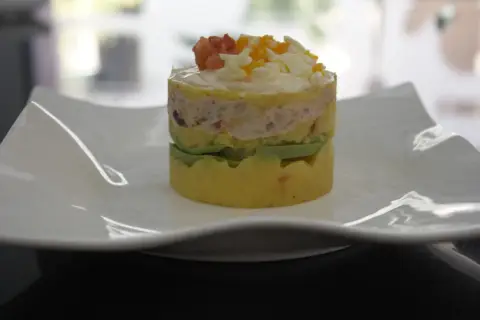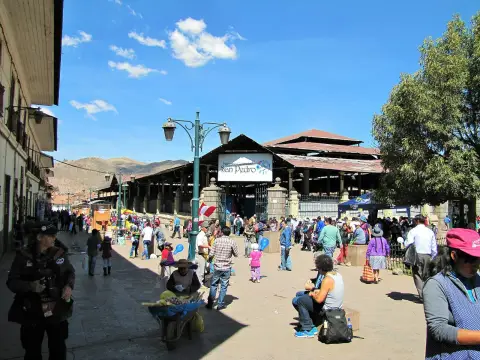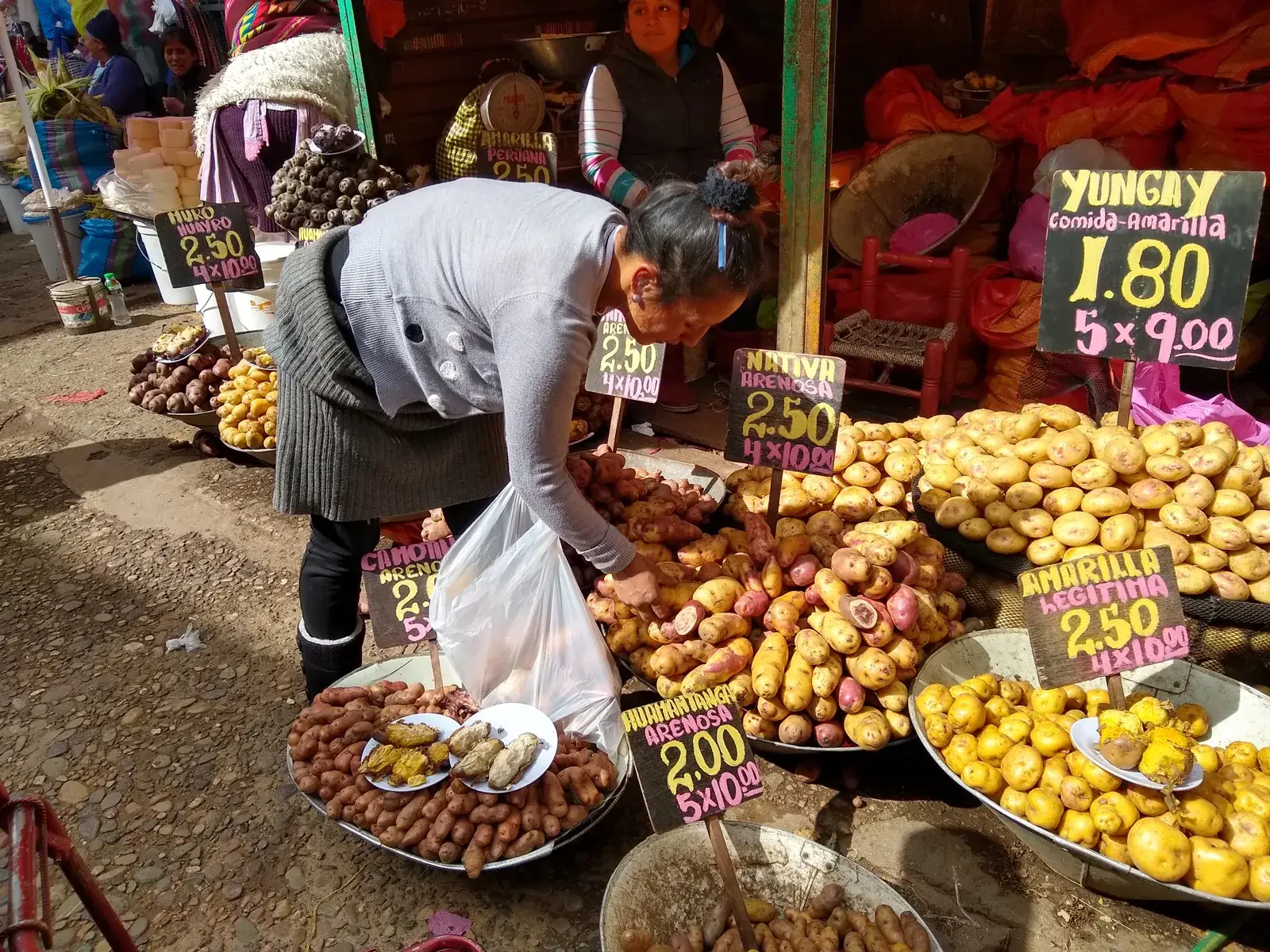
The Andean diet rests on potatoes (thousands of native varieties), maize in many colours and sizes, the grains quinoa, kiwicha and kañiwa, the tubers olluco and oca, and the lupin bean tarwi. Freeze-dried potato, known as chuño, stores for years. The best places to see them are highland markets and the potato conservation areas near Cusco, and the best way to taste them is in soups, stews and market snacks.
Most are inexpensive and available year-round, with fresh harvests in the dry season.
The Andes as a pantry
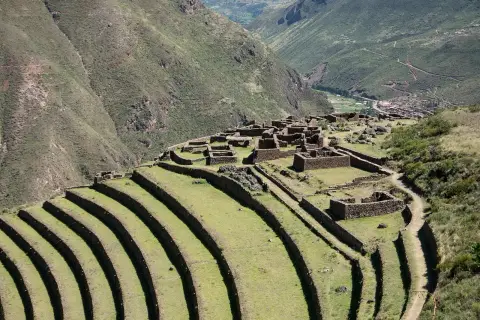
The high Andes are one of the few places where agriculture developed independently, and the crops grown there still feed most families in the mountains. Altitude, cold nights and thin soils shaped a diet of tubers and grains that tolerate frost and drought, and farmers grow different crops at different heights to spread risk.
For a visitor this means that a meal in Cusco or the Sacred Valley is likely to be built around potato, corn and a grain or bean, often all three. Soups are thick, stews come with two kinds of starch, and even a simple lunch plate shows a mix of colours and textures that rarely appears outside the region.
Many of these foods have become fashionable abroad, but in Peru they are everyday items, sold in markets by weight and in heaps. The overview in what to eat in Cusco shows how they are combined with meat, cheese and chilli on the table.
Potatoes: thousands of varieties
Peru is the centre of origin of the potato, and farmers in the Andes grow thousands of native varieties, in a wide range of colours: yellow, purple, red, pink, black and speckled. Sizes range from small round nuggets to long, twisted shapes with deep eyes. Different types are used for boiling, frying, mashing and drying.
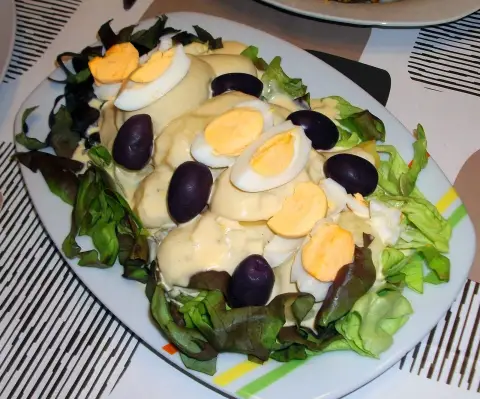
Some of the varieties you are most likely to meet are the yellow potato used in causa and papa a la huancaína, the floury white types for soups, and the purple potatoes used for colour in modern cooking. Bitter potatoes, grown at the highest altitudes, are not eaten fresh but processed into chuño and a similar product called moraya.
In markets, look for tables with several heaps of small, odd-looking potatoes; vendors will often tell you which is best for which dish. If you cook, ask for a few to take home, but note that most countries restrict bringing fresh tubers across borders.
Tours and activities
Bookable online, chosen for their traveller reviews.
-
★ Top rated From €52 per person
-
★ Top rated From €23 per person
-
Day trip From €38 per person
-
★ Top rated From €85 per person
Chuño and moraya
Chuño is potato preserved by exposing it to the freezing nights and bright sun of the high plateau, then trampling out the water and drying it. The result is a hard, light, dark nugget that can be stored for years. A white version, made by soaking in water, is called tunta or moraya.
Chuño was an essential food reserve for Andean communities and, according to many accounts, for the Inca state. It is rehydrated in soups or stews, and it has an earthy, slightly fermented taste that some people love and others do not. It is common in the Lake Titicaca area and around Puno.
You may see it sold in sacks in markets and served alongside cheese or in the dish known as chairo. It is not a flavour for everyone, but it is a good example of how Andean cooks use cold and altitude to solve the problem of storage. Try a small portion first; the texture is dense and chewy.
Quinoa, kiwicha and kañiwa
Quinoa is the best known of the Andean grains. The small seeds, white, red or black, are boiled like rice, added to soups, or made into a hot breakfast drink. The seeds are coated with a bitter substance, saponin, which is rinsed off before cooking, so packaged quinoa is ready to use.
Kiwicha, also called amaranth, has tiny seeds that are popped like corn and mixed with honey or syrup to make a crunchy bar, or ground into flour. Kañiwa is smaller still, with a nutty taste, and is eaten as a porridge or toasted. Both are less common outside Peru but easy to find in markets and in health shops in Cusco.
All three grains are naturally gluten-free, which is useful for people with coeliac disease, though cross-contact is possible in kitchens that handle wheat. They also suit vegetarians, and the options in vegetarian food draw on them. Look for quinoa soup, quinoa salads and breakfast porridge on menus.
Maize in many colours
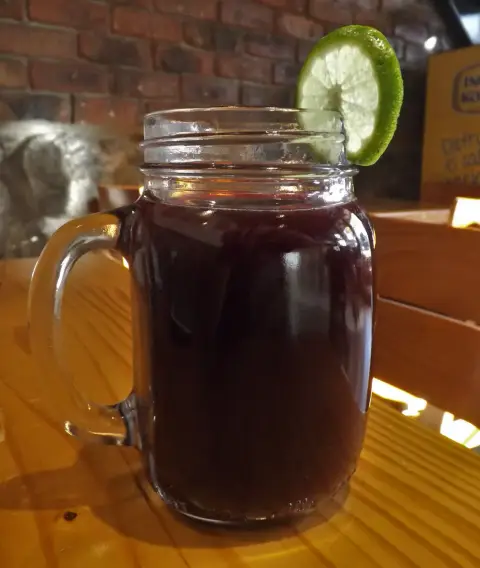
Maize is as important as the potato in the Andes, and Peru grows many types. The choclo has large, pale, chewy kernels and is boiled and eaten with cheese. The cancha is dried corn toasted until crunchy, served in bowls as a snack with a drink. Maíz morado is purple corn used for drinks and desserts, and maíz blanco gigante is a large white kernel particularly associated with Cusco and the Sacred Valley.
Corn also appears in fermented form: chicha de jora, a mildly alcoholic drink, is made from germinated corn, as explained in chicha. Fresh corn is the base of humitas and tamales, which are described in street food.
Corn varieties differ by altitude and soil, and the Sacred Valley is known for its large-kernel white corn. If you visit between harvest and dry season, fields are golden and markets are full of cobs. Try boiled choclo with a slice of fresh cheese; it is a simple and typical snack.
Olluco, oca and tarwi
Olluco is a small tuber with a waxy, crisp texture and bright colours, from yellow to pink and magenta. It is cooked in stews, most famously in olluquito con charqui, with dried meat. Oca, another tuber, is sweet when left in the sun, and is eaten boiled, roasted or dried.
Tarwi, also known as chocho, is a lupin bean that is rich in protein but toxic until soaked for days to remove alkaloids. Once prepared it is eaten as a snack, in salads, or ground into flour. It is sold in bags in markets, ready to eat, and used in dishes such as the cold "ceviche de chocho".
These three are less famous than potato and quinoa but show the breadth of the Andean pantry. They are cheap and nutritious, and trying them in a simple soup or market snack is a good way to experience the region. Do not buy raw tarwi to prepare yourself; the debittering process is long.
Where to see and taste them
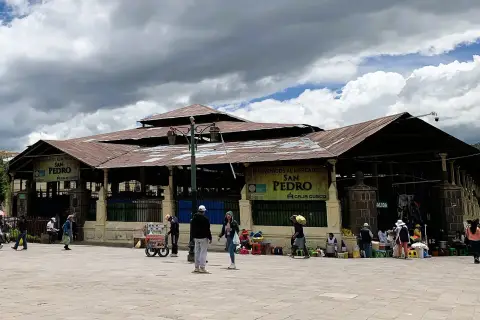
Highland markets are the most direct route. The San Pedro market in Cusco has stalls of potatoes, corn, grains and tubers beside juice and soup counters, and local markets in the Sacred Valley are smaller and often less crowded. Village markets on specific days, particularly in Pisac and Chinchero, are good for seeing the variety of produce.
Near Cusco, community-run conservation areas such as the Potato Park exist to preserve native varieties and to let visitors see them growing and taste dishes made from them. Check current access and arrangements before going, as visits are usually organised through local associations and tour providers.
At restaurants, ask for a mixed plate of Andean tubers, a quinoa soup or a stew with chuño. Combined with a guided session such as those in Lima food tours, markets also give a useful overview. Always eat cooked food from stalls, and see water and food safety for general guidance.
Frequently asked questions
How many types of potato are there in Peru?
Farmers grow thousands of native varieties, and Peru has a large collection of them in conservation programmes. Only a small selection reaches restaurant menus.
What is chuño?
It is potato freeze-dried by cold nights and sun in the high Andes, then dried hard. It keeps for years and is rehydrated in soups and stews.
Is quinoa from Peru gluten-free?
Quinoa itself contains no gluten, but check packaged products and restaurant kitchens for cross-contact if you have coeliac disease.
What is the difference between kiwicha and quinoa?
Both are Andean seeds, but kiwicha (amaranth) is smaller and is often popped or milled into flour, while quinoa is boiled whole. Kiwicha bars are a common snack.
What is choclo?
A large-kernel, starchy Andean corn with a chewy texture. It is boiled and eaten with cheese, and also used in salads and ceviche.
Can I bring Peruvian potatoes or seeds home?
Usually not. Fresh produce and seeds are restricted by most countries' border rules, so check your own country's regulations. Dried or processed products such as packaged quinoa are generally easier.
Where is the Potato Park?
It is a community-managed conservation area in the highlands near Cusco, in the Sacred Valley region. Visits are arranged through local associations, so check current options before you go.