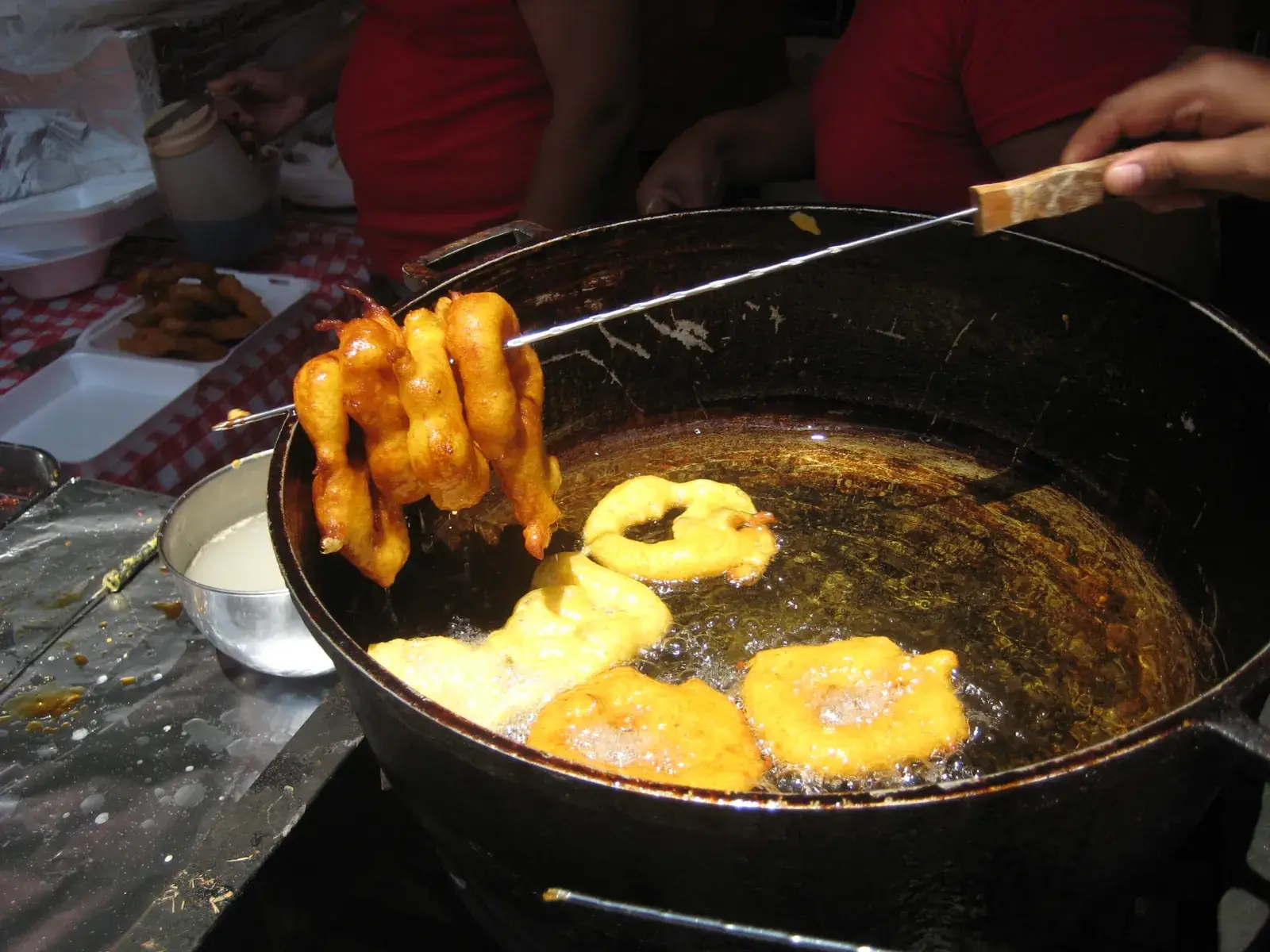
Peruvian street food is inexpensive, filling and mostly eaten standing or on a plastic stool: picarones in the evening, tamales and bread rolls at breakfast, salchipapas and anticuchos after dark, and fried or baked empanadas at any hour. The safest stalls are the busy ones where food is cooked to order and served piping hot.
Expect to pay little for a snack and a modest amount for a full plate at a market counter. Carry small coins and notes, because vendors rarely have change for large bills.
What counts as street food in Peru
Street food in Peru covers three kinds of seller: the cart that sets up on a corner at the same time every day, the woman with a pot and a thermos outside a bus station, and the stall inside a covered market. Each has its own hours. Breakfast sellers appear before dawn, lunch is dominated by market counters, and the evening belongs to grills and fryers.
Most of what is sold is cheap, calorific and designed to be eaten in a few minutes. Fried dough, grilled meat on skewers, boiled corn, sandwiches and sweet snacks make up the bulk of it. Regional differences are strong: the coast leans towards fried and marinated items, the highlands towards corn, potato and pork, and the jungle towards fish wrapped in leaves and fried plantain.
Because many dishes are local specialities, street food is also a quick way to taste a region before sitting down in a restaurant. The overview in what to eat in Lima shows how the capital mixes these traditions.
Evening snacks: picarones, anticuchos and salchipapas
Picarones are rings of deep-fried dough made from squash and sweet potato, served hot with a dark syrup of cane sugar and spices. They are sold from carts, often in the evening, and are covered with other sweets in Peruvian desserts.
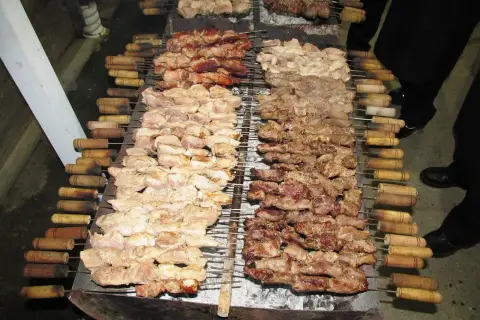
Anticuchos are skewers of marinated beef heart grilled over charcoal and served with boiled potato or corn and a spicy sauce. Smoke and the smell of cumin and vinegar often announce the stall before you see it. The full story is in anticuchos.
Salchipapas are the simplest of the three: chips topped with sliced fried sausage, normally squeezed with ketchup, mayonnaise, mustard and a green or yellow chilli sauce. They are the standard snack for students and children and are usually served in a plastic bag or a small tray. Some stalls add a fried egg or a few slices of grilled chicken.
Tours and activities
Bookable online, chosen for their traveller reviews.
-
★ Top rated From €52 per person
-
★ Top rated From €23 per person
-
Day trip From €38 per person
-
★ Top rated From €85 per person
Breakfast and bread: tamales, butifarra and chicharrón
Tamales are corn dough steamed in a banana or corn leaf, usually filled with pork or chicken, sometimes with olive, peanut or a slice of egg. On the coast they are a weekend breakfast eaten with a bread roll, and sellers push them in large pots on a trolley. Highland versions are denser and may use different corn.
The butifarra is a bread roll filled with slices of cooked ham, red onion salsa and a lemon-dressed pickle; it is a classic Lima sandwich and works as a light lunch. The pan con chicharrón is a roll filled with fried pork, slices of sweet potato and onion salsa, and it is the standard Sunday breakfast in many coastal towns, often with a cup of strong coffee.
Look for a counter with a queue of office workers rather than tourists. Fillings should be cut to order, and the bread should be warm. These sandwiches are filling, so one is enough for most people until lunch.
Empanadas, humitas and other pocket food
Empanadas in Peru are pastry parcels filled with minced beef, olive and raisin, or with chicken or cheese. They are baked or deep-fried, and the baked version is often glazed and dusted with sugar, which surprises visitors expecting only savoury food. They sell at bakeries and from baskets on bus-station platforms.
Humitas are a fresh-corn version of the tamale: sweet or salty corn paste wrapped in the husk and steamed. They are common in the highlands, where fresh corn is abundant, and are usually eaten with a coffee or with cheese. In the jungle, juanes are rice parcels with chicken, wrapped in bijao leaves, and they are the closest equivalent.
Sweet snacks are never far away either. Look for alfajores, small cakes, boiled sweet corn, and in the highlands a cup of hot corn drink sold by the roadside. If you need a quick, cheap snack between sights, any of these fits in a bag and survives a bus ride better than a salchipapa.
Market counters and set menus
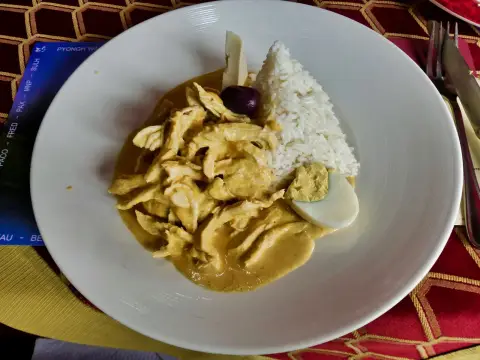
Markets are the best place for a cooked meal at a low price. A typical counter offers a menú of soup, a main course and sometimes a drink, written on a board and served within minutes. Soups tend to be hearty, and the main course is rice with a stew, a grilled or fried meat, or a fish dish on the coast.
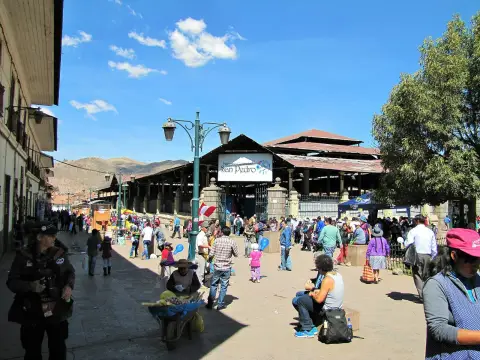
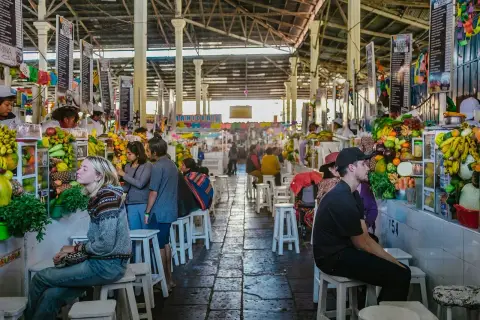
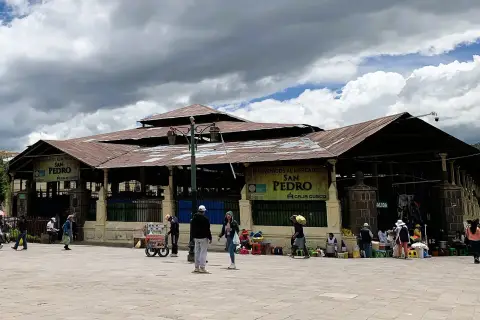
Other counters sell only one thing: juices, freshly squeezed and poured from a blender, cut fruit, roasted or boiled corn, or a thick breakfast drink made from quinoa or oats. The spread in the San Pedro market in Cusco is a good example, with juice, bread and cooked-food sections in one hall.
Order by pointing, ask what is in the dish, and say if you do not want chilli, since many tables come with sauce on the side. Peruvians often eat quickly and leave, so the service is fast and little lingering is expected.
How to choose, order and pay
Look first at the crowd. A stall with locals waiting and a short menu turns over its food quickly, which matters more than how clean it looks. Watch how the vendor handles money and food: ideally one person takes cash and another cooks, or the cook wipes hands in between.
Prices are usually posted on a card or chalked on a board; if they are not, ask before ordering. Street food is inexpensive by international standards, and a snack costs a small fraction of a restaurant dish. Carry small notes and coins, since breaking a large bill at six in the morning can be awkward. Tipping is not expected at carts; leaving rounded-up change is enough, as explained in tipping in Peru.
If you have dietary restrictions, say so with a short phrase: "sin carne" for no meat or "sin ají" for no chilli. Street cooking rarely separates ingredients, so strict vegetarians, vegans and people with allergies should read vegetarian food in Peru before relying on stalls.
Where to start in Lima and Cusco
In Lima, evening carts gather near busy avenues and plazas in districts away from the main tourist streets, and weekend mornings bring tamal sellers to residential corners. For more guidance on the capital's food scene, including organised walks, see Lima food tours.
In Cusco, markets and the streets around them offer soups, bread, juices and grilled snacks, and the Cusco food overview explains the regional dishes. At altitude, avoid heavy fried food on your first day and drink plenty of water, because digestion is slower.
On a budget, street food and market menus are the main reason Peru is cheap to eat in; daily costs shows how this feeds into a travel budget.
Frequently asked questions
Is street food in Peru safe to eat?
Much of it is, if you choose carefully. Pick busy stalls with food cooked to order and served hot, avoid raw salads and cut fruit left in the sun, and use hand sanitiser. Mild stomach upsets are common for newcomers, so start with cooked items.
What is the most popular street snack in Peru?
There is no single winner, but salchipapas, anticuchos, empanadas and bread rolls with fried pork are all very widespread. The coast and the highlands each have their favourites, and picarones are the best-known sweet.
How much does street food cost?
A snack is inexpensive and a plate at a market counter is modest. Prices are always lower than in a restaurant, and they vary between Lima, Cusco and smaller towns, so check the board or ask before you order.
What is a butifarra?
It is a bread roll filled with sliced cooked ham, red onion salsa and a lemony sauce. It is a Lima classic, often eaten at lunchtime or as a late snack.
Can vegetarians eat from street stalls?
Options exist, such as boiled corn, cheese humitas, fried bananas and some empanadas, but many fillings and sauces contain meat or stock. Ask carefully and see vegetarian food for more detail.
Is it safe to eat street food at altitude?
The food itself is no different, but digestion slows and appetite drops at height. Eat lightly on the first day in Cusco, avoid greasy fried food, and drink water between meals.
Should I tip street vendors?
No tip is expected at carts and counters. Rounding up or leaving small change is welcome but optional.
Which markets are best for cooked food?
Most city central markets have a section of small counters serving set lunches, soups and juices. Ask your accommodation for the one locals use, and go at lunchtime when turnover is highest.