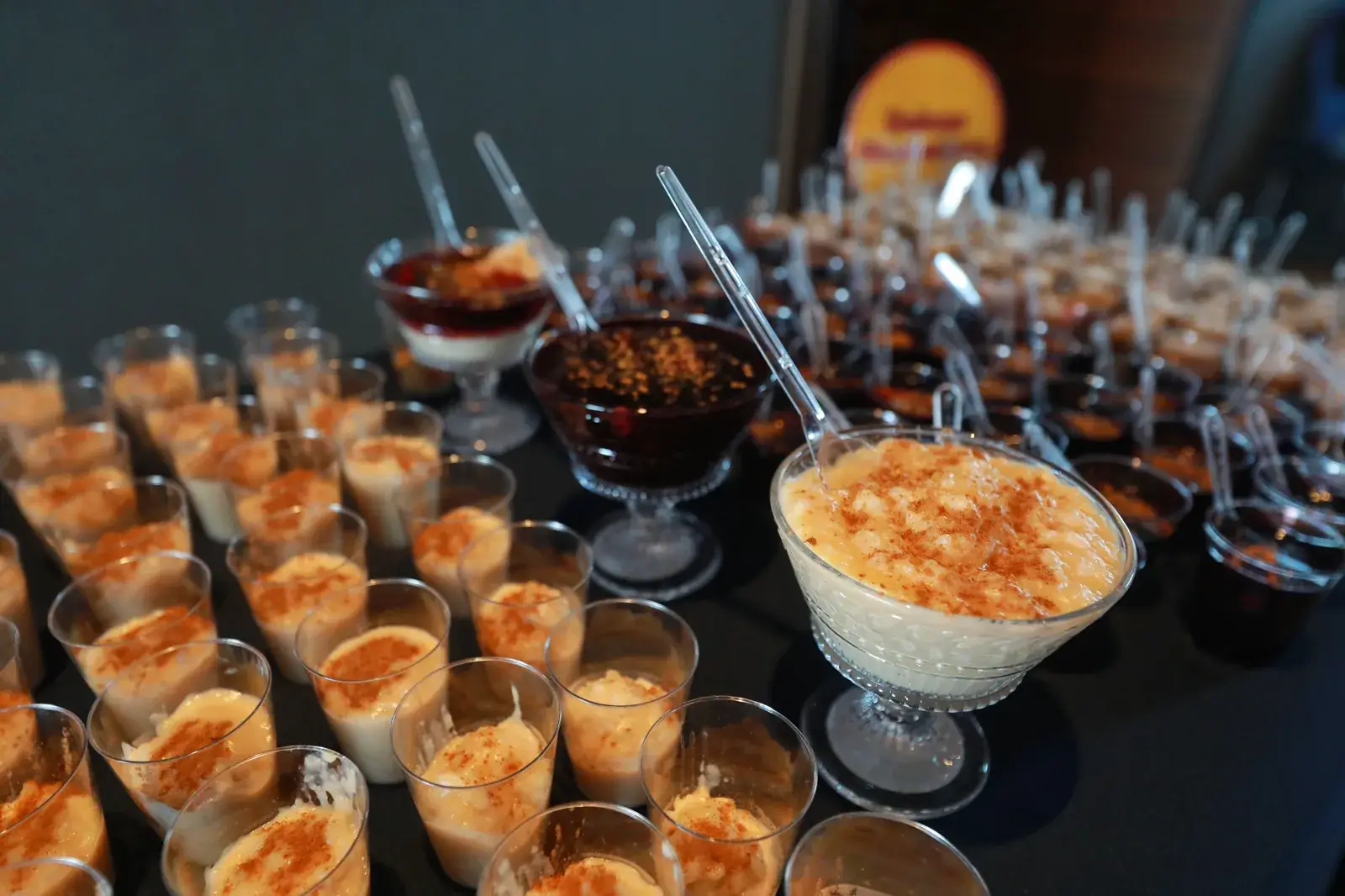
The classic Peruvian dessert is the suspiro a la limeña, a very sweet caramel custard topped with port-flavoured meringue. Beside it sit mazamorra morada, a purple-corn pudding, arroz con leche, alfajores, picarones and, in October, turrón de Doña Pepa. Most are sweet by design, so share portions and pair them with coffee.
Many desserts are served together in a single dish called a "combinado", which is the easiest way to try two at once.
Suspiro a la limeña
The suspiro a la limeña, "the Lima woman's sigh", is built in two layers. The base is a thick custard made from condensed and evaporated milk and egg yolks, sweet enough to coat a spoon. The top is a meringue whipped with a hot sugar syrup and flavoured with port, then dusted with a little cinnamon.
The contrast is the point: smooth and heavy below, light and airy above. It is usually served in a glass or small cup so that both layers appear in every spoonful. It is very sweet, and one portion between two people is often enough, especially after a main course.
Restaurants in Miraflores and across Lima offer it on dessert menus, and traditional dessert shops sell it by the cup. It is one of the dishes most often described as the capital's signature sweet, and tasting it is a good way to understand local taste, which leans towards sugar and cream.
Mazamorra morada and arroz con leche
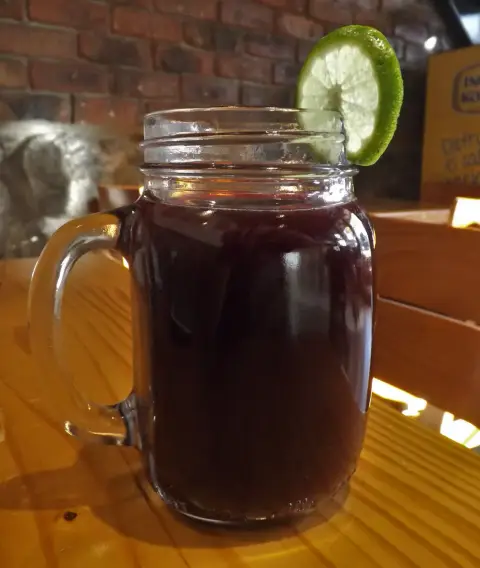
Mazamorra morada is a thick pudding made by boiling purple corn with fruit such as pineapple, quince and dried apricots, then thickening it with a starch and flavouring it with cinnamon and clove. It is deep purple, lightly sweet, and eaten warm or cold. It is the same corn used for chicha morada, described in chicha.
Arroz con leche is rice cooked slowly in milk with cinnamon, sugar and sometimes condensed milk. It is creamy and mild, closer to a rice pudding than a dessert with a strong flavour.
The two are often served in one glass, the white rice on one side and the purple pudding on the other, with a sprinkling of cinnamon. This is the combinado, and it is on the menu of many modest restaurants and street stalls. It is inexpensive, filling and a good way to try the local taste for corn in a sweet form.
Tours and activities
Bookable online, chosen for their traveller reviews.
-
★ Top rated From €52 per person
-
★ Top rated From €23 per person
-
Day trip From €38 per person
-
★ Top rated From €85 per person
Picarones and street sweets
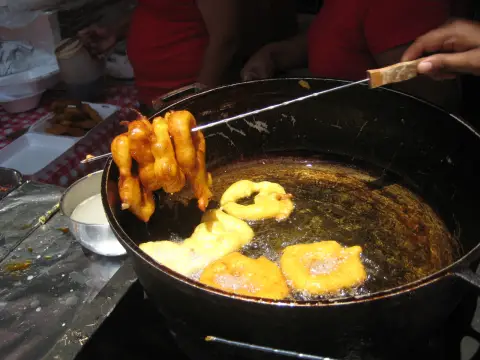
Picarones are doughnut-like rings made with squash and sweet potato, fried until crisp outside and soft inside. They arrive on a plate with a syrup called chancaca, made from unrefined cane sugar and flavoured with spices and sometimes fruit peel.
They are sold from carts and stalls, particularly in the evening and at festivals, and a portion is usually several rings. They are best eaten at once, while hot. Some vendors add extra toppings; a plain portion with syrup is the standard and the best way to judge the dessert.
Other street sweets include cocadas, small coconut sweets, sweet corn cakes and fried banana. For a wider picture of what is sold from carts and counters, read street food. Alongside these, traditional dessert shops sell trays of small cakes and puddings, and bakeries sell sweet bread and empanadas dusted with sugar.
Alfajores and king kong
The Peruvian alfajor is a pair of soft, crumbly shortbread biscuits sandwiching a thick layer of manjar blanco, a milk caramel similar to dulce de leche. The edges are often rolled in grated coconut or dusted with icing sugar. It is sold in bakeries, cafés and airport shops, and it travels well in a bag.
King kong is a northern speciality, strongly associated with the city of Lambayeque near Chiclayo. It is a pile of layered biscuit pastry filled with manjar blanco, pineapple, peanut and sweet fruit paste. A single portion is large and very rich, and it is often cut into pieces to share.
If you are travelling in the north, the region's food culture is described in food in northern Peru. Both sweets are strong in flavour and keep for days, so they work as small gifts. Check the sell-by date and store them away from heat.
Turrón de Doña Pepa and the October festival
Turrón de Doña Pepa is a layered cake of anise-flavoured biscuit sticks held together with a sticky syrup of molasses and honey, and decorated with coloured sugar sweets. It is associated with the Señor de los Milagros procession in Lima, which takes place throughout October and is among the largest religious events in the country.
During this month the turrón appears in bakeries and stalls along the procession route, and families buy it to share. It is made for the season, so it is much harder to find in other months. The story most often told is that a woman called Doña Pepa created the sweet as a thanks for a miracle, though versions differ.
Visitors in October will see purple clothing, street altars and crowds, and the sweet is part of that atmosphere. The festival calendar in festivals and holidays gives general context, and dates and routes should be checked locally.
Lúcuma ice cream and fruit flavours
Lúcuma is a fruit with dry, sweet orange flesh and a taste that sits between caramel and maple syrup. It is the most popular ice cream flavour in Peru, and it is also used in milkshakes, cakes and the filling of some alfajores. Fresh fruit is rarely seen outside the producing areas, so ice cream is the most common way to try it.
Ice cream shops offer many other flavours made from Peruvian fruit: soursop (guanábana), custard apple (chirimoya), passion fruit (maracuyá) and prickly pear. Chirimoya is especially good in season, and many of these fruits can be tried fresh in markets; see fruit juices for the drinks made from the same fruit.
Ask for a taste before you commit, as sellers are used to it. Scoops are generally inexpensive, and they are a pleasant way to cool down after a morning of sightseeing in Lima.
How to order, pair and share
Peruvian desserts are rich, so the rule is to share. Order one or two for the table and add a cup of black coffee or an infusion, which cuts the sweetness; the coffee scene is covered in Peruvian coffee. Many restaurants list a "postre del día", which is a good way to taste something seasonal.
Dessert shops and bakeries are cheaper than restaurants, and mid-range restaurants often charge more for the same dish. If you want to taste several classics in one outing, a guided session such as the ones in Lima food tours usually includes a sweet stop.
Dietary points matter. Most desserts contain milk, eggs and wheat, and suspiro uses alcohol in the meringue. Vegans and people with allergies should ask what is in each dish, and diabetic travellers should be aware that sugar levels are high. Many cafés label the contents on request.
Frequently asked questions
What is the most famous Peruvian dessert?
The suspiro a la limeña is usually named as the signature dessert of Lima, with mazamorra morada and picarones close behind. Which is the national favourite depends on region and generation.
What is manjar blanco?
It is a thick, sweet milk caramel, close to dulce de leche, made by slowly cooking milk and sugar. It fills alfajores, king kong and many pastries, and it is sold in jars in supermarkets.
Is mazamorra morada the same as chicha morada?
They come from the same purple corn and similar spices, but chicha morada is a drink and mazamorra morada is a thick pudding thickened with starch.
When can I find turrón de Doña Pepa?
Mainly in October, when it is sold for the Lima procession of the Señor de los Milagros. Outside that month it is rare, though some bakeries make it on request.
What does lúcuma taste like?
Something between caramel, maple syrup and sweet potato. The flesh is dry and starchy, which is why it is eaten as ice cream or blended with milk rather than as raw fruit.
Can vegans eat Peruvian desserts?
Few traditional desserts are vegan, because they rely on milk, eggs and manjar blanco. Fresh fruit, fruit juices, boiled sweet corn and some mazamorra are better options; ask how each dish is made.
Are Peruvian desserts very sweet?
Yes, by European standards. Share portions and take coffee or an infusion alongside.