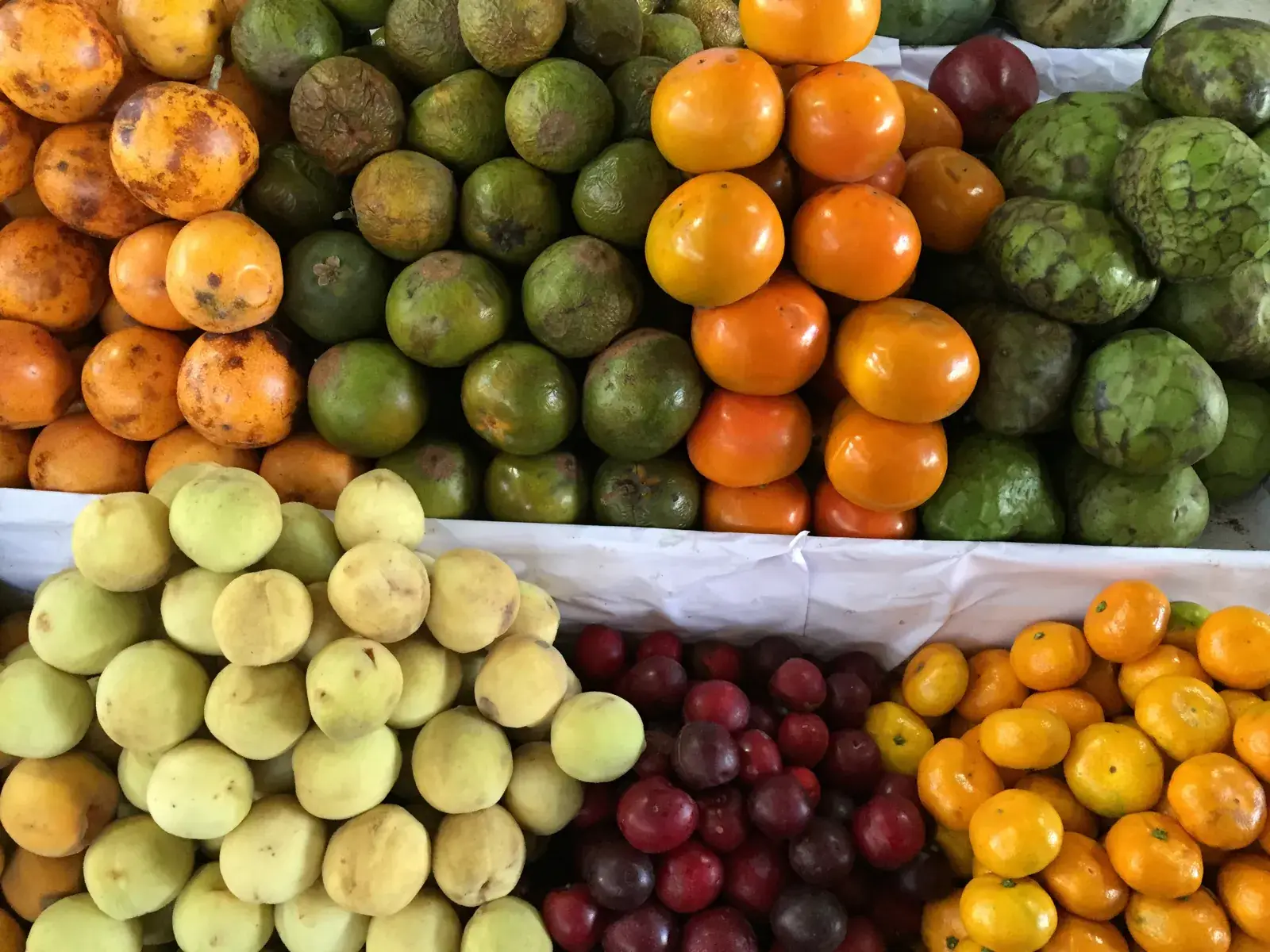
Fresh juice, "jugo", is the everyday drink in Peruvian markets and cafés, blended to order from whatever fruit is in season. The fruits you will meet most are lúcuma, chirimoya, maracuyá, granadilla and tumbo in the Andes and coast, and camu camu and aguaje in the Amazon.
Order at a busy stall, ask for the juice "sin hielo" (without ice) and "sin azúcar" if you prefer it unsweetened, and avoid any juice diluted with tap water. A glass is inexpensive and one of the best reasons to visit a market.
How juice works in a Peruvian market
In a market juice hall, rows of women sit behind counters stacked with fruit, each with a blender and a menu on a board. You sit on a stool, name the fruit, and watch it go into the blender with water or milk and sugar. A typical glass comes with a second serving of the same juice left in the jug, a custom called "la yapa", meaning a little extra.
The usual options are "jugo de" followed by the fruit, or a mix. A jugo surtido is a blend of several fruits, and a jugo especial adds extras like egg, honey, bee pollen, oats or quail egg, which locals take as a hearty breakfast. Orange juice is pressed from a hand-cranked or electric press at street carts, and papaya and banana are common bases.
Ask for water-based juice ("al agua") or milk-based ("con leche") and for sugar to be left out if you prefer. Juice stalls are covered in more detail in the San Pedro market guide.
Lúcuma and chirimoya
Lúcuma is a green-skinned fruit with dry, sweet orange flesh that tastes of maple, caramel and sweet potato. It is rarely eaten fresh, and is better known as a flavour of ice cream, milkshakes and desserts; the lúcuma milkshake, thick and creamy, is the classic way to try it. It grows in Andean valleys and some coastal areas.
Chirimoya, or custard apple, has a bumpy green skin and white, creamy, fragrant flesh with large black seeds. The flavour recalls pear, banana and vanilla. It is eaten with a spoon and also blended into a juice with milk or water. It is grown in several Andean valleys and in the north, and its season is limited, so its availability depends on the time of year.
Both fruits appear in sweet shops and in Peruvian desserts, and a scoop of each is a good first taste. Seeds in chirimoya should be removed and not eaten.
Tours and activities
Bookable online, chosen for their traveller reviews.
-
★ Top rated From €52 per person
-
★ Top rated From €23 per person
-
Day trip From €38 per person
-
★ Top rated From €85 per person
Passion fruits: maracuyá, granadilla and tumbo
Peru has several fruits in the passion-fruit family, and they are easy to mix up. Maracuyá has a wrinkled yellow-orange skin and very tart pulp, and is a common base for juice, sorbet and pisco sours made with fruit. It is often sold as a sharp, sweetened juice.
Granadilla has a smooth orange shell that cracks open to a sweet, jelly-like pulp with black seeds, eaten with a spoon or sipped from the shell. It is gentler than maracuyá and a popular snack. Tumbo, a banana passion fruit, is long, yellow and found in Andean valleys; its pulp is tart and aromatic and it is blended into juice and sorbet.
You will see all three on market stalls from the coast to the highlands. A good way to compare is to order a tasting of small glasses or to buy one of each and eat them with a spoon. Availability depends on altitude and season, and prices vary with supply.
Amazon fruits: camu camu and aguaje
Jungle markets sell fruit unseen elsewhere. Camu camu is a small, dark red berry from the Amazon floodplain with a very sour taste, noted for its vitamin C content. It is usually sold as juice, sorbet or powder, and it is too tart to eat raw.
Aguaje is the fruit of a palm tree that grows in swampy areas. It has scaly, reddish-brown skin and a yellow-orange flesh with a taste somewhere between carrot, pumpkin and cheese. It is eaten peeled, or turned into a thick drink called aguajina and into ice lollies sold in streets in Iquitos. Other jungle fruits include cocona and copoazú.
These are best found in Iquitos, Pucallpa and Puerto Maldonado, and the jungle food tradition is explored in what to eat in the Amazon. Taste small amounts first: sour fruits can upset a sensitive stomach, and some local claims about health benefits are not supported by strong evidence.
Which fruit in which region
The coast supplies mango, papaya, banana, grapes, melon and in the north, passion fruit and lime. Irrigated valleys grow figs, pomegranates and oranges, and lúcuma flavours a good part of the desserts of Lima.
The Andean valleys add chirimoya, tumbo, granadilla, prickly pear, tree tomato (tomate de árbol) and a range of berries. Highland markets have apples, pears and quince too. The Cusco area is well supplied by jungle valleys on the other side of the mountains, so a stall in Cusco can show fruit from three climates.
In the Amazon, expect camu camu, aguaje, cocona, pineapple, papaya and a good range of bananas. Seasons matter: a fruit that is abundant one month may be absent the next, and prices rise when supply drops. Ask the vendor what is "de temporada" (in season) and take their advice. For more on regional dishes, start from the food overview.
Juice, smoothies and other cold drinks
Juice differs from the jugo of a restaurant menu: in cafés, you may be given a bottled or concentrate-based version, which is cheaper and sweeter. A fresh glass is usually described as "jugo natural" or "recién exprimido".
Smoothies are called "batidos" or "licuados" and usually combine fruit with milk, ice and sugar. A "frappé" is a thicker blended drink with ice. Extra ingredients, such as oats, quinoa or maca, are sold in juice bars aimed at health-conscious customers.
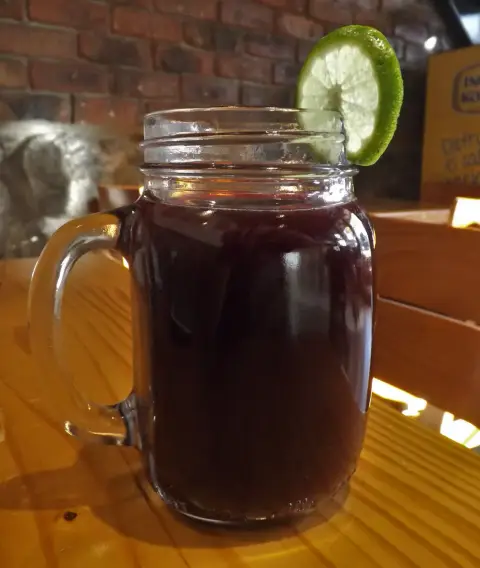
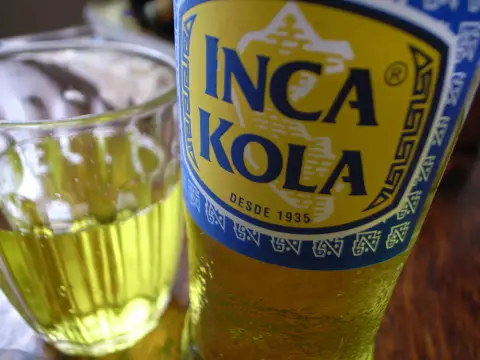
Cold drinks that are not juice include chicha morada, made from purple maize, and the sweet soda Inca Kola. Warm drinks are covered in the herbal drinks guide. Many restaurants offer a jug of fruit juice as part of a set lunch, which is the cheapest way to try the national favourites without ordering one glass at a time.
Buying fruit to eat and where to look
A market is the place to see the range at its best. Wander the fruit aisles, ask the names, and buy one of what you cannot identify; vendors often cut a slice for you to taste. Whole fruit with a thick peel, such as bananas, oranges and granadillas, is the safest to eat, since you can peel it yourself.
Supermarkets sell packaged juice and frozen pulp, which is useful for lúcuma and camu camu if you want to take the flavour home. Dried fruit, chocolate-covered berries and powders of lúcuma or camu camu are sold in markets and shops as souvenirs. Check the label for added sugar and for country import rules on fresh fruit, as most countries do not allow fresh produce through customs.
Prices vary by season and by how far a fruit has travelled. In a big city market, juice by the glass is inexpensive, and a bag of fruit is cheap by international standards.
Frequently asked questions
What is lúcuma?
A sweet Andean fruit with dry, orange flesh that tastes of maple and caramel. It is mostly used in ice cream, milkshakes and desserts.
What is camu camu?
A small, very sour red berry from the Amazon, known for its vitamin C content. It is sold as juice, sorbet and powder.
What does aguaje taste like?
The yellow-orange flesh is starchy and slightly sour, with a taste between carrot and pumpkin. It is eaten peeled or drunk as aguajina in the Amazon.
Is fresh juice safe in Peru?
Usually, if made at a busy stall with clean equipment. Ask for it without ice and check that the water used is boiled or bottled.
What is 'la yapa'?
A small extra serving, often the rest of the juice from the blender, given with the glass. It is a courtesy at many stalls.
What is the difference between maracuyá and granadilla?
Maracuyá is tart and used for juice and cocktails. Granadilla is sweeter and gelatinous, eaten with a spoon straight from the shell.
Where can I try Amazon fruits?
In markets in Iquitos, Pucallpa and Puerto Maldonado, and in juice bars in some larger cities. Seasons affect what is available.
Can I bring fruit home from Peru?
Most countries do not allow fresh fruit through customs. Dried or packaged products are easier, but check your country's import rules.