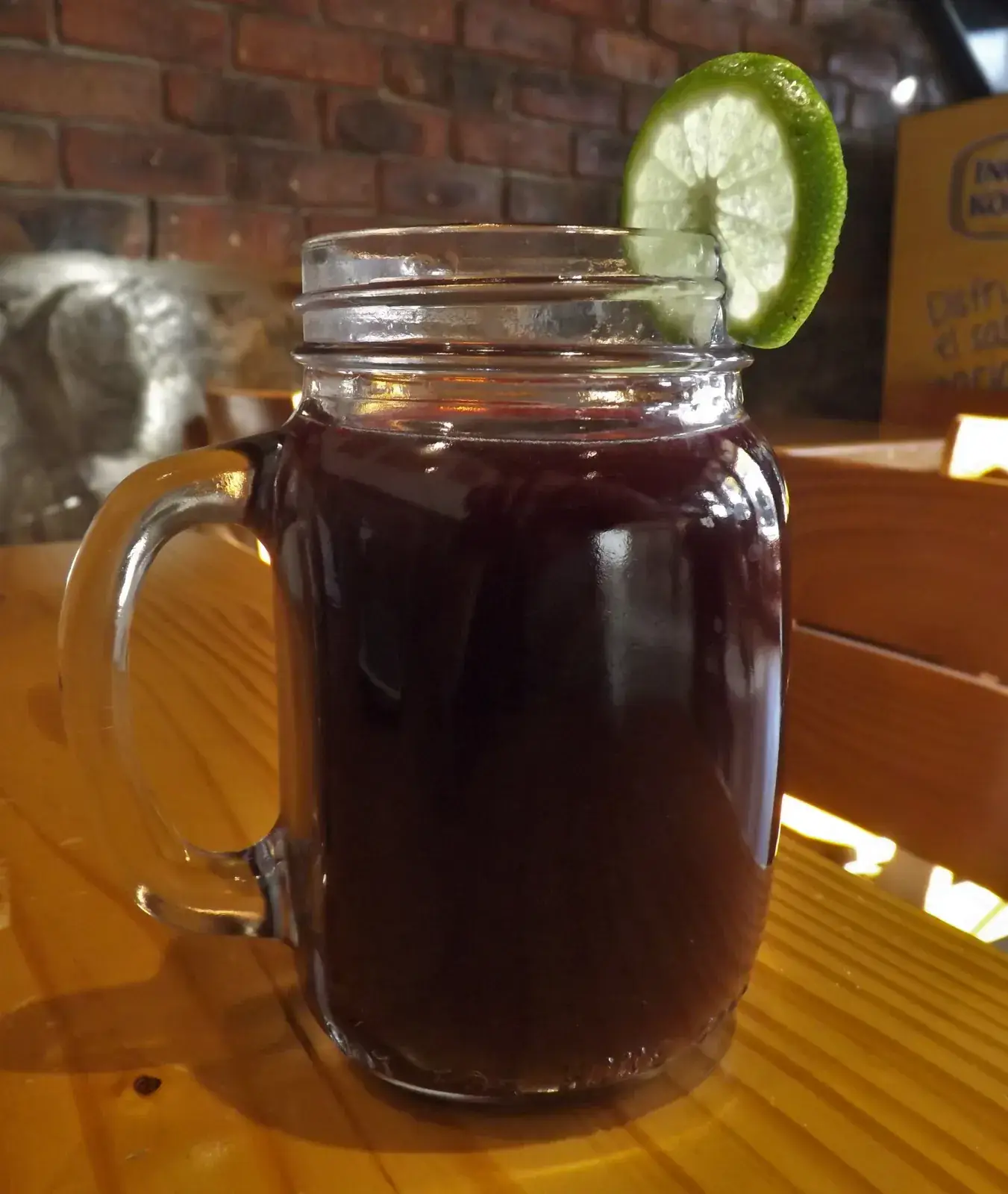
In Peru, "chicha" means two different things. Chicha morada is a sweet, spiced, non-alcoholic drink boiled from purple maize with pineapple, cinnamon and cloves, served chilled with lunch. Chicha de jora is a lightly alcoholic, cloudy beer fermented from sprouted maize, drunk in the Andes in village taverns and at festivals.
Order morada anywhere; look for jora in chicherías in the highlands, where a red flag or plastic bag on a pole outside often signals that it is on sale.
Two drinks with one name
The word comes from a term for fermented maize drinks used long before the Spanish arrived, and it has since stretched to cover more than one recipe. In daily speech a Lima waiter who offers "chicha" means chicha morada, the dark purple, non-alcoholic jug on the lunch table. In a village market in the Andes, someone selling "chicha" almost certainly means chicha de jora, which contains alcohol.
The two drinks have only maize in common. Morada is a boiled fruit-and-corn drink that is cleaned up, sweetened and chilled. Jora is a fermented beverage made without industrial equipment, with variable strength, a sour tang and a cloudy, golden-beige colour.
If you are unsure, just ask "¿es morada o de jora?" Staff will understand, and the question avoids accidentally giving alcohol to a child or ordering a sweet soft drink when you wanted something fermented.
Chicha morada: what goes in the pot
The base is purple maize, a dark, small-kernelled variety grown in the Andes, boiled with water until the liquid turns a deep violet. Pineapple peel, a cinnamon stick and cloves are added for spice, then the liquid is strained, cooled and sweetened with sugar. Lime juice is squeezed in at the end to brighten the colour and balance the flavour.
The result tastes like spiced fruit punch with a slightly earthy note from the corn. Chopped apple and pineapple are often left floating in the jug. It is served over ice at lunch, in restaurants and set-menu cafés, and in many homes it replaces soda.
The same base is used for a thick dessert, mazamorra morada, covered in the desserts guide. Packaged powder and bottled versions exist and are found in supermarkets, but a freshly boiled pot tastes brighter and less sugary.
Tours and activities
Bookable online, chosen for their traveller reviews.
-
★ Top rated From €52 per person
-
★ Top rated From €23 per person
-
Day trip From €38 per person
-
★ Top rated From €85 per person
Chicha de jora: a maize beer
To make jora, maize is soaked until it sprouts, dried, ground and boiled with water, and then the liquid is left to ferment for days in large containers. The result is a low-alcohol, slightly sour drink, sometimes sweetened with panela, a raw cane sugar. Strength is variable: it can be mild or surprisingly potent, depending on how long it has fermented.
It has been central to Andean life for centuries, linked to harvest, planting, weddings and offerings to the earth. Some drinkers pour a little on the ground before the first sip as an offering to Pachamama, the earth mother.
Jora is also the base of some regional variants, with fruit or strawberries added in Cusco, where a strawberry version called frutillada is a regional speciality. In ritual settings, a communal cup or large glass goes around the group, so be ready for the sociable side of the custom.
Where to try each one
Chicha morada is easy: it appears on set-lunch menus, at chifa and criollo restaurants, and at street stalls in Lima. Every city has it, and a jug at a market lunch is inexpensive.
For jora, head for the highlands. In the Sacred Valley and around Cusco, chicherías are traditional taverns, often marked by a red plastic bag or flag tied to a pole above the doorway, meaning that chicha is ready to drink. Many are simple courtyards with benches and plastic cups; some are specialist places visited by tour groups.
A good-value way to try both styles is through a guided tasting or market visit, and the pages on food in Cusco give more context on what to eat alongside. The traditional pairing is with fried pork, stews and cuy, in the manner of the Andean cooking described in the Andean staples guide.
What to eat with chicha
Morada is the everyday lunch partner of the Peruvian set menu, poured beside a bowl of soup, a plate of rice and a stew or fried fish. Its mild sweetness and spice suit salty, fried and creamy dishes, and it is a gentler choice than soda for children and for anyone avoiding caffeine.
Jora has a different role. In the highlands it accompanies slow, hearty food: fried pork, boiled potatoes with a chilli sauce, roast guinea pig on feast days, and plates of maize kernels. The slight sourness works like a squeeze of lime against fat, and the low strength allows people to keep drinking through a long afternoon meal.
At festivals and community work days, large clay or plastic jars of jora are filled and passed around while food is shared. If you are invited to such a gathering, accept a small cup, thank your hosts and do not feel obliged to finish it.
Etiquette in a chichería
A chichería is a social place, and a few habits help. Drinks are often served in a large glass shared among a group, or in smaller cups filled from a jug. Before drinking, some people spill a few drops on the ground, and you can copy this or simply wait quietly.
Sit down, order the drink and expect a short wait. Food is often limited: fried pork, boiled corn or a plate of potatoes with a spicy sauce, depending on the place. Payment is usually in cash, so carry small notes and coins.
Photography should be asked about, since these are everyday gathering places for locals, not stages. The cheapest and friendliest way to learn is to go with a guide or a host who knows the owner. Avoid driving or trekking afterwards, since jora is stronger than it tastes.
Chicha beyond the glass
The name has spilled into other parts of Peruvian culture. Chicha music, also called cumbia peruana, is a psychedelic mix of Andean melodies and Colombian rhythms that began in the 1960s and 1970s, and it gave its name to colourful street posters seen across Lima.
Chicha is also an ingredient: the purple maize behind morada is used in desserts and sauces, and jora corn is used in some soups and stews. In the Andes, chicha is poured at planting and harvest, and a bowl of it appears when workers finish a communal task.
Tourists most often meet the drink in the Sacred Valley around Cusco, but similar maize beers are made across the Andean countries. For a comparison with industrial brews, read the beer guide, and for a broader tour of regional cuisine start at the food overview.
Frequently asked questions
Is chicha morada alcoholic?
No. It is boiled from purple maize, fruit and spices and served cold as a soft drink, safe for children. Only chicha de jora is fermented.
How strong is chicha de jora?
It is usually weaker than beer, but strength varies with fermentation time and the batch. Treat it with respect, especially at altitude.
What does chicha de jora taste like?
Slightly sour and cloudy, with a cereal and sometimes fruity flavour, and little carbonation. Many first-time drinkers find it an acquired taste.
What is a chichería?
A traditional tavern that sells chicha de jora, often a simple courtyard or room with benches. A coloured flag or plastic bag on a pole outside signals fresh chicha is available.
Can I make chicha morada at home?
Yes. Purple maize can be bought dried in Peruvian and Latin American shops, and the recipe is boiling, straining and sweetening. Pineapple peel, cinnamon, cloves and lime give the classic taste.
Is chicha safe for travellers?
Morada from restaurants is generally safe. Jora from informal places is a risk for sensitive stomachs, so choose busy, clean-looking venues and drink in moderation.
Why is chicha spilled on the ground?
It is an offering to Pachamama, the earth, practised in many Andean communities before drinking. You can copy it or just wait politely.