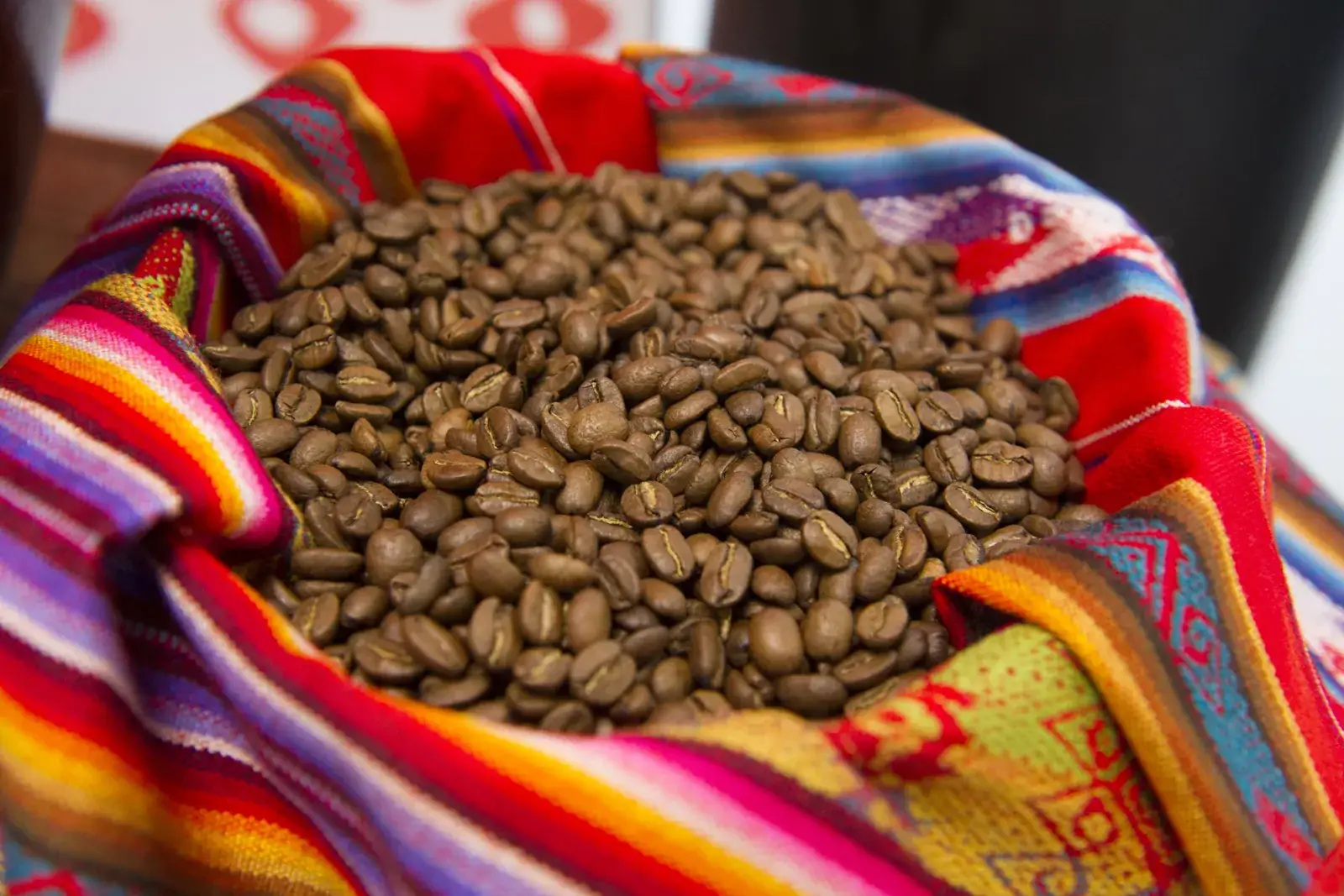
Peru grows mostly arabica coffee on small farms in the Andean foothills and cloud forest, in regions including Cusco, Junín, Cajamarca, Amazonas, San Martín and Puno. Much of it is exported, and a large share is organic or sold through cooperatives.
In Peru itself, coffee is served in two ways: as a concentrated essence mixed with hot water or milk at home and in cheap cafés, and as espresso drinks in specialty cafés in Lima, Cusco and Arequipa. To take some home, buy sealed bags with a roast date, ideally directly from a cooperative or a roaster.
Where Peruvian coffee grows
Coffee is grown on the eastern slopes of the Andes, at altitudes that give slow-ripening beans and bright acidity. The main areas are the Cusco region, especially its jungle valleys such as La Convención; Junín and the Chanchamayo area; Cajamarca and Amazonas in the north; San Martín; and the Puno highlands near the Bolivian border.
Each area has its own character, though flavours vary by farm and by harvest. Northern coffees are often described as sweet and fruity, and southern ones as more floral or citrus-led. Treat such descriptions as general tendencies, and ask a roaster for the actual notes of a bag.
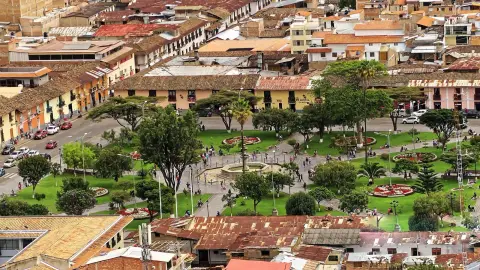
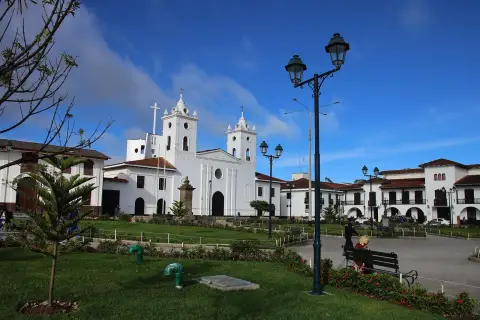
Most farms are small, growing coffee next to bananas, citrus and other crops under shade trees. The harvest generally falls in the drier months, roughly between April and September depending on altitude, and beans are dried on patios or raised beds. For a sense of the northern highlands where coffee is grown, see Cajamarca and Chachapoyas.
Varieties and processing
Most Peruvian coffee is arabica, in traditional varieties such as Typica, Caturra and Bourbon, with newer disease-resistant types planted as well. These are the same families grown across Latin America, so the character comes from altitude, soil and processing more than from exotic plants.
Beans are normally washed: the fruit is removed, the seed fermented and rinsed, then dried. Natural and honey processes, where the fruit stays on during drying, are increasingly used by specialty producers and give a sweeter, fruitier cup.
A large part of the crop is certified organic, and many farmers belong to cooperatives that pool harvests and negotiate prices. Fluctuations in world prices, plant disease and weather have hurt growers in recent years, so buying from a reputable source helps the people behind the bag. Grades and certifications change, so check the label rather than relying on a general claim.
Tours and activities
Bookable online, chosen for their traveller reviews.
-
★ Top rated From €52 per person
-
★ Top rated From €23 per person
-
Day trip From €38 per person
-
★ Top rated From €85 per person
How coffee is served in Peru
Walk into a traditional restaurant or a market breakfast stall and you may be offered coffee in a surprising form: a small jug of dark concentrate, known as "esencia" or "café pasado", and a pot of hot water or milk to dilute it yourself. The method is old and cheap, and it gives a strong, sometimes bitter drink that many Peruvians like with sugar.
Instant coffee is also common in budget places, so do not assume that a plain "café" will be freshly brewed. If you want filtered or espresso coffee, ask for "café americano", "café filtrado" or "espresso" in a café that has a machine.
In specialty cafés, the menu is familiar: espresso, flat white, cappuccino, filter coffee and cold brew. Milk is usually dairy, and plant milks are offered in tourist-oriented places. A morning "café con leche" with bread and butter or a filled roll is the classic Peruvian breakfast.
Specialty cafés in the cities
The speciality scene has grown steadily in Lima, Cusco and Arequipa, where cafés roast or source beans from named farms and serve them as espresso, filter, siphon or cold brew. Some cafés run cuppings and short tastings, and baristas are often happy to explain where the beans come from.
In Cusco, cafés near the main squares draw many visitors, and prices are higher in the busiest streets than a few blocks away. In Lima, the districts of Barranco and Miraflores hold many cafés and small roasters.
Opening hours, menus and names change often, so check recent reviews rather than trusting a printed list. A good test of quality is whether the café can tell you the region and altitude of its beans and the roast date. Cakes and sandwiches are usually on offer, and a stop can double as a light lunch or a place to work for an hour.
Visiting a coffee farm
Some producers and cooperatives welcome visitors, especially in the Cusco jungle valleys and the Amazonas and Cajamarca regions. A visit usually covers the plants, picking in season, washing and drying, and a cup of freshly roasted coffee at the end.
Such tours are arranged through lodges, community tourism projects or agencies, and the details differ widely. Ask what is included, how far the farm is from the road, whether transport is arranged and how much of the fee reaches the farmers. Roads in coffee country can be rough and are affected by the rainy season, roughly November to March.
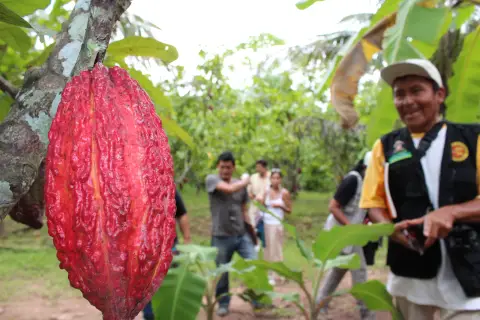
A visit gives you a better sense of how much work lies behind a cup, and many farms sell roasted beans directly. If you are interested in how crops connect to community income, see responsible travel in Peru. Cacao is grown in similar landscapes, and the chocolate guide describes it.
Buying beans to take home
Coffee makes a good gift because it is light and keeps well when sealed. Buy whole beans rather than ground, look for a recent roast date instead of a long expiry date, and prefer bags that state the region, the variety and the producer or cooperative.
Specialty cafés and roasters sell bags of single-origin beans, while markets and supermarkets sell cheaper blends. Packs with a valve keep the coffee fresher in luggage. Avoid heavily dark roasts if you want to taste the origin, and avoid buying large quantities that will go stale.
Check the rules at home: some countries restrict plant products, and roasted coffee is usually allowed in a sealed pack, though customs rules can change. For other gifts that travel well, see souvenirs in Peru. Buying at a café or directly from a cooperative generally returns more money to growers than a tourist shop.
Fair-trade labels or buying direct
Two ideas are often confused. Fair trade is a certification: a farmer group meets standards and receives a guaranteed minimum price and a premium. A cooperative is an organisation of farmers who pool and sell their crop together, which may or may not carry the certification.
For a shopper, a certification label is a quick sign, but it does not tell you about taste or how much the farmer received from your particular bag. Buying from a cooperative shop, a small roaster that names its farms, or a café that shares prices paid to growers gives more detail.
Marketing language can be vague, so ask specific questions: which farm, which cooperative, what harvest year. If the seller cannot answer, the label may be decoration. Remember that a fair price for the farmer and a good cup are separate questions, and both are worth asking about. Other food products with similar questions include chocolate and cacao.
Frequently asked questions
Is Peruvian coffee good?
Yes, particularly from high-altitude farms. Quality varies by farm and roast, and specialty cafés in Lima, Cusco and Arequipa show the best of it.
Which region has the best coffee?
There is no single best. Cusco, Junín, Cajamarca, Amazonas and Puno all produce well-regarded coffee, with different flavour profiles. Try several and compare.
Why is coffee in Peruvian restaurants sometimes weak or instant?
Traditional cafés often serve concentrate or instant coffee with hot water or milk. For brewed coffee, ask for filter or espresso, or go to a specialty café.
Is Peruvian coffee organic?
A large share of exports is certified organic, though not every bag is. Check the label, and ask the seller for details.
Can I take coffee home from Peru?
Roasted beans in sealed packs are usually allowed, but rules vary by country. Check your customs regulations before you travel.
When is the coffee harvest in Peru?
Generally from about April to September, depending on altitude and region. Harvest times vary between farms.
Does coffee help with altitude?
Coffee can mildly dehydrate and may worsen sleep, so drink water alongside it. It is not a cure for altitude symptoms, which are covered in the altitude guide.