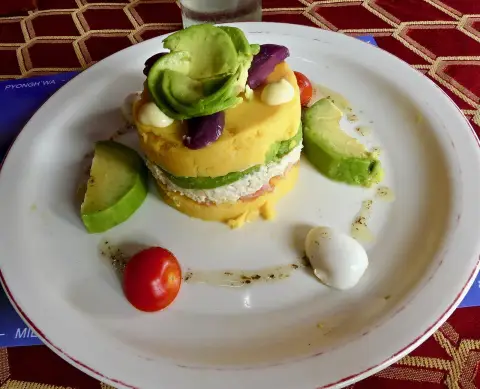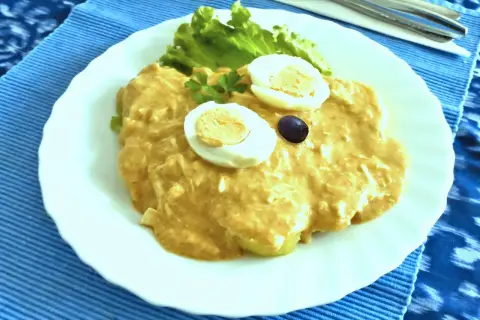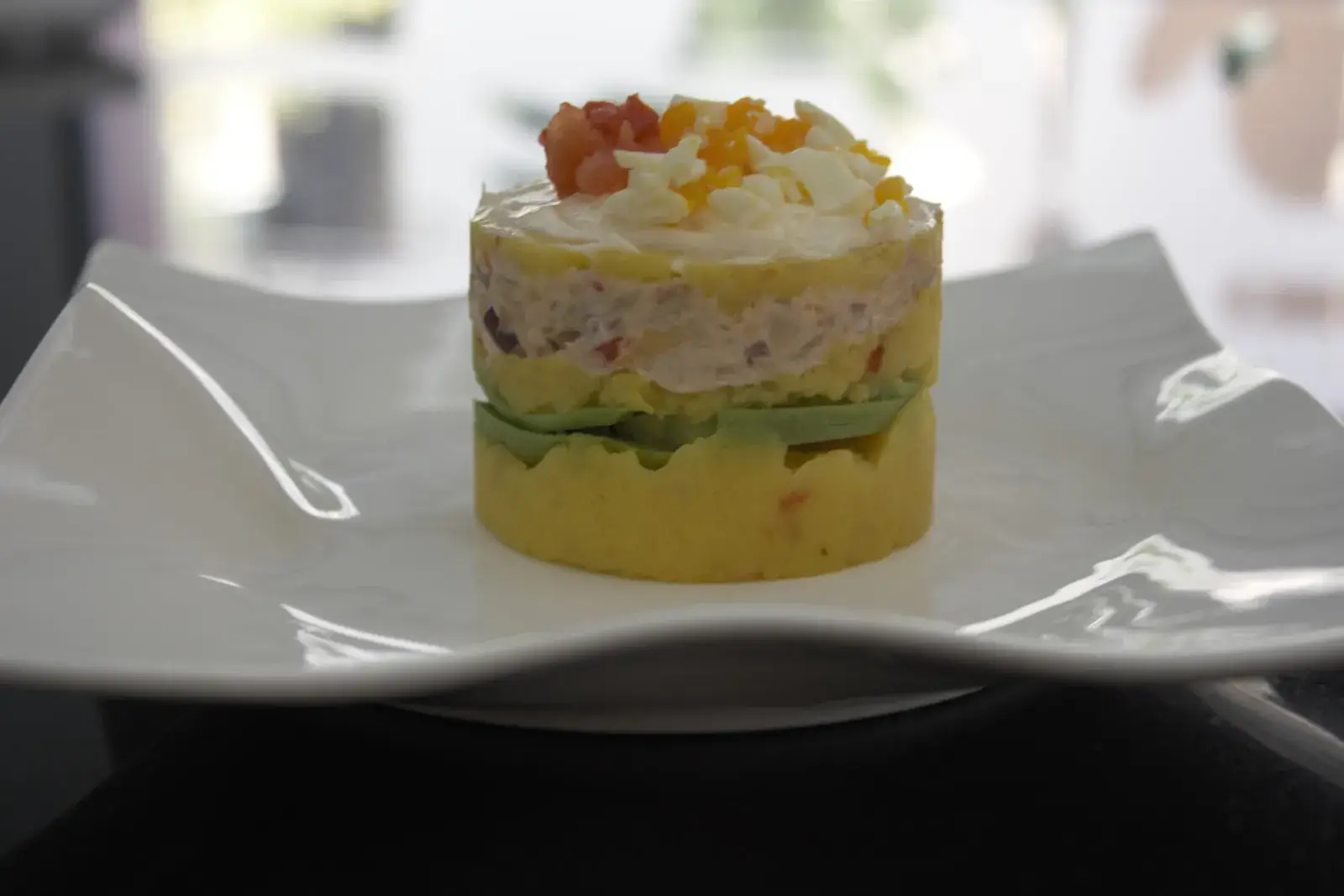
Causa limeña is a cold terrine of yellow potato mashed with lime and chilli paste, layered with a filling such as chicken or tuna salad, avocado and mayonnaise. Papa a la huancaína is boiled potato covered in a yellow sauce of fresh cheese, milk and yellow chilli. Both are served cold as starters, usually with olives and egg, and both are inexpensive and easy to order.
Each can be made without meat, which makes them useful for vegetarians, though the sauce and fillings should be checked.
Two potato starters, one table
Causa and huancaína share the same basic idea: Peru's yellow potatoes, soft and almost buttery, dressed with chilli and served cold. They appear together on the starter list of almost every restaurant that serves traditional food, and both are filling enough that two people often split one as a light lunch.
The difference lies in the way the potato is treated. In causa it is mashed into a smooth dough and shaped; in huancaína it stays in slices and is covered with a sauce. The colours are similar, a bright yellow that comes from the potato and the chilli, so a plate with both looks like a study in one hue.
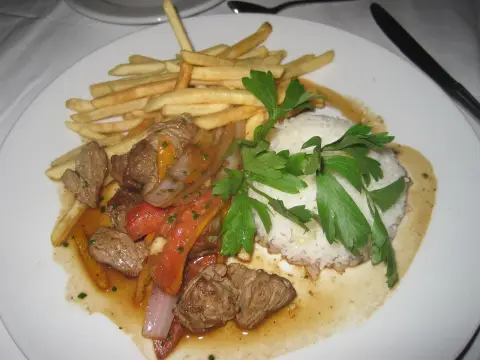
Because they are cold, they are safe for a first meal at altitude, when heavy fried food can sit badly. For other dishes that mix potato with chilli, see ají de gallina, and for a main course that goes with either starter, read lomo saltado.
What causa is and how it is made
Causa is made from boiled yellow potato, usually the variety called Peruana or amarilla, mashed while warm with oil, lime juice and ají amarillo paste until it is smooth and pliable. The dough is then pressed in a mould in layers, with a filling in the middle: shredded chicken in mayonnaise, tuna, crab or prawns, with slices of avocado between the layers.
It is turned out and decorated with boiled egg, black olive, a spoonful of mayonnaise and sometimes slices of tomato or herbs. The flavour is fresh and sharp from the lime and mildly hot from the chilli. The texture is dense but light, because the potato is mashed rather than puréed.
Presentation varies from a single tall cylinder to a long rectangle cut into slices, or a flat roll. Restaurants often decorate it with colour contrasts, using purple potato or beetroot for part of the dough. The same recipe works with vegetables only, which makes it a flexible dish for different diets.
Tours and activities
Bookable online, chosen for their traveller reviews.
-
★ Top rated From €52 per person
-
★ Top rated From €23 per person
-
Day trip From €38 per person
-
★ Top rated From €85 per person
Where causa comes from
Causa is linked to Lima, and the name "causa limeña" shows this. The most commonly told story says that the word comes from the Quechua kausay, meaning life or sustenance, and that the dish was a way to use potato and chilli. A second tale traces the name to the independence era, when women are said to have sold the dish to raise money "for the cause" of the revolutionary army.
Neither story is certain, and food historians treat both as tradition rather than proof. What is clear is that potato and chilli have been used together in the Andes for centuries, and that the layered form with seafood or chicken is a coastal development.
Today causa is a symbol of Lima's food culture, and it features on the menus of both neighbourhood restaurants and modern ones in districts such as Miraflores. For a wider look at how coastal cooking developed, see what to eat in Lima.
Papa a la huancaína
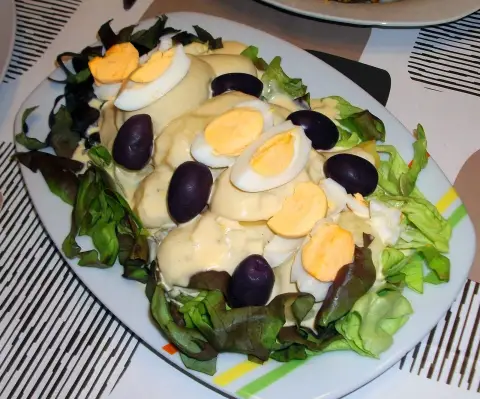
Papa a la huancaína consists of boiled potatoes sliced and laid on a lettuce leaf, covered with a smooth yellow sauce. The sauce is blended from fresh white cheese, evaporated milk, ají amarillo, oil and a few crackers or bread to thicken it. It is creamy, savoury and moderately spicy.
The usual garnish is half a boiled egg, a black olive and sometimes a few leaves of lettuce. The potatoes may be cold or just warm, and the sauce is always cold. A good huancaína has a vivid yellow colour and does not taste of raw flour or too much salt.
The name suggests Huancayo, the highland city in the central Andes. A common explanation is that the dish was served to workers building the railway to Huancayo in the nineteenth century, though this is only one of several versions. Whatever its origin, it is eaten across the country, and it is cheap enough to be a starter in modest places.
Variants you may see
Causa has many variants. Chicken is the classic filling, but menus in Lima also offer tuna, crab, octopus in olive sauce, prawns, smoked trout or slices of cooked beef. Modern chefs tint the dough with purple potato, beetroot or ají panca, and top it with sea urchin, ceviche or raw fish.
Huancaína appears in other forms as well. It is poured over pasta as "tallarines a la huancaína", over cooked meat, or served as a dip with fried yuca. The sauce also accompanies rice dishes in simple restaurants. In the highlands, a boiled potato with huancaína sauce is common, and cheese varies by region, so the flavour changes.
Both preparations turn up on the "entradas" section of the menu next to ceviche, and ordering one of each to share is a good way to compare the range of tastes. Prices differ, with seafood versions costing more than chicken or vegetable ones.
Ordering as starters
Both dishes belong in the "entradas" section of the menu, and they are meant to be eaten at the start of a meal, with a drink and before the main course. Portions are generous: a causa slice is about the size of a small cake, and huancaína often arrives with three or four potatoes. For two people, one of each is a sensible order before a shared main.
Say which filling you want, because the default is usually chicken. Ask for the dressing on the side if you dislike mayonnaise. For a light meal, causa with avocado and a glass of lemonade is enough.
The dishes also work at lunch counters, where a set menu may begin with a small portion. Prices are generally modest, though restaurants in tourist areas charge noticeably more than neighbourhood places. Eating them cold also means they carry less risk than hot food that has sat, but check that the mayonnaise-based fillings have been kept chilled.
Vegetarian and allergy notes
Causa can be vegetarian if the filling is avocado, vegetables or cheese, and if the mayonnaise is acceptable to you. Ask "¿tiene carne o pescado?" and check whether the dough has been seasoned with fish stock, which is rare but possible. Vegans should note that mayonnaise contains egg.
Huancaína contains dairy by definition, and traditional recipes often use crackers that contain wheat and milk. Some kitchens use a fish stock or chicken cube in the sauce, so strict vegetarians should ask. Egg and olive are garnishes and can be left off.
Peanuts are not part of the sauce, but they are used elsewhere in the cuisine, and cross-contact is possible. People with allergies should explain clearly and, if in doubt, choose a simpler dish. A fuller guide for plant-based eaters is in vegetarian food in Peru, and the Andean potato background is in Andean staples.
Frequently asked questions
Is causa served hot or cold?
Cold. It is a chilled potato terrine and is served as a starter, sometimes straight from the refrigerator. The filling is also cold.
Is papa a la huancaína spicy?
Mildly to moderately. The heat comes from ají amarillo, which is fruity rather than fierce. Ask for the sauce on the side if you are sensitive.
Can vegetarians eat causa?
Yes, with an avocado, vegetable or cheese filling. Check that the mayonnaise and dough contain no fish or stock, and note that vegans should avoid mayonnaise.
What potato is used for causa?
Yellow potatoes, such as the amarilla or Peruana varieties, give the buttery texture and colour. Other varieties are used for coloured layers.
Why is it called huancaína?
The name points to Huancayo in the central highlands. One common story links it to the railway, but the exact origin is not settled.
Can I make causa at home?
Yes. Cooking classes in Lima often include it, and the main ingredients are potatoes, lime, chilli paste and a filling. Yellow chilli paste can be bought in jars in many countries.
Are these dishes safe for first-time visitors?
Generally yes. They are cold and made from cooked ingredients, but eat them at reputable places where mayonnaise fillings are kept chilled.
What drink goes well with causa?
A pisco sour, chilcano or a lemonade suits the lime and chilli. See pisco for details.