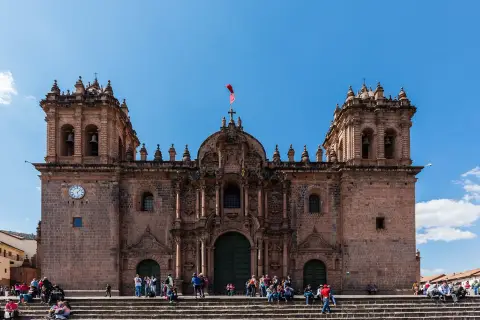
Cusco Cathedral, officially the Cathedral Basilica of the Assumption of the Virgin, is the main church of the city and holds one of the richest collections of colonial art in Peru. It was built between the sixteenth and seventeenth centuries on the site of an Inca palace. Allow about an hour inside, mainly for the Cusco School paintings, the carved wooden altars and the Last Supper in which the main dish is a guinea pig.
It is a working church with its own ticket and rules, so check the current arrangements before you go.
Map
A complex of churches, not a single building
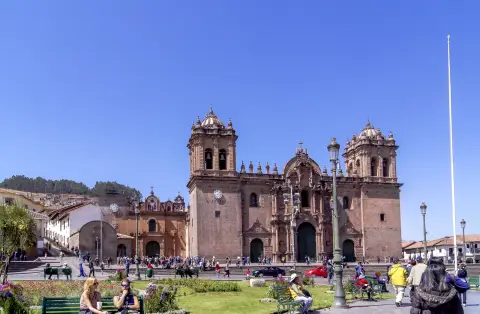
The Cathedral Basilica of the Assumption of the Virgin occupies the north-east side of the main square, and the whole complex covers roughly 3,920 square metres. What visitors call the cathedral is really a group of connected churches. The largest is the cathedral proper, flanked by the older Church of El Triunfo on one side and a smaller chapel, usually named Jesús, María y José, on the other.
This page goes into the building and its contents. For the square around it, the evening lighting and the neighbouring Jesuit church, see the page on the Plaza de Armas.
The cathedral is the seat of the Archdiocese of Cusco and received the title of basilica in 1928. It is also part of the historic centre of Cusco, which UNESCO inscribed as a World Heritage Site in 1983. Because it is an active place of worship, the experience changes with the day: during services the nave is for the congregation, and tourists are asked to wait or come back.
The Inca palace underneath
The Spanish chose this spot deliberately. Before the conquest it held Kiswarkancha, a palace associated with the Inca ruler Viracocha, and the neighbouring Suntur Wasi, described as a building connected with arms and ceremony. The Spanish pulled down the Inca structures and used the ground, and much of the stone, for their own church.
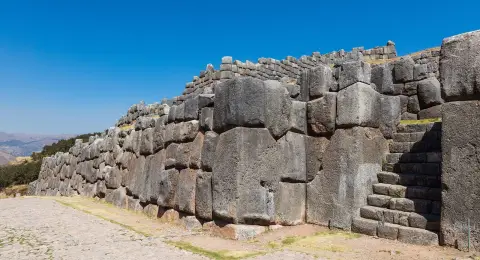
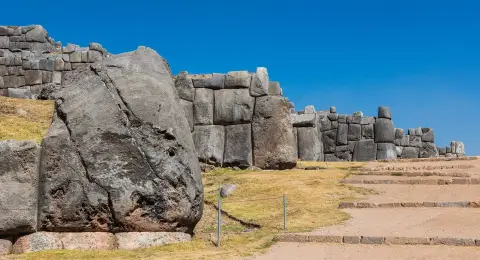
A frequently repeated detail is that large blocks were hauled down from the fortress of Sacsayhuamán above the city and reused here. Wikipedia mentions it, and it fits the wider story of the fortress being used as a quarry, but treat the exact amount as an estimate rather than a measured fact.
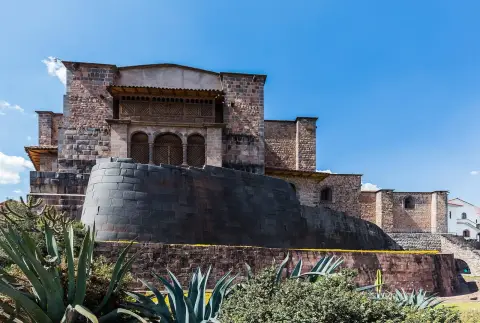
The pattern of building a Catholic church on top of an Inca one is not unique to this site. The Qorikancha, a few minutes on foot, is the clearest example, with the convent of Santo Domingo standing on the Inca temple walls. Seeing both in one day makes the layering of the city very easy to understand.
Tours and activities
Bookable online, chosen for their traveller reviews.
-
★ Top rated From €23 per person
-
★ Top rated From €22 per person
-
★ Top rated From €23 per person
-
★ Top rated From €17 per person
Ninety-five years of building
Construction began around 1559 and the first mass was celebrated in 1654, so the cathedral took almost a century to finish. The work passed through several master builders, and it was paused while the viceroy Francisco de Toledo was in the region in the early 1570s. The church was consecrated in 1668.
The most dramatic interruption was the earthquake of 1650, which brought down part of the vaulting and led to changes in the upper facade, including the removal of the third stage of the towers. Cusco sits in an active seismic zone, and almost every colonial building here has been repaired more than once.
The result is a building in mixed styles. The plan is that of a three-aisled basilica with late Gothic ribbed vaults, while the facade and decoration carry Renaissance, Plateresque and Baroque features. Seen from the square, the dark andesite stone and the two towers look severe, but the inside is much warmer in tone, with gilded woodwork and silver lamps catching the light.
Inside the nave
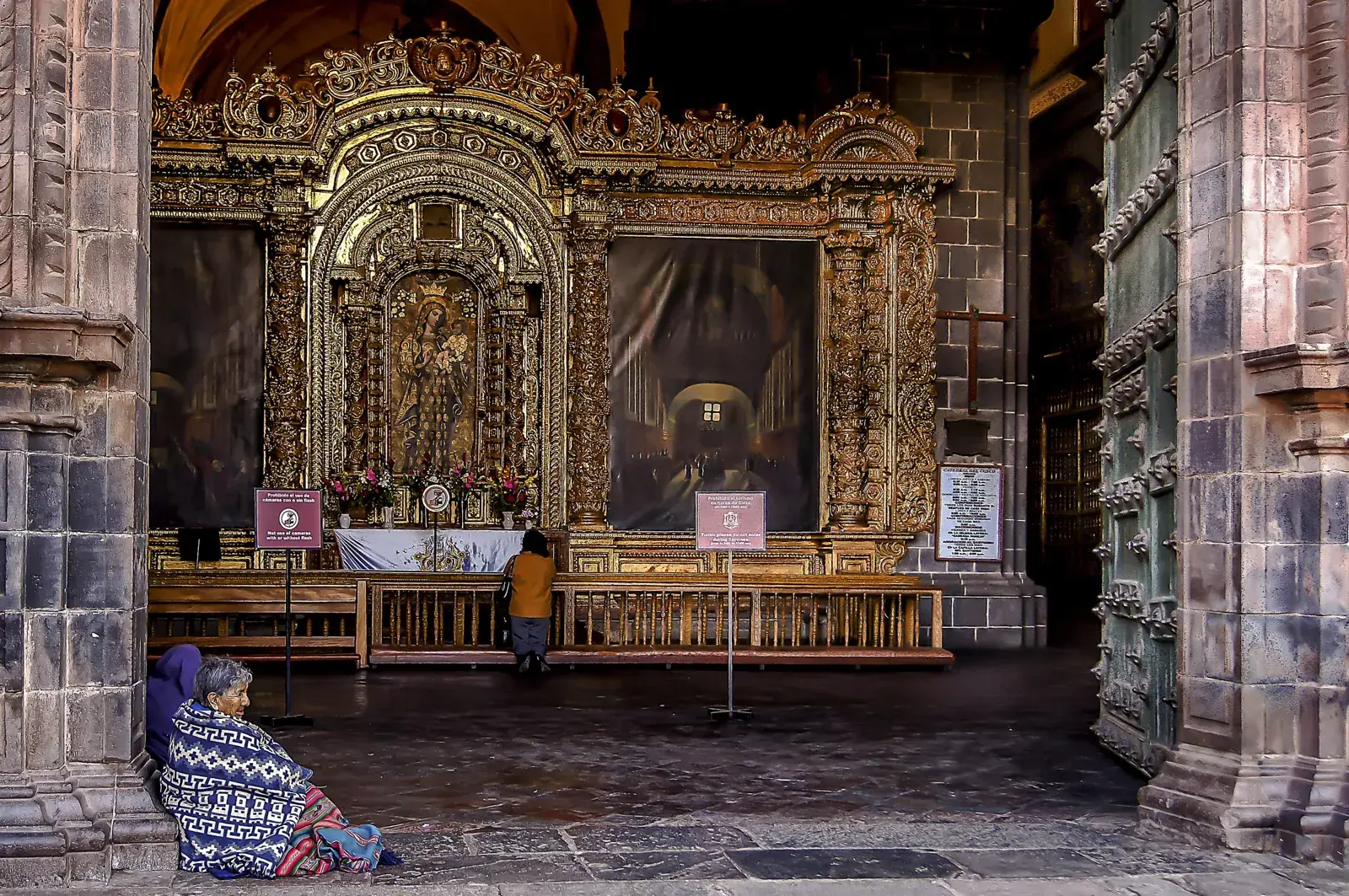
Once through the doors, the first impression is height and gloom. The nave is carried by fourteen cruciform pillars supporting twenty-four rib vaults, and the stone is plain until it meets the carved timber. The choir stalls, the pulpit and the side altars are the best examples of colonial woodcarving in the city, and the main altarpiece is covered in decoration.
Look for details that show local hands at work. A carved jaguar head, an Inca sacred motif, is recorded on the doors, and many paintings and sculptures include Andean flowers, fruit and costume that would not appear in a European church. The cathedral also keeps a late-Gothic image of the Virgin on one of its altars, which is a good reminder that the church was supplied with objects from Spain as well as made locally.
Take your time. The side chapels hold a lot of small things that are easy to pass, and the lighting inside is low, so allow your eyes a few minutes to adjust before judging a painting.
Cusco School paintings and the guinea pig
The cathedral is probably best known for its collection of Cusco School paintings, produced by Indigenous and mestizo painters in the colonial period. A well-documented example is a set of canvases on the parables of Christ by Diego Quispe Tito, one of the leading names of the school, dated to 1681, although the series is no longer complete.
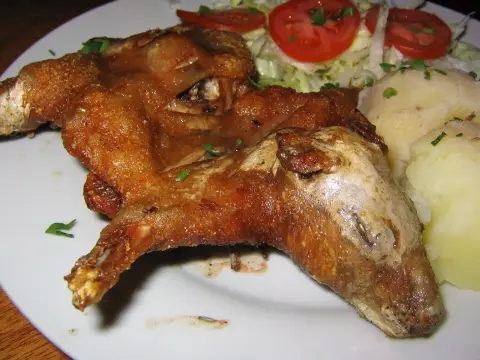
The painting that draws the crowds is the Last Supper attributed to Marcos Zapata, a Cusco-born painter active in the eighteenth century, and usually dated to 1753. The table carries not only bread and wine but also Andean foods, and the central dish is a roast cuy, the guinea pig that is still a festive meal in the highlands. Art historians read it as a deliberate blending of Christian imagery and Andean food culture, rather than as a joke.
If you want to know what the dish tastes like and how it is served, see cuy and what to eat in Cusco. Ask the staff where the painting currently hangs, since works can be moved.
The Lord of the Earthquakes
One of the most revered objects in the cathedral is the Señor de los Temblores, the Lord of the Earthquakes. It is a crucifix venerated by the people of Cusco, and it is linked to the earthquake of 1650, which is also the subject of a seventeenth-century painting kept in the cathedral that shows the city during the disaster.
The tradition is that the figure was carried out into the streets during the quake and the shaking subsided. Whatever one makes of the story, the devotion is genuine: on Monday of Holy Week a procession with the image is held and the square fills with worshippers, and for many local people it is the most important event of the church year.
If your trip overlaps with Holy Week, expect crowds, closed streets and limited access to the church. Read festivals and holidays for how to plan around events of this kind, and book accommodation well ahead.
The Church of El Triunfo
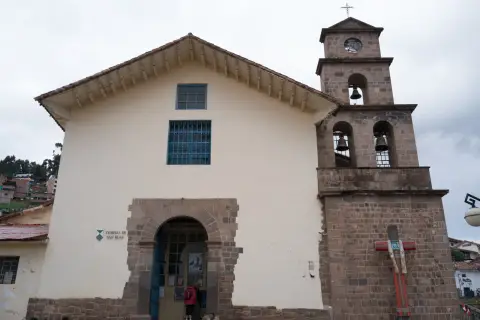
The Church of El Triunfo, built from 1538, is the oldest part of the complex and was the first Christian church in the city. It stands on the side of the cathedral, and its name, the Triumph, refers to a Spanish victory in the siege of Cusco, which tradition credits to the intervention of Saint James.
For visitors, El Triunfo is a quieter space than the main nave, and it helps to see it first because it shows how the early colonial church was smaller and plainer. Its altar and the sculpted facade are worth a look from the square even if you do not enter.
Depending on the ticket arrangement, the chapels may or may not be included in the visit, so ask at the ticket desk which parts are open on the day. Some chapels are reserved for worship and may be closed to sightseeing.
Visiting: time, tickets, behaviour
Allow about an hour for the interior if you read the paintings and look at the side chapels, or about 30 to 40 minutes for a quick circuit. Tickets, opening hours and the entrance used by visitors have all changed over the years, so check them on the day. Audio guides or guides may be offered at the entrance, but agree any price in advance.
The inside is a church, so dress modestly, speak quietly and do not walk through when a service is in progress. Photography rules in Cusco churches are strict and often forbid cameras, or at least flash, so look for signs at the door. See etiquette for general guidance on behaviour at religious sites.
Mornings tend to be quieter than the middle of the day, when tour groups arrive together. The cathedral stands at about 3,400 m, but the visit is flat and slow, so it is a sensible activity for your first day. Pair it with things to do in Cusco, and read about altitude sickness if you have just arrived.
Where to sleep
-
Find hotels
Plaza de Armas and historic centre
Everything on foot, at the price of noise and crowds
-
Find hotels
San Blas
Artisans' quarter with steep lanes and views, a short walk uphill
-
Find hotels
All of Cusco
Compare every area and price level in one search
Frequently asked questions
Is Cusco Cathedral worth paying to enter?
Yes, for anyone interested in colonial art. The collection of Cusco School paintings, the carved altars and the Last Supper with guinea pig are not found together anywhere else in the city. If you only want the exterior, the facade can be admired for free from the square.
How long does a visit to Cusco Cathedral take?
About an hour is enough for a careful visit. A quick walk through takes half an hour, but the side chapels and paintings reward slower looking, and the light inside is dim.
Where is the Last Supper with a guinea pig?
It hangs inside the cathedral and is attributed to Marcos Zapata, usually dated to 1753. Its position can change, so ask the staff when you enter. For the dish itself, see cuy.
Can I take photos inside Cusco Cathedral?
Rules on photography have been restrictive and have changed over time, and signs at the door state what is allowed. Often cameras or flash are banned, so follow the signs and any instruction from staff.
What is the difference between the cathedral and La Compañía?
They face each other across the corner of the square but are separate churches. The cathedral is the main church of the archdiocese, begun in the sixteenth century, while La Compañía is the Jesuit church built later. The Plaza de Armas page covers the latter.
Is the cathedral open during services and Holy Week?
Access for sightseeing is limited during services, and visitors are asked not to walk around while mass is held. During Holy Week and other religious dates the church is crowded and arrangements change, so plan another day for a calm visit.
What should I see after the cathedral?
The Qorikancha is a short walk away and shows the Inca stonework that the colonial church replaced. For a gentle uphill walk, continue to San Blas once you have adapted to the altitude.