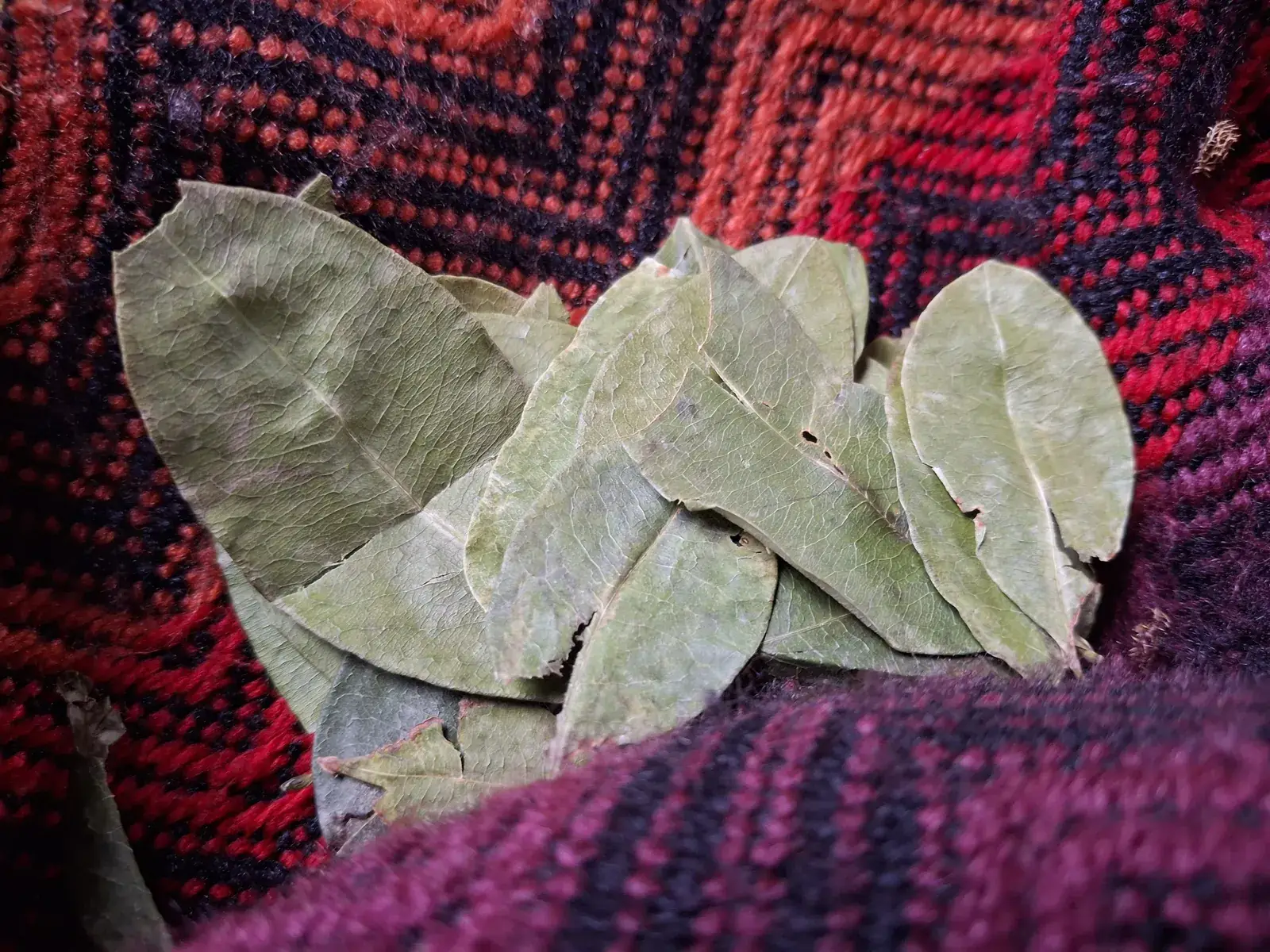
The coca leaf is a sacred and everyday plant in the Andes, chewed, drunk as tea and offered to the mountains. It is not cocaine. In Peru, drinking mate de coca and chewing the leaf are legal and widely offered, including in hotels at Cusco and Puno. Many visitors find it a mild comfort at altitude, though scientific evidence that it prevents altitude sickness is limited.
Taking coca leaves or tea bags out of Peru is a different matter: most countries treat them as controlled substances, and they can cause trouble at borders and in drug tests.
Coca is not cocaine
The coca bush (Erythroxylum coca) grows on the eastern slopes of the Andes. The leaf contains small amounts of alkaloids, including cocaine, at a concentration far below that of the refined drug, which is made by chemical processing that has no place in traditional use. Chewing or drinking the leaf produces a mild stimulant effect, similar to strong tea, and a feeling of reduced hunger and fatigue.
Archaeology shows that coca was used in the Andes for several thousand years. Under the Inca, it was linked to ritual and to the state, and it was a gift and a form of payment. After the conquest, Spanish authorities first tried to limit it, then promoted it for labour in mines, and later 20th-century drug policy created the confusion between plant and drug that still exists abroad.
Peru allows traditional use and cultivation within limits, and a state enterprise has a legal role in the trade. Cocaine, however, is illegal, and Peru is one of the main producers of it, so the plant is a politically sensitive subject. Keep this distinction clear when you talk about coca with locals.
Coca as a gift and a ritual
In Quechua and Aymara communities, coca is a way of showing respect and creating relationships. A person opens a conversation by sharing leaves, a farmer offers three perfect leaves, the kintu, to a mountain spirit, and a paqo reads the way leaves fall to answer a question. Leaves feature in every offering described in Andean beliefs, and in the work parties, markets and festivals of the highlands.
Chewing the leaf
Chewing is practised by farmers, miners, porters and pastoralists as a support for long days at altitude and in the cold. The practice is called chaqchar or acullico. The leaves are kept in the cheek with a little alkaline substance, called llipta, which helps to release the alkaloids. Bitter taste and slight numbness of the tongue are normal.
The leaf also appears in traditional medicine for stomach complaints and tiredness. The Peruvian state recognises the plant as part of cultural heritage. Visitors will see coca at stalls in San Pedro Market in Cusco and in market towns across the highlands.
Coca products you will see
Coca appears in far more than tea. Shops and market stalls in Cusco and the highlands sell coca sweets, flour, biscuits, liqueur, soap and toothpaste, and some bakeries use coca flour in bread. Quality and prices vary, and products labelled "organic" or "Inca" are mostly marketing.
Bags of dried leaf are sold by weight in markets and used by locals for offerings. Visitors buying leaves to give as a gift to a guide, porter or arriero on a trek are generally welcomed, as the gesture is understood. Leaves can be placed at a mountain pass in the way described in Andean beliefs.
The state-licensed trade is separate from illegal cocaine production, but cultivation in some regions, such as the VRAEM valleys, is linked to drug trafficking and violence. Travellers going to remote jungle regions should read safety in Peru and follow official advice, since some areas of the central jungle are not recommended.
Mate de coca: how it is served
Mate de coca is coca-leaf tea, made by pouring hot water over a handful of leaves or a tea bag. It tastes mildly herbal and slightly bitter, rather like green tea, and is often sweetened with sugar. Hotels in Cusco, Puno and the Sacred Valley usually have a pot or a sachet at reception.
Many travellers drink it on the first day or two at altitude. It is a gentle stimulant and a warming drink, but it is not medicine. The best defences against altitude illness are a slow ascent, rest, water and avoiding alcohol; see altitude sickness and Cusco for the practical plan. If symptoms are significant, seek medical help rather than relying on tea.
Other infusions are drunk too, such as muña, a mint-like herb, and manzanilla (chamomile). A comparison is in herbal drinks in Peru. People who are pregnant, who have heart conditions or take regular medication should ask a doctor before using coca regularly.
Does coca help with altitude?
Coca is traditionally used to feel better at altitude, and many travellers report it as pleasant. The evidence that it prevents or treats acute mountain sickness is weak. Studies are limited, and the leaf does not change the amount of oxygen in the air. Doctors generally advise against treating it as a cure.
Its possible effects are a mild lift in energy and a reduction in appetite. It may also upset sleep if taken late in the evening. What really helps is to arrive gradually, sleep at lower elevation if possible, avoid large meals and alcohol, and stay hydrated. These points are developed in Cusco altitude advice.
In practice, a cup of tea at the hotel is harmless for most healthy adults, and chewing the leaf is a cultural experience for those who wish to try. Neither is a substitute for the first-aid plan of descent and medical care if symptoms worsen. Acute symptoms in a trek leader's view are outlined in acclimatisation for treks.
Legal status for travellers
Inside Peru, tourists can drink mate de coca and chew leaves without breaking the law, and shops and markets sell coca products such as sweets, flour, tea bags and toothpaste. Do not buy from street sellers who offer powders or other substances, and never accept a packet of white powder: cocaine is illegal and the penalties are severe.
The situation changes outside the Andes. The 1961 UN convention lists coca leaf among controlled substances, and most countries ban imports. Airport sniffer dogs, customs checks and tests at the border can detect it, even in tea bags. Drug tests can also give a positive result for cocaine metabolites after drinking coca tea, which could matter if you are subject to testing for work, sport or a visa application after your return.
Rules differ between Peru's neighbours. Bolivia allows coca use and Chile and Argentina have their own regulations, so check before crossing a border, particularly if you continue with the Bolivia crossing.
Frequently asked questions
Is it legal to drink mate de coca in Peru?
Yes. Coca tea is sold openly, and hotels and cafes offer it. The leaf has legal traditional uses in Peru, unlike cocaine.
Can I take coca tea bags home?
No, you should not. Most countries ban coca leaf in any form, including tea bags, and customs can seize it or take further action. The only safe place for it is Peru.
Will coca tea show up on a drug test?
It can. Coca tea may produce a positive result for cocaine metabolites for a short time. If you face testing for work or sport, avoid it and tell the tester if it matters.
Does mate de coca cure altitude sickness?
No. It may make you feel more comfortable, but the evidence that it prevents or cures altitude sickness is limited. Slow ascent, rest and fluids matter far more. See a doctor for serious symptoms.
Is it safe to chew coca leaves?
For most healthy adults it is mild, and local people do it daily. Bitterness and numbness of the mouth are normal. Pregnant women and people with heart problems should check with a doctor first.
Where does coca grow in Peru?
It is grown on the warm, humid slopes between the Andes and the Amazon, in valleys such as those of Cusco's La Convención and the central jungle. Not all production is legal, which is why the topic is sensitive.
Why is coca sacred in the Andes?
It is considered a gift from the earth. It is used to open conversations, thank the mountains and mark important moments. Offering three leaves to an apu is a gesture of respect.