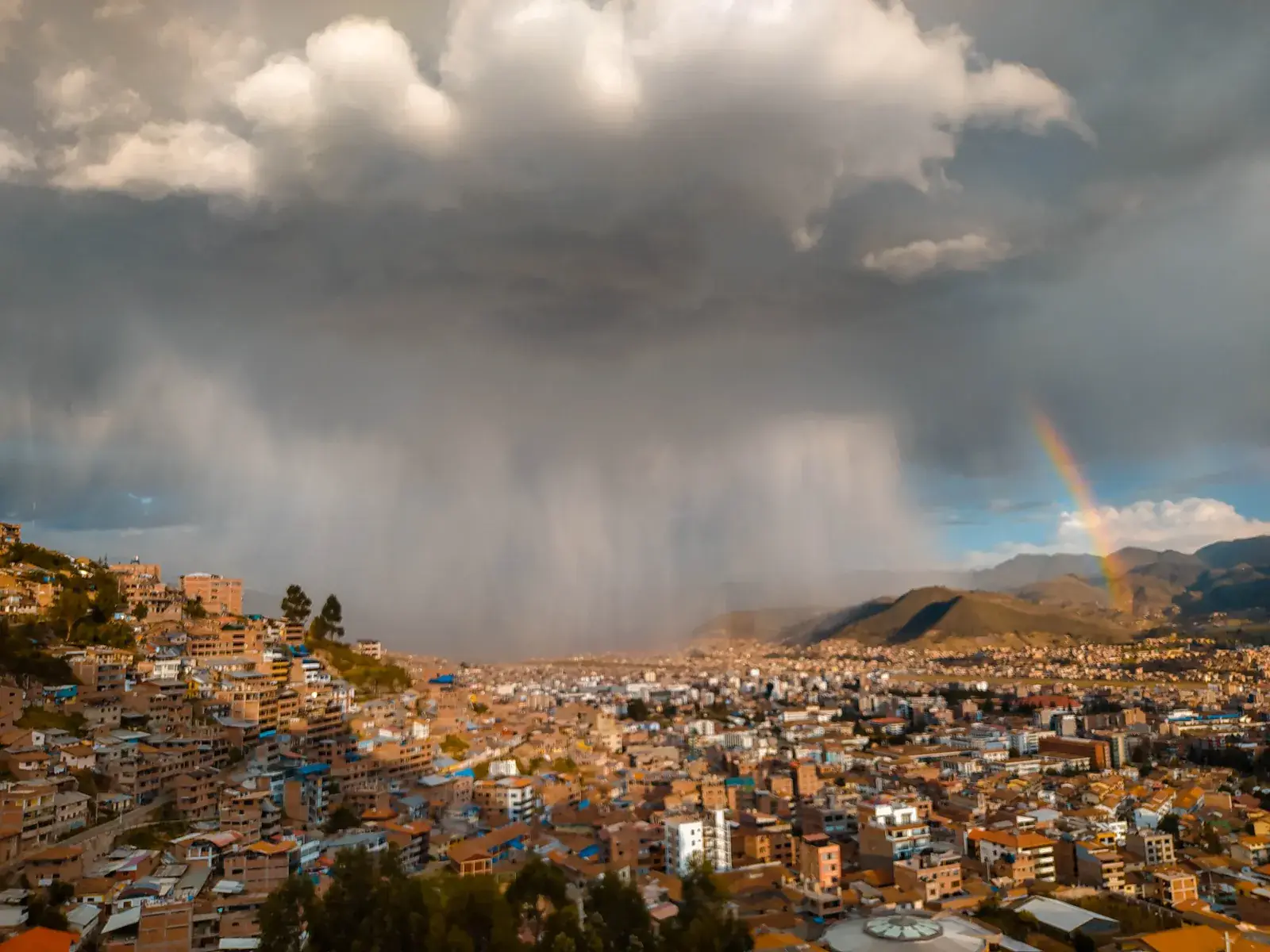
January is Peru's summer on the coast and the heart of the rainy season in the mountains. Choose it for Lima, the north-coast beaches and a short, flexible visit to Cusco and Machu Picchu, and expect heavy afternoon rain, mud and some risk of road or rail disruption in the Andes. The Inca Trail is still open in January, before its February closure.
Where January works best
January is the month to look west and north. Lima is at its warmest and sunniest, the garúa has lifted, and the beach districts and the coastal clifftop walks are at their liveliest. Further north, Máncora and the neighbouring beaches have hot sun and warm water, which makes this one of the best periods for a few lazy days by the sea. Paracas and the Ballestas boat trips are also pleasant, with calm mornings and bright light.
The weakness of the month is the mountains. January sits inside the wettest stretch of the southern Andes, so a trip built around views and long hikes carries the most risk. A city-and-coast plan with a short, flexible mountain section is a better fit than a long Andean circuit.
Cusco, Machu Picchu and the Sacred Valley
Expect mornings that are often clear, afternoons of heavy rain and some days of continuous grey. The upside is landscape: terraces and valleys are intensely green, and Machu Picchu is quieter than in the dry months. The citadel can be wrapped in mist, so treat a clear view as a bonus and not a given; see Machu Picchu weather to understand how fast it can change.
Cusco itself is easy in the rain, since its museums, churches and markets work in any weather. Use the dry hours of the morning for outdoor sights such as the ruins above the city, and keep afternoons for indoor plans. The Sacred Valley is lush at this time, with its villages and terraces at their greenest.
The Inca Trail and other treks in January
The Inca Trail is open in January, but permits for the rainy months are far easier to get and the path is wet and slippery. Many operators advise a rain poncho, gaiters and dry bags rather than relying on a jacket alone. Streams run high, the stone steps are slick and the cloud forest sections are drenched, though also spectacular.
The last month before closure is a useful consideration. If you have set your heart on the classic route, January is the final chance of the season, but a dry-season date is a far safer bet. Landslides can block the road or interrupt the train to Aguas Calientes, so avoid putting an international flight directly after your visit.
Lake Titicaca, Arequipa and the Amazon
Puno and Lake Titicaca see frequent rain and thunderstorms, though the air is less cold at night than in winter. Arequipa has its short rainy spell, with sunny mornings and occasional afternoon showers, and the Colca Canyon road can be affected. The Amazon is hot and humid, with rivers rising, and some lodges can only be reached by flooded routes, so check access with your operator.
If you want rainforest, the lowland lodges still offer rich birdlife and frog activity; just expect wet gear and mosquitoes. The northern jungle around Iquitos is similarly hot, with river levels climbing through the month.
A January trip that works
The strongest January plan keeps the mountains short. Spend a few days in Lima eating and walking the coast, fly to Cusco for two or three nights around Machu Picchu, then return to the coast or head north to the beach. Alternatively, begin in the north and finish in the Andes, with a spare day at the end.
A long road trip across the high Andes is the weakest idea, since bus journeys on mountain roads are the most exposed to landslides and delays. If your route requires one, read weather blocking a route first, and keep a spare day before any flight.
Crowds, prices and who January suits
Outside the New Year weeks, the mountains are quiet and cheaper. Hotel rates in Cusco are below dry-season levels and tours are easier to book at short notice. On the coast the opposite applies: Peruvian families travel in the summer school holidays, so beach hotels, buses and flights are in demand and prices rise.
January suits travellers who prefer sun on the coast, accept the chance of rain in the Andes and want fewer people at Machu Picchu. It suits less well anyone who needs a guaranteed mountain view, a long trek or a tight schedule. If that describes you, compare it with February and the dry season.
What to pack
For the highlands, bring a proper waterproof jacket, a poncho, quick-drying layers, waterproof footwear and a dry bag for electronics. A warm layer is still needed for evenings. For the coast, pack light summer clothes, a hat, sunglasses and high-factor sunscreen, since the sun is strong. Insect repellent is essential for the Amazon, and a flexible budget for a replacement train or taxi is sensible.
The packing list has the full kit. Cotton dries slowly in humid air, so favour synthetic or wool layers, and keep a spare pair of socks in a sealed bag.
Frequently asked questions
Is January a bad month for Machu Picchu?
It is a wet month, but not a closed one. Visits are quieter and greener, with a real chance of mist and showers. Keep a spare day in your plan in case a landslide or delay affects the train.
Can I do the Inca Trail in January?
Yes, it is still open before the February closure, and permits are easier to find than in the dry season. Conditions are wet and muddy, and a good rain kit is essential.
Is January good for the beach?
Yes. The Peruvian coast is at its warmest and sunniest in summer, and the north has hot weather and warm sea. Beaches are busy on weekends because of school holidays.
Is it worth going to Cusco in January?
It can be, if you accept showers and keep plans flexible. Museums, markets and food work in any weather, and the valleys look their best. Avoid tight schedules and long mountain drives.
Is it hot in Lima in January?
It is warm and sunny, and humidity is high. Evenings are pleasant for walking by the sea, and the garúa cloud of winter is absent.
Can I visit the Amazon in January?
Yes, lodges are open, but it is hot, humid and wet, with high rivers. Some routes need boats instead of trails, so check access when you book.
Should I book travel insurance for January?
A policy that covers weather disruption is sensible for the rainy season. Read the exclusions around strikes and natural events in travel insurance before you buy.