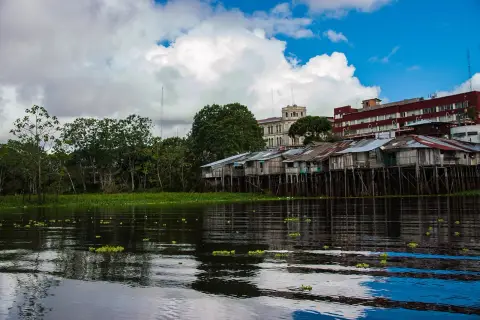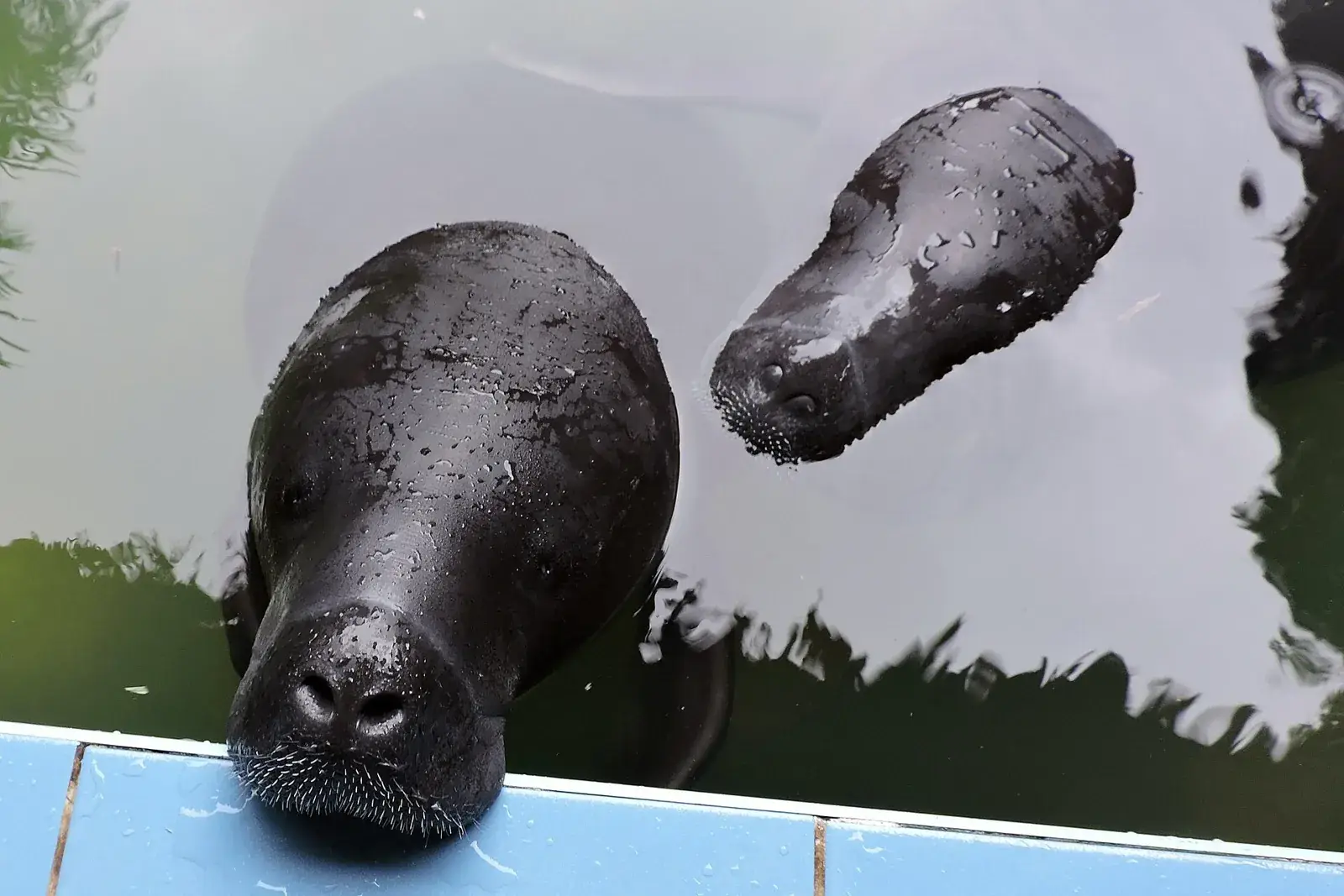
The Amazon manatee rescue centre is a small conservation project on the Iquitos-Nauta road, south-east of the city, where orphaned young manatees are cared for until they can be released. A visit takes about two hours including the trip, and is easy to add to a half day at nearby Quistococha. Opening arrangements and entry rules change, so confirm them with the centre or a local operator before you go. It suits families and anyone interested in Amazon wildlife, but it is a rescue facility, not a zoo.
Map
What the centre is
The Amazonian manatee is a large, slow, grey-brown freshwater mammal that lives in the rivers and lakes of the Amazon basin. It is the only manatee species that lives entirely in fresh water, and it is classed as Vulnerable by the IUCN. Peru has protected it by law for decades, yet hunting for meat and fat has been the main threat, and boat strikes and fishing nets add to it.
The rescue centre near Iquitos exists because of those pressures. Hunters often kill the mother and leave a calf, or calves are confiscated from people trying to sell them. The calves come to the centre, are fed by bottle on a special milk formula, and are kept until they are big enough to survive in the wild. Several sources describe the centre as a project that began in the late 2000s and widened later to other animals, including river turtles, but figures for animals rescued and released differ between reports, so treat any single number with caution.
Why it matters
Manatees are difficult to study. They live in murky, tannin-stained water, surface only briefly to breathe, and are shy, so even in the wild most people never see one. A rescue centre is therefore one of the few places where a visitor can see the animal at close range, and where the species' biology and the reasons for its decline are explained.
Calves stay with their mothers for a long period, and a manatee reaches breeding age slowly, so the loss of a single adult female affects a local population for years. That is the reasoning behind the centre's work: each animal that reaches adulthood and is released matters to a small population. The release sites are usually chosen in protected areas, and the Pacaya-Samiria reserve, a vast flooded forest, is the best-known destination for released animals, although releases have also been reported in lagoons closer to the city. Release plans depend on the animal's health and the water levels, so they are not scheduled for visitors.
Tours and activities
Bookable online, chosen for their traveller reviews.
-
From €54 per person
What you see on a visit
A visit usually begins with a short introduction to the Amazonian manatee and the project, given by a staff member or volunteer, often in Spanish and sometimes in English. You then see the young manatees in their pools. Depending on the day and the rules in force, visitors may be allowed to watch the animals being fed, or to touch the skin of a young animal under supervision. Do not assume that feeding is open to everyone.
The animals are smooth, wrinkled and surprisingly large even when young, and they come to the surface every few minutes to breathe, which makes them easy to watch. Other animals that have been rescued may also be on show. The site is small, so the visit is brief, and most of the time is spent around the pools. Listen to what the staff say about the animals, since the centre depends on donations and on visitors following its rules.
Getting there from Iquitos
The centre lies outside the city, on or near the Iquitos-Nauta road, which runs south-east from Iquitos towards Quistococha and Nauta. Sources disagree on the exact position and on the kilometre marker, so confirm the address with a tour operator or the hotel before you go. The drive from the city centre takes roughly half an hour to an hour, depending on traffic and the exact site.
The easy way is a short tour or a pre-arranged taxi that waits, since public transport on that road is not designed for a day trip with a return at a fixed time. Most operators in the city offer a half-day outing that combines the centre with Quistococha; compare formats under tours from Iquitos. Motorbike taxis are the cheapest option but are not comfortable on a highway, so a car is better for this trip. Agree the fare and waiting time before leaving.
Combining it with Quistococha
The centre is commonly paired with Quistococha, a lagoon park a short way along the same road, where visitors can walk shaded paths, see a small collection of local animals and, in some tours, swim in the lagoon. The park has its own entry arrangements, which are usually not included in a tour price, so ask what is covered before booking.
Together the two stops fill a morning or an afternoon. They are a gentle introduction to the Amazon for visitors who are not yet ready for a lodge stay, and a good way to use the first or last day of a trip. If you are planning a longer trip, see the Amazon itinerary for how a city day fits with a lodge or river cruise, and the comparison of Amazon destinations if you are still choosing where to go.
Best time to go
The centre is open to visitors at set times that have changed over the years, so check before you travel. As a rule, morning is the pleasantest time: the air is cooler, and the animals are active. Midday heat in Iquitos is heavy and humid, and afternoon rain is common in the wetter months.
The manatees are in the pools all year, so the season does not change what you see at the centre. It does change the journey: in the high-water months the road is the same, but nearby lagoons and the surrounding forest look different, and rain can make the ground muddy. Bring a light waterproof layer in any season, and see when the rainy season matters if you are planning around the weather.
Arrive with time in hand: tours that start late can arrive after the last feeding or visiting slot.
Visiting responsibly
A rescue centre is not a petting zoo, and the way visitors behave affects the animals. Follow the staff's instructions, do not tap on the pool walls, do not use a flash, and wash your hands and keep sunscreen and insect repellent away from the water if asked. Young manatees are fed on a formula that is expensive and imported, and the centre usually welcomes donations beyond the entry fee, so carry some cash.
Never buy wildlife products or live animals in markets, including at Belén, and report offers of protected animals to the local authorities. Demand for manatee meat and for baby animals is the reason many calves become orphans in the first place. See responsible travel in Peru for more on choosing wildlife experiences, and treat any promise of swimming with wild manatees as a warning sign.
Practical points and who it suits
The visit is flat, short and easy, so it suits families with children, older travellers and anyone with limited time. It is a poor fit for travellers hoping for a wild-animal encounter: these are captive young animals in pools. If you want to see wildlife in its habitat, take a boat trip into the forest, and read about the Pacaya-Samiria reserve.
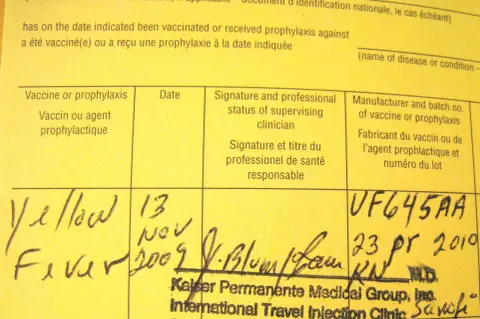
The Amazon has different health risks from the Andes, including mosquito-borne diseases, so ask a doctor or travel clinic about precautions well before travelling, and see health and vaccines for the general points. Wear long, light clothing and carry water. If you are looking for a base, the options are covered in where to stay in Iquitos; the centre is easy to reach from most central hotels by arranged transport.
Where to sleep
-
Find hotels
Iquitos centre
Plaza and riverfront for lodges, tours and restaurants
-
Find hotels
Amazon lodges
Jungle stays with meals, guides and excursions, reached by boat
Frequently asked questions
How long does a visit to the manatee rescue centre take?
The visit itself is short, often around an hour, and tours usually allow about two hours including the introduction. With the drive from Iquitos and a stop at Quistococha, plan a half day.
Can I feed or touch the manatees?
Some visitors have been allowed to watch bottle feeding or touch the skin of a young animal under supervision, but this depends on the day and the centre's current rules. Ask when you arrive and follow the staff's instructions.
Is the centre open every day?
Opening days and hours have varied between reports, and some listings mention a closed day. Check with the centre, your hotel or a tour operator before travelling, and do not rely on old listings.
How much does it cost?
There is an entry fee, usually lower for children, and donations are encouraged. Amounts have changed over the years, so ask for the current price before you go, and note that tour prices may or may not include it.
Are the manatees released back into the wild?
Yes, that is the aim. Animals are released when they are old enough and healthy, often in protected areas such as the Pacaya-Samiria reserve. Releases are decided by the staff and are not scheduled for visitors.
Is it worth going if I am also visiting a jungle lodge?
It is worth it if you have a spare half day in the city, because it is one of the few easy ways to see the species at close range. Wild manatees are rarely seen on lodge trips, so the centre fills that gap. See tours from Iquitos for ways to combine it.
Is it suitable for children?
Yes. The site is small and flat, the animals are easy to watch, and the introduction is short. Bring sun protection, water and insect repellent, and keep children from leaning over the pool edges.