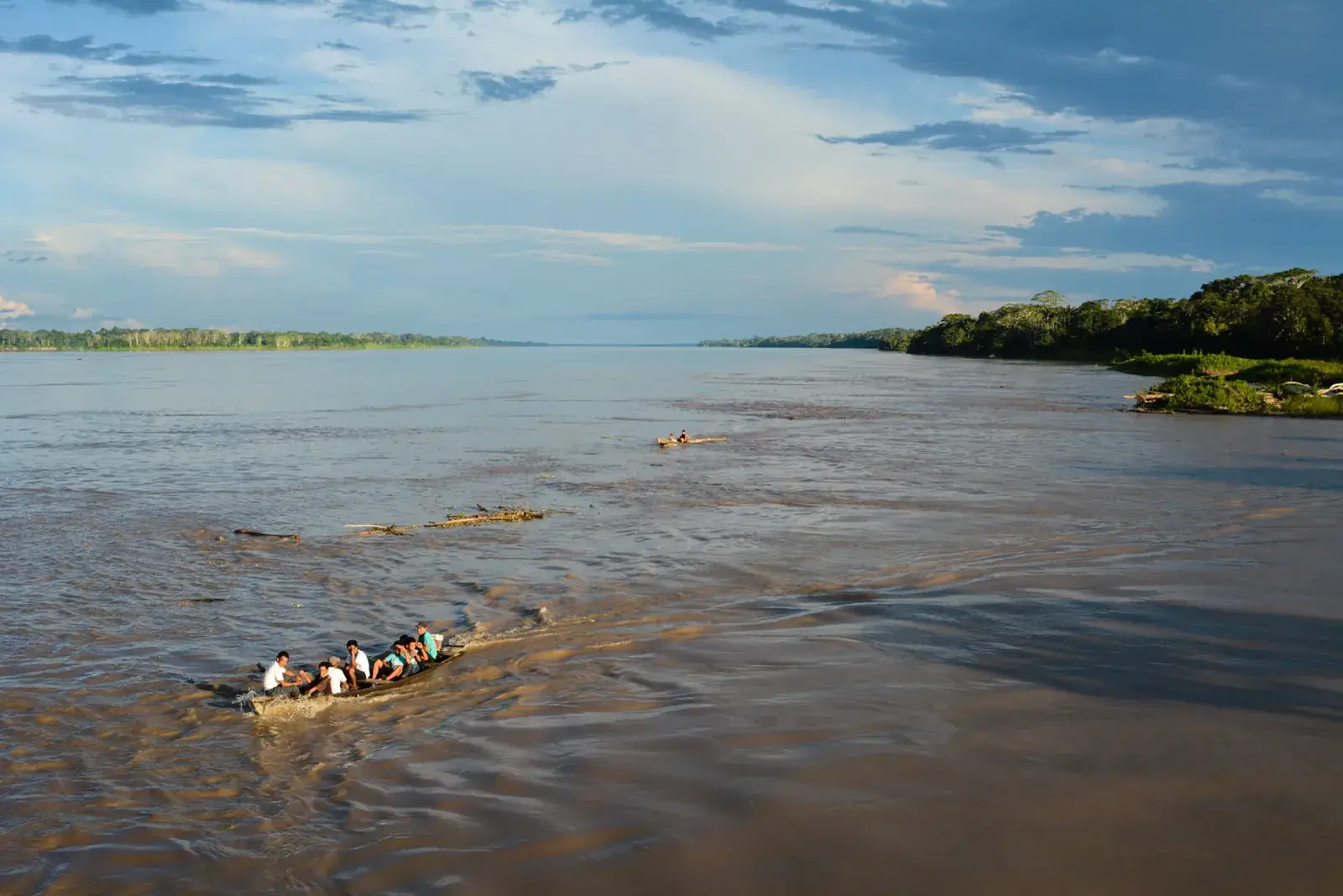
Tours from Iquitos fall into three types: short day trips on the nearby rivers, two- to four-night stays in river lodges, and multi-day cruises or expeditions to the Pacaya-Samiria National Reserve. The longer the trip, the further you go from the city and the better the wildlife. Pick the length that fits your budget and your tolerance for heat and humidity.
Because the city has no road to the rest of Peru, the Amazon starts as soon as you leave town.
Day trips from the city
Short excursions leave from the port and usually combine a boat trip on the Amazon or a tributary with a stop at a riverside village, an animal rescue centre, a market and a walk in secondary forest. They give a feel for river life but not for pristine rainforest. The Belén market district, with its floating houses, is a popular half-day visit on its own; go with a guide and keep valuables hidden.
Day trips are a good fit if you have a short stay, but note that animal sightings are limited, and the quality of rescue centres varies. Choose those that are properly run and avoid places where you can handle wild animals.
Iquitos describes the city and its quirks, from the motorcycle taxis to the riverfront, and helps you decide how many days to spend before heading out on the water.
River lodges
Lodge stays of two to four nights are the standard Amazon experience from Iquitos. Lodges sit a few hours downriver or on tributaries, with huts or cabins, guided forest walks, night boat trips to spot caimans, fishing for piranha and visits to local communities. Distance from the city shapes the experience: the further the lodge, the more wildlife and the fewer other visitors.
Ask the transfer time, the type of boat, the group size and whether guides are local. Check what is provided on the lodge side: mosquito nets, electricity, drinking water and meals.
Lodges closer to the city are cheaper and quicker to reach, but the forest around them is more disturbed. If you have the time, a lodge on a smaller tributary gives quieter water and more birds, and often more of the feel visitors expect when they imagine the Amazon.
Tours and activities
Bookable online, chosen for their traveller reviews.
-
From €54 per person
Cruises and Pacaya-Samiria
Multi-day boat trips travel up the Marañón or Ucayali toward the Pacaya-Samiria reserve, where flooded forest, pink river dolphins, monkeys and large birdlife are the draw. Cruises offer cabins on a river boat with meals included, and skiffs for exploring side channels. Fixed departure dates are common, so check the schedule well in advance, and ask how many days are actually inside the reserve rather than travelling to it.
Water levels change the experience: high water lets boats reach flooded forest, while low water exposes beaches and concentrates wildlife.
A cruise suits travellers who like to unpack once and watch the river from a deck, while lodge stays suit those who prefer walking trips from a fixed base. Compare the two carefully, because the same number of nights can give very different amounts of time on the water and on foot.
Getting to Iquitos and timing the trip
No road reaches Iquitos, so you arrive by air from Lima or by a long river journey from other Amazon ports. Flying from Lima to Iquitos explains the options, and where to stay in Iquitos helps you pick a base for the night before or after a trip.
Plan a spare day at each end, since weather and river conditions can delay departures. Pre-book your first and last nights, and ask the operator where you meet on the first morning. Read about water and food safety before travelling, as stomach upsets are among the most common problems in the region.
Choosing between Amazon regions
Iquitos offers a different experience from Tambopata or Manu in the south: more river, more flooded forest and longer cruises, with less easy road access. If you have time for only one Amazon stop, where to go in the Amazon weighs the regions, and whether the Amazon is worth it is blunt about who will enjoy it.
Be realistic about wildlife: you will hear and see plenty of birds and monkeys, but the big animals are shy. A good guide makes the difference between a pleasant boat ride and a memorable one.
What to check in an operator
Ask for a written itinerary with the number of nights spent inside the reserve, the size of the group and the guide ratio. Check that the company is licensed, what is covered by insurance and how emergencies are handled, given the distances from medical care. Be cautious about street offers at the airport or on the waterfront and about tours promising ayahuasca ceremonies without any detail on who leads them.
Ask about the boat's safety equipment, including life jackets and a radio or phone, and about waste disposal. Read recent independent reviews and compare at least two operators.
Frequently asked questions
Is a day trip enough to see the Amazon?
It gives a taste of river life but little wildlife. Two or more nights in a lodge offer far more.
When is the best time for cruises?
High water, roughly from December to May, allows boats into the flooded forest. Low water exposes more land.
How do I get to Iquitos?
Only by air or by river, as no road connects it to the rest of Peru.
Are pink dolphins easy to see?
They are often spotted on river trips, but sightings are never guaranteed and depend on the water level and the time of day. A good guide knows the channels where they feed.
Should I take an ayahuasca tour?
Ceremonies carry real medical and safety risks, and standards vary widely. Seek independent advice, ask a doctor about interactions with medication and be wary of anyone who offers it casually.
How much time do I need for Iquitos?
A short lodge stay needs three or four days including travel, while a cruise on the reserve takes a week or more. Add a day each end in case of delays.
Is it safe to drink the water on Amazon trips?
Drink only sealed or treated water, and ask what the lodge provides. For general advice, see water and food safety; a doctor can advise on health precautions.