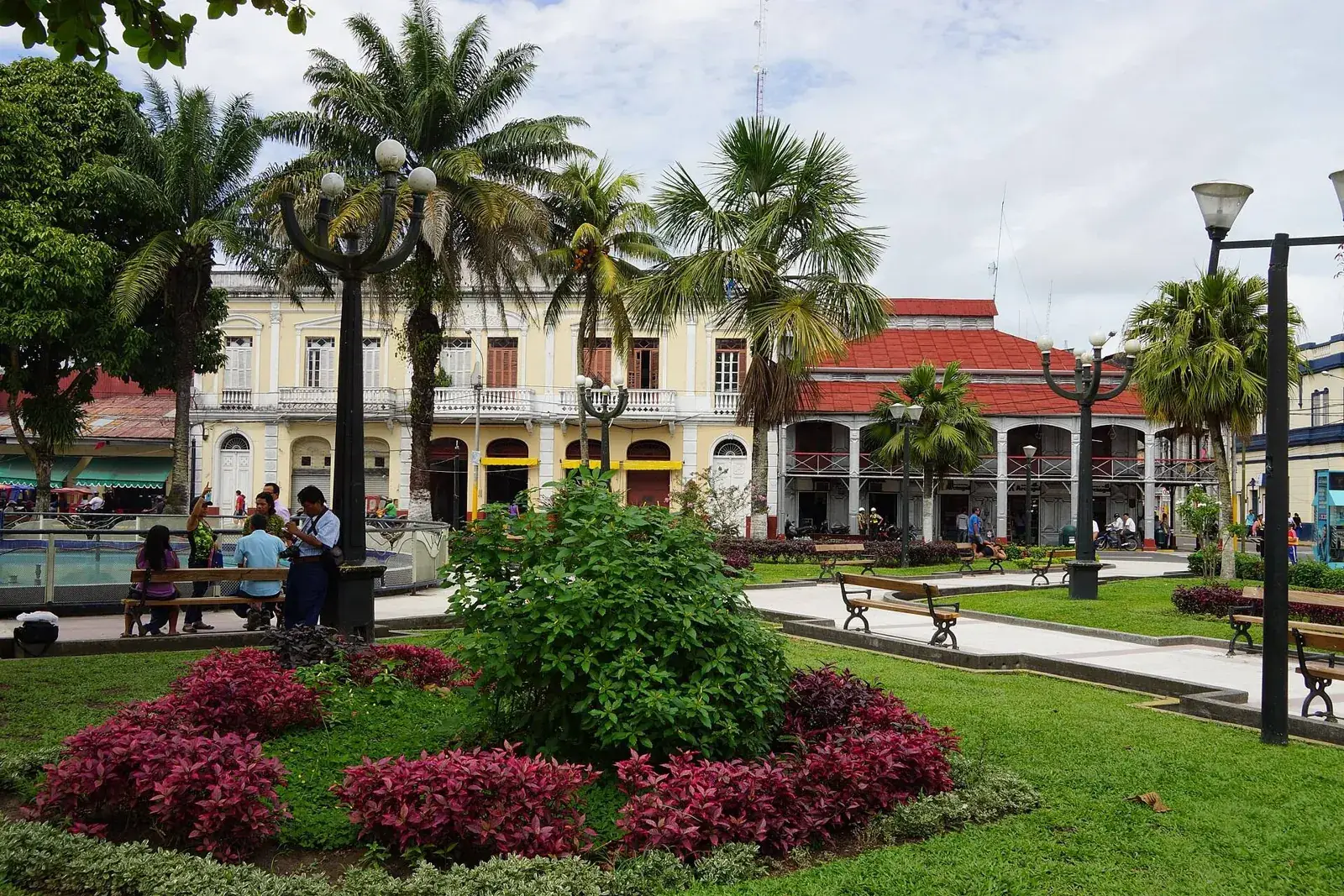
Stay near the Plaza de Armas or along the Malecón Tarapacá for walkable access to restaurants, river views and tour offices. Avoid areas close to the Belén market for sleeping, though they are worth visiting by day. Look for air conditioning, mosquito screens and a room away from the main road, since motorbike taxis never stop.
Most visitors need only one or two nights in the city, before or after a lodge or cruise.
A city on the river
Iquitos is the largest city in the Peruvian Amazon, with no road connection to the rest of the country. It sits on the bank of the Itaya and Amazon rivers, and life centres on the water: ports, floating houses and boats of all sizes. The climate is hot and humid throughout the year, with regular heavy rain.
The centre is flat and compact, and mototaxis, three-wheeled motorbike taxis, are the main way of getting around. They are cheap but loud, and engine noise is part of the soundscape.
For how the city works as a gateway to the forest, see Iquitos; how most visitors arrive is covered in flying from Lima to Iquitos. Because there is no road, everything from food to fuel arrives by boat or plane, which is one reason prices can feel higher than in other Peruvian cities.
Around the Plaza de Armas
The streets around the main plaza hold the cathedral, the best-known iron building and a good number of restaurants, banks and agencies. This is the most convenient base: you can walk to the riverfront, to dinner and to most tour offices. The downside is that it is busy and noisy, particularly at weekends.
Ask for a room away from the street, check that the air conditioning works well and see if the property has a pool, which is a real relief in the afternoon heat.
Because many agencies are in this area, it is easy to compare tours from Iquitos in person before you book. Look at the office, ask for written terms and check that your lodge or cruise departs from a port within reach of your hotel.
The Malecón Tarapacá
The riverside promenade offers views over the water, especially at sunset, with cafés, bars and a few hotels. Rooms with a river view are pleasant, though evenings can be lively. It is a good place for a drink after a day of travel and gives an easy introduction to the rhythm of the city.
Watch the river from the benches as boats of all sizes pass, and note how the water level changes through the year. The difference between high and low water shapes the city's life, from the markets to the boat schedules. Take care with phones and cameras on the promenade after dark, and keep your valuables out of sight.
Belén and the outskirts
Belén is the market district built on the river bank and in part on stilts or rafts. It is fascinating by day with a local guide, but not the place to sleep. Beyond the centre, guesthouses and lodges on the road toward Nanay and the airport provide quieter, greener settings, often with gardens and pools. They suit travellers with early departures or those preferring calm, though you will need transport into town.
If you choose the outskirts, ask how the hotel arranges transfers, whether meals are available on site and how far the nearest restaurant is. Some of these places double as base camps for river trips, with an early boat departing from a nearby dock, which saves a cross-town ride at dawn.
Practical checks
Mosquitoes are common, so look for screened windows or nets and bring repellent. Ask whether the hotel can arrange airport transfers, store luggage while you go on a lodge trip and give a late checkout when you return. Confirm that electricity and hot water are reliable, since outages occur. Consult a doctor or travel clinic before your trip about health precautions for the Amazon.
Health and vaccines lists what to discuss with a professional, and food and water safety gives general advice for the region.
Eating, resting and timing the stay
Hotels are usually near restaurants serving river fish, rice, plantain and jungle fruit juices, and food in the Amazon describes what to try. Eat where the food is hot and busy, and keep your stomach in mind before a boat trip.
Plan a night in the city before a lodge or cruise, so a late flight does not cut into your departure, and a night after your return in case boats run late. Where to go in the Amazon helps you decide how many days to spend in Iquitos itself. Keep a spare day in your plan, since weather and river conditions can delay both flights and boats.
Where to sleep
-
Iquitos centre
Plaza and riverfront for lodges, tours and restaurants
The Plaza de Armas and the riverfront promenade, with restaurants, tour agencies, the Belén market and a good choice of hotels. The best base for a night before or after a lodge.
Keep in mind: The city is hot and noisy with motorbike taxis, and rooms without air conditioning are uncomfortable.
Find hotels → -
Amazon lodges
Jungle stays with meals, guides and excursions, reached by boat
Lodges in the forest and along the rivers near Iquitos, usually reached by boat and sold as stays with meals, guides and excursions included. The place to see the jungle at dawn and at night.
Keep in mind: They are remote, with limited Wi-Fi and no stepping out for dinner, so check what the price includes.
Find hotels →
Hotels on the map, with prices
Frequently asked questions
How many nights do I need in Iquitos?
One or two in the city, before or after your lodge or cruise.
Is air conditioning necessary?
For most people, yes. It is hot and humid year round.
Is Iquitos safe for tourists?
The centre is generally fine in daylight. Be careful in crowded markets and avoid walking alone at night.
Can I leave luggage in Iquitos while I go on a lodge trip?
Most hotels will store bags, often free for guests. Take only what you need for the forest, and confirm that your room or a locked store will be available on your return.
Is Belén safe to visit?
By day with a local guide it is a rewarding visit, but keep valuables hidden and avoid wandering alone, especially at night. Ask your hotel to suggest a reliable guide.
Do hotels in Iquitos have Wi-Fi?
Most do, but connections can be slow or patchy. Download what you need before you travel, and do not rely on a stable connection at lodges.
What should I bring for a stay in Iquitos?
Light long-sleeved clothing, repellent, a rain jacket and sun protection. A small day bag and a dry bag help for river trips.