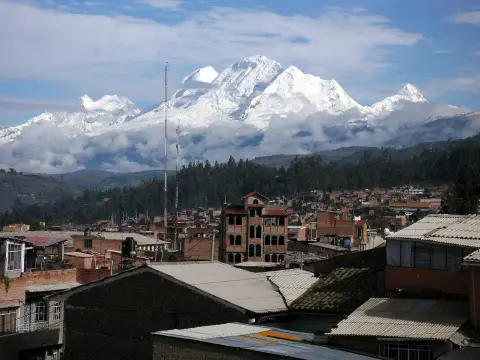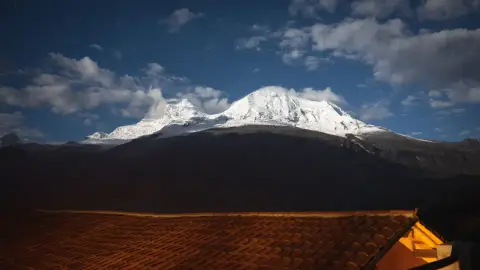
The Pastoruri glacier is an ice front at roughly 5,000 m in the Huascarán National Park, reached from Huaraz as a long day trip by road and a short, slow walk. It is not a trek: the effort is the altitude, not the distance. The ice has retreated a great deal and access rules have changed more than once, so confirm with your agency or the park office that the circuit is open before you book. Keep it for the second half of your stay in the Huaraz area, once you have acclimatised.
Map
What Pastoruri is
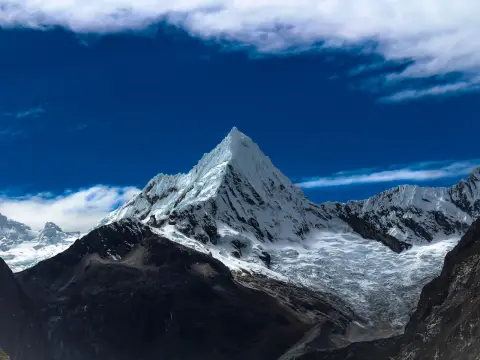
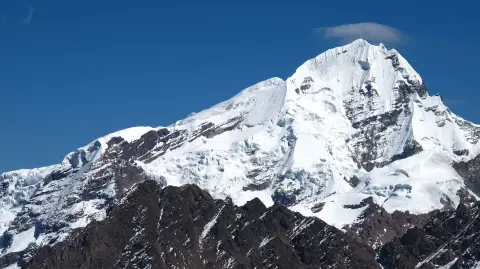
Pastoruri is a valley glacier on the southern side of the Cordillera Blanca, wrapped around the north face of the peak that gives it its name. Reference sources place the ice between about 5,200 m and 5,000 m, which makes it one of the few glaciers in Peru that an ordinary traveller can see close up without roped climbing. It lies inside Huascarán National Park, a World Heritage site, and is part of the wider range described on the Cordillera Blanca page.
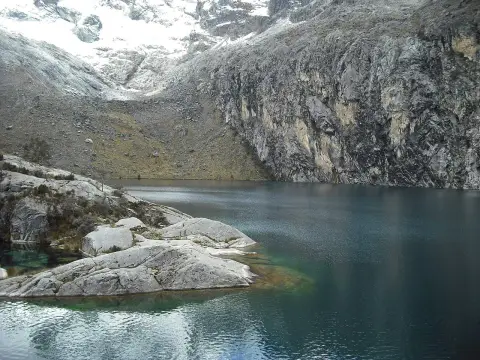
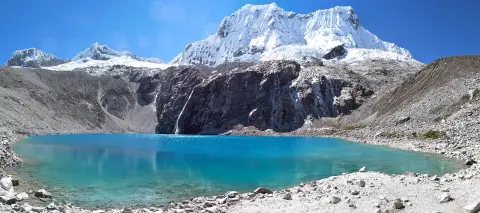
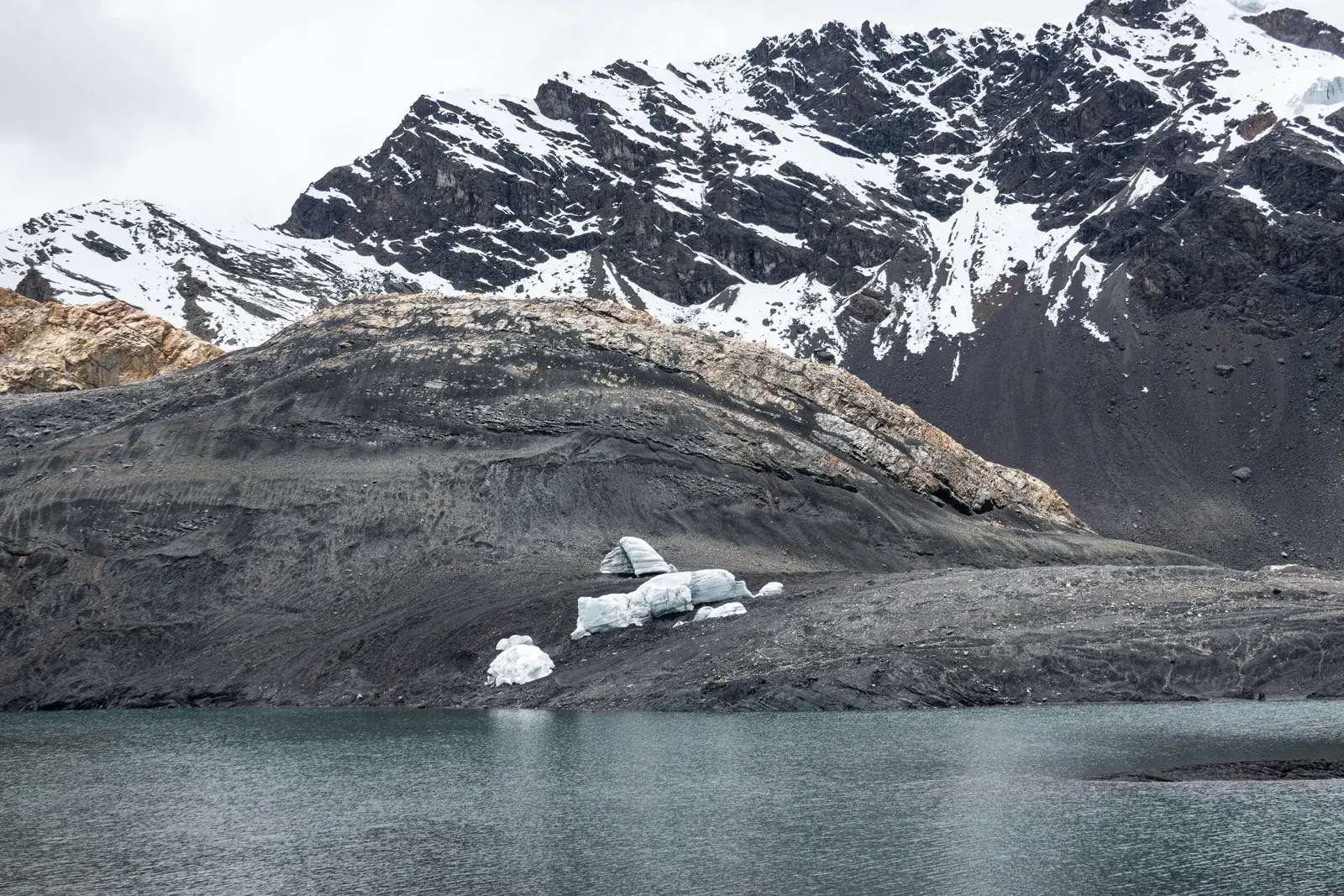
The glacier is small by Andean standards, with an area of about two square kilometres, and its front ends in a meltwater lake. What visitors come to see is therefore a mix of ice, dark rock and water rather than a vast white slope. The place has become a symbol of the retreat of tropical glaciers, and that is the honest way to approach it: as a landscape in the middle of changing, not as a postcard of permanent snow.
A glacier in retreat
Bands of bare rock and loose debris in front of the ice, and small lagoons in hollows the ice has left, show how far the front has pulled back. An ice cave of around 40 m that used to be a highlight of the visit has melted away, and a small lake now fills the space. Photographs taken a decade or two ago look very different from what you will see today.
That has practical consequences. The ice front a traveller sees from the path is smaller than guidebooks and older tour descriptions suggest, and the details of the circuit, such as how close you may approach the ice, have been adjusted over time for safety. Visits were suspended in the late 2000s and later reopened with an interpretive circuit run by the national park, so treat any description of the route, including this one, as a snapshot. A calm look at the moraine and the lake, with your guide explaining what changed and when, is the best use of the time.
Tours and activities
Bookable online, chosen for their traveller reviews.
-
Day trip From €29 per person
The road and the Puya raimondii
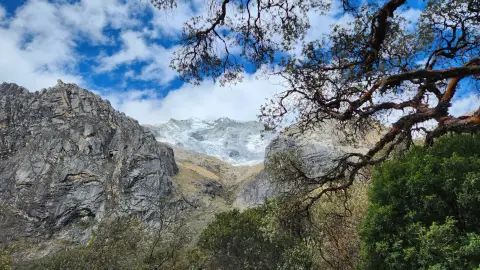
Most of the day is the journey. From Huaraz the road runs south along the valley of the Santa river and then climbs onto a high, open plateau of grass and rock, with views back toward the white peaks. Along the way, groups often stop at roadside stands of Puya raimondii, the largest bromeliad in the world, a spiky rosette that takes decades to flower and then dies after sending up a flower stalk several metres tall.
The plants are native to the high Andes of Peru and Bolivia, and the stands near the road are among the easiest to see. Do not touch or climb them, and never take cuttings or seeds. The stalk is in flower only in some years and at some times of the year, so you may see a field of plain rosettes rather than blooms. The plateau also has small lagoons, mineral springs with orange-stained rock and, with luck, vicuñas or high-Andean birds.
The walk to the ice front
The vehicle stops at a car park close to 5,000 m, and from there a marked path leads to a viewpoint above the lake and the ice front. The walk is short and gentle in terms of distance, but at this height it feels long. Expect to stop often, breathe through the pace and take the slope in small steps. Allow roughly an hour or two at the site, including time for photographs and a slow return.
The ground is rocky and can be wet or icy in the morning, so boots with a good sole are better than trainers. Wind and cold are the rule even when the sun is out, and the light is strong. Take a hat, sunglasses, sun cream and layers, and use the checklist on the packing list as a starting point. Stay on the path and away from the unstable edge of the ice, since slabs can fall.
Getting there from Huaraz
Almost everyone goes on an organised tour from Huaraz, a full day that leaves early in the morning and returns in the afternoon. The drive each way is long, with a good stretch on a rough or unpaved road toward the end, so check how long your operator expects it to take. Independent visits by hired car or taxi are possible, but the high road and the lack of services make a guide or driver who knows the area worth the cost.
Entry to the national park is charged separately from many tours, so ask whether the ticket is included, and keep your passport or a copy with you since the entry is checked at a control post. Fees and procedures change, which is why you should confirm them locally. If you are arriving from the coast, the journey is covered in Lima to Huaraz, and nearby places to sleep are on the Huaraz accommodation page.
When to go and what can change
The dry season, roughly May to September, gives the best chance of clear skies and a firm path, and it is also the busiest period. Rain and snow between November and March make the high road slower and the walk less pleasant, and some departures are cancelled. Mornings are usually clearer, and cloud often builds in the afternoon, which is another reason for an early start.
The circuit can close or change its rules without much notice because of weather, ice stability, road works or park decisions, and entry hours at the control post have been adjusted in the past. Ask your agency whether the Pastoruri circuit is open on your dates and what it includes, and allow a spare day in your plan. See strikes and road blockades if you are working to a tight schedule.
Who it suits and what to combine it with
Pastoruri suits travellers who want a high-altitude experience without a long hike, families with older children who are in good health, and anyone interested in climate and glaciers. It does not suit those who expect big snow fields, or anyone who has just arrived and not acclimatised. If you want a more demanding day of scenery, compare it with Laguna 69, which is a much harder hike but a stronger lake view.
On the broader plan, read the things to do in Huaraz page and the notes on acclimatisation for treks, and put Pastoruri after a lower outing. Choose a reputable operator by following choosing a trekking agency, take travel insurance that covers altitude, and keep the full Huaraz guide as your base reference.
Where to sleep
-
Find hotels
Huaraz centre
Services, tour offices and restaurants for the Cordillera Blanca
-
Find hotels
Monterrey
Quieter spot north of town with thermal baths
-
Find hotels
Caraz
Small town closer to the northern lakes and trails
Frequently asked questions
How high is the Pastoruri glacier?
The ice itself is reported between roughly 5,000 m and 5,200 m, and the car park and path used by visitors are close to 5,000 m. That is far higher than Huaraz, at about 3,050 m, so plan for the effect of altitude.
Is the Pastoruri glacier still worth visiting?
Yes, if you go for the landscape and for an honest look at glacier retreat, not for a large ice field. The front is much smaller than in older photographs, and the day also gives you the high plateau and the Puya raimondii plants.
Do I need to hike to reach Pastoruri?
Not a long one. A vehicle takes you near the end of the road, and a short marked path leads to a viewpoint. The difficulty is breathing at close to 5,000 m, so walk slowly and be ready to stop.
Can I visit Pastoruri independently?
It is possible by private vehicle, but most travellers go with a tour from Huaraz because of the distance, the rough road and the lack of services. Ask your accommodation or the park office about current access before you set out.
How long does the Pastoruri day trip take?
Plan on a full day, with an early start and a return in the afternoon or evening. Most of the time is spent on the road, with an hour or two at the glacier and short stops for the plants and the viewpoints.
Is Pastoruri safe for children and older people?
The distance is short, but the altitude is a real risk for anyone at any age, and children cannot always describe symptoms. Acclimatise first, keep the group together, and speak to a doctor if there are health concerns. Read safety in Peru for the general picture.
What should I wear and bring to Pastoruri?
Warm layers, a windproof jacket, gloves, a hat, sunglasses, strong sun cream and boots with grip, plus water and a snack. The weather changes quickly, and the wind at the ice front is cold even on a sunny day.