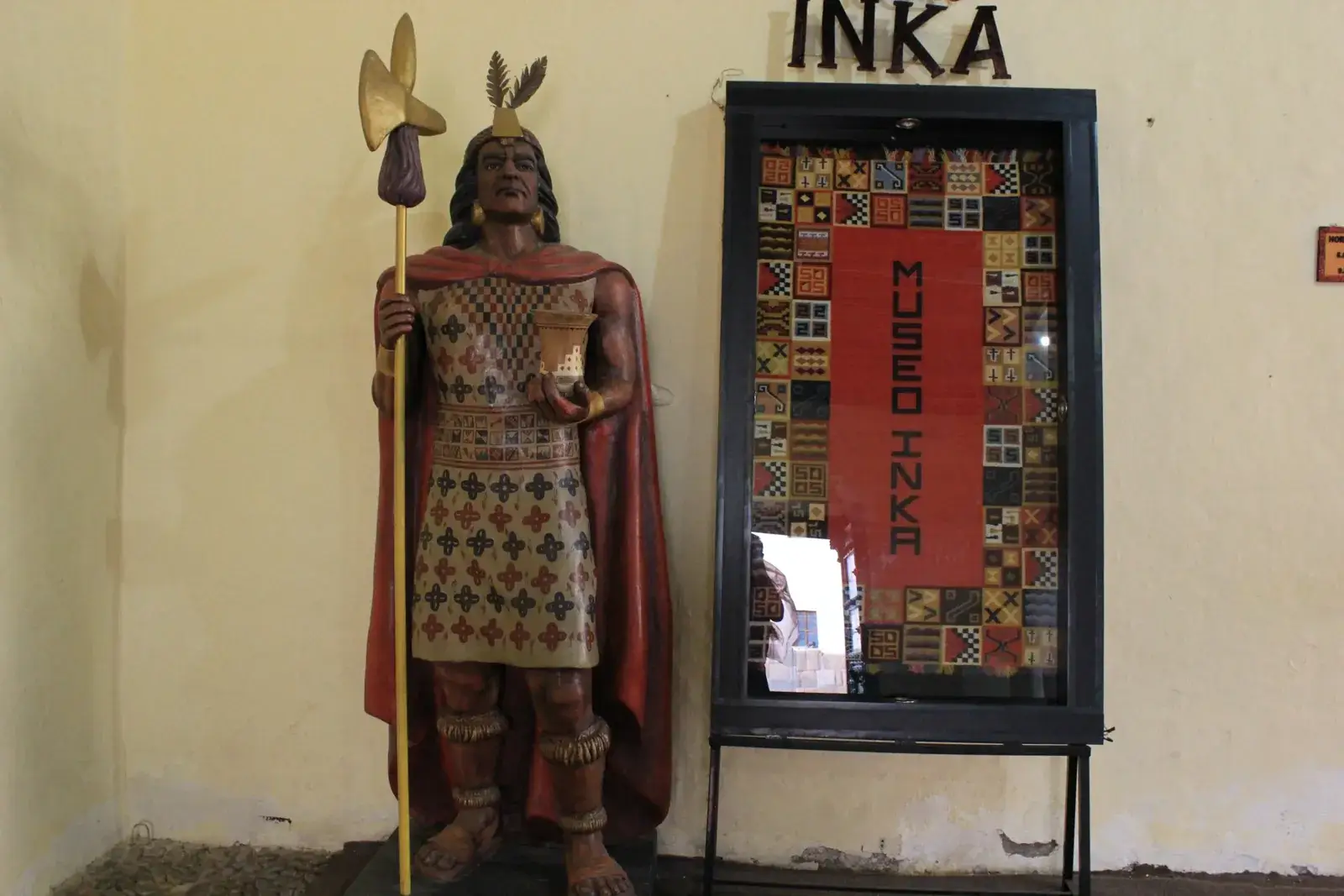
The Inka Museum (Museo Inka) is the archaeological museum of the Universidad Nacional de San Antonio Abad, set in a colonial house called the Casa del Almirante, a short walk uphill from the Plaza de Armas. It holds Inca and earlier Andean pottery, textiles, metalwork, mummies and a large collection of painted wooden drinking vessels. Allow about one and a half to two hours, go early or on a rainy afternoon, and visit it before the ruins so the objects give the sites some context. Check opening days and ticket rules locally.
Map
What the museum is
The Inka Museum is Cusco's main archaeological museum and is run by the Universidad Nacional de San Antonio Abad, the city's public university. It began in 1920 as the university's archaeological museum, and the name Inka Museum came later. Its first collections came from two acquisitions authorised by the government in 1919: antiquities from the old Biblioteca-Museo del Cusco and the private collection of the local collector José Lucas Caparó Muñiz.
Its value for a visitor is that it puts the region's story in one building and in order. The ruins around Cusco are impressive but mostly empty of objects, while here you see what people actually made, wore, drank from and were buried with. The scope runs from early cultures of the southern Andes through the Inca period and into the early colonial years. For the wider picture of the museums in the country, see museums in Peru.
The house: Casa del Almirante
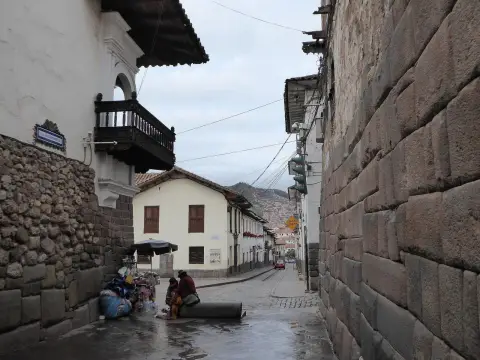
The museum occupies the Casa del Almirante, the Admiral's House, a colonial mansion on the street known as Cuesta del Almirante, a few minutes from the Plaza de Armas. It takes its name from Admiral Francisco Alderete Maldonado, who is said to have built it in the 17th century, although sources differ on the exact date. As in much of the historic centre, the lower walls are reported to stand on earlier Inca foundations, and tradition links the site with the Inca ruler Huáscar.
The building has had several lives, including as an episcopal residence and as an official house in the republican period, and Cusco's earthquakes have damaged and forced repairs to it over the centuries. What survives is a classic colonial layout with rooms arranged around a courtyard, stone doorways and timber balconies. It is worth a few minutes for its own sake, since few Cusco mansions are open to visitors with their layout intact. The colonial side of the city is explained in Spanish conquest and colonial rule.
Tours and activities
Bookable online, chosen for their traveller reviews.
-
★ Top rated From €23 per person
-
★ Top rated From €22 per person
-
★ Top rated From €23 per person
-
★ Top rated From €17 per person
What you see inside
The collection is built around everyday and ceremonial objects. Ceramics are the backbone: bowls, jars and figurines from several periods, useful for seeing how Inca pottery relates to the styles that came before it. There are tools, weapons and metalwork, including small pieces of silver and copper, and an array of items used in ritual.
Two highlights draw most attention. The first is the large group of keros, the wooden drinking vessels used in Andean ceremonies and painted in colonial times with scenes and figures; one source gives the number as around 450, which should be checked. The second is the textiles, whose geometric designs, called tocapu, are the closest thing to a written language the Inca left behind in visible form. If cloth interests you, Andean textiles gives the background. Mummies and funerary material are also displayed, often with the posture and wrappings that show how the dead were treated. Panels are mostly in Spanish with some English, so a little preparation helps.
How it fits with the ruins
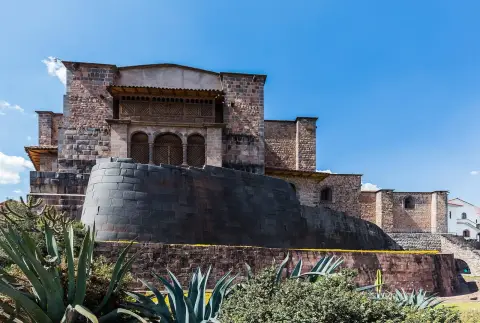
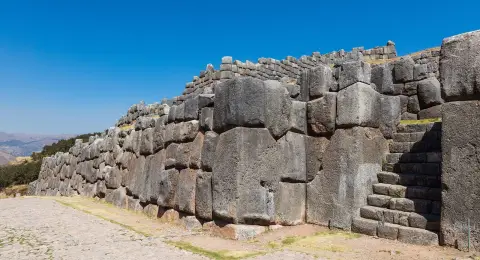
Visit the museum before, not after, the major sites. A first look at pottery and textiles makes the stonework at Qorikancha and the terraces of Sacsayhuamán easier to place, and the section on the Inca state backs up what you read in the Inca Empire.
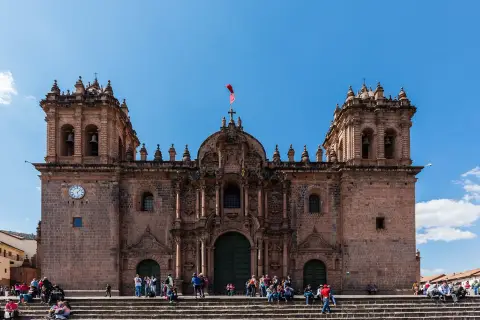
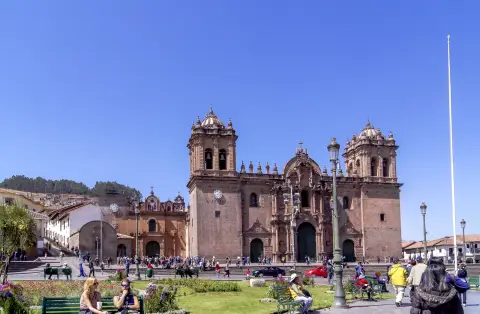
The museum is also a useful contrast with Qorikancha, which is a smaller site of great importance but with few objects, whereas the Inka Museum is mostly objects in a colonial setting. Together with the plaza, the cathedral and a walk through San Blas, they fill a relaxed day in the historic centre without needing a car or a guide.
How long to allow and when to go
Most visitors spend one and a half to two hours, and a keen reader of labels can use more. It is not a large museum, so there is no need to rush, and it fits easily into a morning before lunch or an afternoon after a hill-top site.
Because it is indoors it is a good choice for the rainy season, roughly November to March, when afternoon showers are common; see the rainy season for what the weather is like. Early opening is usually the quietest time, before organised groups arrive. Museums in Cusco often close one day a week and change their hours, so check the current schedule locally, and ask whether the ticket is a single entry or part of a wider pass, as rules have varied.
Getting there and moving about
The museum is in the historic centre, a short and slightly uphill walk from the Plaza de Armas, so no transport is needed from most central hotels. The climb, even if brief, is felt at 3,400 m in your first days, and the cobbled street is steep. If you have just arrived, build in a slow pace and read altitude sickness before sightseeing.
Inside, there are steps and thresholds typical of old buildings, and the upper floors are reached by stairs or, in some areas, ramps, so the museum is not equally easy for everyone. Visitors with limited mobility should ask at the entrance what is accessible. Photography rules have changed over time, so look for signs inside before taking out a camera.
Who it suits and what to combine it with
The museum suits anyone who wants context, especially travellers heading to Machu Picchu, the Sacred Valley or the Inca Trail, and those with an interest in textiles, ceramics or archaeology. Families with children can enjoy it if kept to a shorter visit; the keros and mummies tend to hold attention best. People who prefer open-air sights may find it a modest stop, in which case the time is better spent outdoors.
A natural pairing is the museum in the morning, a lunch near the plaza, and the churches and colonial art described in the Cusco School of painting in the afternoon. For other ideas for the city, including a day plan, use the things to do in Cusco page.
Where to sleep
-
Find hotels
Plaza de Armas and historic centre
Everything on foot, at the price of noise and crowds
-
Find hotels
San Blas
Artisans' quarter with steep lanes and views, a short walk uphill
-
Find hotels
All of Cusco
Compare every area and price level in one search
Frequently asked questions
How long does the Inka Museum take?
Plan on about one and a half to two hours for a relaxed visit. A quick walk through the main rooms can be done in an hour, but the textiles and keros reward slower looking.
Where is the Inka Museum in Cusco?
It is in the Casa del Almirante, on Cuesta del Almirante, a few minutes' walk uphill from the Plaza de Armas. Most central hotels are within walking distance.
Is the Inka Museum worth visiting?
Yes, if you want to see actual Inca and pre-Inca objects rather than only ruins. It is smaller than some national museums in Lima, but it focuses on the Cusco region and helps explain the sites you will visit later.
Who runs the Inka Museum?
The Universidad Nacional de San Antonio Abad del Cusco, which founded it in 1920. This is why it is sometimes listed as a university museum and why its details are published on the university's pages.
Do I need a guide for the museum?
No. Labels are mainly in Spanish with some English, and the rooms are easy to follow. A guide adds explanation of the textiles and ritual objects, but it is a choice, not a requirement.
Does the Inka Museum have English information?
Some, but not everywhere. Expect part of the labelling in Spanish only, so a translation app or a short read of Inca Empire beforehand helps.
What else should I see near the museum?
The plaza, the cathedral, Qorikancha and the lanes of San Blas are all within a short walk, so they combine easily in one day.