The Revash mausoleums are a row of small, house-shaped tombs built by the Chachapoya in the 14th century under an overhang of limestone, in the Santo Tomás district, roughly 60 km south of Chachapoyas as the crow flies and several hours by road. The final approach is on foot or on horseback, and the tombs are seen from a viewpoint rather than touched. Plan a long day, or combine it with the Leymebamba museum, and check the access rules locally first.
Map
What Revash is
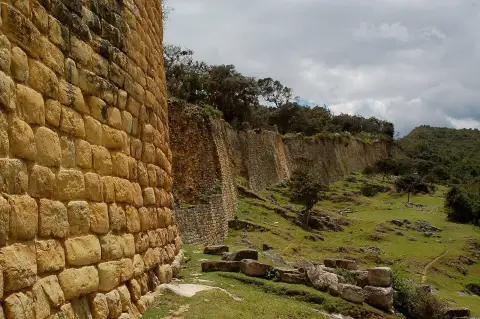
Revash is a group of funerary buildings in the Santo Tomás district of Luya province, in the Amazonas region of northern Peru. They were built by the Chachapoya culture, the same highland people who raised the walled town of Kuélap, and are usually dated to the 14th century, in the Late Intermediate period, before the Inca conquest of the region.
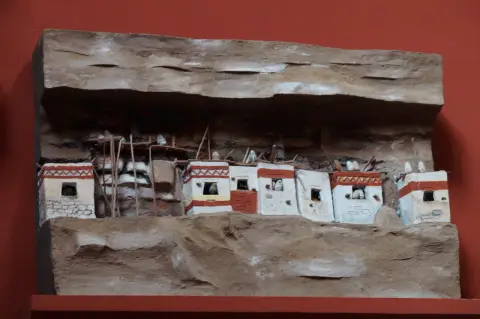
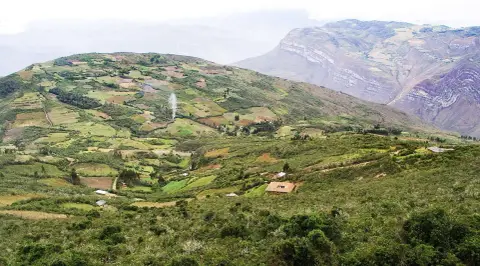
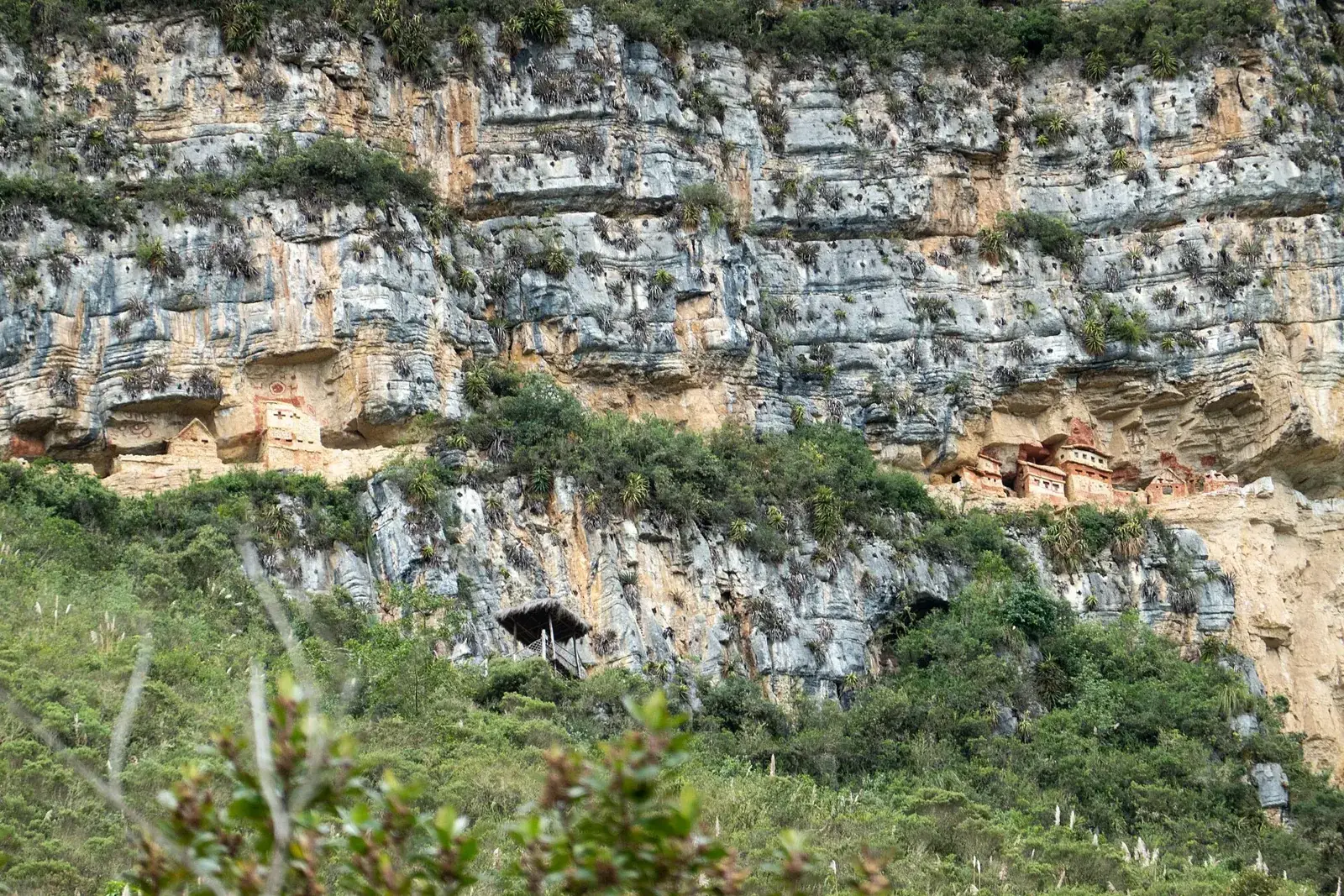
The buildings stand in a narrow ledge cut into the wall of a canyon, in the limestone of Cerro Carbón, on the left side of the upper Utcubamba valley. The altitude is about 2,800 m. From a distance they look like a miniature village hanging on a cliff, which is exactly the impression their builders gave them: each tomb is shaped like a small house, with walls, a roof and in some cases a second storey.
This is a place for people who like quiet, remote archaeology more than big monuments. Nothing here is large, and the pleasure is in the setting, the colour on the walls and the effort of the journey.
What you see at the cliff
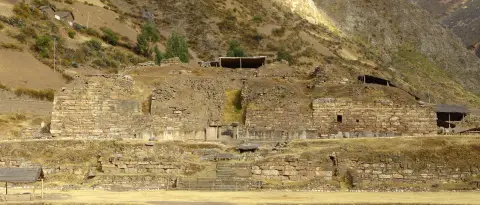
The tombs are laid out in a straight line along the ledge, and many share dividing walls, so the group reads as a single terrace of houses. Their floors are rectangular, they have one or two storeys, and their doors are on the side rather than the front. The walls are of stone laid in mud mortar, and the sloping roofs are made of mud, sticks and reeds in a technique called quincha, which is why they look like thatched cottages in clay.
The decoration is what sets Revash apart. Along the top of the walls run painted mouldings with images that researchers have identified as felines, camelids such as llamas, human figures and two-colour circles. On some walls there are incised signs shaped like a T, a cross or a rectangle. The reds and whites can still be made out from the viewpoint, particularly in good light.
Be realistic about what you see. The buildings are partly sheltered by the overhang, which helps explain why they survive, but they are far enough away that binoculars or a camera with a zoom make a real difference.
Why the tombs are built like houses
Many Chachapoya groups buried their dead in places that were hard to reach and easy to see, such as cliff ledges and shelters high above a valley. The house shape is generally read as a statement about the afterlife: the dead continued to live in a village, and the living could look up and see them. Archaeologists connect the Revash buildings with a wider tradition of chullpa funerary architecture across the Andes.
The mausoleums were probably used for several people over time rather than for single burials, and the people interred are thought to have been of high standing in their communities. That is an interpretation, since the human remains were disturbed long ago by rodents and looters, and little original burial material is left in place.
The site was studied in the mid-20th century by Henry and Paule Reichlen, who proposed the date and compared the architecture with chullpas elsewhere. They worked here partly because a collapsed roof had protected some of the remains. For the people who made them, see the background in pre-Inca cultures.
Getting to Revash from Chachapoyas
Revash lies a long way from the regional base at Chachapoyas: it is about 60 km south in a straight line, and the road is longer and slower than that suggests. Public minivans and buses run towards the Santo Tomás area on the main valley road, and local sources describe leaving the main road at a village such as Yerbabuena or San Bartolo before the last stretch. Which village is used for the start of the walk depends on the route chosen.
The final approach is a walk of roughly twenty minutes to a couple of hours, depending on the path and where the vehicle drops you; guides and visitors describe the short route and the steep, longer route very differently, so ask for the current one. Horses are often available for the way up, which is useful if you want to save your legs.
The practical option is a tour or private car from Chachapoyas, which handles the junctions and the timing. Many operators pair Revash with the Leymebamba museum in a full-day circuit. Confirm the plan the day before, and agree how long the vehicle will wait.
Tickets, community management and access
The site is managed locally rather than by a large national visitor operation, and visitors have reported buying a small entrance ticket at a community tourism office in Santo Tomás, which also helps arrange horses and guides. The price, the opening hours and even where the ticket is sold have changed over the years, so treat any figure you find online as a starting point.
Reports also differ on how close visitors may go. Some describe viewing the tombs from a path or platform at a distance, and others say that approach to the buildings themselves is restricted to protect them. Either way, never climb on or touch the walls and do not take anything away: these are fragile mud and stone structures, and the paint is old.
Cash in small notes is the sensible way to pay for the ticket, a horse and a snack, because there are no machines in the district. Ask your hotel or operator in Chachapoyas to confirm the current arrangements, and the return times, before you set out.
When to go and what to bring
The drier months, roughly May to September, are the most reliable for a day on an unpaved road and a path that turns to mud when wet; see the dry season for the general picture. In the rainy season, landslides can close roads in the region, and cloud can hide the cliff, so keep your plans flexible.
The day should be started early. Distances are long, the walk adds time, and shared transport back towards Chachapoyas can thin out in the afternoon, according to some visitors. Light on the cliff is usually better in the morning than at midday, although weather in the cloud forest is never certain.
Bring shoes with grip, a rain jacket, a hat, sun protection, water and a snack. A pair of binoculars is more useful than usual. The altitude is moderate at 2,800 m, but travellers who have just arrived from the coast may notice the climb, so read about altitude sickness. The paths are uneven and not suited to people with limited mobility.
Combining Revash with other sights
Revash is best treated as part of a loop, not as a stand-alone day trip, because the travel time is much greater than the time at the site. The natural partner is the Leymebamba museum, which holds mummies and objects from the Chachapoya funerary world and explains what the tombs once contained. Seeing the cliff and then the museum puts the buildings in context.
The district also has other Chachapoya funerary sites, including La Petaca, where sarcophagi are built into a cliff near Leymebamba, and other cliff-tomb groups in the Utcubamba valley. Ask a local guide what is open and reachable on the day rather than relying on a map.
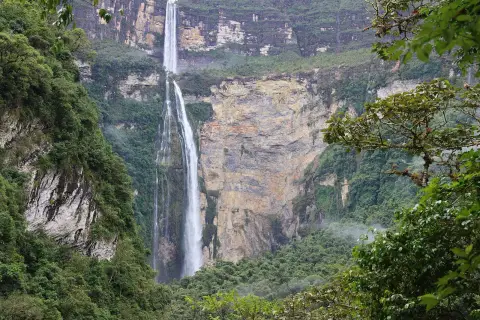
For the bigger picture, the usual three-day pattern in the region is Kuélap on one day, the Gocta waterfall on another, and the museum and tombs on a third. Travellers heading on to the highlands can continue towards Cajamarca along the same road, as described in the north itinerary.
Is it worth the trip?
Revash suits travellers who already have a few days in the region and want something beyond the fortress. It is smaller and harder to reach than Kuélap, and a visitor expecting to walk among ruins will be disappointed: the interest is in the colour, the form of the buildings and the daring of the site.
It suits people comfortable with a long day of travel and some walking, and it works well with a guide who can explain the symbols. It is less suited to anyone short of time, since a half-day is unrealistic from Chachapoyas.
For safety, the main risks are the road, weather and slippery ground rather than people; see staying safe in Peru for the basics, and tell your hotel where you are going. If getting to the region itself still needs sorting out, read getting from Lima to Chachapoyas first.
Where to sleep
-
Find hotels
Chachapoyas
Base for Kuélap and Gocta
Frequently asked questions
How long does it take to get to Revash from Chachapoyas?
Expect several hours by road each way, plus a walk or horse ride of anything from about twenty minutes to a couple of hours depending on the route. Most visitors make it a full-day trip and often add the Leymebamba museum on the way.
How old are the Revash mausoleums?
They are usually dated to the 14th century, in the Late Intermediate period, before the Incas took over the region. The date goes back to the mid-20th-century work of Henry and Paule Reichlen and remains an estimate.
Can I walk up to the tombs?
Reports differ, and rules have changed over time. Some visitors view the buildings from a path or platform at a distance, and approach to the structures is restricted at times to protect them. Ask in Santo Tomás or your operator, and never touch the walls.
Do I need a guide for Revash?
Not strictly, but a guide helps with transport links, the path and the meaning of the painted symbols. Tours from Chachapoyas are the simplest option, and see Chachapoyas for the base.
Is Revash the same as Karajía?
No. Both are Chachapoya funerary sites on cliffs, but Revash has house-shaped tombs while Karajía is known for large clay sarcophagi. They are in different parts of the region, so they are not usually combined in one day.
Can I take a horse?
Horses are generally available in the area for the way up, arranged locally, and some visitors prefer them to the steep walk. Agree the price and the time before you set off, and bring cash.
What is the best way to combine Revash with other sights?
The usual partner is the Leymebamba museum, which shows what the Chachapoya buried with their dead. Add Kuélap and Gocta on other days.