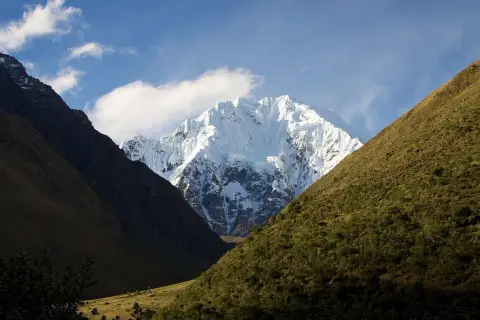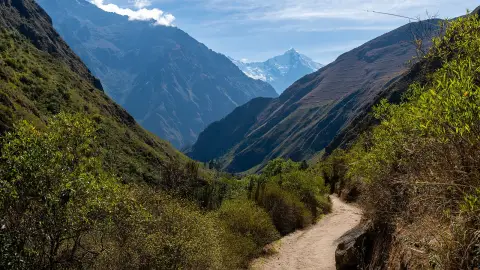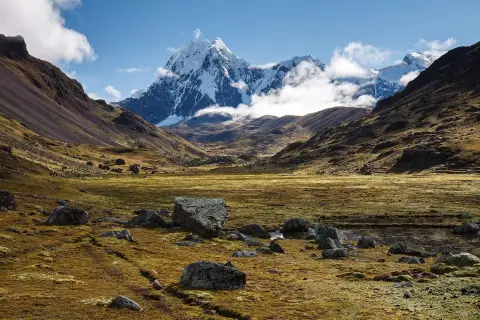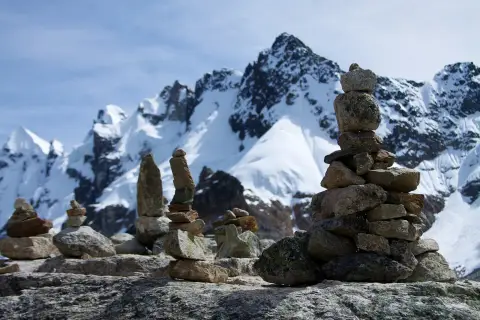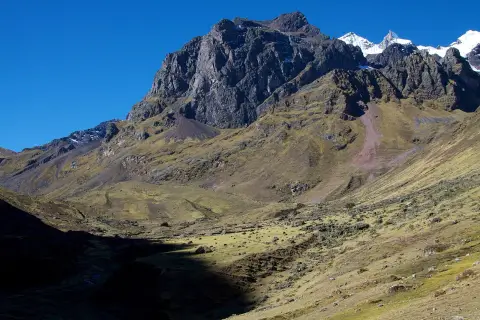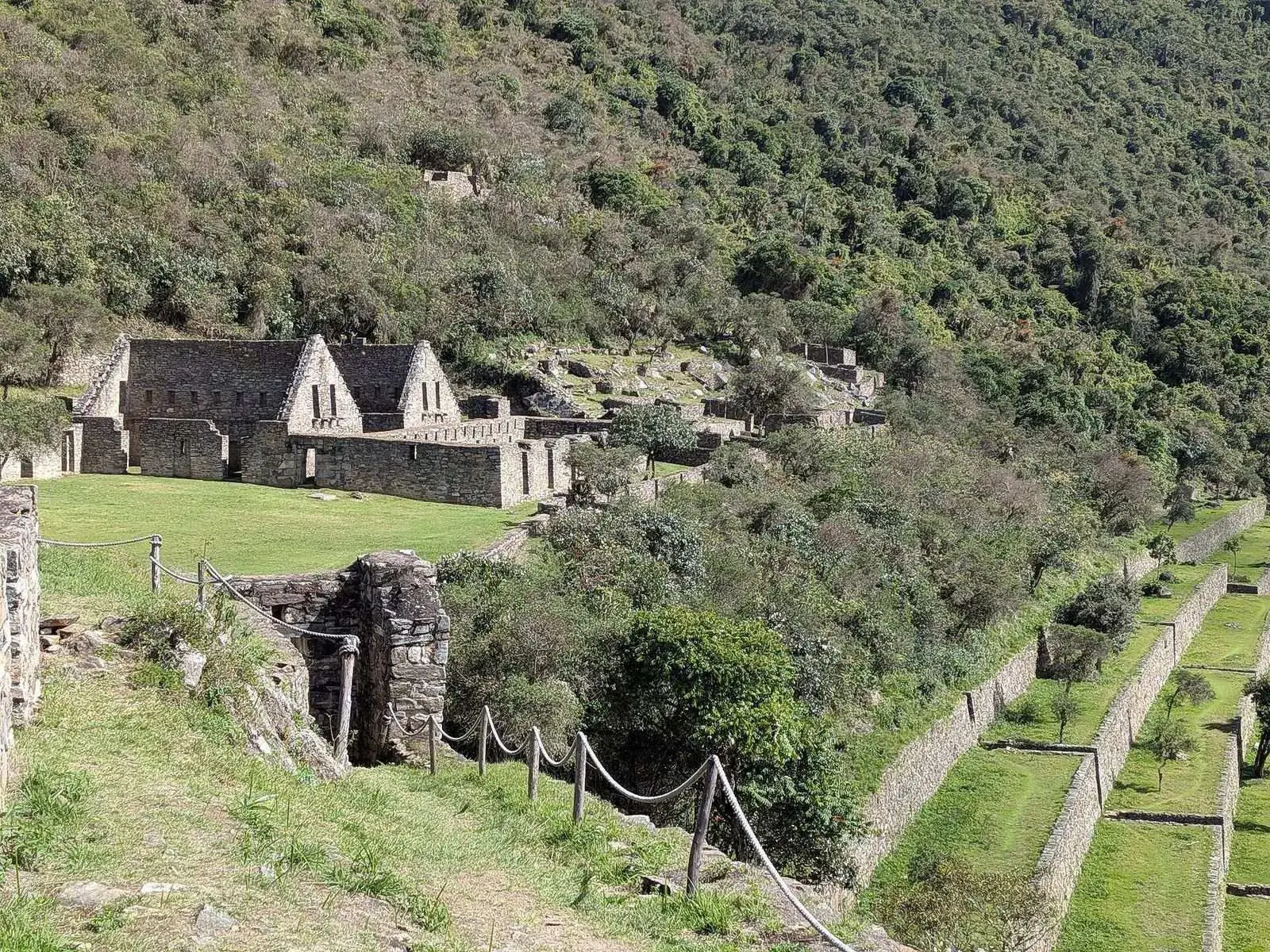
Choquequirao is a large Inca site high above the Apurímac canyon, reached on foot from Cachora in about two days each way. The standard trek takes four days, with a steep descent of well over 1,000 m to the river and a hard climb to the ruins at about 3,000 m. It is much quieter than Machu Picchu and far more demanding, so it suits fit, experienced walkers who like remote places.
Route map
- 30 km on foot
Why people go
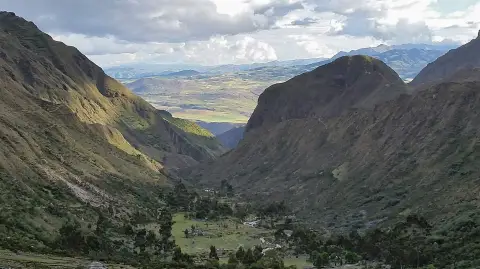
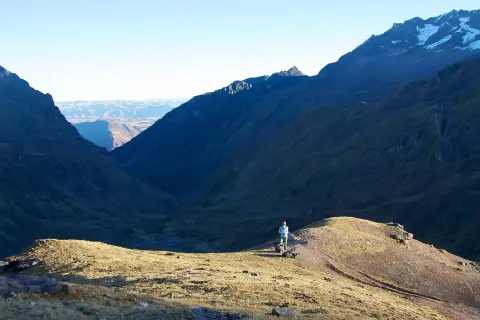
Choquequirao is often described as a sister to Machu Picchu: a royal estate or ceremonial complex of terraces, plazas and llama figures set into the mountainside, with views across the canyon to snow peaks. Only part of it has been cleared, and the rest remains under vegetation. What makes it special is how few people are there. On many days the ruins have only a handful of visitors, which is almost unthinkable at Machu Picchu.
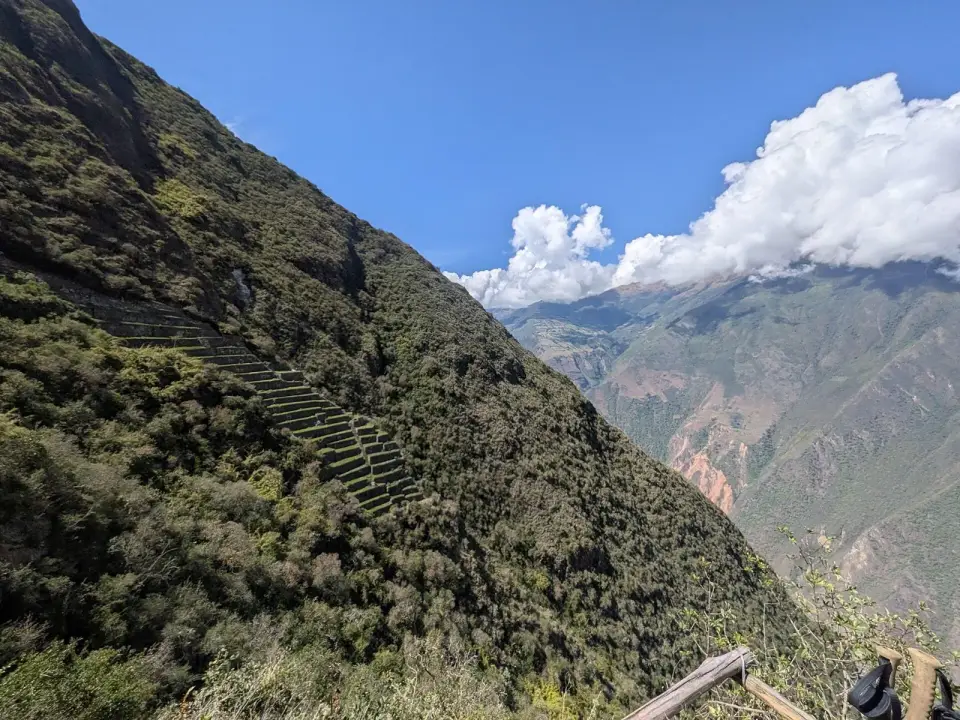
The price is effort. There is no train and no bus: the site is reached on foot, through hot, dry canyon slopes and then up to a cool, misty ridge, and the walking days are long.
The standard four-day trek
Transport takes you from Cusco to Cachora, at about 2,900 m, a drive of roughly four to five hours. On day one you walk along a ridge and then descend to a camp near the Apurímac river, at about 1,500 m, a loss of around 1,500 m and a journey of 15 km or more. Day two begins with a hot, steep climb of about 1,500 m up to the area near the site, with camps at roughly 3,000 m. You usually reach the ruins on the afternoon or the next morning.
Day three is spent exploring the ruins and may include the terraces and the llama figures. The return follows the same path: back down to the canyon and up again on the final day. Many walkers find the descent and climb equally hard on the knees and legs.
An extended route continues beyond Choquequirao over high passes towards Machu Picchu, taking around eight or nine days. This is a serious multi-day expedition that requires strong fitness and a good operator.
Tours and activities
Bookable online, chosen for their traveller reviews.
-
★ Top rated From €23 per person
-
★ Top rated From €22 per person
-
★ Top rated From €23 per person
-
★ Top rated From €17 per person
Season, fitness and access
The dry season, roughly May to September, is the practical time, with the most stable weather. In the wet season, from roughly November to March, rain makes paths muddy and dangerous, landslides can block roads and many operators do not run the trek. The canyon is hot at any time of year, so temperature extremes are part of the route.
Fitness requirements are higher than for Lares or the classic Inca Trail. You should be able to hike for six to ten hours on consecutive days with steep ups and downs. Training with long hill walks, including descents, is worthwhile. Access and facilities have been changing, and there have been plans for easier access in the area.
What to ask an operator
Ask how many days are planned and whether there is a rest day at the ruins, what the group size is, how mules and muleteers are looked after, and what camp facilities are available. Confirm that the price covers site entrance fees, meals, tents and transport to and from Cachora, and ask for the evacuation plan. If you want to continue to Machu Picchu, ask how the final stages and tickets are arranged. Because the route is remote, choose experienced local guides rather than the cheapest option.
What there is to see at the site
The cleared areas include a large central plaza, a series of platforms, a ritual or administrative complex and, below the main group, a terrace wall decorated with white stone llamas. Excavation is ongoing, and some parts are closed or under restoration, so what you see depends on the year. The upper sectors give wide views down to the canyon and across to snow-covered peaks.
It is easy to underestimate the time needed. The site is spread over a steep ridge, and moving between sectors takes effort at that altitude. Many walkers feel that a full day at the ruins is the minimum, and that a trek which reaches them in the afternoon and leaves early the next morning misses the best of it. Ask your operator how long you will actually have there, and whether a rest day is included.
Choquequirao compared with Machu Picchu and Ausangate
Machu Picchu is the complete, restored citadel with tickets, timed entry and crowds. Choquequirao is half cleared, partly overgrown and almost empty, reached only by long walking days. If you want to see the best-known Inca site, the travel logistics of the train are far simpler. If you want a sense of the scale of the empire away from the crowds, Choquequirao has no equivalent.
Among the demanding Cusco options, it sits close to Ausangate in difficulty but in a very different landscape: a hot, steep canyon rather than a cold, high plateau. The Salkantay trek is a more accessible compromise for people who want mountain scenery and a well-supported route.
Food, water and camp life
Because the canyon is dry and hot, water management is important. Operators usually supply boiled or treated water, but you should carry at least two litres on the trail and be ready to refill. Food is prepared by the cook and carried by mules, and menus are simple and filling. Camps in the canyon bottom are warm and buggy, with insects at dusk, while those near the ruins are cool and often wet with mist.
Bring light, quick-drying clothes for the descent and warm layers for the ridge, and a head torch for early starts and late dinners. Because the route has few services, bring small cash for any local stalls and for tips. For what to take, see gear, and for what the price should include, choosing an agency.
Where to sleep
-
Find hotels
Plaza de Armas and historic centre
Everything on foot, at the price of noise and crowds
-
Find hotels
San Blas
Artisans' quarter with steep lanes and views, a short walk uphill
-
Find hotels
All of Cusco
Compare every area and price level in one search
Frequently asked questions
How hard is the Choquequirao trek?
It is demanding. The distances are moderate, but the height gain and loss in a day is large, and the heat in the canyon adds to the effort.
How many days do I need?
Four days is the common minimum from Cusco. Longer versions allow a rest day or continue to Machu Picchu.
Is it worth it compared with Machu Picchu?
They are different. Choquequirao is quieter and wilder, but less complete and harder to reach. Many people go for the experience of walking there.
Can I go independently?
Experienced trekkers sometimes do, but the steep terrain, heat and remote location make guidance and planning important.
When was Choquequirao discovered?
The site was known to local people long before modern visitors arrived, and it has been visited by explorers and archaeologists for more than a century. Excavation has been slow, which is why much of it is still covered by forest.
Is there a cable car to Choquequirao?
A cable car has been discussed for years, and access plans change. Access plans change, and the trek may become shorter in future.
What is the best time of year to visit Choquequirao?
June to August have the most stable weather, though the canyon is hot at midday. April, May and September are also possible, with some rain risk.