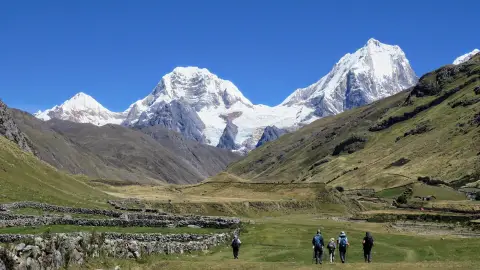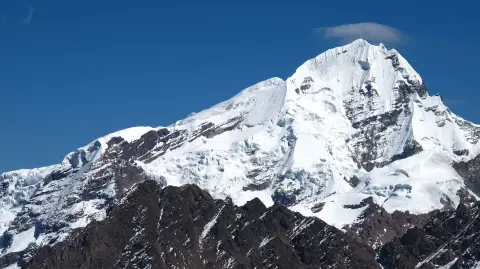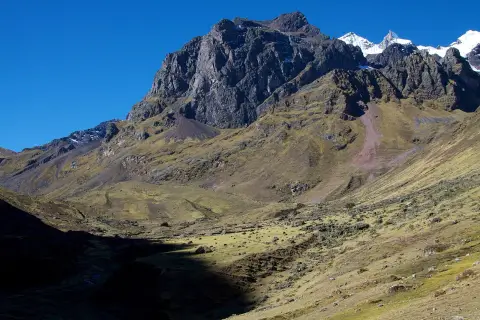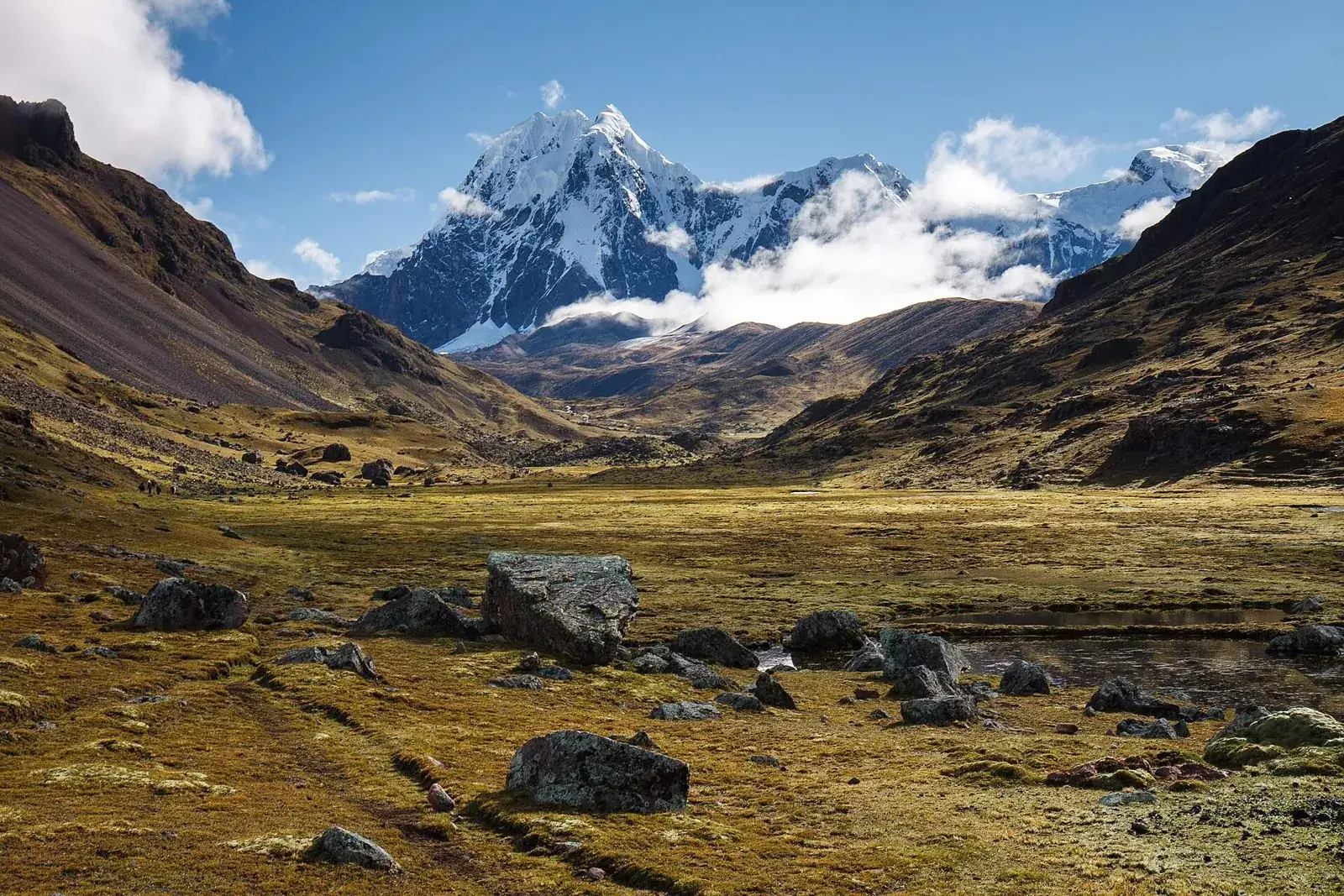
The Ausangate trek circles a glaciated peak of more than 6,300 m in the Vilcanota range, usually in five or six days. Camps are above 4,000 m and several passes exceed 5,000 m, so it is among the hardest of the Cusco-area treks. It rewards fit, acclimatised walkers with empty trails, herds of alpacas, coloured mountainsides and hot springs, and it is not a route for a first trek.
Route map
Route character
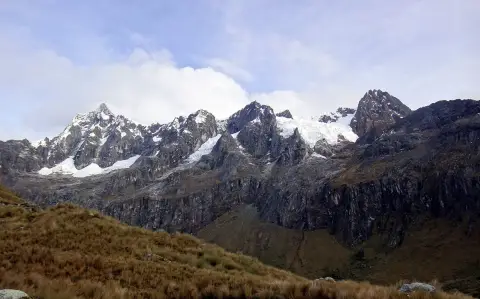
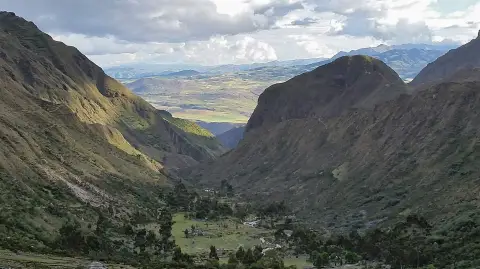
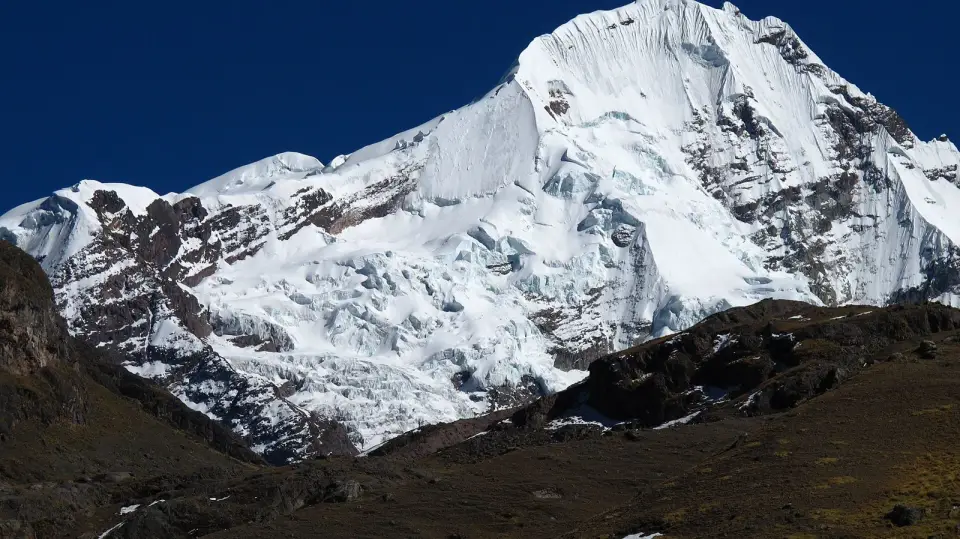
Ausangate is a mountain of great importance in Quechua tradition, regarded as an apu, or protective mountain spirit. The trek circles its base, never leaving the high plateau for long, and the scenery is a mix of glaciers, turquoise lakes, rust-red and ochre slopes, and open grassland dotted with alpacas and herders' houses. The trail is part of a landscape that is still lived in, and you will meet families herding their animals.
Few treks give so much sense of isolation so close to Cusco. The price is cold and altitude: nights are freezing, the air is thin, and rest days are short.
The stages
Most itineraries start from the village of Tinki or from Pacchanta, at roughly 4,200 to 4,400 m, a drive of about four hours from Cusco. Day one is a moderate walk to a first camp near a lake, often with a stop at hot springs. Day two crosses a pass of around 4,800 m, followed by more passes of up to 5,000 m or more on the following days, with long, rolling stretches above 4,500 m between them.
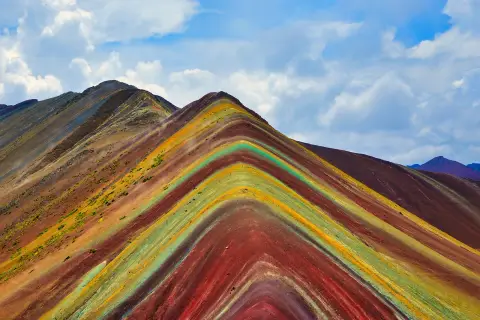
The classic loop includes views of the striped hills that resemble those at Rainbow Mountain, and many routes include a side trip or return through that area. Hot springs at Upis and Pacchanta give a welcome end to a hard day. The full circuit is about 70 km, though shorter options exist for those with less time. Daily walking times are typically five to eight hours.
Tours and activities
Bookable online, chosen for their traveller reviews.
-
★ Top rated From €23 per person
-
★ Top rated From €22 per person
-
★ Top rated From €23 per person
-
★ Top rated From €17 per person
Season and fitness
The dry season, roughly May to September, is the only sensible period. Even then, nights drop well below freezing at the camps, and snow can fall at any time. The wet season, roughly November to March, brings heavy snow, cloud and avalanche risk on the high passes. You need to be comfortable walking five to eight hours a day at altitude with climbs of several hundred metres. Previous multi-day experience helps.
The trail is well established but sections are exposed. Weather can change in minutes, and the lack of shelter makes good clothing essential.
Booking and costs to understand
Because the route is remote, most walkers go with an operator that supplies guides, cooks, muleteers and camping equipment. Ask about the group size, tent and sleeping bag quality, the number of days and whether a spare day is built in for weather. Check whether local community entrance fees are included. Some communities charge fees for access and for camping, and they are often paid in cash on the trail, so ask your operator how this is handled. Choose an operator that employs local people and ask how muleteers are paid.
Ausangate and the culture of the apus
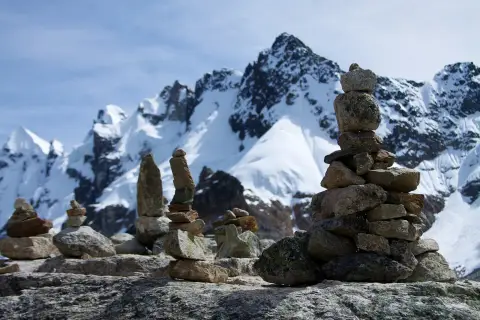
For many families in the region, the mountain is a living presence. Offerings are made to it, and stories about its moods and powers shape how people herd, plant and travel. Respect this by following your guide's advice on where to walk and what not to touch, and by asking before photographing people, shrines or animals. The pilgrimage to the Qoyllur Rit'i festival, held near the mountain, is an important event for many Andean communities, and trekkers should avoid the area during it unless they are part of the pilgrimage.
The communities also own the land and the livestock, so camp only on designated sites, keep away from the alpacas and leave no waste. A responsible operator pays the community fees and tells you why they exist.
Ausangate compared with Huayhuash and Santa Cruz
Ausangate is shorter than Huayhuash and higher on average than Santa Cruz. Its character is different: more open plateau, fewer jagged peaks, and a combination of colour and emptiness that suits photographers and people who like silence. The passes are not technical, but the sustained height wears you down, and the camps are colder than those of most routes.
If you have already done a Cordillera Blanca trek and want a harder one without leaving the Cusco region, Ausangate is the natural step. If this is your first trek in Peru, choose something shorter, such as the Lares trek, and save this circuit for a later trip.
A short version and day options
Not everyone has six days. Some operators offer a shortened loop of three or four days, or day visits to the hot springs and the lakes near the start. A short version loses some of the highest passes, but it still places you above 4,500 m and still needs acclimatisation. Ask exactly which sections are omitted and whether the route is a loop or an out-and-back.
For a single day in the same region, the Rainbow Mountain excursion is the better known option, though it is crowded and gives a very different experience. The route to the colourful ridge from the Ausangate side is quieter and is sometimes included on the longer trek. Because the access road is rough, allow time for delays and keep your flights flexible after the trek.
Where to sleep
-
Find hotels
Plaza de Armas and historic centre
Everything on foot, at the price of noise and crowds
-
Find hotels
San Blas
Artisans' quarter with steep lanes and views, a short walk uphill
-
Find hotels
All of Cusco
Compare every area and price level in one search
Frequently asked questions
How high is Ausangate?
The peak is more than 6,300 m. The trek stays lower, but several passes exceed 5,000 m.
How many days does the circuit take?
Most itineraries take five or six days, with shorter versions available.
Is Ausangate harder than Salkantay?
Yes, generally. It is longer, higher and more remote, with colder camps.
Can I combine it with Rainbow Mountain?
Some itineraries pass the Rainbow Mountain area. Because of the altitude, do not combine them too early in your trip.
Can I do the Ausangate trek without a guide?
Experienced high-altitude trekkers do, but the terrain is remote, the weather changes quickly and community fees and route-finding add complexity. Most visitors go with an organised group.
What is the weather like on the Ausangate trek?
Days are often sunny and cold, with strong sun and sudden snow or hail. Nights at the camps are freezing, so a warm sleeping bag and insulating layers are essential.
Do I need to carry my own gear?
On organised treks, mules carry the camping equipment and food, and you carry a daypack. Check what the operator supplies, especially sleeping bags and mats, and whether the bag limit is strict.