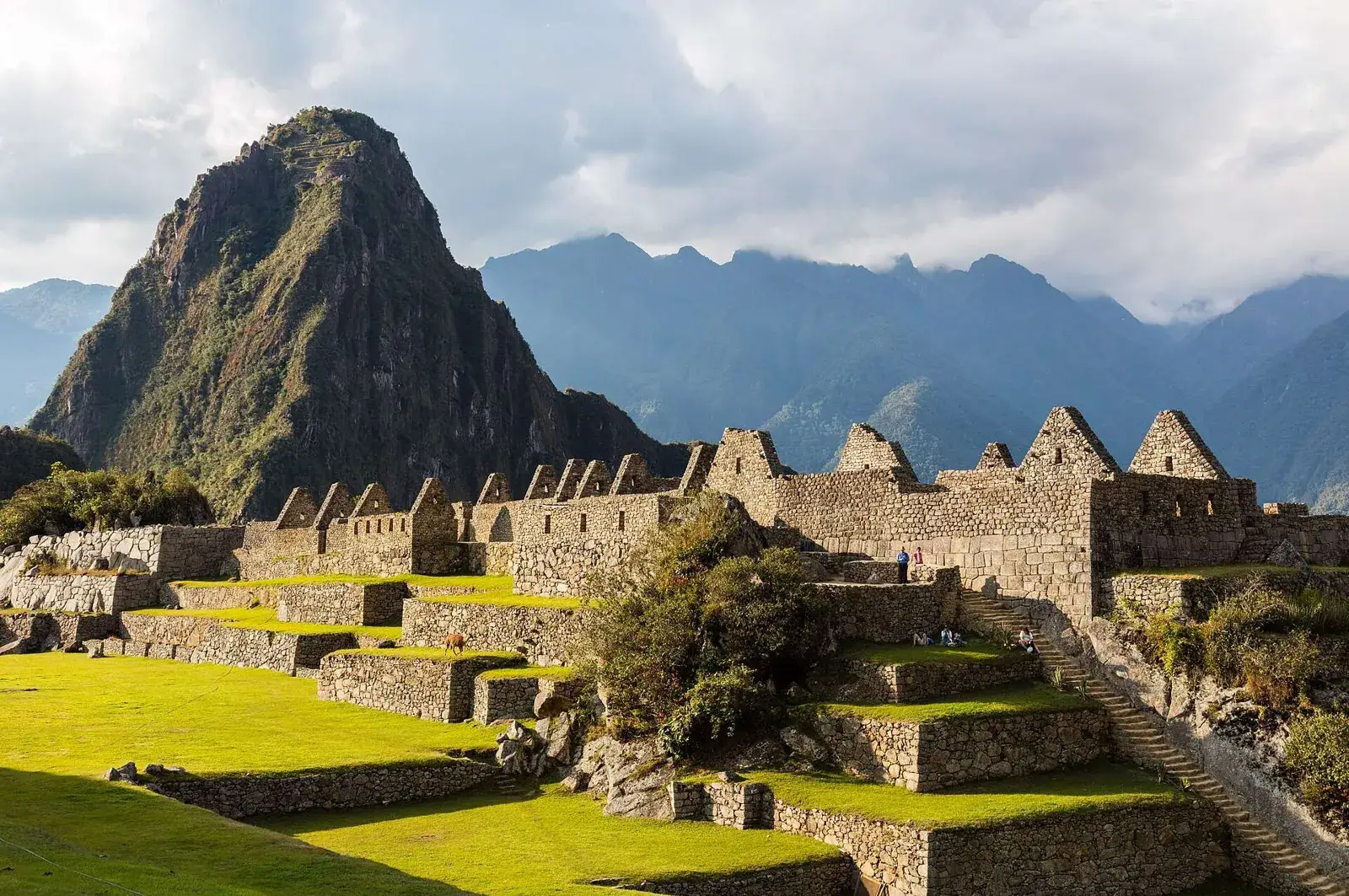
For a first visit, plan about ten days to two weeks: Lima for a day or two, then Cusco, the Sacred Valley and Machu Picchu, with an optional add-on such as Lake Titicaca, Arequipa or the Amazon. Book Machu Picchu entry and trains first, spend your first nights at lower altitude, and leave slack for delays. Do less, but do it unhurried.
The classic first route
Most first trips follow a similar shape, and for good reason. You arrive in Lima, which has the international airport, great food and a coastline worth a day or two. You fly to Cusco, the old Inca capital and the base for the region. From there you visit the Sacred Valley and Machu Picchu. With a third week, or a shorter stay at each stop, you can add the Colca Canyon and Arequipa, Lake Titicaca or a few nights in the rainforest.
Resist the urge to add everything. Distances are large, flights are sometimes delayed and every move costs half a day. Three or four bases is a sensible limit for two weeks. How many days Peru needs shows what each length of trip can realistically include.
What to book first
Machu Picchu is the one thing that cannot be improvised. Entry tickets are limited and time-slotted, and in busy months the better slots and train times disappear weeks or months ahead. If you want the Inca Trail, permits are the earliest booking of all. Once those are fixed, build flights and hotels around them. Everything else, from restaurants to most day tours, can usually be arranged closer to the date.
Fly into Lima and out of Lima if you can, and consider flying between Lima and Cusco rather than taking the long bus. For the Machu Picchu system, see Machu Picchu tickets; transport covers the other legs.
When to go, and what to expect
The dry season, roughly May to September, gives the clearest weather in the highlands and the most crowds. The rainy season, roughly November to March, is greener and quieter, with a higher chance of delays. April and October are good compromises. Lima is grey for much of the year, so do not plan a beach holiday around it. Check when to go and each month for detail.
Money, safety and logistics are manageable with normal care. Use official taxis or apps, keep your phone out of sight in crowded areas and carry some cash in small notes, since many small places do not take cards.
A sample ten-day shape
A workable first-timer's trip gives Lima two nights for food and the coast, then a flight to Cusco and a move straight down to the Sacred Valley for two nights to adjust. A day for Ollantaytambo and the train follows, with a night in Aguas Calientes and a morning at Machu Picchu. Return to Cusco for two nights to see the city and its nearby ruins, and spend the last nights back in Lima before the flight home.
This is the pattern behind the ten-day itinerary, and the fourteen-day version adds a region such as Arequipa and Colca or Lake Titicaca. Treat the numbers as guides, not rules, and change the order if flights or tickets demand it.
Mistakes to avoid
The common first-trip errors are all about compression: arriving in Cusco and going straight to a high-altitude excursion, trying to fit Machu Picchu, Rainbow Mountain and Lake Titicaca into a week, booking tight flight connections on the last day, and leaving Machu Picchu tickets until arrival. A calmer plan with one fewer stop almost always gives a better trip.
First-timer mistakes lists the rest in detail, and too many cities explains why a short list works better than a long one.
Guides, tours and independence
A first trip does not need to be fully guided or fully independent. Machu Picchu rewards a guide, since the site is confusing without context, and some circuits require one. Cusco, Lima and Arequipa are easy to explore on foot, and many day trips can be booked in town a day or two in advance outside the peak months.
Treks are different. The Inca Trail requires a licensed operator, and other multi-day routes are best arranged through a reputable agency. The guided versus independent reality check helps you decide where a guide adds the most value.
Money, health and paperwork
Check entry requirements for your nationality well before departure, and make sure your passport has enough validity. Take out travel insurance that covers altitude and medical evacuation, and ask a doctor or travel clinic about vaccines and altitude medication. Bring some US dollars or soles in small notes and an ATM card, and keep copies of key documents separately.
Mobile data is easy to arrange with a local SIM or eSIM. The entry requirements and the money cover the practical details, which change with the rules and the exchange rate.
Frequently asked questions
How many days do I need for a first trip?
Ten days is a workable minimum for Lima, Cusco, the Sacred Valley and Machu Picchu. Two weeks gives more breathing room and one extra region.
Do I need a guide?
For Machu Picchu a guide is useful and, for some circuits, required. For cities and many day trips you can go independently.
Is Peru safe for first-timers?
Most visitors have trouble-free trips with normal precautions. Read the safety before you travel.
What is the best month for a first trip?
May and September offer dry mountain weather with lighter crowds than July and August. If you must travel in the rainy season, keep the mountain section short and flexible.
Should I start in Lima or Cusco?
Most visitors start in Lima, since international flights arrive there. If you fly into Cusco, spend the first night or two at a lower altitude, such as the Sacred Valley.
Can I do Machu Picchu as a day trip from Cusco?
Yes, it is possible by train, but the day is long and tiring at altitude. Staying a night in the valley or Aguas Calientes gives a calmer visit.
How much Spanish do I need?
Tourist hotels and tour offices often have English speakers, but outside them little English is spoken. A few phrases go a long way, and the Spanish phrases is a good start.
What should I pack for a first trip?
Layers for cold nights and warm days, a rain jacket, sun protection and comfortable walking shoes. The packing list covers it in detail.