In Peru the best choice is rarely all one or the other. Use a guide or operator where access is regulated or logistics are hard, such as the Inca Trail, multi-day treks, the Amazon lodges and some Machu Picchu circuits, and travel independently for cities, buses and many day trips.
Decide by activity: the question is not what kind of traveller you are, but what each part of the trip needs.
Where a guide or operator is required or close to it
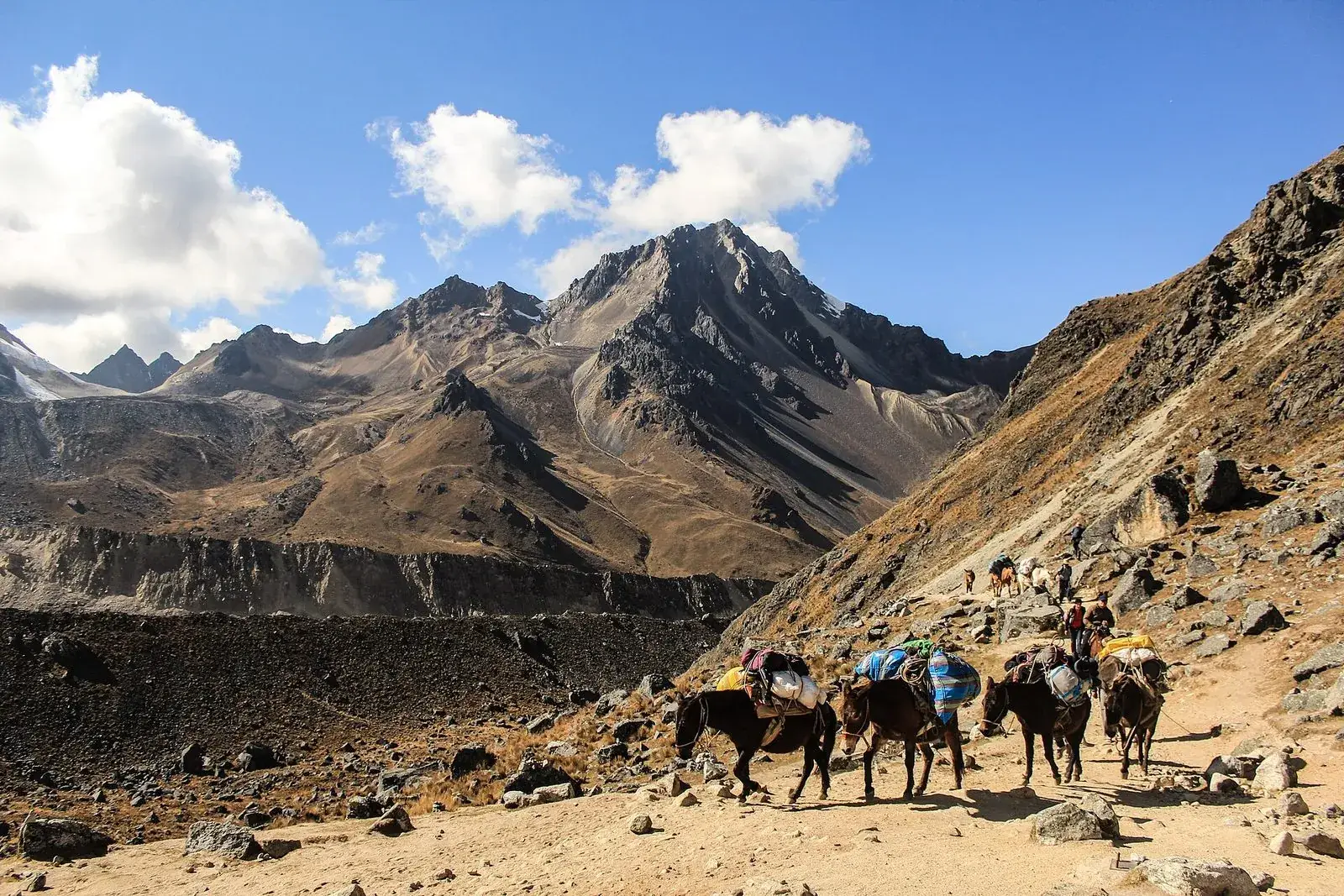
Some activities cannot be done independently. The Inca Trail is open only with a licensed operator, and permits are booked through the operator. Multi-day treks in remote country, such as Salkantay, Ausangate or Huayhuash, need an organised service with food, tents and animal support in practice, even where nothing legally forbids walking alone. Amazon lodges include the boat transfer and guides, and in protected areas guides are the norm.
Machu Picchu has rules about timed entry and routes, and it is common to enter with a guide, but the site can be visited without a tour if you buy the tickets yourself. See Machu Picchu tours for the main formats. See Inca Trail for the permit system in detail.
Where independent travel works well
Cities are easy to explore on your own. Lima, Cusco and Arequipa have walkable centres, plenty of taxis and apps, and many places to eat. Transport between main towns is organised: domestic flights and long-distance buses are booked online or at a terminal. Many day trips, such as the Sacred Valley by shared transport or taxi, can be arranged on the day or the day before.
Independent travel is also more flexible. You can stay longer where you like a place and leave sooner where you do not. For how the systems work, see long-distance buses and taxis and apps. See Cusco tours to understand which excursions are easiest to buy on the spot.
What a tour really buys
A tour buys logistics, not necessarily knowledge. Pickup from the hotel, tickets, transport in one vehicle, a set schedule, a guide who knows the access points and, on treks, safety equipment and support. It saves effort, and the effort saved is greatest where the information is hard to find or the places are remote.
A tour also costs you flexibility. Group tours keep to a schedule, make stops chosen by the operator and may include shopping stops. Quality differs widely between companies, and the cheapest offer is not always the best, particularly where safety or welfare of porters is involved. For what to compare, see the best tours and choosing an agency.
Private, small group or large group
Within guided travel there are three formats, and the difference is large. A large group tour is the cheapest and the most rigid: a bus of many people, a fixed timetable, shared stops. A small group of a few travellers gives the guide more time for questions and keeps the pace more flexible. A private tour with a driver or guide of your own is the most expensive per person, but you control the start, the stops and the speed.
For a first visit to a crowded site, a small group is often the best compromise. For families, older travellers or people who tire easily, a private driver is worth considering for the Sacred Valley, where several sights are spread along a road. For a trek, the group size also decides how the camp feels, so ask before booking. See Sacred Valley tours to compare the formats.
Language, safety and the question of a guide's knowledge
Language matters less than people expect in tourist areas, where staff speak English, but basic Spanish makes independent travel much easier on buses and in markets. If you take a guide, ask whether tours run in your language on the day you want, since small groups may be offered only in Spanish or English depending on bookings.
Guides in Peru are often licensed and trained, and a good one adds a great deal of context to a site such as Machu Picchu or the Qorikancha. But the quality varies, and a licence does not guarantee a good tour. Ask what the tour covers and how long it lasts, and read recent reviews on a neutral platform. For safety, always prefer a guide who tells you what to do if the weather or your health changes.
A mixed plan
A common and sensible plan combines both. Book the Inca Trail or a trek and a rainforest lodge in advance, arrange the Machu Picchu entry and train ahead, and keep everything else open. Use a private driver for a day in the Sacred Valley if you want to see several sites quickly, and a shared van or taxi if you prefer to save money.
For the Colca Canyon the choice is more open: tours are cheap and convenient, but independent travel is possible if you have time. The comparison of tours and independent travel in the Colca Canyon sets out the trade-off. The more a place depends on regulated access or remote logistics, the more a tour makes sense; the more it is a town or a main road, the less.
How to decide for each part of your trip
Make a table of the main parts of your trip and ask three questions about each. Is access regulated? Is it remote or does it need equipment? Would I enjoy the planning, or is it a chore? If the answers are yes, yes and no, book a guide. If they are no, no and yes, go alone.
On a ten-day trip that usually means two guided pieces, such as the Machu Picchu visit and a lodge or a trek, and the rest independent. That keeps the cost down and the time free. For which items to book first, see first-timer mistakes, and for the day-trip choices, tours at Cusco.
Frequently asked questions
Can I do the Inca Trail without a tour?
No. It needs a licensed operator and a permit booked through them.
Is a guide needed at Machu Picchu?
Entry rules change over time. Many visitors take a guide for the history, but it is not the only way to visit.
Are group tours cheaper?
Usually, per person, but they offer less flexibility. Compare what is included before deciding.
Can I hire a guide on the spot at a site?
At many sites guides offer their services at the entrance, but quality and licensing vary. Ask to see an identification card, and agree the price and the duration before you start.
How far ahead should I book a trek?
The Inca Trail needs months in high season. Other treks need weeks, but good operators fill up, so book as soon as your dates are firm.
Do I need Spanish to travel independently?
Not in the main tourist places, but it helps on buses, in markets and in smaller towns. A few phrases and a translation app go a long way.
Is it safe to book a tour on the street?
It is common and often fine for simple day trips, but compare two or three offers and check what is included. For treks and anything remote, book through a company you have checked.
Should I tip a guide?
Tipping a guide is customary in Peru and is separate from the tour price. The usual amounts and how to give them are covered under tipping.