A good family route is Lima for two nights, the Sacred Valley for three, one night in Aguas Calientes for Machu Picchu, then three nights in Cusco and the flight home. The key choice is to fly to Cusco and go straight down to the valley, which sleeps lower than the city, so children adjust before they reach the highest point.
The days are short on purpose: one main activity in the morning, a long lunch, a rest or nap in the afternoon. The train to Machu Picchu is treated as part of the fun, not just transport.
The design: low first, few moves, slow afternoons
This route has four bases and only three moves between them, which is about the limit for younger children. The order is Lima at sea level, the Sacred Valley at roughly 2,800 m, a night in Aguas Calientes at a lower altitude again, and Cusco at about 3,400 m last. Cusco is the highest sleep and comes after six nights of gradual adjustment.
Plan one main activity a day. Children cope with an early start much better than with a packed afternoon, and the altitude makes everyone tire sooner than expected. Keep the hotel as a real base, with a pool or a garden if possible, because the best part of the day for a seven-year-old may be an hour of doing nothing.
The route differs from the standard 10-day itinerary by dropping Arequipa and the canyon, which means long drives and a high pass, in favour of more time in each place. For the wider picture, see Peru for families.
Booking order, tickets and age rules
Book in this order: the Machu Picchu entry ticket for your date, the train seats, the Lima to Cusco flights, and then the hotels. The ticket and the train are the only items with a real chance of selling out, and the whole route hangs on that one day. Machu Picchu tickets explains how the entry system works, and when to book gives the lead times to check.
Children's rules differ by item and change. Check the official ticket rules for the age at which a child needs a ticket or a discounted one, whether a passport or birth certificate is needed to prove age, and the train company's rules on children's fares and seats. Ask the airline about the child baggage and seat rules on the domestic flights too.
Carry the passports of every traveller, including children, on all internal flights and on the train. Keep a printed copy of the Machu Picchu ticket and the train booking in a folder that is easy to reach.
Days 1 and 2: Lima
Spend the first two days in Lima, where altitude is not an issue and jet lag can settle. The first day should be very light: a walk along the clifftop park in Miraflores, an early dinner and bed. Children who slept badly on the plane do better with a calm first day than with a museum.
On day two choose one sight that suits children. The Magic Water Circuit is a park of lit fountains that most children enjoy in the evening, and the Huaca Pucllana pyramid in Miraflores is short and easy to follow. Check the opening days before going, as both have set schedules. Leave a long midday gap for lunch and a nap.
The Lima airport is far from the centre and traffic is heavy, so allow plenty of time on the transfer. Lima lists the districts, and the airport transfer guide explains the options. Pack the next morning's bags before dinner, because the flight to Cusco is early.
Days 3 to 5: the Sacred Valley
Fly to Cusco in the morning and do not stay: a driver takes the family straight down to the valley, a transfer of roughly an hour or more depending on the base. Book it in advance and ask for a child seat if you need one, since local cars may not have them. The first afternoon is for a pool, a garden and an early night.
Ollantaytambo is a good base for children, with its Inca fortress, narrow cobbled streets and the train station close to the town. Day four can be a gentle circuit: the Pisac market in the morning, where children can choose a small souvenir, and a slow lunch. Day five can combine the circular terraces of Moray and the Maras salt pans, which are visual and need little walking. Check each site's ticketing and whether a combined tourist ticket applies.
Read the Sacred Valley guide to pick a base and Ollantaytambo for the fortress climb, which has many steps and may be better as a short visit for small children.
Day 6: Machu Picchu, with the train as part of the fun
On day six take the morning train from Ollantaytambo to Aguas Calientes. For many children this is the highlight: a window seat, mountains close on both sides and a river in the gorge. Some trains have panoramic windows, so check the carriage type when booking.
Sleeping in Aguas Calientes lets the family go up to Machu Picchu in the late afternoon or the next morning without a rushed journey. Check the entry time on the ticket, and the circuit options in Machu Picchu circuits, because some routes have long steps and narrow paths with drops. Keep children close on the upper terraces and on the stairs.
Rules for bags, food and walking sticks apply to everyone, so read Machu Picchu with kids before the visit. Take water, sun cream and a hat, and plan a long rest at the entrance rather than trying to see everything. The citadel is at about 2,430 m, lower than Cusco, so altitude is mild here.
Days 7 to 9: Cusco at an easy pace
Take the train back to the valley or to the station for Cusco on day seven, then transfer to the city for the night. The last stretch can be long for children after a big day, so keep the evening quiet.
Day eight is a gentle city day. Walk the Plaza de Armas, visit the San Pedro market for fruit and a juice, and stop at the Qorikancha only if energy allows. Stairs and cobbled streets are tiring at 3,400 m, so go slowly and use taxis for the hills.
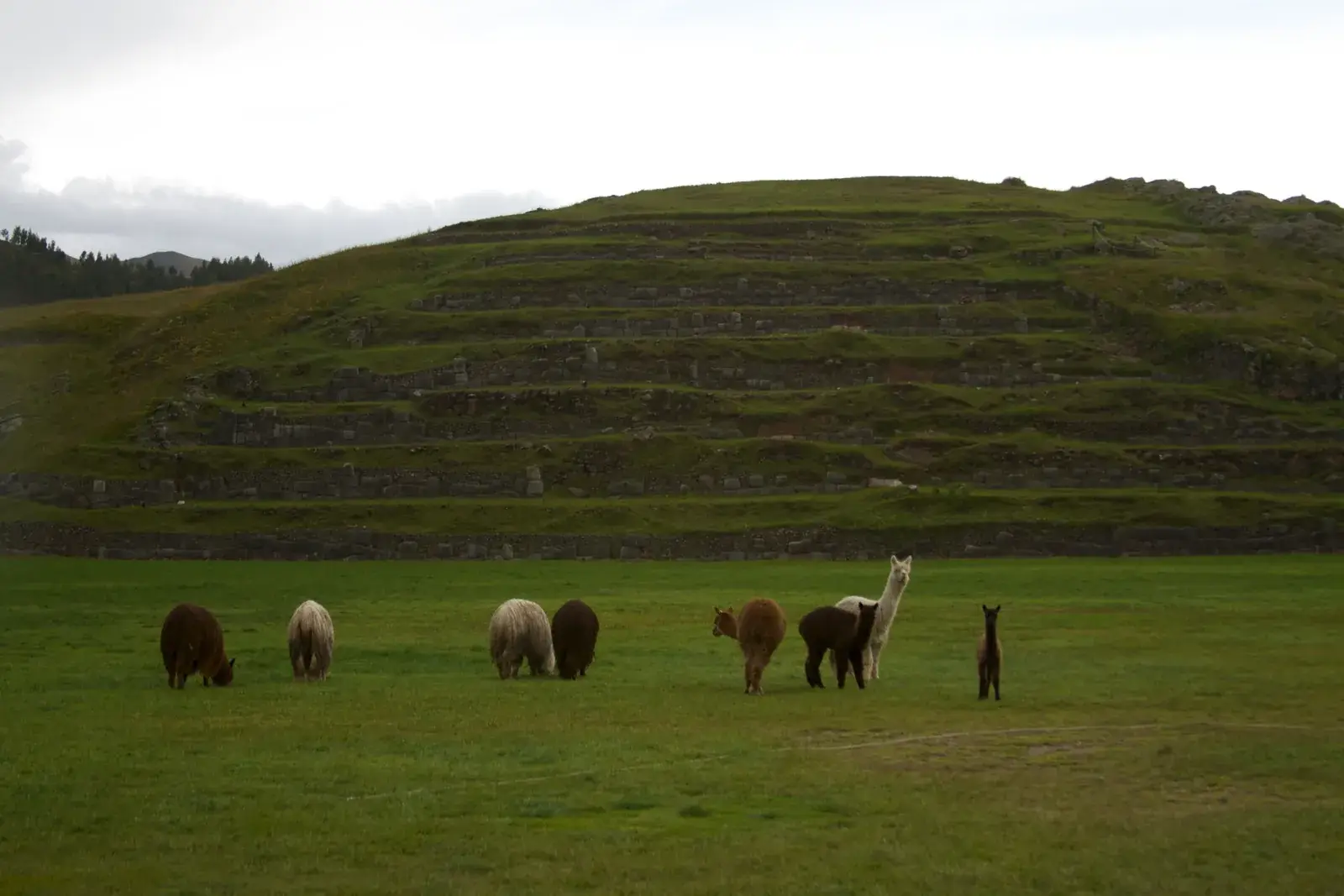
Day nine is the rest day. Keep it free for a cooking class suited to children, a short visit to Sacsayhuamán, or simply the hotel. Do not fill every hour. If the family still has energy, Cusco has more child-friendly options, and the sites near the city are described in Inca sites near Cusco. If anyone feels unwell, a half-day of rest beats a tour.
Day 10: the flight home
On day ten transfer to the Cusco airport and fly to Lima for the connection home. Allow a long buffer between the domestic and international flights, because morning clouds can delay Cusco departures. Flights in Peru explains why. Keep the morning calm: a late breakfast, packed bags the night before, and snacks and a small toy or book for the flights. Reconfirm the airport transfer the evening before, keep the passports and the boarding documents in one bag, and leave the hotel with enough time to pass through security without hurrying small children who may be tired after nine busy days.
If the trip feels too packed, drop one valley outing, or add a night in the valley instead of a second night in Aguas Calientes. Do not add a day trip to the coast or to Lake Titicaca; with children, fewer moves are always better.
Food, health and packing with children
On food, keep children to cooked dishes, bottled or treated water and fruit that can be peeled. Plain rice, chicken, soups and potatoes are easy everywhere, and most restaurants will serve a simple plate. Carry snacks for the train and for long transfers. Water and food safety covers the basics.
Ask a doctor or travel clinic about vaccines and a first-aid kit well before departure; health and vaccines lists the topics to raise. Bring sun protection, because the sun at altitude is strong.
Pack a thermometer, any regular medicines, wet wipes, a hat and layers, because mornings and evenings are cold even in the dry season. Insect repellent is useful in the valley and at Aguas Calientes, and a small day pack for each older child lets them carry their own water and snacks, which many children enjoy.
Frequently asked questions
Is Peru safe and suitable for young children?
Many families travel with children, but the altitude calls for care, especially for babies and toddlers. Talk to a paediatrician before booking, and keep the route low at the start, as this one does.
What is the minimum age for the Inca sites and the train?
Rules on ages, tickets and fares change and vary by operator. Check the official Machu Picchu rules and the train company's terms for the child's age at the time of travel.
Can children get altitude sickness?
Yes, and it can be harder to spot in small children who cannot describe symptoms. Watch behaviour, appetite and sleep, descend if they worsen, and ask a doctor in advance.
Is a Machu Picchu night in Aguas Calientes worth it with kids?
It is usually easier than a long single day, because it removes the rush and gives time for a rest. The town is small and sits at a lower altitude than Cusco.
Should we take a stroller or a carrier?
A soft carrier is more practical on stairs, cobbled streets and trains, while a light stroller helps in Lima. Machu Picchu has rules on what can enter, so check them in advance.
What do children eat in Peru?
Rice, chicken, potatoes, soups and fresh fruit are easy to find. Avoid raw street food and use bottled water; see food and water safety.
Do we need a private guide or a driver?
A driver is useful for the valley day and the airport transfers because it removes waiting and lets you stop. A guide is optional, and short private visits suit children who tire quickly.