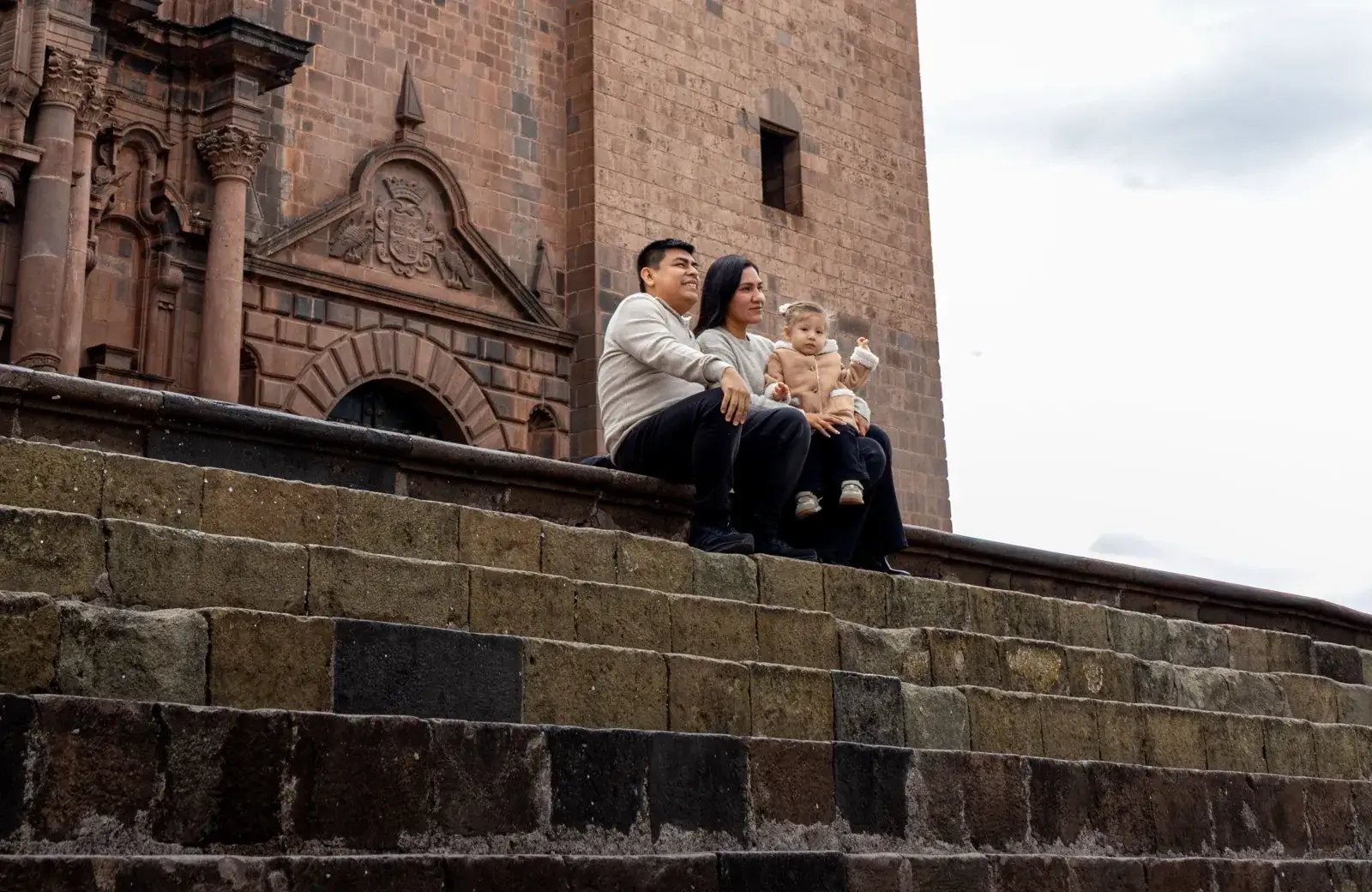
Peru works well for families when the pace is slow and the plan is built around children's needs. Start at lower altitude, keep transfers short, mix one big sight with a calm day, and choose activities that suit their ages. Talk to a paediatrician before travelling, as altitude, vaccines and food hygiene all need individual medical advice.
Shape the trip around the kids
Children do better with fewer hotel changes, shorter drives and a day of rest after each big excursion. Two weeks with four bases is usually plenty. A common family shape is Lima, then a night or two in the Sacred Valley, then Cusco, then Machu Picchu, with a beach or wildlife stop at the end. Pick hotels with space, a garden or a pool if you can, as they give children somewhere to burn energy.
Build in rest days without guilt. Long days in a car or bus, early starts and unfamiliar food tire children and parents alike. If you can, fly instead of taking overnight buses for long legs. The fourteen-day itinerary shows a pace that can be slowed further for children.
What kids tend to enjoy
The Ballestas Islands trip near Paracas offers sea lions, penguins and seabirds from a boat. Lima has parks, a seafront with playgrounds and several interactive museums. In the Sacred Valley, a pottery workshop, a visit to a weaving cooperative or a guided stop with llamas and alpacas holds younger children's attention. Machu Picchu itself works for children who like to explore, though it involves stairs, uneven paths and long queues. Machu Picchu with kids goes into detail.
Rainforest lodges can be wonderful for older children, with canoes, night walks and wildlife, but ask about minimum ages and about the trip length from the airport.
Choosing bases that suit children
The Sacred Valley is usually the easiest base for families. It is lower than Cusco, has gardens and open space, and offers short activities within a few minutes of the hotel. Cusco is rewarding but steep, cold at night and busy with traffic, so a short stay is enough with younger children. Paracas is a good coastal break at sea level, with calm mornings and boat trips.
Arequipa is a manageable city at about 2,330 m, lower than Cusco, and a useful stop for adjusting. Choose accommodation with family rooms, heating in the highlands and a restaurant on site, which makes late and early meals easier. Check the lift and stair situation if you travel with a pushchair, since many historic streets are cobbled and uneven.
Food, water and health
Peruvian food has plenty that children will eat, from chicken and rice to soups, potatoes, fruit and bread, and many restaurants will adapt dishes. Use bottled or purified water, and be careful with raw salads and street food, especially at the start of the trip. Bring a basic medical kit, rehydration salts and any regular medicines in their original packaging, and get advice on vaccines in good time. For general information, see water and food safety and health and vaccines.
Car seats are not always available in taxis or on tours. If you need one, arrange a private transfer in advance and ask what is provided.
Getting around with children
Flights between Lima and Cusco take roughly an hour and a half and save a long day on the road. On the ground, private cars and vehicles with a driver are more expensive than shared options but give flexibility for toilet stops, snacks and naps. The train to Machu Picchu is a highlight for many children, with large windows and a changing landscape.
Carry entertainment and snacks, expect delays and avoid tight connections. Taxis in cities often lack seat belts in the back, so check before you set off. See taxis and apps to understand how to book safer rides.
Practical choices
Book flights with generous connection times, carry snacks and entertainment for transfers, and choose tours with private vehicles when you can. Check age limits for treks, trains and activities, since some have minimum ages. Travel in the dry season if weather certainty matters, or in a shoulder month if you want fewer crowds.
Note that July and August coincide with school holidays in both Peru and many other countries, so they are the busiest weeks for family-friendly hotels and trains. Book those early, or consider June or September instead.
Frequently asked questions
What is the best age to take children to Peru?
There is no fixed age. Older children cope better with altitude and long days, but families with younger children travel successfully with a slow pace and medical advice.
Is Machu Picchu suitable for children?
Many children enjoy it, but it involves stairs, uneven paths and crowds.
Is it safe for children to drink the water?
Use bottled or purified water, and ask your doctor for advice about food and hygiene.
Can toddlers go to Cusco?
Families do take toddlers, but altitude affects small children and they cannot always say how they feel. Start lower, go slowly and ask a paediatrician before booking.
Are there child fares on trains and buses?
Operators have their own age and fare rules, and these change. Ask each company when booking and carry proof of age.
Which month is best for a family trip?
June and September offer dry weather with lighter crowds than July and August. The rainy season is cheaper but muddier and less predictable, which is harder with young children.
Can older children trek?
Some treks accept teenagers, while others set minimum ages. Choose an easier route, check the operator's rules and consider a shorter option instead of the Inca Trail.