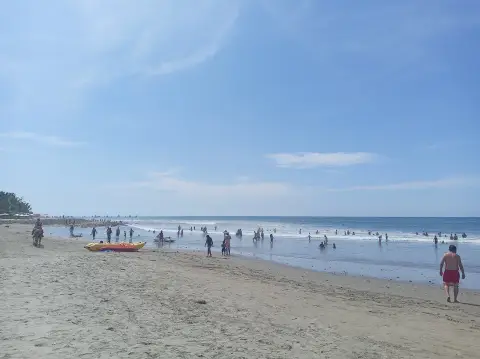
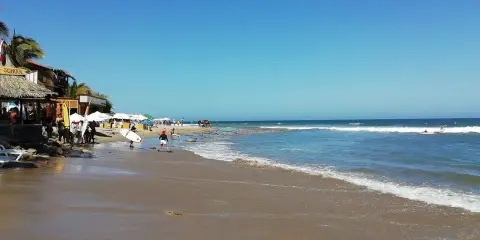
Punta Sal is a beach of about 6.5 km on the coast of the Tumbes region, roughly 25 km north of Máncora by the Pan-American Highway. The water is warm and generally calm all year, and the atmosphere is far quieter than in Máncora, with hotels and a few restaurants rather than a nightlife strip. It suits a relaxed day trip or two or three nights, and it is easy to reach by taxi or shared vehicle.
Map
Where Punta Sal is and what it is
Punta Sal is a coastal village and beach in the district of Canoas de Punta Sal, in the Contralmirante Villar province of the Tumbes region, the northernmost coastal region of Peru. It is usually described as the longest beach on the northern coast, about 6.5 km of sand, and it lies roughly 25 km north of Máncora and about 80 km south of the city of Tumbes. The border with Ecuador is farther still, over 100 km away.
It is a resort beach in the plain sense of the word: a long shore, hotels set behind it, and not much else. There is no historic centre to see and no ruins to visit, so the draw is the sea, the sand and the sunsets. Travellers who find the main beach of Máncora too loud and crowded often come here for the opposite experience, either as a day out from town or as the place to stay instead of it.
The two sectors of the beach
The beach is described as having two parts. Punta Sal Chica is the smaller one, a slightly curved shore between two small capes, with whiter sand and the most sheltered feel. Punta Sal Grande is the longer stretch, with less white sand and more room to walk. Hotels are spread along both, and which sector a hotel faces matters more than its name suggests, so look at a map before booking and do not assume that every room is a few steps from the water.
The sea is blue and warm, with a temperature usually quoted at about 24 °C through the year, because the warm current of the equatorial coast reaches this far south. The water is generally calm, which makes it comfortable for swimming and for children. Calm does not mean risk-free: conditions change with the tides and the swell, so look for flags or ask the hotel where it is safe to swim, and do not swim alone far from shore.
What you do there
Most days follow the same simple pattern: a swim in the morning, shade at midday, a long walk along the water in the late afternoon and the sunset, which is the main event of the day. The wide, flat shore is good for walking, and the low evening light is when photographers come out.
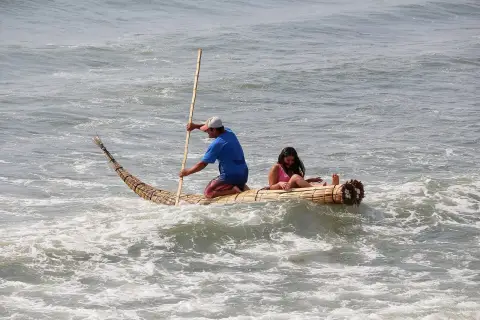
Some hotels organise kayaking, paddle boards and fishing outings with local boatmen, and other activities depend on the season and the sea. The coast here is part of the same stretch where humpback whales pass between roughly July and October, and sea turtles and seabirds such as frigatebirds are recorded along this shore. Treat any wildlife as a possible bonus, not a promise, and if you book a boat trip, choose an operator who explains how close the boat will go and for how long. A day here is slow by design, and that is the reason people come.
Getting there from Máncora
The simplest route is by road from Máncora, along the Pan-American Highway and then a side road to the coast. The distance is about 25 km and the trip takes in the order of 20 to 30 minutes by taxi. Shared vehicles also run along the highway, a cheaper option that follows the logic described in collectivos. Agree a taxi fare before you set off, as explained in taxis and apps, and arrange the return at the same time if you are going for only a day, because the beach is not a place where you can count on a passing car in the evening.
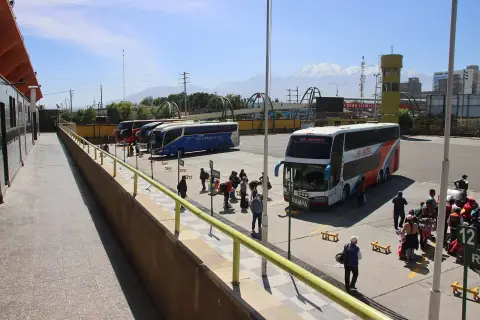
From farther away, long-distance buses on the highway stop at Máncora rather than at the beach, so the usual approach is to get off there and take a local transfer; the options for reaching the coast at all are in buses and flights. Coming from Tumbes and its airport takes about an hour and a half by road, and many hotels will arrange a pick-up if you ask in advance.
When to go
The warmest and sunniest months run roughly from December to April, which is also when Peruvian families fill the beach hotels, especially around holidays and long weekends. Between about May and November the weather is milder and can be hazy or cloudy, with fewer visitors and lower rates in many places, while the sea stays pleasant. The whale season, roughly July to October, falls in this quieter period.
At weekends and during national holidays the beach is livelier, and on weekdays outside the high season you may share a long stretch of sand with very few people. The equatorial sun burns fast even through haze, so bring a hat, high-factor sunscreen and a long-sleeved top, as covered in the packing list. For how the north coast compares with the rest of the country month by month, see weather by region.
Where to stay and eat
Accommodation is mostly in beachfront hotels, bungalows and small resorts, from simple rooms to large complexes, and some stays are sold with meals included. That is practical, because there are fewer independent restaurants than in Máncora, and prices in the hotel restaurants tend to be higher than in town. Check what is included before you book, and ask about water supply and air conditioning, which can matter in the humid months.
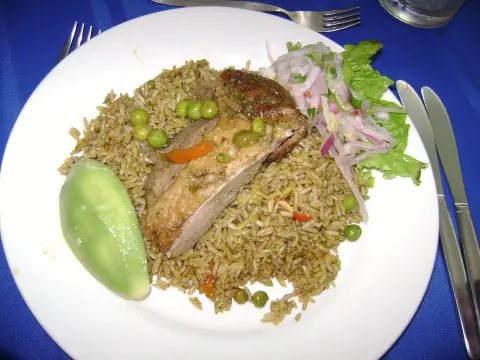
The food is the fish of the north coast: ceviche, grilled catch of the day, seafood rice and fried fish. Food in the north describes the dishes. Eat at places that cook to order and are busy, and read water and food safety if your stomach is sensitive. Because services are limited, bring cash in soles from a cash machine in Máncora or Tumbes, since card payment and machines may not be available everywhere along the beach.
Punta Sal compared with Máncora
The two places complement each other rather than compete. Máncora has the surf, the bars, the market, the wider choice of food and the ease of transport, and it is noisy at night. Punta Sal has the calm water, the longer beach, the sunsets and the silence, and it is almost entirely dependent on its hotels for everything else.
Many travellers base themselves in one and visit the other, which works well in either direction. If you want to learn to surf or to meet other travellers, stay in Máncora and come here for an afternoon. If you want to rest after a long overland trip, stay at Punta Sal and make a single trip into town. The rest of the coast and the way it fits into a longer journey north are covered in the northern Peru itinerary, and the long journey from the capital is described in Lima to Máncora.
Where to sleep
-
Find hotels
Máncora
Beach town on the north coast, from surf hostels to resorts
-
Find hotels
Vichayito
Quieter beach and bungalow resorts a short ride south of town
Frequently asked questions
How far is Punta Sal from Máncora?
About 25 km by road, which is roughly 20 to 30 minutes by taxi along the Pan-American Highway. Estimates vary by source, so confirm the fare and the time locally before you leave.
Is Punta Sal better than Máncora?
It depends on what you want. Punta Sal is quieter, calmer and better for resting, while Máncora has more food, nightlife, surf lessons and transport. Many visitors split their time between both.
Is the sea at Punta Sal safe for swimming?
The water is usually calm and warm, which suits swimmers and children, but currents and swell vary. Ask your hotel about the day's conditions and avoid swimming alone, far from shore or at dusk.
Can I visit Punta Sal as a day trip?
Yes, from Máncora it is an easy half day or full day by taxi or shared vehicle. Arrange your return trip in advance and bring cash, shade and water, since facilities on the sand are limited.
What is the best time of year to go to Punta Sal?
December to April is the hottest and busiest period, with the warmest sea. From May to November it is milder and quieter, and the whale season falls between roughly July and October. See weather by region.
Are there whales at Punta Sal?
Humpback whales pass along this coast from about July to October, and boat trips can be arranged through hotels or operators in the area. Sightings are never guaranteed, so treat a whale as a bonus.
Is there a cash machine or are there many shops at Punta Sal?
Do not count on it. The beach has hotels and a few restaurants, but services are limited and card payment is not universal. Withdraw soles in Máncora or Tumbes, and see money for advice on cash.