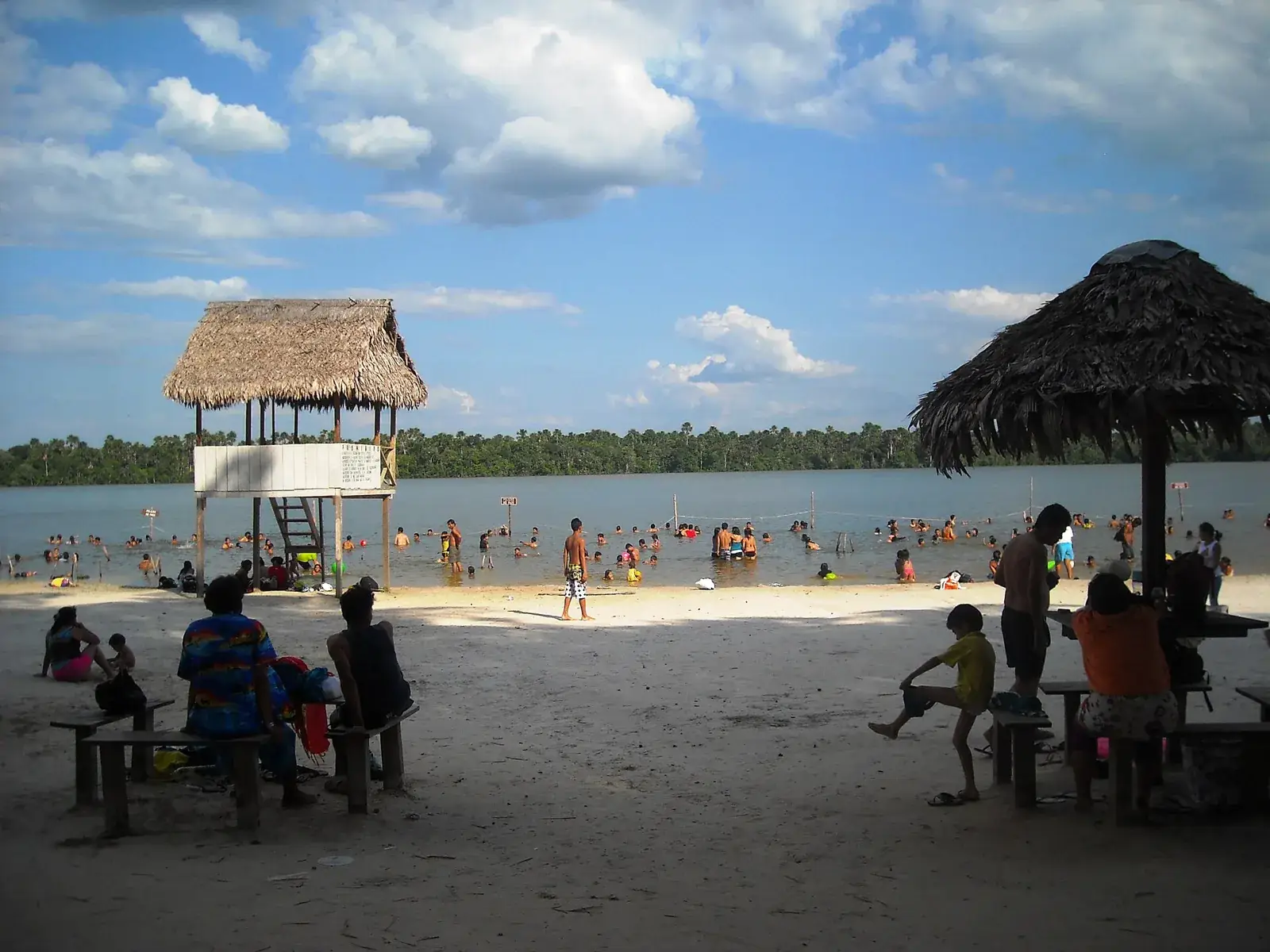
Quistococha is a dark-water lake inside a tourist park just outside Iquitos, on the road to Nauta. The park has a small zoo of Amazon animals, an artificial sandy beach on the lake, short forest trails and a fish hatchery. It is a simple half-day trip by motorbike taxi or taxi, best in the morning, and a gentle way to see Amazon animals and vegetation if you are not heading to a lodge. Confirm hours and entry fees locally, as they change.
Map
What Quistococha is
Quistococha is a lake and the tourist park built around it, a short way south-west of Iquitos, along the highway that runs to the town of Nauta. It is one of the few places near the city where you can walk among tall forest without taking a boat, and the nearest to a day out for local families, which is why weekends and holidays are busy.
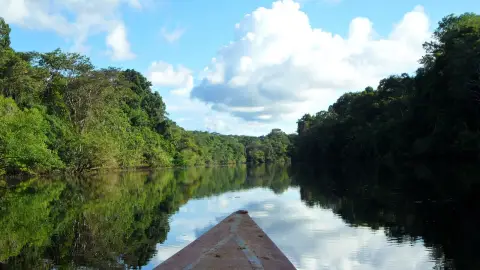
The lake is a blackwater lake: the water is dark and stained by plant material. The park around it covers a few hundred hectares of forest, and the official name is the Quistococha Tourist Complex. Most visitors come for the zoo and the beach, while the quieter trails around the shore are what many travellers remember afterwards.
It is not a wilderness reserve and it should not be compared with the Pacaya-Samiria National Reserve. Think of it as an easy, close-to-town introduction to the Amazon, useful on a day when you have a few spare hours.
A short history and the name
The park was created in the early 1970s, with a protected status that was later raised to that of a national tourist park, one of very few in the Peruvian Amazon. The aim was both to keep a patch of forest near a growing city and to give the people of Iquitos somewhere to swim and picnic.
The name is usually explained as Quechua: quisto is given as a word for a pumpkin or gourd and cocha means lake or lagoon. Some sources add that the lake is shaped like a pumpkin when seen from above. Treat that explanation as the commonly repeated one, since place names in the lowland Amazon often have several versions.
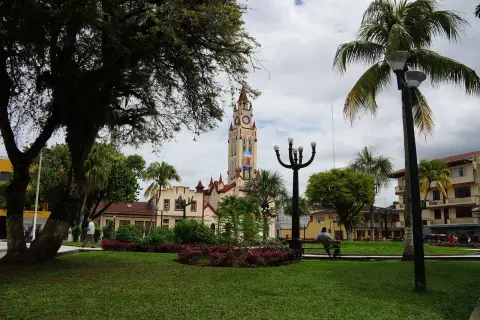
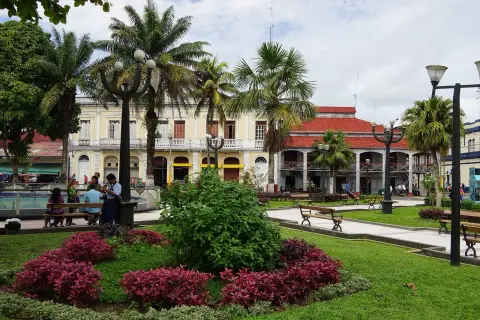
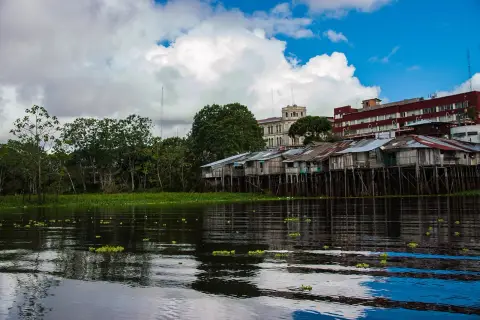
The lake lies in the district of San Juan Bautista, which is partly a suburb of Iquitos today. The city has spread along the Nauta highway in recent decades, so the journey passes shops, houses and roadside stalls for most of the way before the forest begins.
Tours and activities
Bookable online, chosen for their traveller reviews.
-
From €54 per person
The zoo and the hatchery
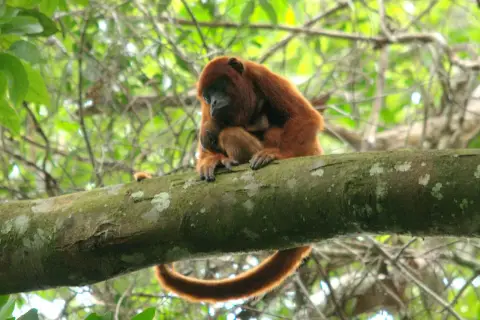
The zoo is small and simple, with enclosures in the shade of the forest. It shows animals from the region that many visitors do not see in the wild, even on a lodge stay: large cats, monkeys, macaws and other birds, turtles, caimans and snakes. Many of the animals are reported to have been confiscated from the illegal wildlife trade or handed in, which is a good reason to visit with realistic expectations. Enclosures vary in size and condition, and you will see the animals at close range rather than as you would in the forest.
A fish hatchery is part of the complex, where the giant river fish paiche (arapaima), one of the largest freshwater fish in the world, is bred. It is a useful thing to see before you eat paiche in a restaurant, and it helps explain why farmed paiche is now common in the city. Whether the hatchery is open to visitors varies, so ask at the gate.
Do not feed or tease any animal, and keep your voice down near the cages. For the kind of wildlife you can expect on an actual trip, see the Iquitos tours page.
The beach and the lake
The lake has an artificial sandy beach, usually called Tunchi. In the dry months the sand is wide and the water is calm and warm, and families swim and eat under thatched shelters. At the busiest times it is loud, with music and food vendors, so go early if you want peace.
Take care in the water. The lake is a natural body of water in a tropical forest and not a pool, the bottom drops away and there is no guarantee of lifeguards, so keep children close and swim only where others are swimming. Dark water hides what is below the surface. Use a waterproof sunscreen and keep your valuables with someone who stays on the sand.
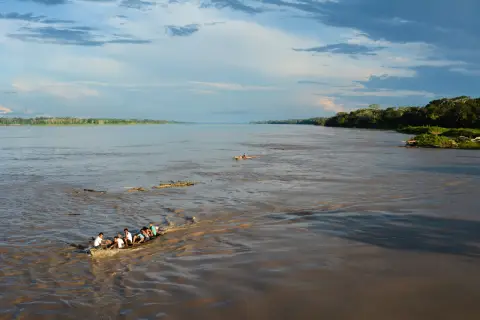
Boat rides on the lake are usually available. They are a pleasant way to see birds at the edge of the forest and the vegetation that floods when the lake rises, and they take less time than a walk around the shore.
Walking the trails
Marked forest trails lead from the entrance area to the lakeshore and to viewpoints over the marsh. They are short, flat and mostly shaded, so they suit most people, including children, and you do not need a guide for the main loops.
The best moments are early, when birds and butterflies are active and the air is cooler. Expect tall trees, palms and lianas, along with the sounds of insects and frogs, and be ready for mud after rain. Wear closed shoes and long, light clothing against insects, and bring repellent as advised by your doctor or travel clinic; see health and vaccines.
Do not expect to see large wild animals here. Birds, insects and the odd monkey or lizard are the realistic highlights, and the experience is closer to a forest park than to a jungle expedition. If wildlife is the main goal, spend your days on a lodge or river trip instead.
Getting there from Iquitos
Quistococha lies on the Iquitos–Nauta highway, a short drive from the centre of Iquitos. Sources give different distances, from about six to about thirteen kilometres, depending on where they measure from, so ask your hotel for the current practice. The usual ways are a motorbike taxi (mototaxi), a regular taxi, or a local bus or minibus along the highway. A taxi or mototaxi can wait for you and bring you back, which is useful because transport back can be scarce late in the day.
Agree the fare before you set off, and agree the waiting time if you want a return ride. Allow roughly half an hour each way, longer in the afternoon traffic. Many tours from Iquitos include Quistococha in a half-day city programme, and your hotel, listed on the where to stay page, can book one.
Travel with a small bag, a bottle of water and cash in small notes, as card payment is not something to count on. Arriving by air from Lima is described in Lima to Iquitos.
When to go
The park is open daily, usually from the morning until late afternoon, and the morning is the best time: cooler, quieter and better for birds and for the animals at the zoo, which are more active before the heat. On a hot afternoon the beach is crowded and the trails are humid.
The water level changes the lake. In the drier months, roughly June to September, the beach is at its widest and swimming is at its best. In the wetter months, from roughly December to May, the lake rises, parts of the forest flood and the vegetation looks greener, though the beach shrinks and mud on the trails is common. Rain can arrive at any time of year, so carry a light waterproof.
Weekends and public holidays draw large local crowds, so a weekday gives a calmer visit. Check dates of local holidays on festivals and holidays if your trip is near one.
Who it suits and how to combine it
Quistococha suits families, travellers with a spare half-day in Iquitos, and anyone who wants a gentle first look at Amazon plants and animals before a longer trip. It is less suitable for those looking for wild wildlife, long hikes or remote scenery.
It combines well with a morning in the city: the riverfront, the markets and lunch of local fish, described in eating in the Amazon. Keep the late afternoon for the river, when the light is softer.
If you are deciding how much of your time in the region to give to the jungle, whether the Amazon is worth it puts the options in perspective. A visit here also helps you judge what you want from a lodge or a river cruise before you pay for one.
Where to sleep
-
Find hotels
Iquitos centre
Plaza and riverfront for lodges, tours and restaurants
-
Find hotels
Amazon lodges
Jungle stays with meals, guides and excursions, reached by boat
Frequently asked questions
Is Quistococha worth visiting?
It is worth a half-day if you are staying in Iquitos and want an easy outing with a small zoo, a beach and forest trails. It is not a substitute for a lodge or river trip, which is the place to see wild animals; compare the options in Iquitos tours.
How far is Quistococha from Iquitos?
It is on the Iquitos–Nauta highway, a short drive south-west of the centre. Sources differ on the distance, so ask at your hotel, and allow about half an hour each way by mototaxi or taxi.
How long do I need at Quistococha?
Two to three hours covers the zoo and a walk, and half a day lets you add the beach and a boat ride. Add the transfer time on both ends.
Can you swim in Quistococha lake?
Yes, at the sandy beach, which is the area set aside for swimming. It is a natural lake with dark water, so swim only where others do, keep children close and do not go out of your depth.
Is the Quistococha zoo good?
It is a small, simple zoo that shows regional animals such as monkeys, macaws, large cats and reptiles, many of them rescued. It is better thought of as a close look at Amazon species than as a modern zoo; enclosures vary in quality.
Do I need a guide for Quistococha?
No, the main paths are short, marked and flat, and you can go on your own. A guide helps only if you want identification of plants and birds, which you can arrange through your hotel or a local operator.
What should I bring to Quistococha?
Bring insect repellent, sunscreen, a hat, water, closed comfortable shoes and cash in small notes. A light waterproof helps in any season, and the packing list covers the rest for the Amazon.