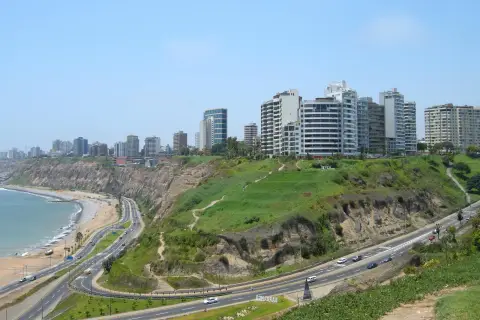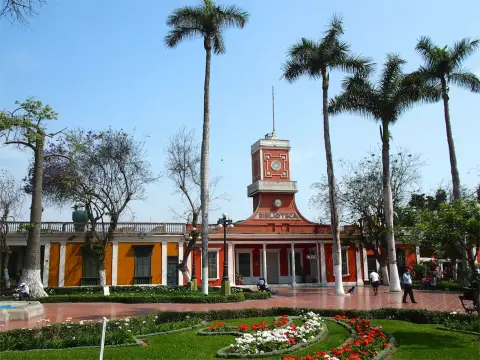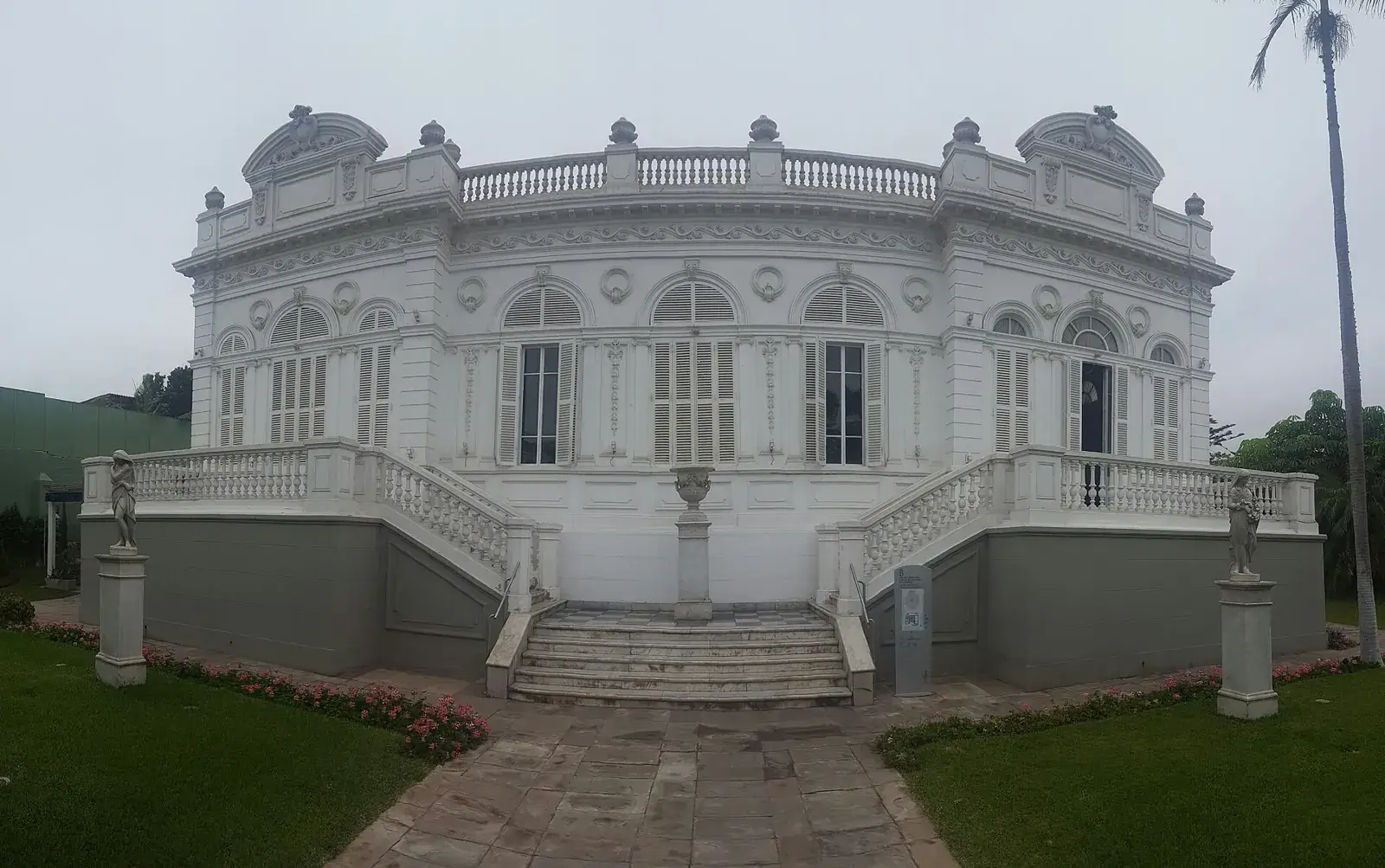
The Pedro de Osma Museum is a private museum of Peruvian colonial art in a former family mansion in Barranco, Lima. Its strength is the Cusco School: devotional paintings, carved and gilded sculpture, silver and period furniture, gathered by one collector and shown in rooms that still feel like a house. Allow about one to two hours, combine it with a walk through Barranco, and check opening days and ticket rules before you go, as they change.
Map
What the museum is
The Pedro de Osma Museum, in Spanish Museo Pedro de Osma, is a small art museum in the district of Barranco, on the avenue that carries the family name. It is not a national museum and not a survey of all of Peru. It shows one thing in depth: art made in the Andes during the Spanish viceroyalty, roughly the sixteenth to the eighteenth century, drawn from a private collection.
That focus is the reason to visit. Lima has large archaeological museums, such as the Larco Museum, that cover the centuries before the Spanish. This one covers what came after, when European religious painting met Andean painters and patrons and produced a style found nowhere else. If you have only a day or two in the city, see the things to do in Lima page to weigh it against the bigger names.
The collector and the house
The museum grew from the collection of Pedro de Osma Gildemeister, a Lima philanthropist who bought colonial paintings, sculpture, furniture and silver over several decades in the middle of the twentieth century. Sources agree on the outline but differ on some dates, so the exact years of his buying and of the museum's opening are best checked on the museum's own pages.
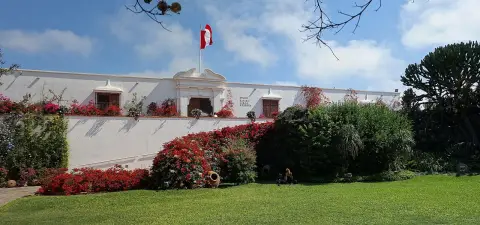
The building is a mansion from 1906, put up as a summer house for his father when Barranco was a seaside resort for Lima's wealthy families. It is usually described as French in taste, with a design attributed to the engineer Santiago Basurco. After the collector's death in 1967 the property passed to his sister, public visits stopped after the 1974 earthquake, and the house was declared a national monument in 1980. It was restored and the collection reopened as a museum in the late 1980s. A foundation named after the brother and sister has run it since 2004.
Tours and activities
Bookable online, chosen for their traveller reviews.
-
★ Top rated From €52 per person
-
★ Top rated From €85 per person
-
★ Top rated From €94 per person
-
★ Top rated From €55 per person
The Cusco School in Lima
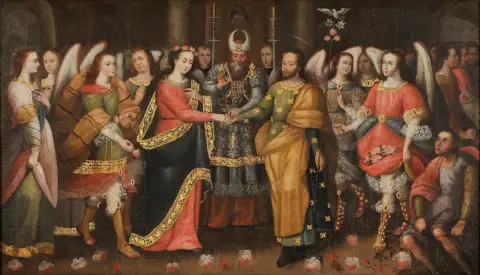
Most of the paintings belong to the Cusco School, the tradition of religious painting developed in and around Cusco from the seventeenth century. Indigenous and mestizo painters, many of them anonymous, worked from European prints and adapted them with local colour, gold-leaf patterns on clothing, Andean plants and animals, and saints dressed like colonial nobles. The wider story is told on the Cusco School of painting page.
Seeing these works in Lima is useful if you are going on to Cusco, because the museum gives you the vocabulary first, and the Spanish conquest and colonial Peru page gives the history behind it. The best-known image associated with the collection is the arquebusier angel, an archangel in the dress of a Spanish soldier carrying a firearm, a type of picture that also appears in churches in the southern Andes.
What you see room by room
The paintings and sculpture are spread over about eight rooms, arranged by theme and region rather than as one long corridor. There is a room of angels and archangels, a room of religious sculpture, separate rooms for Cusco painting of the seventeenth and eighteenth centuries, and a room of portraits that includes a large series of Spanish kings painted by local artists.
Beyond the paintings, the house holds furniture of the viceregal and early republican periods, such as wardrobes, console tables and inlaid writing cabinets, and a room of silver: reliquaries, church objects, tableware, jewellery and weapons. There are also textiles, books, coins and prints. Because the rooms are domestic in scale, you look at the furniture and the pictures together, as the owners did, rather than seeing them behind a long glass wall.
The building and its garden
Part of the visit is the mansion itself. The ground-floor rooms, the stairs, the stained glass and the former family chapel give a picture of how Lima's elite lived by the sea in the early twentieth century, a different world from the colonial houses of the historic centre of Lima. The house is described in more detail in the colonial architecture overview, which helps you place its style.
There is a garden, and the museum has traditionally had a café, but services such as this can change with management and season, so treat both as something to confirm rather than rely on. The avenue outside is quiet and shaded by comparison with the bar streets nearer the main plaza of Barranco, which is good for photographs of the façade in morning light.
How long, when and who it suits
Plan one to two hours. The collection is deep rather than large, and a quick walk-through is possible in less, but the labels reward reading. Go in the morning or on a weekday if you like quiet rooms, and pick a day when the weather is overcast, since Lima's grey winter months suit museum time anyway.
The museum suits travellers with an interest in colonial art, religious history or architecture, and people about to travel to Cusco. It is a calm visit, so it also works for those who find the archaeological sites tiring. Children may find it quiet unless they like the angels and saints with their unusual costumes. Photography and bag rules vary, so ask at the door. See museums in Peru for how this one fits with the others.
Getting there and combining it
The museum is in Barranco, a short taxi ride from Miraflores and a longer one from the airport, whose options are compared in the Lima airport transfer guide. A taxi booked through an app or by your hotel is the simplest way, and the address is on avenue Pedro de Osma. Walking from the main plaza of Barranco is also possible in daylight.
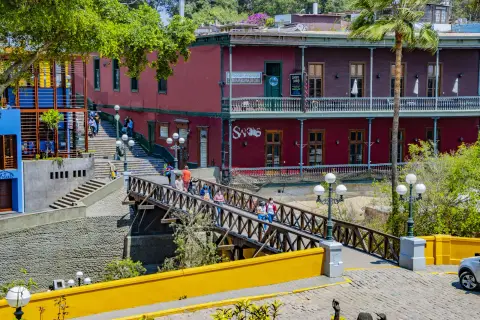
Most visitors pair the museum with a stroll through the district: the bridge, the clifftop, a late lunch and perhaps a gallery. Visit the museum early in the day, eat in Barranco, then walk. Where to sleep nearby is covered on the where to stay in Lima page. Barranco is lively at night, and the safety page explains why a taxi home is the better choice than a late walk.
Where to sleep
-
Find hotels
Miraflores
Easy first base: restaurants, parks and the cliff-top walk
-
Find hotels
Barranco
Art, nightlife and a seaside feel, quieter by day
-
Find hotels
San Isidro
Calm business district with parks, close to Miraflores
-
Find hotels
Historic Centre
Colonial sights on the doorstep, busy by day and quiet at night
Frequently asked questions
Is the Pedro de Osma Museum worth visiting?
It is worth it if you want to see Peruvian colonial art, especially the Cusco School, in an elegant setting before or after going to Cusco. If you prefer pre-Inca pottery and gold, the Larco Museum is the better choice.
Where is the Pedro de Osma Museum?
It is in the Barranco district of Lima, on Avenida Pedro de Osma, in the former family mansion. It is a short taxi ride from Miraflores and within walking distance of the main plaza of Barranco.
How long does a visit take?
Most visitors need one to two hours. Allow more if you read the labels or join a guided tour, and less if you only want the main rooms.
What is the Cusco School of painting?
It is the style of religious painting that developed in Cusco from the seventeenth century, by indigenous and mestizo artists working from European models. It is explained on the Cusco School page.
Who was Pedro de Osma?
Pedro de Osma Gildemeister was a Lima collector who gathered colonial art in the twentieth century. His collection, kept in his family's seaside house, became the museum, which is now run by a foundation set up in the names of him and his sister.
Can I take photographs inside?
Rules differ between museums and can change, and flash is rarely allowed near paintings. Ask at the entrance before you take out a camera, and respect any signs in the rooms.
Can I combine it with other sights the same day?
Yes. It pairs well with a walk through Barranco and lunch in the district, and with the historic centre on another half day if you want more colonial architecture.