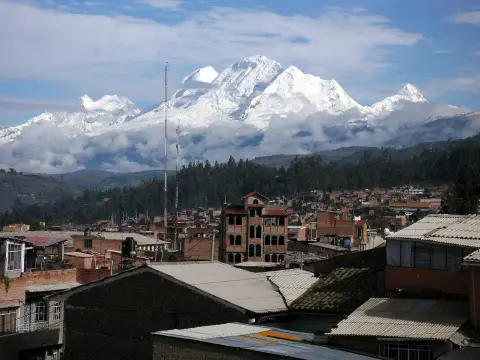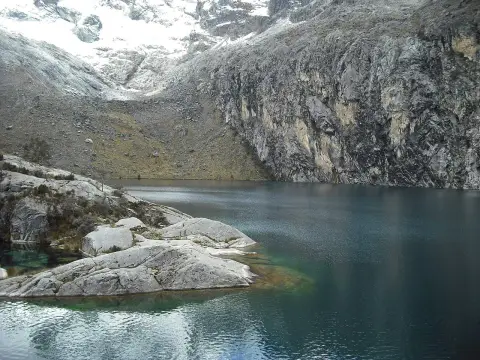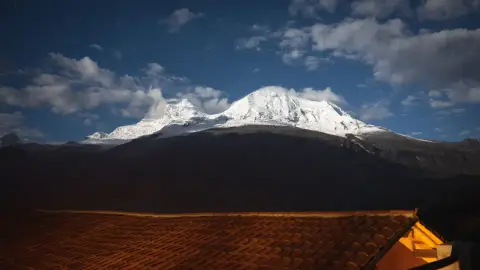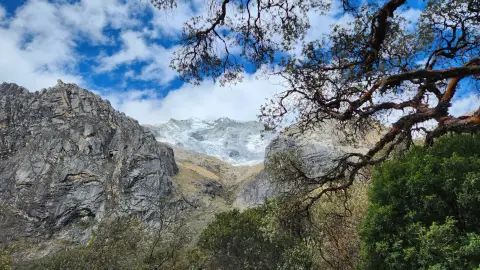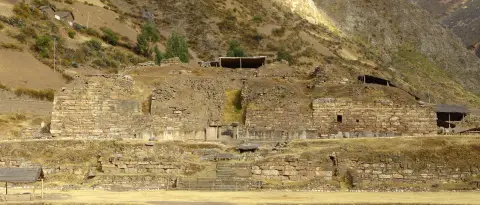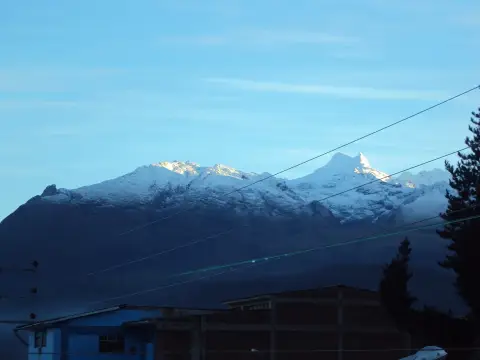
Chavín de Huántar is a pre-Inca temple complex, about 3,000 years old, in a valley on the eastern side of the Cordillera Blanca, and it is the best archaeological day trip from Huaraz. It is a UNESCO World Heritage Site, known for its underground stone galleries, the carved Lanzón monolith and the stone heads set in the walls. Plan a full day, because the road crosses a high pass, and combine the ruins with the site museum in the village.
Map
What Chavín de Huántar is
Chavín de Huántar is an archaeological site in the Ancash region, at roughly 3,180 m, where two rivers meet on the eastern side of the Cordillera Blanca, at the head of the Conchucos valley. It is the main site of the Chavín culture, which belongs to the long period before the Incas. Building began before 1200 BC, most major construction was finished by about 750 BC, and the temple stayed in use as a ceremonial centre for several centuries more.
It is not a city in the usual sense. The stone complex was a place of pilgrimage, where people from distant regions came for ritual and, it is thought, to consult an oracle. That makes it different from the Inca sites that most visitors know, and it is one of the reasons the place was inscribed as a UNESCO World Heritage Site. The wider story of the cultures that came before the Incas is told in pre-Inca civilisations.
Why it matters
The early twentieth-century Peruvian archaeologist Julio C. Tello called Chavín the birthplace of Andean culture. That claim is now qualified, because older sites such as Caral on the coast are recognised, but Chavín remains the clearest example of an early religious centre that spread a shared art style and set of ideas across the Andes.
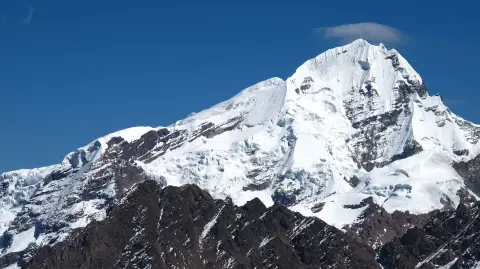
The site sat between the coast and the jungle, on routes along which goods and ideas moved, and its imagery mixes jaguars, caimans, birds and human features. Part of the temple's meaning probably came from its setting: the meeting of two rivers is a sacred idea in the Andes, and the snow peaks of the range rise above the valley. For the cultural background, Andean beliefs gives context for why such places were sacred.
Tours and activities
Bookable online, chosen for their traveller reviews.
-
Day trip From €29 per person
What you see on the site
The core of the visit is the temple complex: terraced platforms, stairways and walls of carefully cut stone, grouped around a large rectangular plaza and a smaller sunken circular plaza. The circular plaza, with its steps down into the floor, is the part most visitors photograph, and it gives a good sense of how rituals could be staged for a crowd.
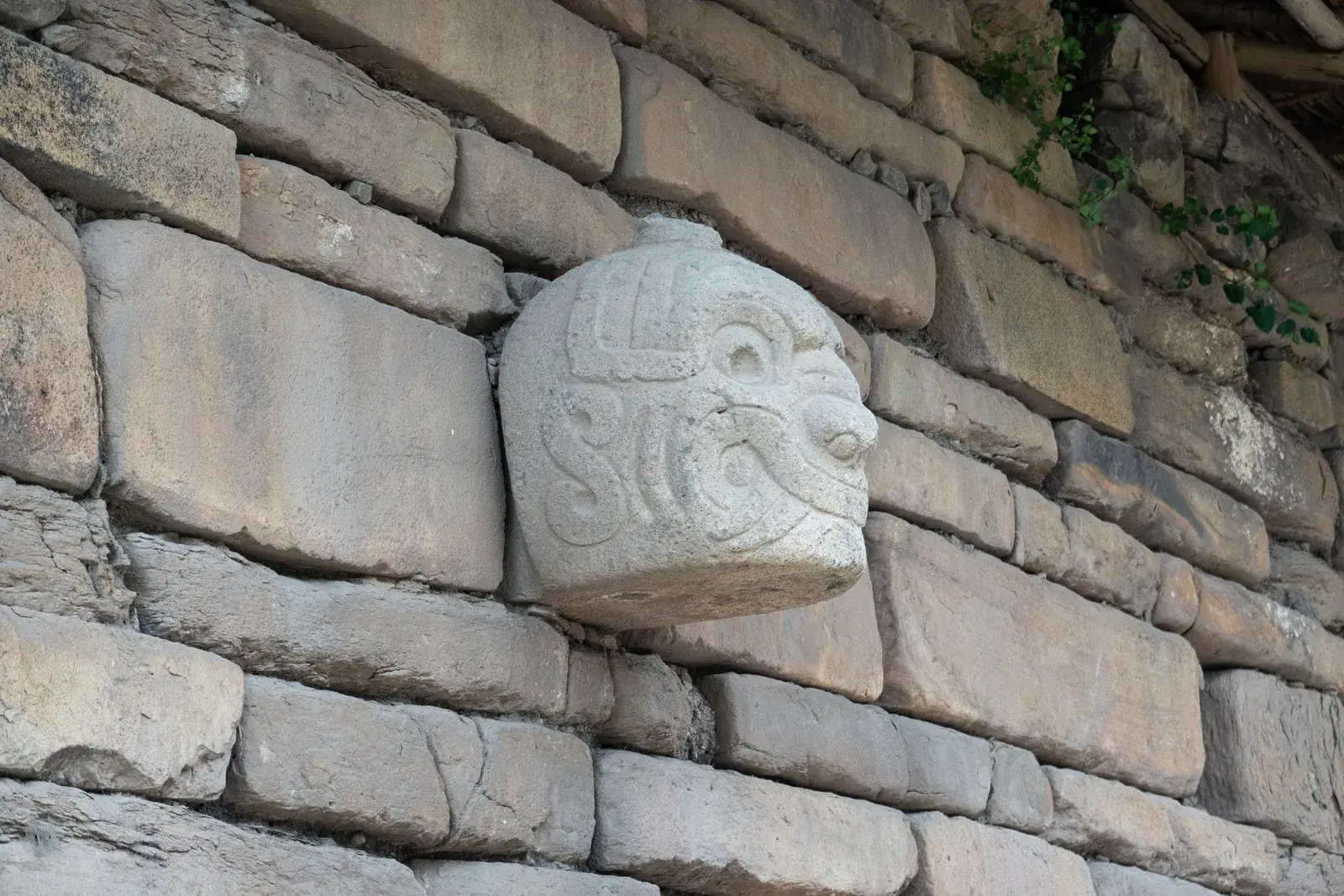
On the outer walls, look for the cabezas clavas, carved stone heads that were fixed into the masonry like pegs, showing faces that change from human to feline. Few remain in their original position, so seeing one in place on a wall is a highlight. Carved reliefs and stelae are the other main art form, with the original masterpieces mostly protected indoors. Allow time to walk the whole site, since the stonework rewards slow looking.
The galleries and the Lanzón
What sets Chavín apart is what lies under the platforms: a network of stone-lined galleries, narrow passages and small chambers with ventilation shafts and drainage channels. Light is limited and the passages are tight, so the effect is meant to be disorienting, and archaeologists link this to the staging of rituals for visitors who arrived to be impressed.
At the centre of the oldest part is the Lanzón, a tall granite monolith carved with a figure that combines a feline head and a human body, shaped like a spear or blade, which gives it its name. It is thought to have been the main deity of the temple and still stands in its gallery, which is a rare thing in a site of this age. Visitors are usually limited in how many enter at once, and access can be restricted, so ask at the entrance and follow the staff. Recent research has also found further tunnels beneath the site.
The site museum and the village
The Museo Nacional de Chavín, a short walk from the ruins, holds carved stones, ceramics and other finds, and gives context that the ruins alone do not. Many of the best-known sculptures, such as the Tello Obelisk and the Raimondi Stela, are kept in Lima rather than here, so the museum is not a duplicate of a Lima museum visit; it shows what was found at this site and how the temple was built.
The village of Chavín is small and quiet, with a plaza, simple restaurants and a few places to stay. The area also has hot springs, and some travellers use the village as a base for a second day, although most visitors do the trip from Huaraz. Opening times and ticket arrangements for the site and museum change, so check them locally before you go.
Getting there from Huaraz
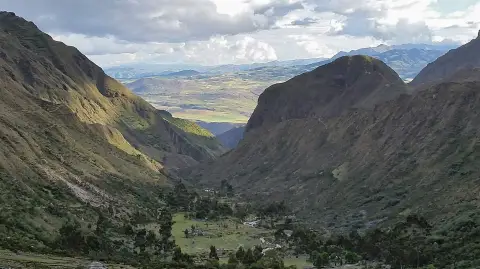
Chavín is reached by road from Huaraz and takes a few hours each way, depending on the vehicle and the condition of the road. The route climbs through the Cordillera Blanca and crosses a high tunnel near the pass, at a much greater altitude than either Huaraz or the ruins, before dropping into the valley on the other side. The scenery on the way, with lakes and the ranges on both sides, is part of the day.
Most people go on a guided day tour, which includes the transport and a guide at the site; choosing a trekking agency also applies to choosing a tour operator. Public buses and shared vans exist for independent travellers, and a private car with a driver is another option. Road works, landslides and protests can delay the journey, so read about strikes and road blockades before fixing a tight schedule.
Altitude, weather and best time
The site is at about 3,180 m, a little above Huaraz at about 3,050 m, so the ruins themselves are not much harder than the town. The pass on the road is the high point, and some people feel a headache there, so do not make this your first outing; spend a day or two on easy walks first, as described in acclimatisation in Huaraz and altitude sickness.
The dry season, roughly May to September, brings the clearest views and the most reliable road. In the wetter months the site is slippery and the road is more likely to be affected, although the ruins can still be visited. Go in the morning for the best light, bring a warm layer for the galleries, rain protection, sun cream and sturdy shoes, as the paths and stairs are uneven.
Who it suits and what to combine
Chavín suits travellers with an interest in archaeology and early history, and it is a good choice for a day when cloud hides the peaks or after a hard hike. It is less suited to anyone who dislikes narrow, dark spaces, and to those who want a short outing, because the road takes most of the day.
Combine it with the rest of the region on the things to do in Huaraz page, which lists the lakes and the glacier outings, and with a walk in the Huascarán National Park, which the road passes through or near, depending on the route. For hiking days see Laguna 69, and for the bigger picture of the mountains read Cordillera Blanca. Where to sleep is covered in where to stay in Huaraz.
Where to sleep
-
Find hotels
Huaraz centre
Services, tour offices and restaurants for the Cordillera Blanca
-
Find hotels
Monterrey
Quieter spot north of town with thermal baths
-
Find hotels
Caraz
Small town closer to the northern lakes and trails
Frequently asked questions
How long does the trip from Huaraz to Chavín take?
The drive is a few hours each way, so the trip is a full day even with a short visit at the site. Most tours leave early in the morning, which also gives better weather in the mountains.
Is Chavín de Huántar worth it?
Yes for anyone interested in ancient history, because it shows an early religious centre with intact underground galleries. If you prefer landscape to archaeology, the lakes and viewpoints in Huaraz things to do may suit you better.
Can I visit Chavín without a tour?
Yes. Public transport and private cars both go, and the site can be visited independently. A guide helps explain the galleries and the carvings, which are hard to read alone.
How much time do I need at the ruins?
Allow about two to three hours for the site and the museum together. More time is useful if you want to walk the whole complex slowly.
Is the site dangerous or claustrophobic?
The galleries are narrow and dim, and access to some of them can be limited. People who dislike enclosed spaces can still see the plazas, platforms and carved heads outdoors.
What is the Lanzón?
It is a tall carved granite monolith in the oldest gallery, showing a figure with a feline head and human body. It is thought to have been the principal deity of the temple and still stands where it was placed.
Do I need to acclimatise before going to Chavín?
It helps. The road crosses a high pass above the altitude of Huaraz, so spend a few days in the area first and read altitude sickness before the trip.