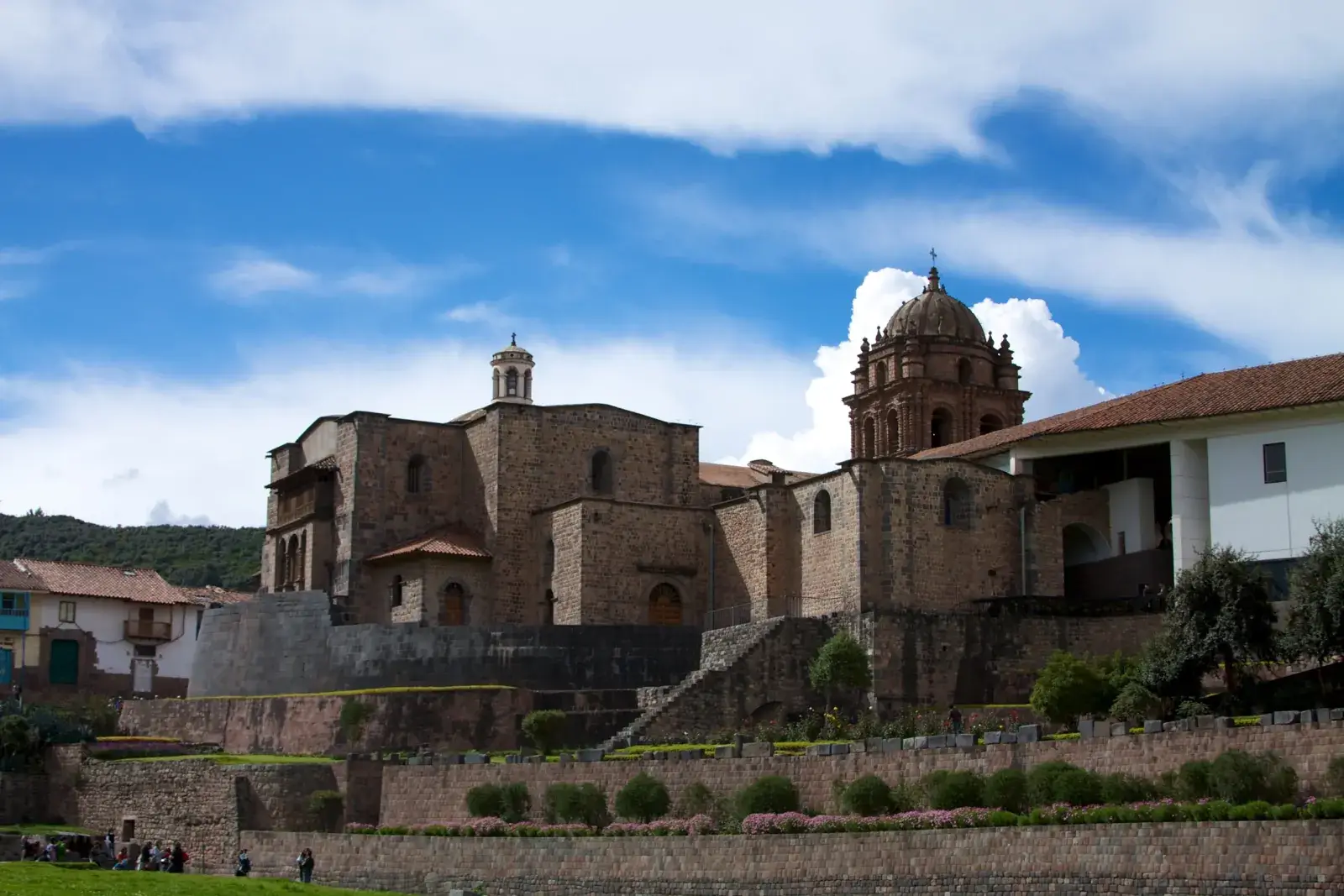
Peruvian history spans more than 10,000 years: hunter-gatherers, the first cities such as Caral, a series of regional civilisations, the Inca Empire, Spanish rule from 1532, independence in 1821, and a republic that has lived through wars, coups, reform and civil conflict. Each period left physical traces that are easy to visit.
The key dates to hold on to are 1532, when the Spanish captured the Inca ruler Atahualpa, and 1821, when independence was proclaimed.
First settlers and early farmers
People reached the Andes and the Pacific coast well over 10,000 years ago, probably moving south from northern South America. Early groups hunted, fished and gathered, and they gradually domesticated plants and animals: the potato in the highlands, maize, beans and squash in the valleys, and the llama and alpaca as pack and fibre animals. Exact dates for the first arrivals are debated, and sites claiming older occupation are discussed among archaeologists.
By about 3000 BC, fishing communities on the coast and farmers in the river valleys had built the first monumental centres. The most famous is Caral, in the Supe valley north of Lima, a city of platforms and plazas that is often called the oldest in the Americas. Its builders had no pottery at first and no known writing, yet organised labour on a large scale. The wider story of this and later societies is told in pre-Inca civilisations.
Regional civilisations before the Incas
From roughly 900 BC, a sequence of cultures rose and fell across Peru. Chavín spread a religious style through the northern highlands. On the south coast, Paracas weavers and the Nazca people, famous for their desert lines, developed striking textiles and ceramics. On the north coast the Moche built adobe pyramids and produced realistic portrait pottery, and later the Chimú raised Chan Chan, the largest adobe city in the Americas.
In the highlands, Wari and Tiwanaku created expansive states between about AD 600 and 1000. When they declined, smaller regional kingdoms emerged, such as the Chachapoya of the cloud forest. None of these peoples left written records, so their history comes from archaeology, art and later colonial accounts, and some questions remain open.
The Inca state
The Incas began as one of several groups around Cusco. Around the mid-fifteenth century, under the ruler Pachacuti, they expanded rapidly, and within about a hundred years their territory, which they called Tawantinsuyu, stretched from southern Colombia to central Chile. They ruled through roads, storehouses, labour service and the use of Quechua as an administrative language.
The empire was young and had its weaknesses. After the death of Huayna Capac, probably from an epidemic, his sons Huáscar and Atahualpa fought a civil war. Atahualpa had just won when Francisco Pizarro and about 170 Spaniards arrived. The Inca Empire article follows the story in more detail, and the best places to see its legacy are around Cusco.
Conquest and the viceroyalty
In November 1532, Pizarro ambushed Atahualpa at Cajamarca, held him for ransom and executed him in 1533. The Spanish entered Cusco soon after. Resistance continued from Vilcabamba until 1572, when the last Inca ruler, Túpac Amaru I, was captured and executed. The events and their causes are in the Spanish conquest.
Lima, founded in 1535, became the capital of the Viceroyalty of Peru, which for a time covered much of Spanish South America. Silver from Potosí and mercury from Huancavelica fuelled the economy, supported by forced labour, and Indigenous populations declined sharply from disease and exploitation. Churches, convents and mansions from this era survive in Lima's historic centre and other old towns.
Rebellion and independence
Colonial rule provoked uprisings, the largest being the rebellion led by Túpac Amaru II in 1780, which was crushed but is still remembered. In the early nineteenth century, Napoleon's invasion of Spain and independence movements elsewhere in South America weakened royal control.
José de San Martín arrived with an army from Chile and proclaimed independence in Lima on 28 July 1821, a date celebrated as the national holiday. Spanish forces still held the highlands, and the matter was settled by Simón Bolívar and Antonio José de Sucre, whose victory at Ayacucho in December 1824 ended Spanish rule on the continent. See independence for the full account.
The republic: guano, war and reform
The early republic was unstable, with frequent military leaders. Revenue from guano, bird droppings used as fertiliser and exported in the mid-nineteenth century, funded a brief boom. Peru then lost territory in the War of the Pacific (1879-1883) against Chile, an event that still shapes national memory.
The twentieth century brought oil, fishing and mining, rapid migration from the highlands to Lima, and political swings. A reformist military government under Juan Velasco Alvarado (1968-1975) carried out a major land reform and recognised Quechua as an official language. Indigenous and rural people gained more rights on paper than in practice for many decades.
Conflict, democracy and today
In the 1980s and early 1990s, Peru was torn by internal conflict, mainly between the state and the Shining Path guerrilla group, which cost tens of thousands of lives, most of them Indigenous highland villagers. A Truth and Reconciliation Commission reported on this period in 2003.
Alberto Fujimori governed from 1990 to 2000, ended the worst violence and stabilised the economy, but his government was marked by authoritarianism and corruption. Since then Peru has had elected governments, economic growth driven by mining and agriculture, and recurring political crises. Tourism, much of it built on the heritage described across this section, has become one of the country's major industries.
Where to see each period
Because Peru's history is so spread out, a trip can follow it almost step by step. Caral and Huaca Pucllana in Lima show early and pre-Inca building; the museums of Lima and Trujillo hold ceramics, gold and textiles; Chan Chan and Kuélap show the later regional states; Cusco and the Sacred Valley are the Inca heartland.
Colonial Peru dominates the historic centres of Lima, Cusco and Arequipa, and the republic appears in plazas, monuments and the battlefield of Ayacucho. Guides are most useful at archaeological sites, where much is not labelled, and a local specialist can separate established fact from popular legend.
Frequently asked questions
What is the oldest civilisation in Peru?
Caral, in the Supe valley, is usually named, with monumental building from about 3000 BC. Other very early sites exist along the coast, and archaeologists keep refining the dates.
When did the Spanish conquer Peru?
Pizarro's party captured Atahualpa at Cajamarca in 1532, and Cusco fell in 1533. Resistance lasted until 1572, so the conquest was a process rather than a single event.
When is Peruvian Independence Day?
Peru celebrates independence on 28 and 29 July. Independence was proclaimed in 1821, but the final victory over Spain came in 1824.
Did the Incas have writing?
No alphabet or script is known. They kept records with the quipu, a system of knotted cords, which is explained in Inca engineering.
What was the Shining Path?
A Maoist guerrilla organisation that fought the Peruvian state from 1980. The 2003 Truth and Reconciliation Commission attributed most deaths to it, with significant abuses also by state forces.
Is Quechua still spoken?
Yes, by millions of people, mainly in the highlands. It is an official language alongside Spanish in the areas where it predominates.
How long does it take to see Peru's history?
A two-week trip covering Lima, Cusco and the Sacred Valley gives a good grounding in the colonial and Inca periods. Adding the north coast or Nazca lets you see the pre-Inca cultures too.