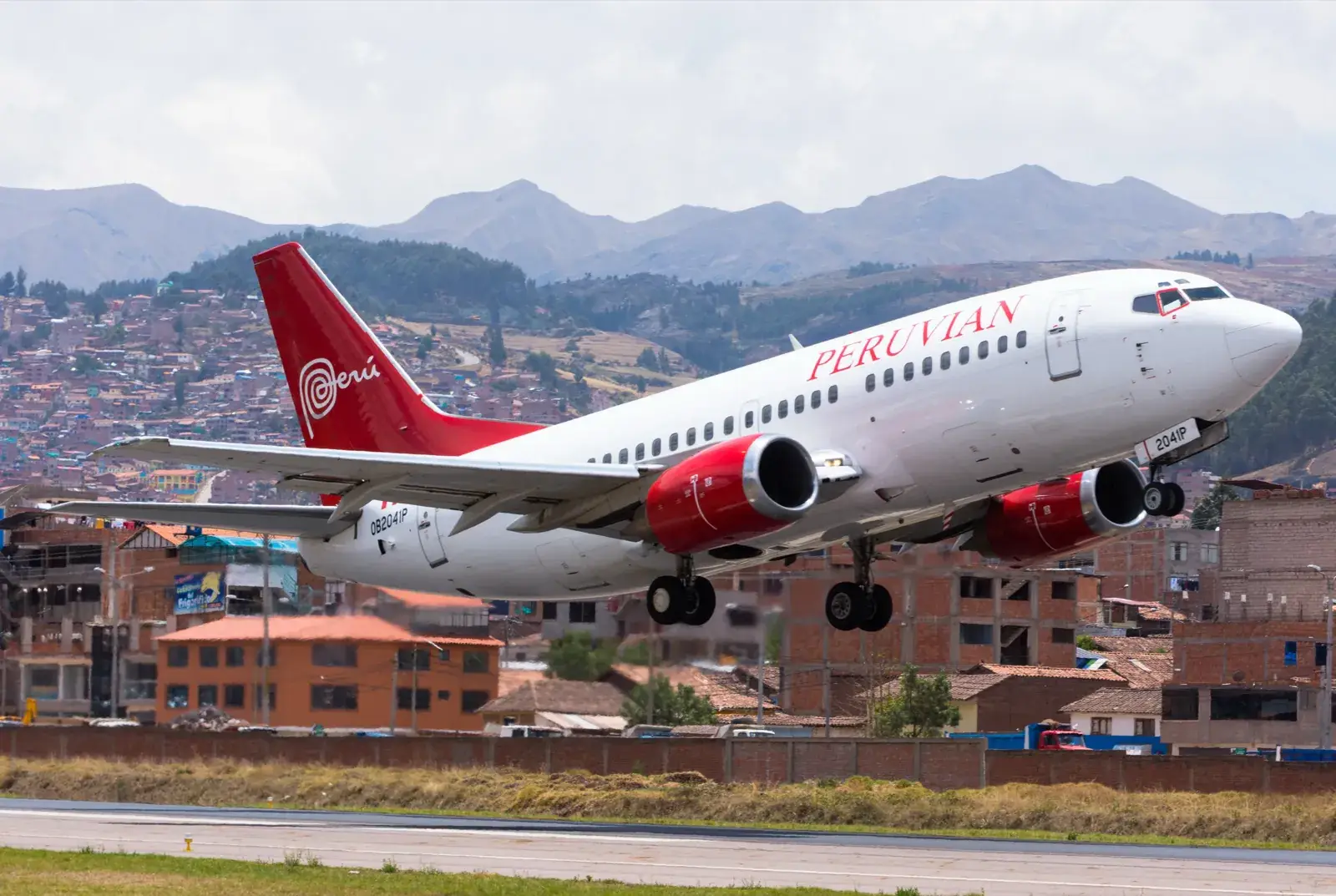
Almost all long-haul travellers arrive at Lima's Jorge Chávez airport (LIM). From Europe the journey normally involves one connection, through a European or American hub, and the total time is long, often a full day. From North America, direct or one-stop options exist, depending on the city and season.
Consider an open-jaw ticket, arriving in Lima and leaving from another city via Lima, so you do not backtrack. Leave a generous buffer between an international arrival and any domestic flight the same day. A flight search tool is available on this page to compare routes and dates.
Lima is the gateway
Peru's main international airport is Jorge Chávez (LIM) in Lima, and nearly every intercontinental itinerary lands there. Other cities, such as Cusco, are served mainly by domestic flights, so most trips begin with a hop from Lima. The airport and its neighbours are described in Peru's airports, and the domestic network in domestic flights.
For planning, this means the arrival is in the capital whatever the final destination is. Many international flights land at night or in the early hours, which affects the first night's accommodation and the onward connection. Travellers who plan to continue the same day to Cusco should read the later sections about buffers before booking both legs.
The flight search tool on this page lets you compare departure airports, dates and the number of stops. Treat the results as a starting point, and check baggage terms and the exact connection times on the airline's own pages before paying.
Typical routings from Europe and North America
From Italy and the rest of Europe, the usual pattern is one connection: a flight to a European hub or to an American one, then a long flight to Lima. Total travel time commonly exceeds a day, including the layover. Direct service from Europe to Lima has existed on some routes in some periods, but it is not guaranteed and changes with airlines and seasons, so confirm whether any non-stop option is currently on sale for your city before assuming it.
From North America, options vary more: some cities have direct flights to Lima, while others need one stop. Flight time from the east coast of the United States is considerably shorter than from Europe, and the time difference is small.
The practical points are the same: pick a connection of reasonable length, avoid tight transfers, and prefer one ticket for the whole journey so that the airline is responsible if a first leg is late. Separate tickets save money sometimes but shift that risk onto you.
Check the flights for your dates
Fares, times and airlines for your route, in one search on Booking.com.
Time zones, overnight flights and jet lag
Lima is behind Italy and central Europe by six or seven hours, depending on daylight saving, and Peru does not observe daylight saving time. From North America the gap is smaller, and from the east coast it can be zero or an hour. These differences are worth checking against the date of travel.
The effect on the body is moderate for most people, but the combination of a long journey and altitude can make the first days harder. Overnight flights and arrivals in the small hours are common, so a night in Lima before moving on to Cusco is a sensible buffer. It also helps with altitude, since Lima is at sea level and Cusco is at about 3,400 m; the climb is not made worse by a poor night after a long flight. See altitude sickness for general guidance.
If you arrive at dawn, check whether your hotel allows early check-in, or whether luggage storage is available, rather than assuming a room will be ready.
Open-jaw tickets
An open-jaw ticket flies you into one city and out of another, for example arriving in Lima and returning from Cusco, Arequipa or Iquitos via Lima. The advantage is that it removes a backtracking leg and can save a day on a one-way journey through the country. It is particularly useful for itineraries that end in the south, such as the 10-day itinerary, where finishing in Cusco avoids a return to the coast.
The trade-offs are practical. An open-jaw fare is not always cheaper than a return, and some airlines price multi-city tickets differently. The domestic leg to the departure city is normally a separate booking, and a late or cancelled domestic flight will not be protected by the international ticket, which is a good reason to book the last domestic leg a day or two before the long-haul departure.
Compare the open-jaw cost against a return plus a separate domestic flight, and include any luggage fees on the domestic leg.
When fares are higher or lower
Fares are generally higher in the northern summer, around Christmas and New Year, and at Easter, which also coincides with the Andean dry season for the first of these. They tend to be lower in the shoulder months and in the wet season, although the weather in the Andes is then less reliable. Prices change daily and by route, so the pattern is a tendency rather than a rule.
As for timing of the purchase, booking some months ahead often gives a wider choice for the busy months, while flexible travellers can sometimes find better prices on mid-week departures. Fare alerts help to see how a route moves over time. Check the season-by-season overview in when to book for how this fits with Machu Picchu tickets and treks, which sell out earlier than flights.
For a sense of where flights sit in the total cost, see trip cost. Flights are often the largest single item in a trip budget.
Baggage and the domestic leg
International tickets generally include a checked bag on full-service fares, but low-cost and basic fares may not. The domestic flights in Peru often have tighter limits, a smaller checked-bag allowance and a strict cabin-bag size, and fees for extra weight can be significant. Check the domestic limits before packing, and consider carrying less than the international allowance.
When the domestic ticket is bought separately, the baggage allowance of the long-haul flight does not carry over, and the bag must be collected and checked in again in Lima. Treks and Machu Picchu trains also have small-bag rules, which means a lighter pack is useful throughout. See packing list for a list that works within these limits.
Keep valuables and medication and one change of clothes in the cabin bag, in case a checked bag arrives late. It is a common enough problem on connecting itineraries that it is worth planning for.
Arrival procedures and the first night
On arrival, expect immigration, baggage collection and customs, followed by the transfer into the city. Entry rules, including passport validity and any forms, are covered in entry requirements; check them for your nationality close to departure. The journey into town depends on the time of day and traffic, and the options are in Lima airport transfer.
For the first night, a hotel in Miraflores or near the airport is the usual choice, depending on whether you want an easy morning or a short transfer. Carry some local currency or a way to pay for the transfer, and use official taxi desks or pre-booked pickups rather than unrelated offers at the exit.
Finally, buy travel insurance before you pay for non-refundable flights, because cover often depends on being purchased soon after the first payment, and it includes missed connections and baggage delays on some policies.
Frequently asked questions
Are there direct flights from Italy to Lima?
Non-stop service from Europe to Lima has existed on some routes at some times, but it changes with airlines and seasons and may not be available from your city. Check current schedules on airline and search sites rather than relying on past patterns.
How long does it take to fly from Europe to Peru?
Expect a full day of travel with one connection, including the layover, and somewhat less for a direct service where one exists. The exact time depends on the hub and on the layover length.
What time difference should I expect between Lima and Italy?
Lima is behind central European time by about six or seven hours, depending on the season, because Peru does not change its clocks. Check the gap for your dates, as European daylight saving shifts it.
Is an open-jaw ticket cheaper?
Sometimes, but not always. Compare it with a return ticket plus a domestic flight, and include luggage fees. Its main advantage is saving time and backtracking, not always money.
Can I connect to a domestic flight on the same day?
It is possible, but risky. Allow plenty of time for immigration, baggage and rechecking, and avoid separate tickets if you can. A night in Lima is safer and helps you start the Andes less tired.
When is the cheapest time to fly to Peru?
Generally outside school holidays, Christmas, New Year and Easter, in the shoulder months. Fares change often, so compare dates in a flexible search and set an alert.
Do other Peruvian airports receive intercontinental flights?
Most intercontinental arrivals use Lima, and other airports mainly handle domestic traffic, so plan on a connection in Lima. See airports for how the network is organised.