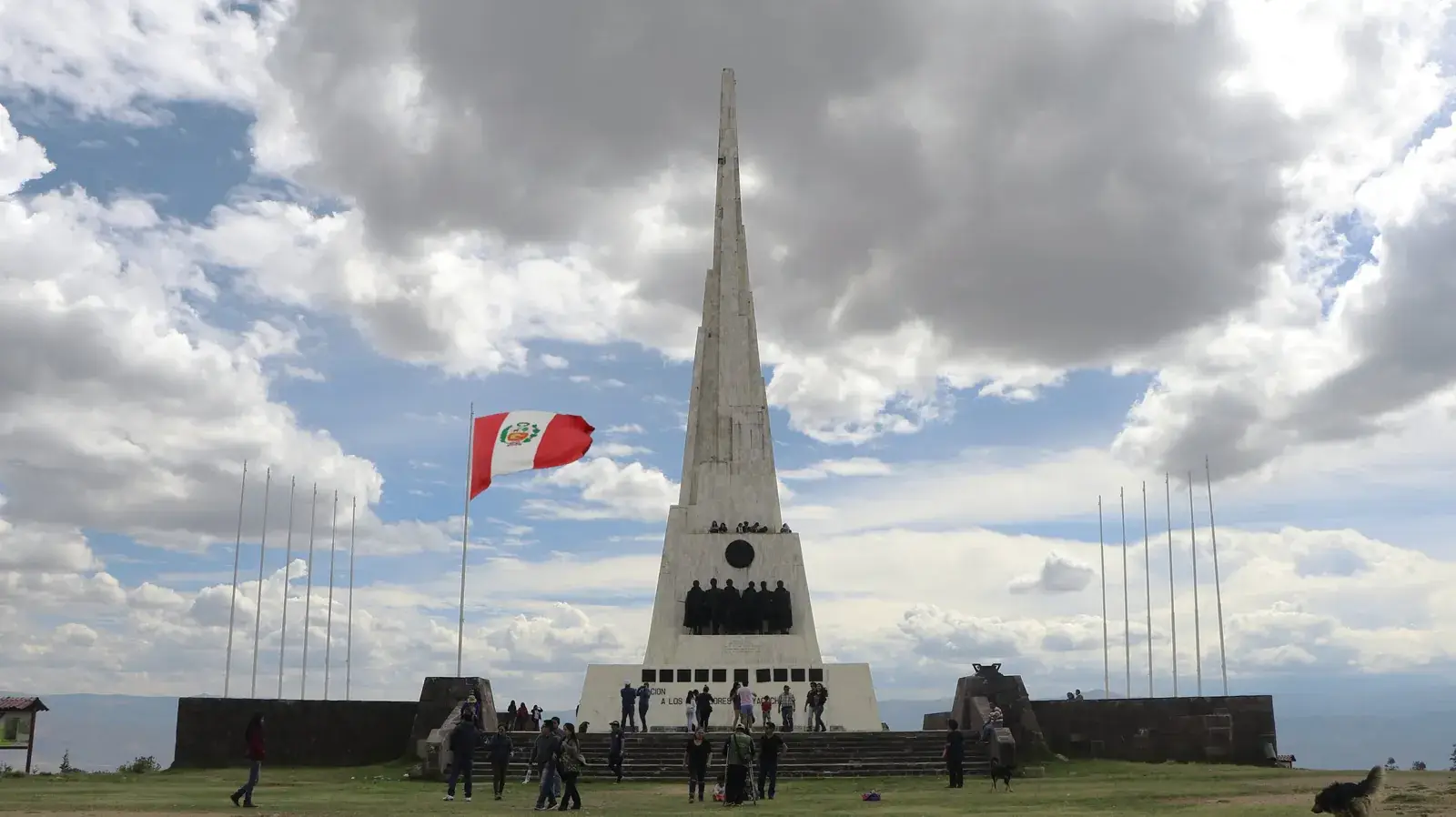
The Pampa de la Quinua is a high plain about 37 km from Ayacucho where the battle of 9 December 1824 ended Spanish rule in Peru. A tall white obelisk marks the spot, and the village of Quinua, a short distance away, is known for its ceramics. Allow a half day from Ayacucho by taxi or tour, usually combined with the Wari ruins. Bring a warm layer and sun protection, because the plain is open and exposed.
Map
What this place is
The Pampa de la Quinua, also called the Pampa de Ayacucho, is an upland plain above the colonial city of Ayacucho. It is protected as the Pampa de Ayacucho Historical Sanctuary, created in 1980 around the ground where the army of the Spanish viceroy met the patriot army led by Antonio José de Sucre. The nearest settlement is Quinua, a Quechua-speaking village at roughly 3,400 m.
Nothing here resembles a fortress or a ruin. The interest is the open ground itself, a monument, and a view over the surrounding hills, which helps explain why the two armies could manoeuvre against each other. Visitors who arrive expecting a museum-style site are sometimes surprised, so it is worth reading a little of the story beforehand. The wider context is covered in Peru's independence.
The battle of Ayacucho in brief
On 9 December 1824 a patriot army under Sucre defeated the royalist forces of Viceroy José de la Serna on this plain. The viceroy was wounded and captured, and the royalist commander José de Canterac negotiated a capitulation. Historians give different figures for the size of each army, so treat any precise numbers on signs or from guides as estimates.
The battle is widely regarded as the end of Spanish rule on the mainland of South America, although a few royalist strongholds, such as the Callao fortresses, held out until 1826. It followed years of struggle that included the earlier uprisings of the late colonial period, and it is commemorated each year in December.
Some historians question how decisive the fighting was and suggest the outcome was shaped by negotiation, a view presented as debate rather than settled fact. For the longer arc, from conquest to republic, see the Spanish conquest.
The obelisk and what is on the plain
The main feature is a white obelisk, reported at about 44 m high and built in 1968, standing on a platform with steps and surrounded by flagpoles. Reliefs and inscriptions at the base honour the soldiers and leaders of the campaign. Seen from the road, it appears suddenly over the grass, which is the moment most photographs capture.
Around the monument the ground is mostly open grassland with low walls and paths. There is a small area of stalls and sometimes a small museum or information point, but opening arrangements and displays change, so ask your driver or hotel before counting on them. A site museum has been discussed in recent years as part of the bicentenary works.
Most visitors need 30 to 60 minutes at the monument. If you like reading about history, a guide who can explain where each army stood adds a good deal, since the plain on its own gives few clues.
The village of Quinua and its ceramics
The village of Quinua is the second reason to come. It is a quiet highland settlement with a plaza, adobe houses with tiled roofs and a tradition of pottery. Workshops make a range of terracotta objects, and the best known are the small clay churches and figures that Andean families place on rooftops for protection and good luck, a custom you will notice on houses around the region.
Visiting a workshop is the best way to see how pieces are shaped and fired, and buying directly from the maker is fairer than buying the same object in a city shop. Prices should be agreed in advance, and fragile items need careful packing for the flight home. For the wider picture of regional handicrafts, see Peruvian crafts and the advice on buying souvenirs.
Not every workshop is open every day, and some close on market days or festivals, so go in the morning if the pottery is your priority.
Getting there from Ayacucho
Quinua lies about 37 km from Ayacucho on a paved road that climbs into the hills, and the drive usually takes under an hour each way, depending on traffic and stops. The simplest option is a taxi hired for a half day, with a fixed price and waiting time agreed before leaving. Many local tour offices run a combined excursion to Quinua and the Wari ruins, which is the most efficient way to see both in a single outing.
Shared minibuses and colectivos run between Ayacucho and Quinua, but timetables are informal and returning from the monument can be slow, so independent travellers should confirm the last departure back. Do not rely on finding a taxi at the site late in the day.
If you are arriving from Lima, the flight lands at Ayacucho, so you can add this trip on your second day once the first day has been kept light.
Altitude, weather and what to bring
The plain and village are higher than Ayacucho city, which sits at about 2,750 m. Quinua is about 3,400 m, so you gain several hundred metres in a short drive and may notice breathlessness when climbing the monument steps. Go slowly, drink water and read the advice on altitude sickness if you have only just arrived.
The site is exposed. Sun at this altitude is strong, wind can be cold even at midday, and there is little shade. A hat, sun cream, water and a jacket are sensible. Mornings are usually clearest, and the dry season, roughly May to September, brings the most reliable views. In the rainy months, roughly November to March, afternoon cloud and showers are common.
Visitors are generally welcome and the main road is used daily by locals and tour vehicles. For general regional precautions, including avoiding mountain roads after dark, see safety in Peru.
Fitting it into a trip
This is a half-day excursion, best placed on a day when you are acclimatised and want a mix of history and village life. It pairs naturally with the pre-Inca capital of Wari, described under pre-Inca cultures, since the two together show a thousand years of regional history in one outing.
Around 9 December, and during national holidays, there may be official ceremonies and more visitors, which can change access and transport. Check dates with your hotel and read the notes on festivals and holidays. If road blockades are reported, see strikes and blockades before setting out.
The excursion suits travellers interested in history, photographers who like open landscapes and anyone looking for craft shopping away from the main circuit. It is less suited to people expecting extensive interpretation, and it is an optional extra on the southern loop, not a priority on a short first visit.
Frequently asked questions
How far is the Pampa de la Quinua from Ayacucho?
About 37 km by paved road, usually under an hour by taxi or tour vehicle. Traffic and stops can lengthen the trip, so allow a half day in total.
What happened at the Pampa de la Quinua?
The battle of Ayacucho was fought here on 9 December 1824. Sucre's patriot army defeated the royalist army of the viceroy, which is generally taken as the end of Spanish rule in Peru. See Peru's independence for the wider story.
How long should I spend there?
Plan 30 to 60 minutes at the monument and another hour in the village of Quinua if you want to visit a pottery workshop. A combined trip with the Wari ruins fills most of a day.
Is there an entrance fee?
Rules on tickets and fees for the sanctuary can change, so ask your hotel or tour operator before you go. Carry small cash for the village in any case.
Is it worth going without a guide?
You can see the obelisk and the village alone, but the plain gives few clues about the battle without explanation. A local guide or some reading beforehand makes the visit more meaningful.
Will I feel the altitude in Quinua?
Quinua is higher than Ayacucho, so some visitors feel mild breathlessness on steps. Move slowly, stay hydrated and see altitude sickness for general guidance.
What can I buy in Quinua?
The village is known for ceramics, especially small clay churches and figures made for rooftops. Buy directly from workshops, agree a price first and pack pieces carefully. See buying souvenirs.