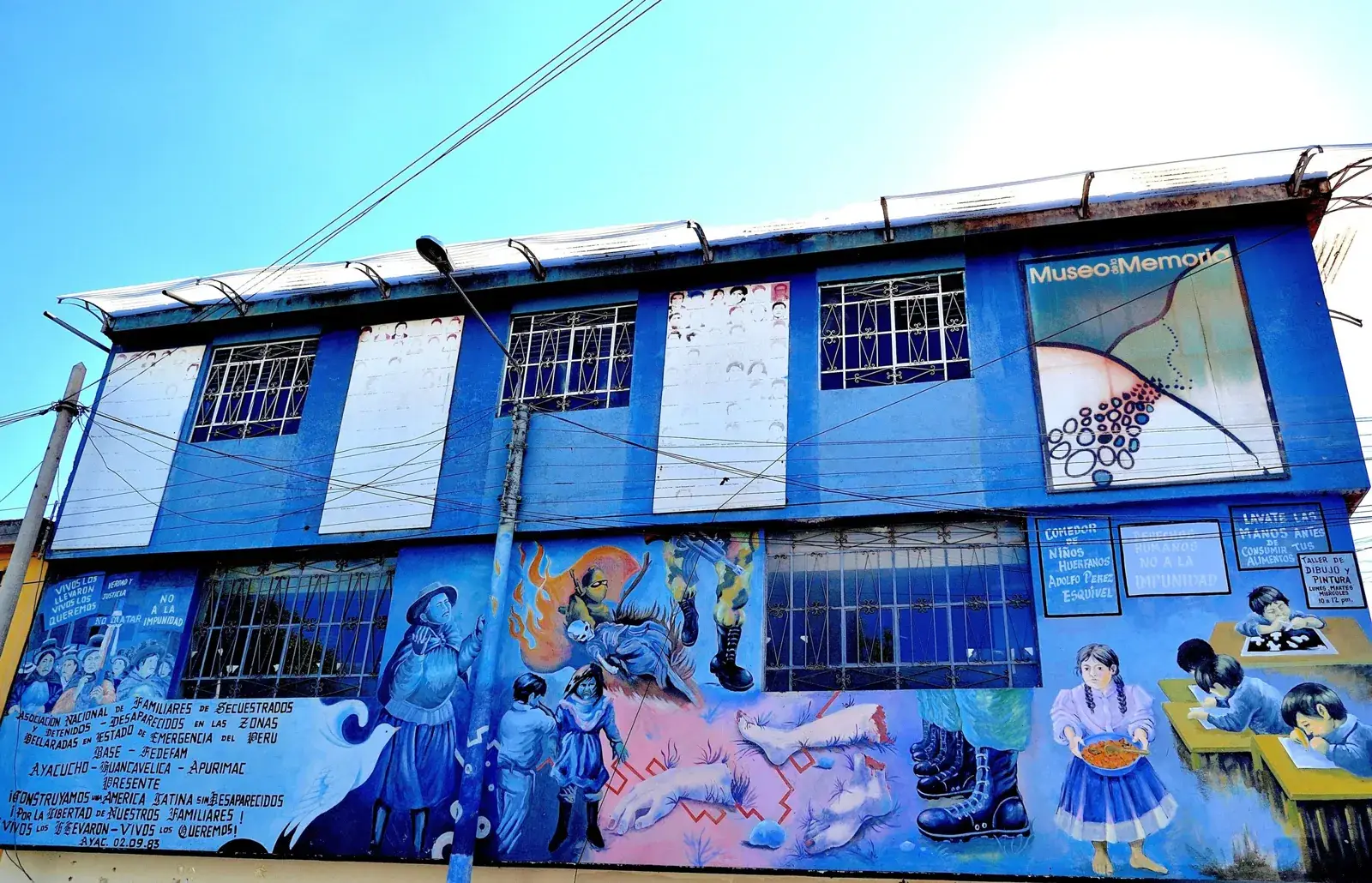
The Museum of Memory "Para que no se repita" is run by ANFASEP, the association of relatives of the kidnapped, detained and disappeared, in the city of Ayacucho. It opened in 2005 and tells the 1980-2000 internal conflict through the families who lived it, with objects, photographs, retablos and testimony. Allow about one to two hours, ask ANFASEP for current opening arrangements before you go, expect a serious and sometimes disturbing visit, and treat the staff and volunteers, many of them relatives of victims, with care.
Map
What the museum is
The Museo de la Memoria ANFASEP, officially "Para que no se repita" (so that it does not happen again), is a small museum in Ayacucho created and maintained by the Asociación Nacional de Familiares de Secuestrados, Detenidos y Desaparecidos del Perú, known as ANFASEP. It is not a state institution with a large budget and glass cases, but the house of an association of victims, and that is the point of the visit: the story is told by the people who lost someone.
It is usually described as the first museum in Peru devoted to the internal armed conflict. It exhibits the causes, events and consequences of the violence from the point of view of the victims and their relatives. The facade carries painted murals, some of them graphic, which show that this is not a conventional tourist museum.
The museum stands beside the Parque de la Memoria on the outskirts of the city centre, in a district that grew as families displaced by the violence settled in Ayacucho. It is a place to go with time and attention, not a quick stop between churches.
The conflict in brief
Between 1980 and 2000 Peru went through an internal conflict between the Maoist group Shining Path (Sendero Luminoso), other armed groups and the state forces. The first Shining Path action took place in the department of Ayacucho in 1980, and the region became the worst affected. Peru's Truth and Reconciliation Commission, whose final report appeared in 2003, estimated about 69,000 deaths and disappearances nationwide, with a majority of the victims being Quechua-speaking rural people.
Many of those killed or disappeared were peasants from the highlands around Ayacucho, caught between the armed group and the army. Thousands of families fled to the city, and thousands of relatives were left searching for a person who had been detained and never returned. The wider timeline is summarised in Peruvian history in brief, and the languages and peoples most affected are described on peoples and cultures.
The museum assumes you know little of this and tells it step by step, so you do not need to read first, although some background helps.
ANFASEP and the mothers
ANFASEP was founded in 1983 in Ayacucho by relatives, mostly women, who were searching for sons, husbands and brothers taken by the security forces. It is often called the first victims' organisation in Peru. Its best-known leader, Angélica Mendoza de Ascarza, known as Mamá Angélica, led it until 2006 and died in 2017 without learning what had happened to her own son Arquímedes, who was disappeared after being taken to the Los Cabitos barracks.
In the early years the women, many of them Quechua speakers with little schooling, went from office to office and barracks to barracks asking for news, and were often turned away or accused of supporting terrorists. They organised, ran a communal canteen and later a home for children orphaned by the violence, and they became a public voice when speaking out was dangerous.
This history explains the building. The museum was created so that the symbols of the association and the memories of its members would be kept, and many of the objects were given by the women themselves.
What you see inside
The museum is arranged as a route through the story of the violence and of ANFASEP. You see photographs of the disappeared, personal belongings, clothing, banners and documents from the association, and the pots and pans of the communal canteen that fed families and children. Among the pieces are retablos, the painted boxes with miniature scenes that Ayacucho is known for, here used to show scenes of the conflict and the founding of ANFASEP, a form discussed in studies of the museum.
The walls carry testimony and painted images, some of them violent, which is why the museum is not suited to small children. The tone is sober, without a commercial shop atmosphere or an attempt to entertain.
Exhibits and the route can change, and the museum is small, so the final impression depends on the visit. Ask for a guided explanation if one is available: many visitors report that the personal commentary of a guide or volunteer is what makes the objects understandable. A Spanish-language visitor guide has been published by a Peruvian university, but check what is currently offered in English.
Visiting with respect
This is a memorial as much as a museum. Speak quietly, dress modestly, and do not treat the staff as performers. Many of the people at the door or in the rooms are relatives of victims, and a question that seems neutral to you can reopen a loss. Listen first, ask only what you are invited to ask, and do not photograph people without permission. Ask before taking pictures inside, since rules on photography can vary and some images are sensitive.
Spanish is the working language, and Quechua is spoken by many of the older members. Some basic Spanish helps a great deal, and the notes on etiquette in Peru and responsible travel apply here.
A donation or a purchase of the association's crafts, where offered, supports the work of ANFASEP, but the amount is up to you. Do not expect a fixed price and do not bargain. If the visit affects you, leave time afterwards to sit in the park or the square before the next stop.
La Hoyada and Los Cabitos
The museum is often combined, in thought if not always in practice, with two other places linked to the same story. Los Cabitos was an army barracks in Ayacucho where, according to the Truth Commission and court cases, people were detained and many disappeared. La Hoyada is the nearby field where families and forensic teams found ovens and the remains of 109 people, according to reports, and where the regional government declared a Santuario de la Memoria, a memorial zone, in 2013.
A sanctuary has been under construction there, but the state of the works and access has been reported as uncertain, so do not plan a visit as if it were a developed attraction. The barracks is a military site and not open to tourists.
If you want to understand these places, the museum is the right starting point, because its guides and volunteers can explain what happened and where it stands today. Ask them what is open and what is appropriate to visit.
Getting there and how long to stay
The museum is in the Prolongación Libertad area, on the corner of the Parque de la Memoria, a short taxi ride from the main square. A taxi is the simplest way, and you can ask for the museum by name or for the ANFASEP building. The central streets are walkable, but the museum lies on a slope outside the colonial grid, and the walk includes a climb at about 2,750 m, so go slowly if you have just arrived; see altitude sickness.
Allow one to two hours, longer if you join a guided conversation. The visit goes well in the morning, leaving the afternoon for the churches and the rest of the city described on the Ayacucho page. Opening days and hours are not confirmed by any reliable source, so contact ANFASEP through its official channels or ask your hotel to call before you go.
Ayacucho is reached by air from Lima, covered in flying in Peru, or by long road journeys.
Who it suits and what to combine it with
The museum suits travellers who want to understand modern Peru beyond Inca sites, and anyone interested in human rights, memory and recent history. It is a short but heavy visit, and it is better placed before a lighter part of the day. Teenagers can go with an adult who is ready to talk afterwards; it is not for young children.
Combine it with the city's colonial centre and churches, and with the retablo workshops, which belong to the same living tradition. For other places that collect Peru's story, see museums in Peru. The conflict is long over, and Ayacucho city is welcoming and safe to visit, but ask locally about conditions before going into rural areas, and read the safety guide for general advice.
The museum does not offer an easy ending, and it is not meant to. What it gives is the chance to hear that a mother's search for a son lasted decades and still continues.
Frequently asked questions
What is the ANFASEP Museum of Memory?
It is a museum in Ayacucho created in 2005 by ANFASEP, the association of relatives of the kidnapped, detained and disappeared. It presents the 1980-2000 internal conflict from the victims' point of view and is usually described as the first museum in Peru on the subject.
How long does a visit take?
Plan one to two hours. The museum is small, but the testimony and any conversation with a guide or volunteer take time, so avoid rushing it between other stops in Ayacucho.
Is there an entrance fee?
Check with ANFASEP before you go, as the arrangements may change. Where a donation is requested or crafts are sold, the money supports the association's work, and the amount is your choice.
Is the museum suitable for children?
It is not recommended for young children, because the murals and images include scenes of violence. Older teenagers can visit with an adult who is willing to talk about what they see.
Do I need to speak Spanish?
Spanish is the main language of the museum, and some Quechua is spoken by older members. Without Spanish, read the background in Peruvian history in brief beforehand and bring a translation app.
Can I take photographs?
Ask at the entrance, since rules can change and some images are sensitive. Never photograph people without their permission, and avoid photographing relatives of victims who are present.
Is it safe to visit Ayacucho today?
The city and its main sights are visited without difficulty, though conditions in some rural areas differ. See the safety guide and ask your hotel before leaving the city by road.