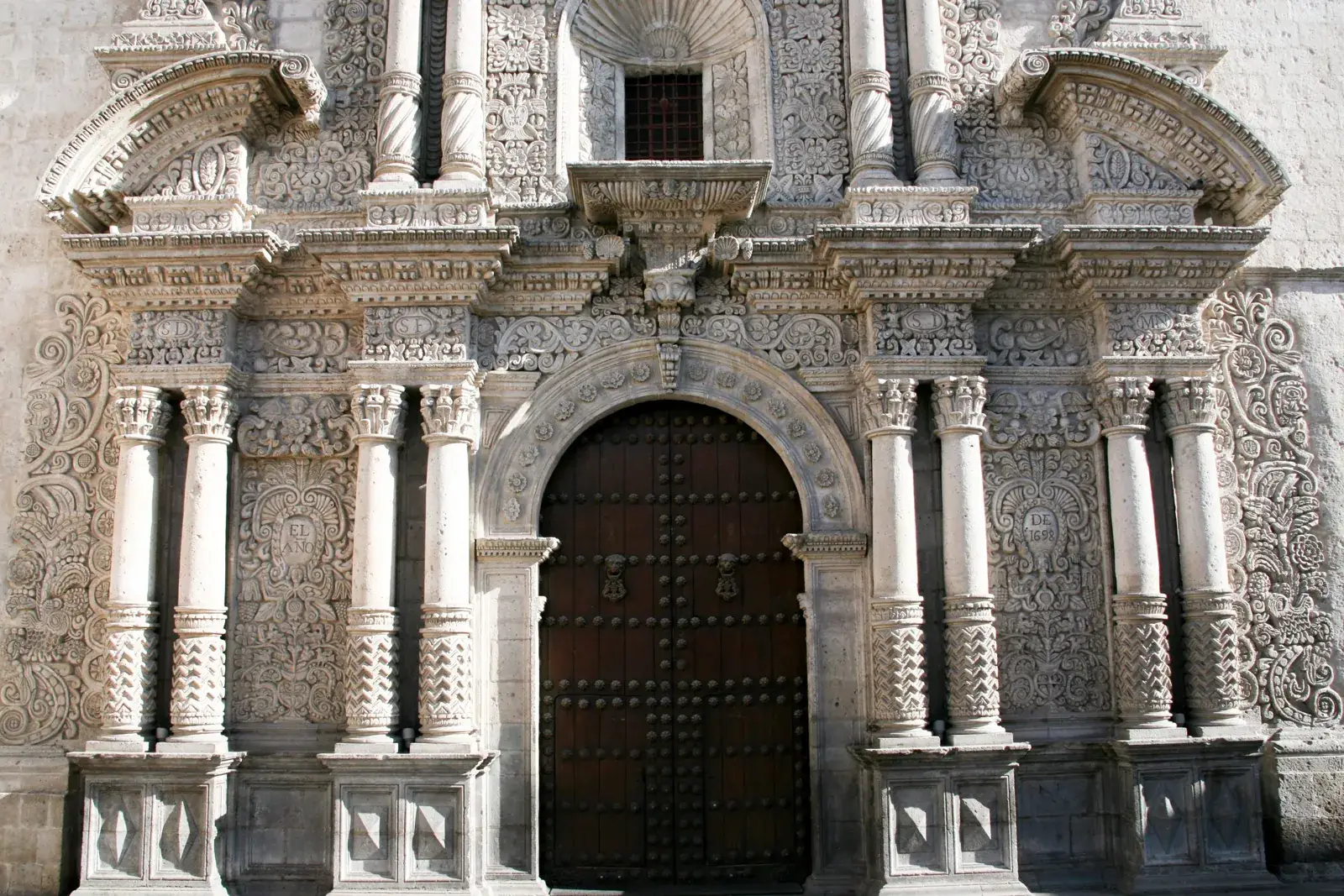
La Compañía is the Jesuit church beside the Plaza de Armas in Arequipa, and its carved sillar facade is the reason to go. The interior has a gilded baroque altar and a small side chapel, San Ignacio, painted in bright colours. Allow 30 to 45 minutes for the church, and an hour if you add the cloisters behind it. Opening hours and ticket rules change, so check them locally.
Map
What La Compañía is
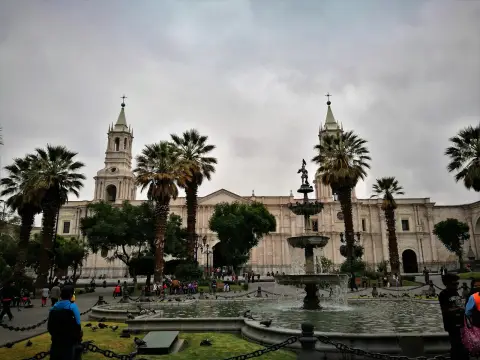
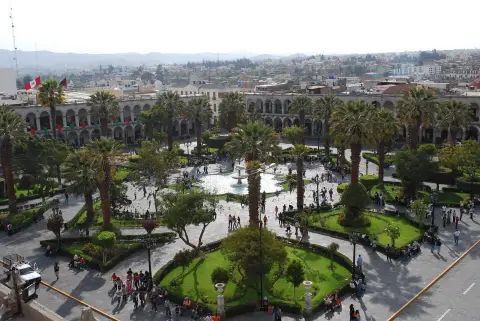
The Church of the Society of Jesus, known simply as La Compañía, stands at the corner of the Plaza de Armas in the old town of Arequipa. It was built by the Jesuits, the order that arrived in the city in the late sixteenth century, and it is one of the best-known buildings of the historic centre that UNESCO lists as World Heritage.
Like most of the city, it is built of sillar, the pale volcanic stone that is soft enough to carve in fine detail and hardens with exposure. That quality explains why Arequipa developed its own school of stone carving, and La Compañía is the showpiece of that school. If you have only a short time in the city, this is the church to see up close, next to the cathedral that fills the north side of the Plaza de Armas.
A building rebuilt after earthquakes
The history of the church is a history of earthquakes. The Jesuits began building in the late sixteenth century, and an earthquake brought the first church down within a few years. A second and then a third church followed, the last begun around the middle of the seventeenth century, and the earthquake of 1687 damaged that one too. The date 1698 is carved into the main doorway, and it marks the completion of the reconstruction that you see today.
The order was expelled from the Spanish territories in 1767, and the church went on serving the city under other hands. The tower was lost to the earthquake of 1868, and its replacement fell in 1960. Arequipa sits in one of the most seismic regions of Peru, so the cracks and repairs you notice on old buildings are part of their story, not a sign of neglect.
Tours and activities
Bookable online, chosen for their traveller reviews.
-
Day trip From €38 per person
-
Day trip From €16 per person
-
Day trip From €58 per person
-
From €9 per person
The facade and mestizo baroque
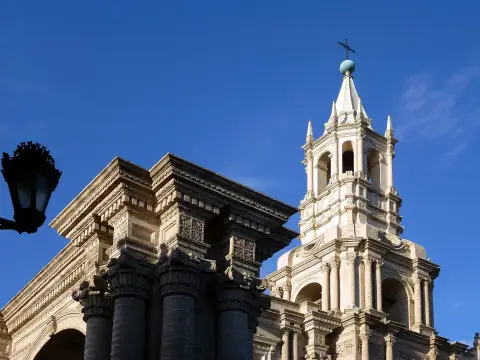
The main portal is the reason people stop in the street. Paired columns with Corinthian capitals frame the arched door in two levels, and nearly every surface between them is covered with shallow relief. The carving mixes motifs brought from Spain, such as interlaced geometric patterns, grapes and rosettes, with local ones: masks, birds, maize and the cantuta flower of the Andes. Art historians call this blend mestizo baroque or Andean baroque, and Arequipa and the Lake Titicaca region are where it flourished.
Look for the double-headed eagles on either side of the upper niche, a Habsburg emblem from the period of construction, and for the date 1698 on the doorway. A second portal on the side street, carved in the mid-seventeenth century, is older and is counted among the earliest examples of the style in the city. Go in the morning, when the sun lights the front of the church and the carving shows depth, as the shadows fall flat at midday.
Inside the church and the San Ignacio chapel
The nave is dark and quiet after the plaza, with a tall gilded altarpiece at the end and side altars carved in the same tradition. It is a working church, so services take place and visitors are expected to dress modestly and keep voices low; the notes on etiquette in Peru cover what to wear and when to avoid photography.
The surprise is the San Ignacio chapel, the former sacristy, which is entered separately. Its walls and dome are covered with painted vines, exotic flowers and brightly coloured birds, a decoration usually linked to the Jesuit missions in the rainforest. After the pale stone outside, the colour is striking. Entry to the chapel has usually been charged separately from the church, but the ticket rules are not fixed, so confirm them at the door.
The cloisters behind the church
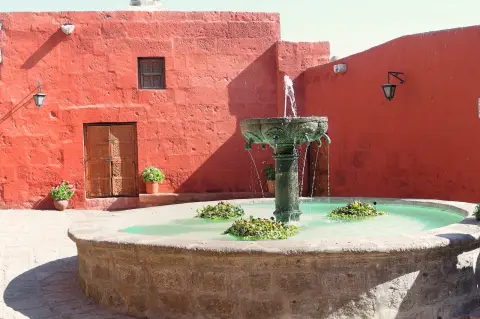
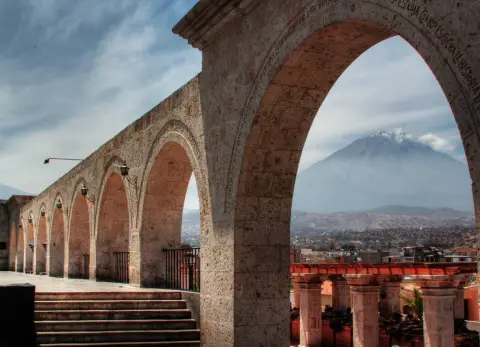
Behind the church lie the Jesuit cloisters, started in the late seventeenth century and finished in the first half of the eighteenth. They are two-storey stone arcades around courtyards, with about forty rooms and a central fountain, and the arches are carved with the same care as the facade. After the expulsion of the Jesuits they served other religious and charitable uses, were sold off in lots in the early twentieth century, and were restored in the 1970s.
Today the cloisters are mostly occupied by shops, offices and tourist businesses, so you wander through as in a small arcade, with the carved stone visible between the displays. It costs little time and gives a view of the arches from inside. Craft stores here are a handy place to compare alpaca and other goods before buying; buying souvenirs explains what to look for.
When to go and how long to stay
Plan 30 to 45 minutes for the church and the chapel, and about an hour if you add the cloisters. The best light on the facade is in the morning; in the late afternoon the stone turns warm, which is also a good time for photographs from the plaza. Midday is the busiest time, when tour groups pass through.
Opening hours vary by day and may close for services, and the church has sometimes shut for restoration after earthquakes, so check locally. La Compañía is a few minutes on foot from everything else in the centre. Pair it with the Santa Catalina monastery for a full morning, or with the Mirador de Yanahuara at sunset. The wider list of options is on the things to do in Arequipa page.
Getting there and who it suits
La Compañía is in the old centre, so any hotel nearby is a short walk away; see where to stay in Arequipa for the areas to choose from. The streets are flat and the city is at about 2,300 m, so effort and altitude are not a concern for most visitors, although those arriving straight from the coast may want to read about altitude sickness. The church floor is stone and there are a few steps at the entrances, so access for wheelchairs is limited and worth checking in advance.
The visit suits anyone with an interest in architecture, stone carving or colonial history, and it is easy for older travellers and families because it is short and central. If you are weighing how much time the city deserves, is Arequipa worth visiting puts it in context, and the Juanita museum is a good contrast with the baroque.
Where to sleep
-
Find hotels
Plaza de Armas and historic centre
Colonial core within walking distance of the main sights
-
Find hotels
San Lázaro
Old narrow lanes close to the main square, with character and lower prices
-
Find hotels
Yanahuara
Residential quarter with views of the volcano and good restaurants
-
Find hotels
All of Arequipa
Compare every area and price level in one search
Frequently asked questions
Is La Compañía church worth visiting?
Yes, mainly for the carved facade, which you can see from the street for free, and for the colourful San Ignacio chapel. It takes less than an hour and sits on the Plaza de Armas.
How much does it cost to enter La Compañía?
The facade costs nothing to see. Entry to the church or the San Ignacio chapel has been charged at times, but the price and rules change, so ask at the door and do not rely on an old figure.
What is special about the facade of La Compañía?
It is a carved sillar portal that blends Spanish baroque with Andean motifs such as masks, maize and the cantuta flower. Look for the date 1698 and the double-headed eagles above the doorway.
Where is La Compañía in Arequipa?
It is on the corner of the Plaza de Armas in the historic centre, with a side portal on the street beside it. Any hotel in the old town is within a short walk, as described in where to stay.
How long do I need at La Compañía?
Allow 30 to 45 minutes for the church and chapel, plus about an hour if you walk through the cloisters behind it. The cloisters are small and mostly taken up by shops.
What is in the San Ignacio chapel?
It is the old sacristy, with walls and a dome covered in painted vines, flowers and birds. The decoration is generally linked to the Jesuit missions in the rainforest.
Can I take photographs inside La Compañía?
Rules differ by area and may change, and it is a working church. Ask before photographing, never use flash, and avoid taking pictures during services; see etiquette.