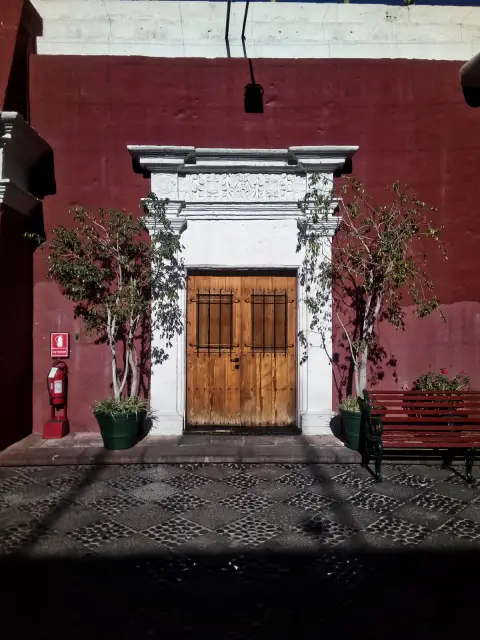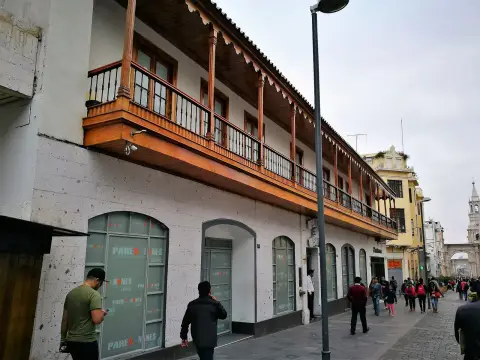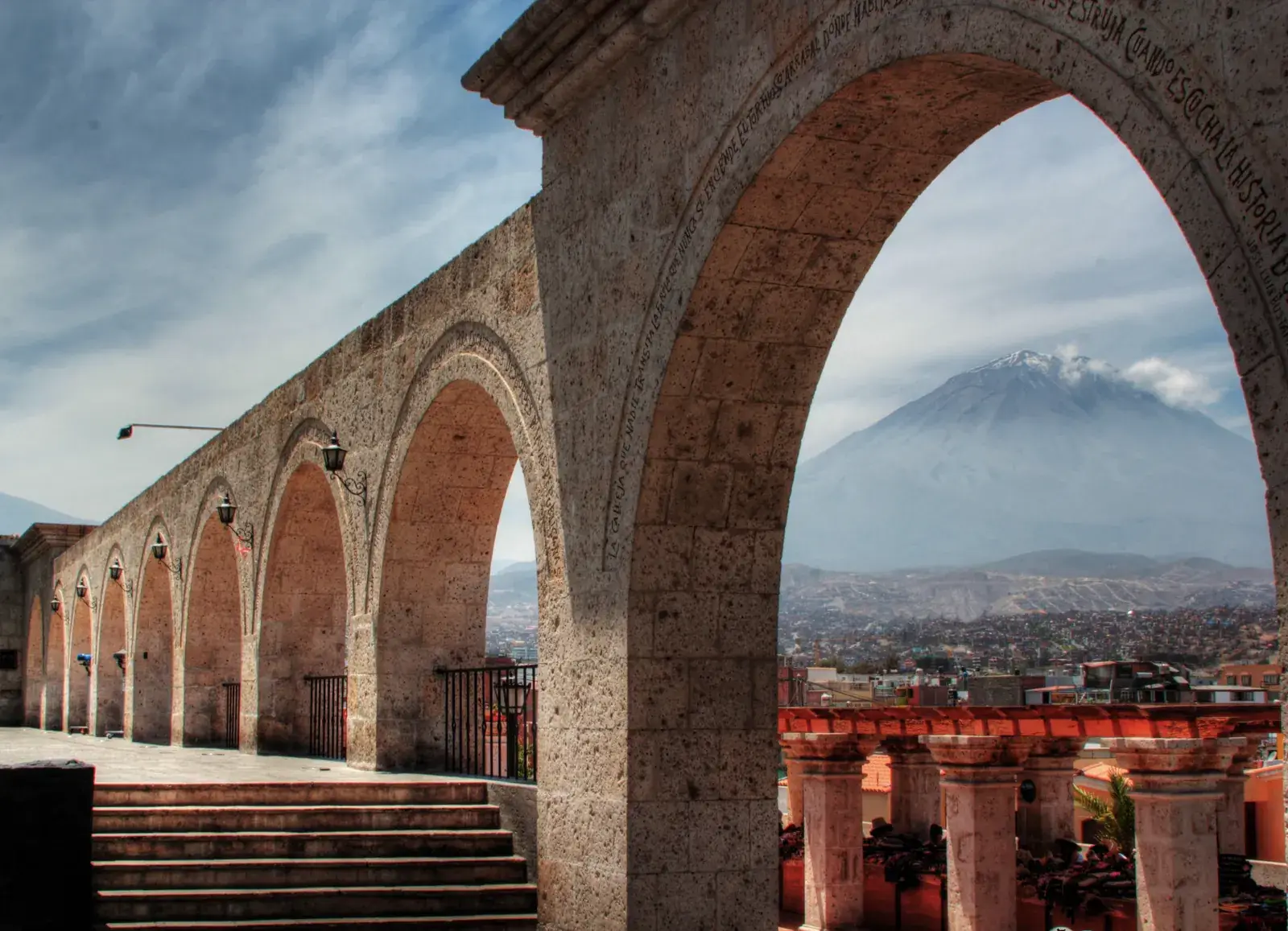
Yanahuara is a quiet residential district west of central Arequipa, known for a small viewpoint where a row of sillar arches frames El Misti volcano and the city below. Verses are inscribed on the arches, and the church of San Juan Bautista stands beside the small plaza. A visit takes about an hour, longer with a meal.
It is an easy walk or short taxi ride from the centre, best in the late afternoon and at sunset. Go on a clear day if you want the volcano, and combine it with a traditional meal nearby.
Map
What Yanahuara is
Yanahuara is a district of Arequipa on the right bank of the Chili river, a short distance from the historic centre. Historically it was a separate settlement of indigenous people on the edge of the colonial city, and it has kept a village-like feel, with narrow streets, low houses and a small central plaza. Today it is a residential area where local families live, and it receives a steady stream of visitors who come for the view.
The reason to visit is the mirador, or viewpoint, at the edge of the plaza. From it you look across the valley to the city and the mountains behind, which gives a good sense of how Arequipa sits in a green river valley at the foot of volcanoes. The view is especially helpful early in a stay, because it makes the geography of the city clear.
The setting is relaxed. Unlike the centre, the district has few tour groups, and the main activity is to sit, look and eat.
The sillar arches and their verses
The viewpoint is a row of arches built of sillar, the pale volcanic stone used across the old town. The arches are generally described as dating from the 18th or 19th century, and they form a sheltered terrace with a low wall at the front. Their rounded shape makes natural frames for photographs, and many visitors stand under an arch to capture El Misti centred between the pillars.
Inscribed on the arches are verses by writers and poets associated with Arequipa, who are sometimes called the city's literary figures. The lines are in Spanish, and they celebrate the city and its landscape. It is worth stopping to read a few, even with limited Spanish, because they add a human voice to what is otherwise a view.
The terrace is small, and at sunset it fills up. For a quieter moment, try the late morning or the early afternoon, when the light is harder but there are fewer people to share it with.
Tours and activities
Bookable online, chosen for their traveller reviews.
-
Day trip From €38 per person
-
Day trip From €16 per person
-
Day trip From €58 per person
-
From €9 per person
The view of El Misti
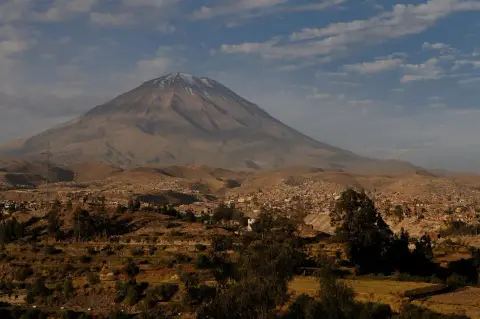
The main subject is El Misti, a symmetrical volcano of about 5,800 m that dominates the skyline. Beside it are the broader forms of Chachani and the lower Pichu Pichu, which together form the backdrop to the city. From Yanahuara you see the rooftops and domes of Arequipa in the foreground, with the volcano rising above them.
Clarity depends on the weather. The best conditions are in the dry months, roughly May to September, when the sky is often clear, though mornings are clearer than afternoons in the wetter months, when cloud builds. If the cone is hidden, wait a few minutes, as cloud moves, but do not count on it.
For photographers, late afternoon gives warm light on the rooftops, and the hour around sunset can turn the stone and the mountain orange. Bring a layer, since the temperature drops quickly once the sun goes, at an altitude of around 2,300 m.
The church and the plaza
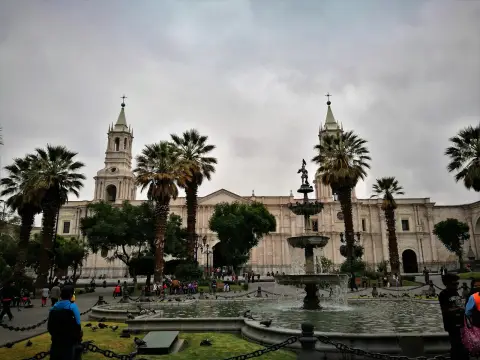
Beside the viewpoint stands the church of San Juan Bautista, the parish church of the district. It is generally dated to the 18th century and is built of sillar, with a decorated stone facade in the regional mestizo baroque style, comparable in spirit to La Compañía in the centre, though more modest in size. The interior is usually simple, and it is open at times set by the parish.
Because it is an active church, dress modestly and avoid entering during services unless you plan to take part. Opening hours are irregular, so view the exterior first and enter only if it happens to be open.
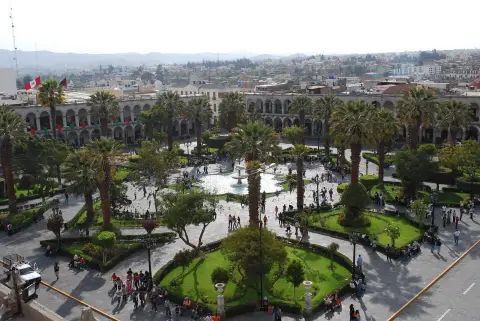
The small plaza in front of the church and the mirador is shaded, with benches, and is the natural meeting point for the district. It is a good place to sit for a few minutes and watch local life, away from the more crowded sights downtown. The stone, the arches and the church form a compact group that is easy to see in a single visit.
Picanterías, sweets and a meal
Yanahuara is known for its traditional restaurants, called picanterías, which serve the spicy, hearty dishes of Arequipa, often at midday. A picantería is typically a simple, family-style place that serves regional specialities, and the neighbourhood has several. Opening hours vary, and many are busiest at lunch, so check before planning dinner. See what to eat in Arequipa for dishes such as rocoto relleno.
The district is also known for sweets. Small stalls and shops around the plaza sell traditional desserts, including iced milk-based treats and pastries, and these make a good snack while looking at the view. Prices are normally modest but vary, so look at what is on offer before buying.
Choose where to eat by watching where local families go and by checking the menu, not by the first person who invites you in. Avoid assuming that any place with a view is the best value, and ask for the price of drinks before ordering if it is not displayed.
How to get there and when to go
From the Plaza de Armas, Yanahuara is roughly 20 to 30 minutes on foot, crossing the river by a bridge and following streets that climb gently. The walk is pleasant in daylight and passes ordinary neighbourhoods, but at the altitude of Arequipa you may feel it more than expected. A taxi takes only a few minutes and is the easy choice if the sun is strong or if you are going after dark.
Time your visit for the late afternoon, arriving an hour or so before sunset, so you can walk around, eat something and watch the colours change. After dark the area is less lively, and a taxi back is advisable, as explained in the safety guide.
Allow about an hour for the viewpoint, church and plaza, and more if you stay for a meal. Wear a hat and sunscreen for the afternoon sun, and carry water.
Combining it with the centre, accessibility and mistakes
A good Arequipa day starts in the morning at Santa Catalina Monastery, continues with the square and a late lunch, and ends at Yanahuara for sunset. If you also want the mummy museum, see the Juanita Museum and fit it in before or after the monastery.
For accessibility, the plaza and viewpoint are on a mostly flat paved area, though pavements are uneven and there may be a few steps near the church. The walk from the centre includes a gentle climb. Ask a taxi to drop you as close as possible if mobility is an issue.
Common mistakes are arriving after the sun has set and missing the view, going on a cloudy day and leaving without trying again, and walking back in the dark on quiet streets. A short plan avoids all three. More ideas are on the things to do in Arequipa page.
Where to sleep
-
Find hotels
Plaza de Armas and historic centre
Colonial core within walking distance of the main sights
-
Find hotels
San Lázaro
Old narrow lanes close to the main square, with character and lower prices
-
Find hotels
Yanahuara
Residential quarter with views of the volcano and good restaurants
-
Find hotels
All of Arequipa
Compare every area and price level in one search
Frequently asked questions
Is Yanahuara worth visiting?
Yes, if you have an afternoon free. It offers one of the clearest views of El Misti with the city beneath, in a calm neighbourhood, and it pairs naturally with a meal.
How far is Yanahuara from the Plaza de Armas?
Roughly 20 to 30 minutes on foot, or a few minutes by taxi. The walk is gentle but can feel tiring in the sun at altitude.
What are the verses on the arches?
They are lines in Spanish by writers associated with Arequipa, inscribed on the sillar arches of the viewpoint. They celebrate the city and the landscape, and reading a few adds context to the view.
What is the best time to see El Misti from Yanahuara?
Late afternoon to sunset is popular for the light, while mornings often have clearer skies. The dry months, roughly May to September, give the best chance of an unclouded cone.
What is a picantería?
It is a traditional Arequipa restaurant that serves hearty, spicy regional dishes, often at midday. Many are family-run, and hours vary, so check before you go. Typical dishes are described in what to eat in Arequipa.
Is Yanahuara safe?
It is a residential area and is generally calm in daylight. Take normal care with phones and bags, and use a taxi at night rather than walking back through quiet streets.
How long do I need in Yanahuara?
About an hour covers the viewpoint, the church and a short wander around the plaza. Allow two hours or more if you plan to have a meal or wait for sunset.
Can I combine Yanahuara with Santa Catalina?
Yes, and it works well. See Santa Catalina in the morning or midday, and go to Yanahuara in the late afternoon for the view.