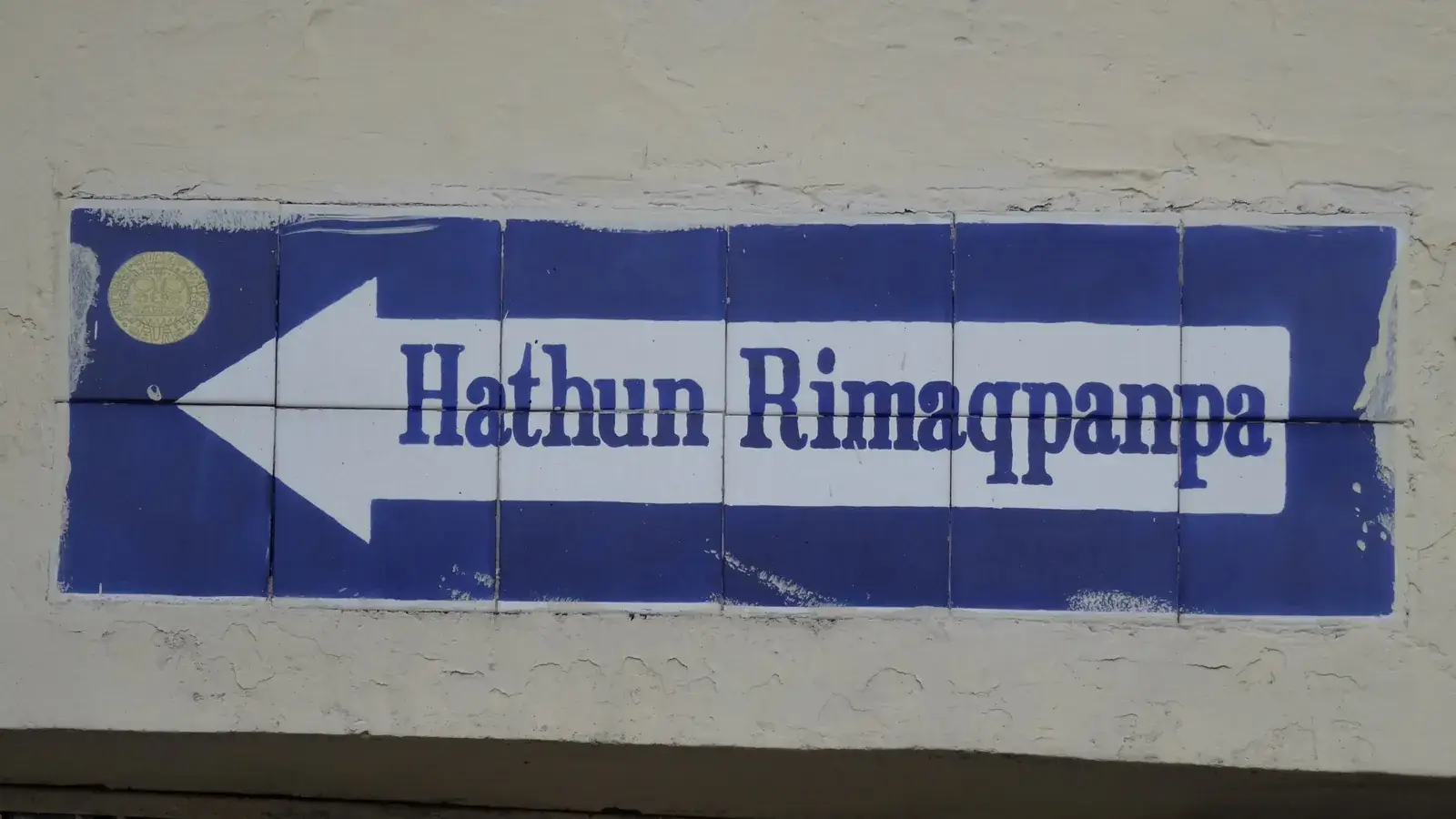
Spanish is the main language of Peru and the one travellers will use almost everywhere. Quechua is the most widely spoken indigenous language, with Aymara in the far south around Lake Titicaca, and dozens of smaller languages in the Amazon. The constitution recognises Spanish as an official language and, in the areas where they predominate, Quechua, Aymara and other native languages as well.
Learning a few greetings in Spanish, and a word or two of Quechua in the highlands, is appreciated, and English is common only in tourist services.
A multilingual country
Peru has one dominant language and many living ones. The national census of 2017 recorded that a large majority of people, about four in five, learned Spanish as their first language, roughly one in seven learned Quechua, and a smaller share learned Aymara. Other indigenous languages account for a small percentage of the total but a large share of the country's linguistic variety.
The Ministry of Culture counts around 48 indigenous languages, most of them in the Amazon basin. Many are endangered, since children increasingly grow up speaking Spanish at school and in the city. This history matters for visitors, because the language a person speaks at home may not be the one used with strangers: a market seller in Cusco may switch between Quechua with family and Spanish with customers, and a guide may be bilingual from childhood. Spanish remains the common thread, and it is the language of administration, media and tourism across the country.
Peruvian Spanish
Spanish in Peru is considered by many learners to be clear and fairly slow, especially in Lima and the coastal cities. Vocabulary shows the mix of local history: words from Quechua such as palta (avocado), choclo (large-kernel corn) and papa (potato) are used across Latin America, while others are very Peruvian. Everyday slang includes pata (friend), chamba (work) and chévere (great), and new expressions come and go quickly among young people.
In the highlands, Spanish spoken by Quechua speakers has its own rhythm and some grammar influenced by Quechua, which some outsiders mistakenly judge as "bad Spanish". It is a regular variety with its own history, and it deserves the same respect as any other. Travellers with school Spanish usually manage well: speak slowly, be patient, and use polite forms such as por favor and gracias. The Spanish phrases for travellers page lists the most useful ones for menus and transport.
Quechua, the language of the Andes
Quechua, called Runasimi ("the people's tongue") by its speakers, is not a single language but a family, with varieties that differ enough that speakers from distant regions may struggle to understand each other. The Inca empire used a form of Quechua as an administrative language and spread it widely, though it was already spoken before the Incas and continued to spread in colonial times.
The varieties most often heard by visitors are those of Cusco and Ayacucho, which belong to the southern group. Spellings differ too; a standard alphabet was agreed in the 1980s, so you may see both Cusco and Qosqo on signs, and Inka and Inca. Quechua is a rich oral and written language, with poetry, songs and, increasingly, radio and school teaching. It is a language of daily life and also of ritual, as in the offerings described in Andean beliefs.
Useful Quechua words and phrases
A little Quechua is welcomed in Cusco, the Sacred Valley and the villages of the south. A common greeting is Allillanchu, roughly "are you well?", to which the answer is Allinmi, "well". Thanks is Sulpayki or, in some areas, Yusulpayki. Yes is arí and no is manan. Words you will meet on trips include wasi (house), inti (sun), mama (mother, often "mother" of a lake or mountain), pacha (earth, time, world) and apu (a mountain spirit and lord).
Many place names are Quechua: Machu Picchu is usually understood as "old mountain", though translations of names are often debated. Pronunciation differs by region, and the same word can be spelled in several ways. Do not worry about being exact; a try, with a smile, is the point. It also helps to avoid translating Quechua phrases for others with confidence, unless you know the area, since local meanings vary.
Aymara around Lake Titicaca
Aymara is spoken in the southern highlands of Peru, mostly in the region of Puno around Lake Titicaca, and much more widely across the border in Bolivia. It is unrelated to Quechua in origin, though the two have borrowed from one another over centuries. In Puno you may hear it in markets and villages, alongside Quechua and Spanish.
A common Aymara greeting is Kamisaraki ("how are you?"), with the reply Walikiw, "I am well", and thanks is Yuspagara. A cheer heard at festivals in Puno is Jallalla, which is used in both Aymara and Quechua contexts. Visitors who go to Puno or the islands of Lake Titicaca are more likely to meet Aymara speakers than elsewhere in Peru, although Quechua and Spanish remain the most common languages in practice. As with Quechua, spelling varies according to the system used.
Languages of the Amazon
The Amazon holds most of Peru's indigenous languages, grouped in families that are unrelated to Quechua or Aymara. The largest are Asháninka, spoken in the central jungle, Awajún in the north, and Shipibo-Konibo on the Ucayali river. Shipibo-Konibo is also known for its geometric designs, called kené, which are painted and embroidered on cloth and ceramics and are recognised as cultural heritage.
Visitors to lodges near Puerto Maldonado or tours out of Iquitos may meet guides who speak an indigenous language at home, Spanish for work and English for guests. Many Amazon languages are spoken by only a few hundred or a few thousand people, and some by even fewer. Efforts include bilingual schools, dictionaries and recordings, though resources are limited. Languages in this region are tied to land and territory, so respect for communities and their rules is part of respect for the language.
Language, respect and practical tips
A few habits help. Greet people before you ask a question, since a plain "Where is the bus?" can sound abrupt; start with buenos días or buenas tardes. Do not call Quechua or Aymara "dialects" or "Inca language"; they are languages with their own grammar, history and living speakers. Ask permission before photographing people, and expect that some will ask for a small payment, or decline.
For practical use, learn numbers, directions and food words in Spanish, since prices and times are given that way. Download an offline translator before trekking or visiting remote areas, where signal is weak. Guides on treks and in museums often explain in English, and a guide who speaks Quechua can open doors in rural communities. Reading literature written in Quechua or Spanish, as described in Peruvian literature, is a good way to hear how the languages sound and think; the Peoples of Peru page gives wider context on the communities that speak them.
Frequently asked questions
What language is spoken in Peru?
Spanish is the main language and is understood almost everywhere. Quechua is spoken by millions, mostly in the Andes, and Aymara around Lake Titicaca, with dozens of languages in the Amazon. The constitution gives official status to Spanish and, where they predominate, to indigenous languages.
Do people in Peru speak English?
English is common in tourist hotels, tour agencies and at main sites, and less common elsewhere. In markets, on local buses and in small towns, Spanish is needed. A few Spanish phrases make a real difference.
Is Quechua the language of the Incas?
The Incas used a form of Quechua as an administrative language and spread it across their empire, but Quechua existed before them. Today's varieties have developed over centuries and differ from region to region. Many speakers prefer to call it Runasimi.
How do I say hello in Quechua?
A common greeting is Allillanchu, to which people answer Allinmi. Thank you is Sulpayki or Yusulpayki depending on the area. A smile and a try are usually welcomed in the highlands.
How many languages are there in Peru?
The Ministry of Culture counts about 48 indigenous languages, in addition to Spanish. Four of them are Andean, including Quechua and Aymara, and the rest are Amazonian. Many are endangered.
Is Peruvian Spanish easy to understand?
Many learners find it clear, especially on the coast and in Lima. In the Andes you may hear a different rhythm and some Quechua words. Speaking slowly and asking people to repeat is perfectly normal.
Can I photograph people who speak Quechua in traditional dress?
Ask first, and accept a no. In tourist areas, some people expect a small tip for a photo, and others simply prefer not to be photographed. Never photograph children or ceremonies without permission.