May is one of the best months in Peru for the Andes. The rains have ended, skies are clear, the trekking routes open and the main tourist season has not yet started, so crowds and prices are lower than in June to August. The coast turns grey, though, and the Amazon is drying out. It is a very good choice for Machu Picchu, Cusco and the Cordillera Blanca.
What changes in May
Think of May as the month when things flip. In the first days there may still be some leftover rain, but within a few weeks the southern Andes settle into the clear, dry pattern that lasts until September. Mornings are crisp, afternoon light is clean and the mountains stand out against a deep blue sky. Nights are cold and get colder as the month goes on, and the first frosts appear at high altitude.
Meanwhile the coast does the opposite. Lima loses its summer sun and the garúa cloud returns, so beach plans on the central coast are unreliable. The Amazon starts to dry, and rivers fall from their April peak, which makes forest walks easier. See dry season for the pattern that May opens.
Trekking opens up
May is when many trekking seasons begin. The Cordillera Blanca opens for treks such as the Santa Cruz, with stable weather and fewer groups than in July and August. Around Cusco, routes such as Salkantay and Lares are in good condition, and snow-fed streams are manageable. The Inca Trail is open, but permits are in demand, particularly for the last weeks of the month, so book early.
Conditions at altitude vary. Early in the season some high passes still hold snow or ice after the rains, and your guide may adjust the route. Huaraz fills with trekkers and climbers as the month goes on, and local guides are busier at the end of May than at the start.
Qoyllur Rit'i and other events
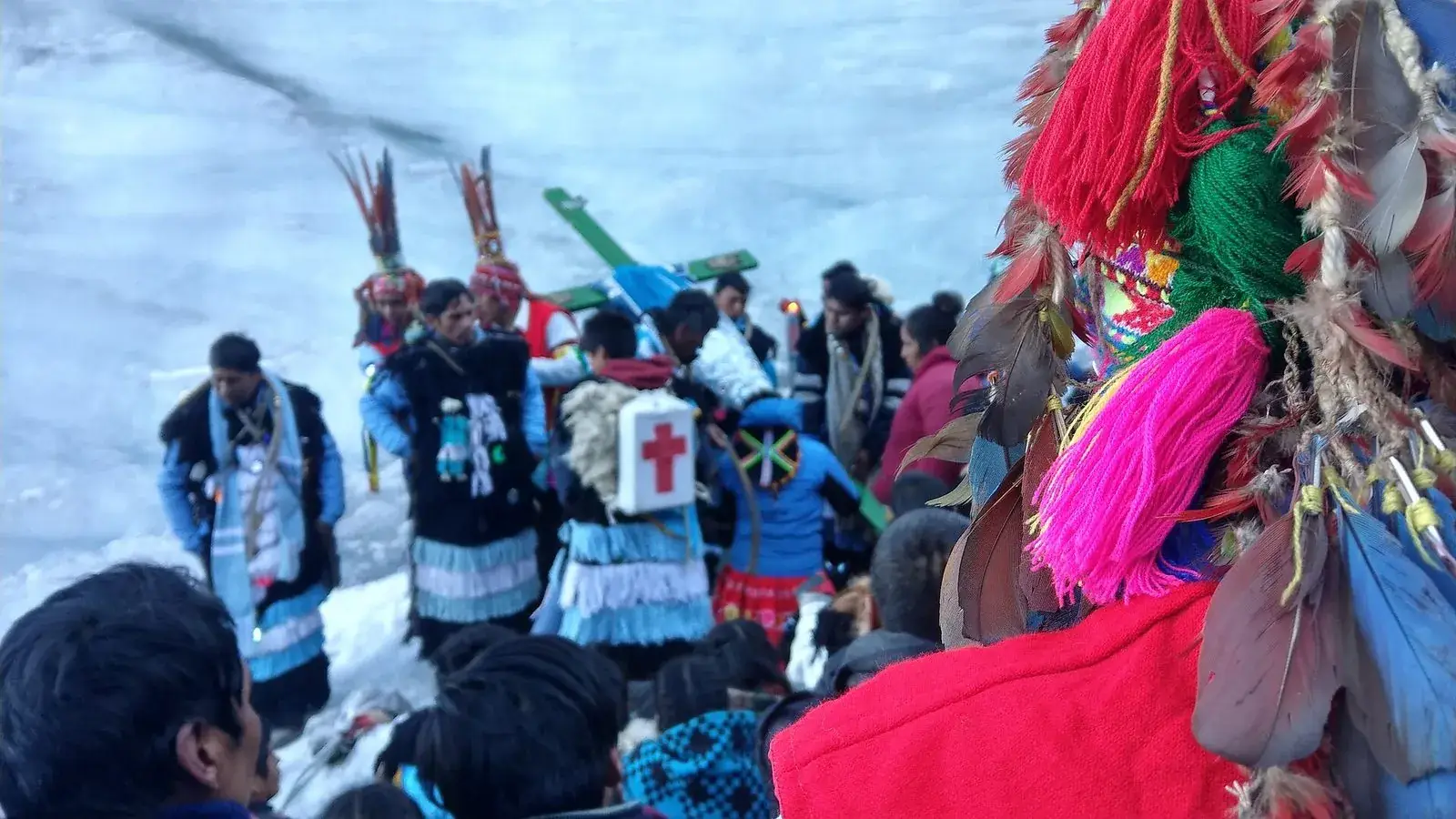
One of the most striking events in the Andean calendar is the Qoyllur Rit'i pilgrimage, held in the mountains east of Cusco, where tens of thousands of people travel to a glacier-side sanctuary with dancers in elaborate costume. Its date depends on the moon and the Christian calendar, so it falls in late May or in June depending on the year. It is a religious event more than a tourist attraction, and outsiders should join only with a reputable guide and with respect for the pilgrims.
In the cities, the Day of the Cross, in early May, is celebrated with processions and decorated crosses on hilltops. See festivals to understand how these dates affect transport and closures.
Machu Picchu in May
May is among the strongest months for Machu Picchu. The terraces are still green from the rains, the air is clearer than in the wet season and the crowds are below July and August levels. Mist often fills the valley in the early morning before burning off, which gives the classic photograph of the citadel emerging from cloud.
Tickets and trains are easier to secure than in the peak season, but they are still limited, so book before you finalise the rest of the trip. See best time for Machu Picchu to compare May with the rest of the year, and it is a good month for first-time visitors who want reliable weather without the maximum crowds.
Lake Titicaca, Arequipa and the south
Around Lake Titicaca the air is dry and the light is sharp. Nights in Puno begin to drop towards freezing, and the island visits are pleasant in the middle of the day. Arequipa is sunny and comfortable, and the Colca Canyon has its best viewing season starting, with condors riding the morning thermals.
This is a good month to link the south in a loop through Cusco, Puno, Colca and Arequipa. The weather is stable across the route, and the long bus journeys are less exposed to landslides than in the wet season.
Value and what to pack
The best argument for May is value. You get the dry-season weather that people pay a premium for in July, with room to choose your hotels and tours. Machu Picchu is still busy, but entry slots and trains are easier to secure than in the summer. Pack warm layers for nights and early starts, sun protection for the thin air and a light rain layer for any stray showers. In Lima, bring a fleece and a windproof jacket.
If you can choose only one shoulder month for the Andes, May and September are the two most often recommended.
Frequently asked questions
Is May better than July for Machu Picchu?
For many people yes. The weather is similar, and the crowds and prices are lower. Nights are slightly milder than in July, though still cold.
Can I trek in the Cordillera Blanca in May?
Yes, it is the start of the season, with generally stable weather. Check pass conditions with local guides.
Is Lima sunny in May?
Usually not. The grey winter cloud begins to return, so do not count on beach weather.
Is it cold in May?
At altitude, nights are cold and getting colder, while days are sunny and pleasant. On the coast the temperature is mild but damp. Layers solve most problems.
When is Qoyllur Rit'i?
It falls in late May or June, depending on the year, and the dates follow the lunar and church calendar. Dates differ each year; join only with a reputable guide.
Do I need to book Inca Trail permits for May?
Yes, and well ahead for the later weeks, since the dry season is under way. Permits for the first part of the month are easier to find.
Is the Amazon good in May?
It is a good month for walking and wildlife viewing, with falling rivers and fewer downpours. Occasional cold snaps called friajes can cool the southern jungle, so bring a warm layer.