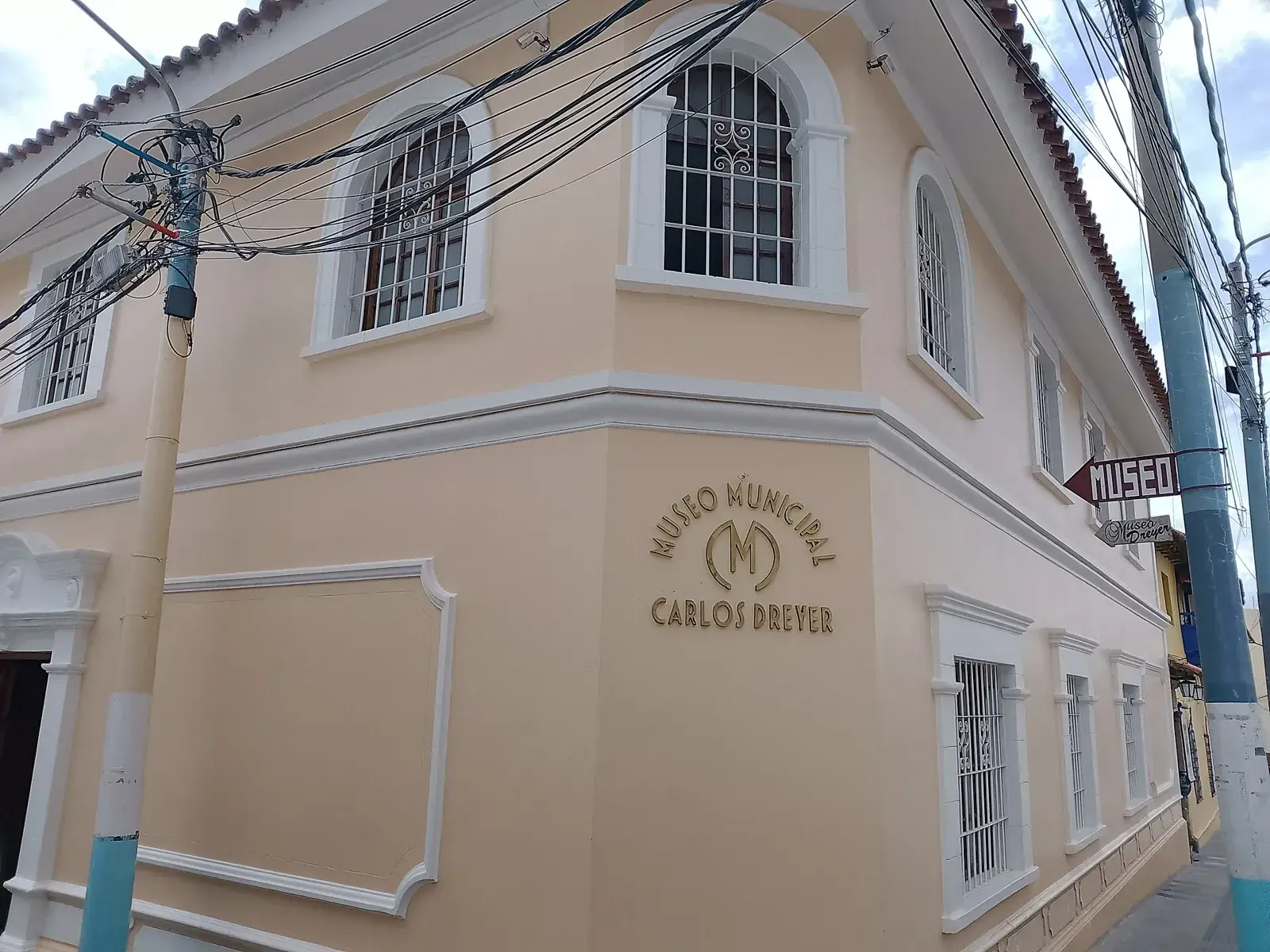
The Carlos Dreyer Museum is the best indoor stop in Puno: a municipal museum in the former home of a German-born painter and collector, a few streets from the main plaza. Allow about an hour. Its strength is the stone sculpture of the Pukara culture and the finds that explain the pre-Inca peoples around Lake Titicaca, which makes a useful primer before Sillustani or the boat trip.
Map
What the museum is
The Carlos Dreyer Museum, officially the Museo Municipal Carlos Dreyer, occupies a two-storey town house in central Puno, on Jirón Conde de Lemos. Carlos Dreyer was a German-born painter and collector who settled in the city and filled his home with archaeological pieces, paintings, books and everyday objects. The house and collection later became a municipal museum, and the building was declared part of Peru's cultural heritage in 1980.
It is a modest museum rather than a grand one. Rooms are small, labels are mostly in Spanish, and the collection is wide rather than deep. That suits a short visit: in an hour you pass through several thousand years of Altiplano history without the fatigue of a large institution. If the weather is cold or wet, which it often is at this altitude, it is a good use of a spare hour in the town described in the Puno guide.
The Pukara stone carvings
The museum's best-known holding is its lithic gallery, a room of carved stone from the Pukara culture, which flourished on the northern shore of the lake roughly before and around the start of the Christian era, centuries before the Incas. The pieces include sculpted figures and slabs with stylised human, animal and geometric designs, and they show an artistic tradition that is often regarded as an ancestor of later Altiplano styles.
Seeing them indoors is a real advantage. Stone carvings left in the open weather badly at 3,800 m, and here you can look closely at the cutting and the worn surfaces. Spend more time in this room than any other, and read the labels for the origin of each piece, since many come from sites that are not easy to visit independently. It pairs well with the archaeology of the lake region covered in Lake Titicaca.
Tours and activities
Bookable online, chosen for their traveller reviews.
-
★ Top rated From €23 per person
-
★ Top rated From €23 per person
-
Day trip From €41 per person
-
From €8 per person
Altiplano peoples and the burial towers
Other halls trace the cultures that followed Pukara and Tiwanaku, including the Colla, Lupaca and Pacajes kingdoms that held the plateau before the Inca expansion. Pottery, tools, textiles and ornaments give a sense of how these societies lived and traded around the lake.
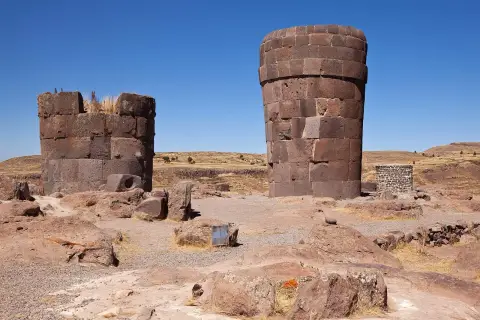
A separate room is devoted to death and burial in the Altiplano, with objects associated with the chullpas, the tall stone burial towers. These are the same structures that stand on the ridge at Sillustani, about an hour from Puno. Visiting the museum first makes the towers easier to read: you see the kind of objects associated with burials in the region and get a sense of the culture that built the towers. Go to the museum before the ruins, not after.
Inca, colonial and religious halls
In the later rooms the story moves forward in time. An Inca hall shows objects from the period of Cusco's rule over the region, and the colonial and religious rooms hold paintings, sculpture and church objects from the viceroyalty. They are a useful companion to the cathedral on the plaza, which gives the colonial period its architectural setting.
Colonial Puno grew rich on silver from nearby mines, and the religious art here reflects a mixture of European models and local hands. Do not expect the scale of the museums in Cusco or Lima. The value is in seeing the Altiplano version of the story, and in the fact that nearly everything on display came from the region rather than from elsewhere in Peru.
Dreyer and the indigenist paintings
The painting room, a pinacoteca, shows works from Dreyer's own collection and canvases by painters of the indigenist current, which in the early twentieth century turned Andean people and landscapes into a subject of serious art. Laykakota, the hillside district of Puno, is the name linked to the local group. A room named after Dreyer gives the museum its human thread.
This part is smaller than the archaeology but worth ten or fifteen minutes. It shows that Puno has a modern cultural life of its own, apart from the festivals and the lake. Check the labels for artists' names if you want to follow up later, because attribution and dating vary between sources and the museum's own information is the most reliable.
Practical visit: hours, tickets, time
The museum is in the centre of Puno, within walking distance of the Plaza de Armas and most hotels in where to stay in Puno. Plan on about an hour, or a little longer if you read every label. Opening hours, closing days and the entrance fee are set by the municipality and have changed over the years, and some sources describe free entry at certain times. Confirm them locally before you go, and do not plan a visit around a Monday or a public holiday without checking.
Photography rules for individual rooms vary, so ask at the entrance. Because the rooms are small, a visit in the middle of the day is rarely crowded, though tour groups can pass through briefly. If you want to read the labels with a guide, ask whether one is available on the spot. Ask at the entrance about access if you use a wheelchair, since the building is an older town house.
Fitting it into a day in Puno
Because the lake trips take most of a day, the museum belongs in the gaps: the morning of arrival, or the hour before an afternoon departure. On the first day, when altitude makes everything slower, a seated, indoor visit is a gentler start than a long walk. Read altitude sickness before planning your first afternoon.
A sensible short loop is the museum, then the cathedral on the plaza, then the pedestrian street and a walk down to the lakefront. Other ideas for the town are in things to do in Puno. If you have only one night, the museum is a better use of time than most of the town's shops, but it should not replace the Uros islands or Taquile, which are the reasons most people come to Puno. Travellers choosing between cities will find the trade-offs in Puno versus Arequipa.
Where to sleep
-
Find hotels
Puno centre
Walkable to the main square and the lake port
Frequently asked questions
How long does the Carlos Dreyer Museum take to visit?
About an hour is enough for most visitors. Allow a little more if you want to read the labels in the stone gallery and the Altiplano halls, which are the most interesting part.
Is the Carlos Dreyer Museum free?
Some sources describe free entry and others a small fee, and the policy has changed over time. Ask at the entrance, or check with the Puno municipality or your hotel before you go.
Where is the museum in Puno?
It is on Jirón Conde de Lemos, in the centre of town, a short walk from the Plaza de Armas. Most central hotels are within a few minutes on foot, so no taxi is needed.
Who was Carlos Dreyer?
He was a German-born painter and collector who settled in Puno. His former house is now the museum, and a room there is dedicated to him and to the art he collected.
Is the museum worth it if I am short of time?
Yes, if you have a spare hour. It is the best way to understand the Pukara, Colla and Lupaca cultures before visiting Sillustani, but it should not replace a boat trip on the lake.
Are the labels in English?
Most labels are in Spanish, and English may be limited or absent. A guidebook, a translation app or a guide on the spot helps, especially in the archaeology rooms.
Is it a good rainy-day option in Puno?
Yes. The museum is indoors, close to the centre, and takes only an hour, so it suits cold, wet or windy weather when boat trips are less appealing. See things to do in Puno for other options.