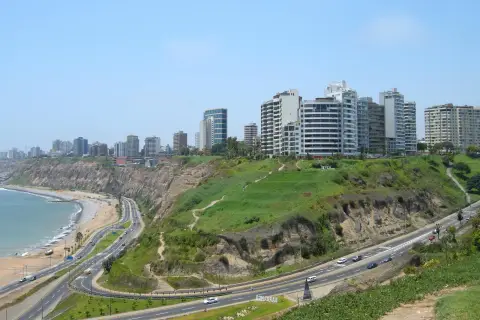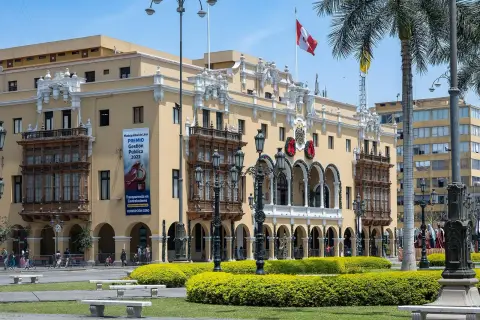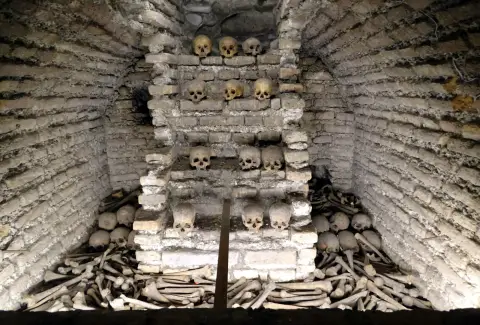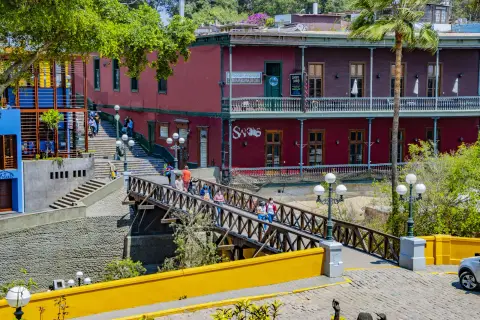
The Santo Domingo Convent is a Dominican complex a few blocks from Lima's main square. It is worth a visit for the tiled main cloister, the library and above all the tombs of Saint Rose of Lima and Saint Martin de Porres, two of the most venerated figures in Peru. Allow about an hour. Opening hours and entry rules change, so check them before you go.
Map
What it is
The Santo Domingo Convent (Convento de Santo Domingo, formally the basilica and convent of Our Lady of the Rosary) stands in the historic centre of Lima, a short walk from the Plaza Mayor, at the corner of Jirón Camaná and Jirón Conde de Superunda. It belongs to the Dominican order, which arrived with the Spanish at the foundation of the city, and it is still a working religious house as well as a place visitors can enter.
It is one of the oldest and most important convents in the country. The site is part of the Historic Centre of Lima inscribed on the UNESCO World Heritage list, and the church was raised to the rank of minor basilica in the early 20th century. For a traveller it combines three things in one compact visit: a colonial cloister, a historic library and the shrine of the saints.
A short history
Sources generally date the convent to 1535, the year of the founding of Lima, although some give later dates for the church itself, so treat the exact year with care. The first church took several decades to build and was finished in the late 16th century. Lima sits in a seismic zone, and the story of the building is partly a story of earthquakes: the quake of 1678 destroyed the first church, and the one of 1746 brought down the bell tower, so most of what you see was rebuilt in the 17th and 18th centuries and repaired again after the earthquake of 1940.
The convent also has a place in the history of learning. Spanish and Peruvian sources link the origins of the University of San Marcos, the oldest university in the Americas, to the convent's chapter house in the 16th century. Today the main cloister's bell tower, a rococo design of about 46 m, is one of the tallest in Lima and a landmark you can pick out across the centre.
Tours and activities
Bookable online, chosen for their traveller reviews.
-
★ Top rated From €52 per person
-
★ Top rated From €85 per person
-
★ Top rated From €94 per person
-
★ Top rated From €55 per person
The saints of Santo Domingo
The main reason people come is devotion. Saint Rose of Lima (Santa Rosa), a lay Dominican born in the city, became the first person from the Americas to be canonised, in 1671. Saint Martin de Porres (San Martín), the son of a Spanish nobleman and a freed woman of African descent, worked in the convent as a lay brother and is known for his care of the sick and poor. Saint John Macías, a Spanish-born friar who lived out his religious life in Lima, is also venerated here.
Their relics rest in the complex. Rose's marble tomb is in a decorated room reached from the cloisters, and Martin's remains lie in a chapel of their own, while the church altar dedicated to the Peruvian saints draws a steady stream of worshippers. Expect quiet queues, candles and people touching the glass or marble. This is a place of prayer, so dress modestly and keep your voice down; see etiquette in Peru for the general rules.
The main cloister and its tiles
The finest space is the main cloister, a square of galleries on two levels around a garden with a bronze fountain. The lower walls are covered in Sevillian tiles dated to the early 17th century, made in Seville and shipped across the Atlantic. Their blue, white and ochre patterns are the closest Lima gets to Andalusia, and they are well worth a slow walk.
Look up at the ceilings, which are carved in the Mudéjar tradition, with timber work in cedar brought from Central America. Paintings along the galleries show episodes from the life of Saint Dominic. A second, plainer cloister has a Carrara marble sculpture of Christ at the column. If you also visit the Franciscan convent nearby, you will notice how different the two orders' houses feel; the San Francisco convent and catacombs give a useful comparison.
The library, the church and the tower
The library occupies the former refectory and holds roughly 25,000 volumes, including incunabula, which are books printed before 1501, and manuscripts from the colonial period. Its coffered timber ceiling is as much a draw as the shelves. Access depends on the visit format and on the day, so do not assume you can walk in freely.
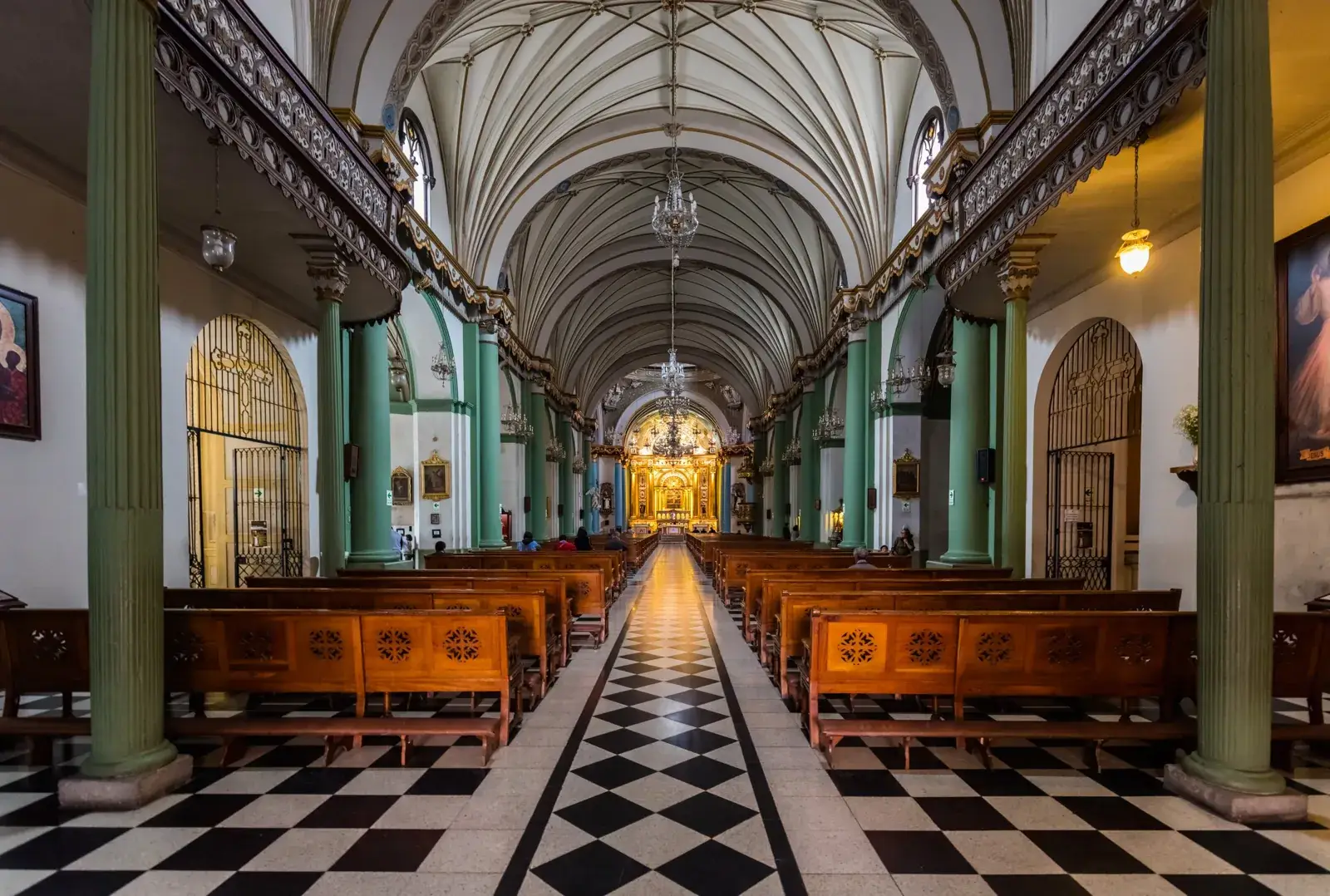
The church has a long, tall nave with green columns and carved pews, plainer than the cathedral but calm and cool on a hot day. The tower is best seen from the cloister or from the street. Inside, the altar of the Peruvian saints is the focus, and services take place regularly, so keep to the sides if one is under way. Photography rules can differ between the church, the shrine areas and the library, so ask before raising a camera.
Visiting: time, tickets and getting there
From the Plaza Mayor it is an easy walk of a few minutes, so the convent slots naturally into a morning in the historic centre. Visitors usually spend 45 minutes to an hour inside, longer if they want to linger in the library or at the shrines. Many visits are done with a guide who explains the tiles and the saints; some combine the convent with other colonial sites in the things to do in Lima list or on a city walking tour from Lima tours.
Opening hours, entry fees and whether a guide is compulsory can change, and some areas may close during religious services or restoration. Confirm them locally or with the convent before planning around it. Hotels in Miraflores and Barranco are a taxi ride away; staying in the centre itself is covered in where to stay in Lima.
Best time, safety and who it suits
The convent is a calm indoor stop, which makes it useful in any season. In the cool, grey winter months from roughly June to October, Lima's humidity and overcast skies make an indoor visit a pleasant alternative to the beach. Mornings tend to be quieter, and the main devotional days around the feasts of Rose and Martin are busier. In Peru Saint Rose's day is celebrated on 30 August, and Saint Martin's feast falls in November, so expect crowds and possible changes to hours around those dates; see festivals and holidays.
The historic centre is busy and generally fine in daylight, but keep valuables out of sight and read the advice on safety in Peru. There is some walking and a few steps, so the visit suits most travellers, including families and those who like history and religious art. It is less ideal if you want a lot of space or silence at peak devotional times.
Where to sleep
-
Find hotels
Miraflores
Easy first base: restaurants, parks and the cliff-top walk
-
Find hotels
Barranco
Art, nightlife and a seaside feel, quieter by day
-
Find hotels
San Isidro
Calm business district with parks, close to Miraflores
-
Find hotels
Historic Centre
Colonial sights on the doorstep, busy by day and quiet at night
Frequently asked questions
How long does a visit to the Santo Domingo Convent take?
Most visitors spend between 45 minutes and an hour. Add time if you want to see the library or wait at the saints' tombs, which can be busy on devotional days.
Whose tombs are in the Santo Domingo Convent?
The convent holds the remains of Saint Rose of Lima and Saint Martin de Porres, and Saint John Macías is also venerated there. Rose's tomb and Martin's chapel are in different parts of the complex, so ask where each one is when you arrive.
Is the Santo Domingo Convent the same as the Qorikancha in Cusco?
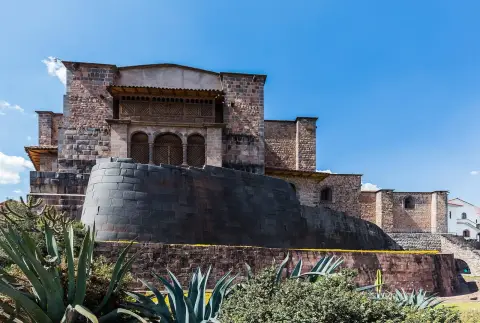
No. Both are Dominican convents with the same patron saint, but they are in different cities. The Cusco convent was built over an Inca temple, described on the Qorikancha page, while the Lima one was built on a site granted to the order at the founding of the city.
Is it worth visiting if I have already seen the San Francisco convent?
Yes, because they offer different things. San Francisco is known for its catacombs, while Santo Domingo is known for its tiles, library and shrines. Seeing both gives a fuller picture of colonial religious life; compare them on the San Francisco catacombs page.
What should I wear to visit?
Dress modestly: covered shoulders and knees are the safe choice, since it is an active church and shrine. Remove hats inside the church and keep phones silent.
Can I take photographs inside?
Rules differ between the cloister, the church, the shrines and the library, and they can change. Ask staff at the entrance and respect any signs, especially near the tombs.
Is the area around the convent safe?
The historic centre is busy during the day and the convent is a short walk from the main square. As in any large city, keep bags closed and avoid displaying valuables; the scams page lists common tricks to watch for.