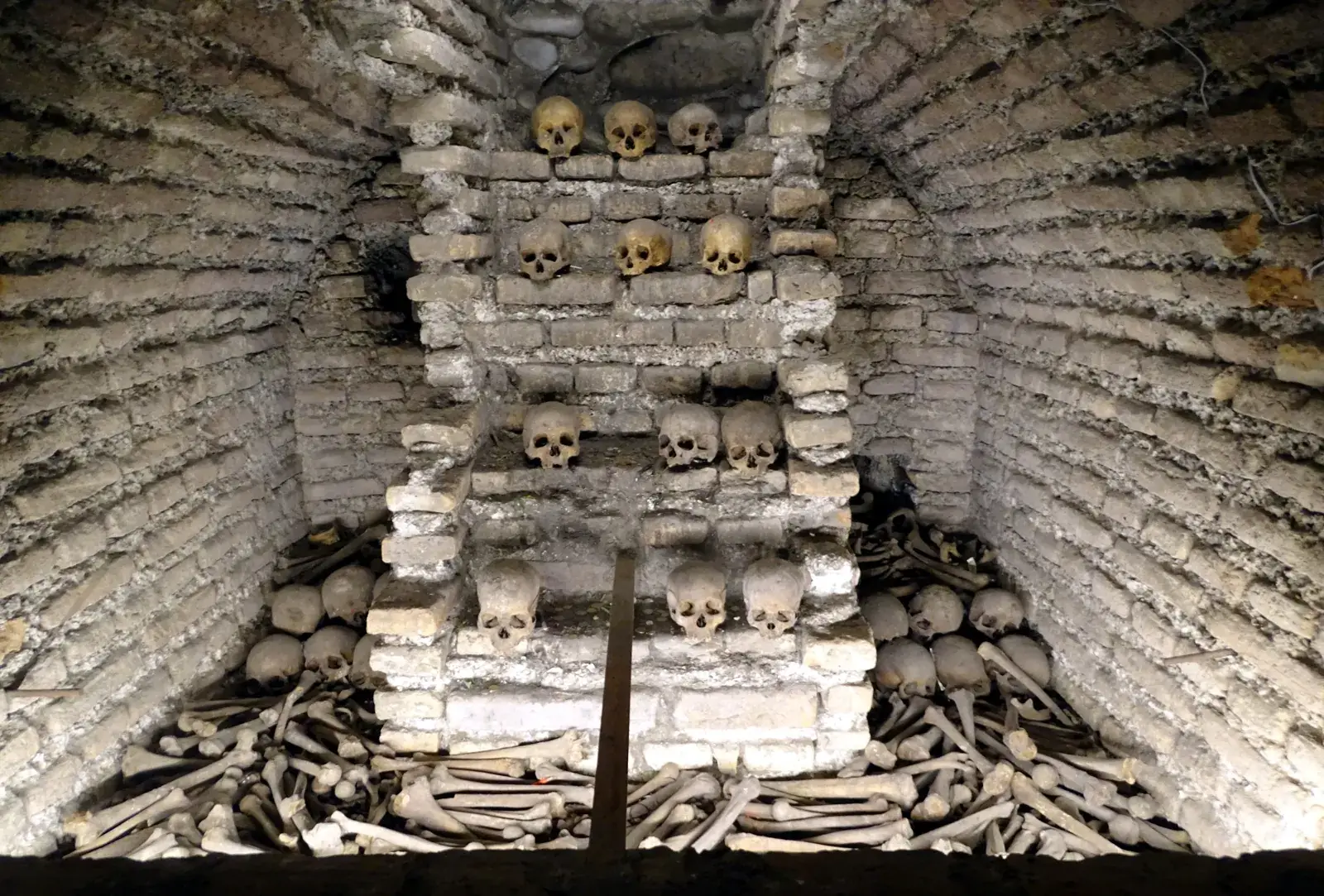
The San Francisco Convent is a Franciscan church and cloister in Lima's historic centre, and its main draw is the crypt beneath it, where bones of many thousands of people lie in pits, some arranged in circles and other patterns. The visit is by guided tour only and usually takes about 45 minutes to an hour.
It is a short, memorable stop that fits easily into a morning in the centre. Check the current schedule and tour languages before going, expect no photography inside the complex, and think twice if you dislike enclosed spaces.
Map
What the convent is and why it matters
The San Francisco Convent belongs to the Franciscan order, which arrived in Lima soon after the city's foundation in the 1530s. The complex has been rebuilt more than once, because Lima lies in an earthquake zone, and the church and cloister that stand today are usually described as baroque work of the 17th and 18th centuries. It forms part of the area inscribed by UNESCO as the Historic Centre of Lima.
Its importance is partly architectural and partly social. For centuries the convent was a place of worship, study and burial for the colonial city, and it kept its own library and collection of religious painting. The site is a few blocks from the main square, so it is one of the easiest colonial interiors to reach on foot from the Lima historic centre.
The crypt is what most visitors come for, but the convent rewards a slow look at the building itself.
A short history of the catacombs
Until the early 19th century, burial inside or beside churches was normal in Lima, and the catacombs under San Francisco served as a burial ground for members of the religious community and for lay people who could arrange a place. The practice is generally said to have ended when a public cemetery was opened outside the city in about 1808, after which the crypt fell out of use.
The underground spaces were rediscovered and studied in the 20th century, and the bones were sorted and arranged by researchers. The total number of remains is often given as tens of thousands, but figures vary between sources and should be treated as approximate.
It helps to remember that this is a former burial place, not a purpose-built attraction. Guides tend to explain how colonial Lima treated death, class and religion, and what the crypt can tell us about the people buried there, in a measured and respectful tone.
Tours and activities
Bookable online, chosen for their traveller reviews.
-
★ Top rated From €52 per person
-
★ Top rated From €85 per person
-
★ Top rated From €94 per person
-
★ Top rated From €55 per person
What you see above ground
The tour normally begins in the church and cloister before going below. The cloister is built around a courtyard and is decorated with glazed tiles of the kind associated with Seville, and the ceilings in some rooms have carved timber work in a style often called Mudéjar. Guides usually point these out, along with religious paintings hanging in the corridors.
The library is a highlight for many visitors. It holds a collection of antique books, some of them centuries old, and the long shelves and heavy volumes give a sense of the convent as a centre of learning. Access to the shelves is restricted, and you view the room from a distance rather than handling the books.
Allow time to look rather than rush towards the crypt. The upper parts of the convent are quiet and give a useful contrast with the underground section, and they explain why the complex is more than a curiosity about bones.
Inside the crypt
Below the church, narrow passages lead to a series of circular pits and chambers. In some of them skulls and long bones have been sorted and laid in geometric patterns, such as rings, which visitors often remember most clearly. This ordering was done in modern times, not by the people who were buried, and guides generally say so.
The space is low, cool and slightly damp, with a stale smell that some people notice more than others. Lighting is dim, and floors can be uneven. If you are claustrophobic, easily upset by human remains or travelling with a young child who might be frightened, consider skipping this part. You can still see the church and library.
Respect matters here. Follow the guide, do not touch anything and keep your voice down. The passages are not long, and the underground section is a modest part of an hour-long tour, so it is rarely overwhelming for people who are comfortable with the subject.
Tour format, photography and tickets
Entry is through a guided tour, and the guide accompanies the group throughout, including in the crypt. Tours are usually offered in Spanish and English, and sometimes in other languages, but this changes, so ask at the ticket desk about the next departure and the language. Waiting times depend on how many groups are running.
Photography is normally not allowed inside the complex, particularly in the crypt, and staff may ask you to put cameras away. Rules can change, so confirm on arrival rather than assuming. Leave large bags where instructed.
Ticket prices, opening hours and days are set by the convent and can change, so check the current schedule on the day. Pay at the official entrance rather than through someone approached on the street, a point also made in the common scams guide. Cash is useful as a backup, but card acceptance may vary.
Fitting it into a historic-centre walk
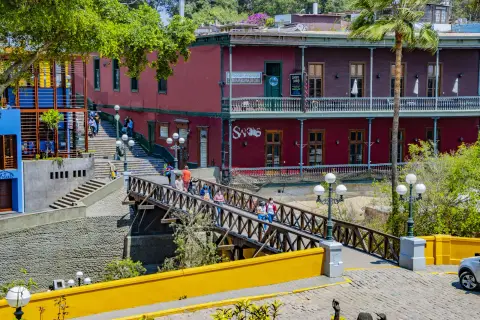
Allow about one hour for the visit and a little extra for queuing. Morning is a sensible time, partly because the streets are calmer and partly because you can continue to the other main sights before the afternoon. A good route links the convent with the main square, the cathedral and a stroll along streets with wooden balconies, as described in the things to do in Lima guide.
Many visitors combine the convent with a guided walk of the centre, because a guide can add context for the buildings. The Lima tours page explains the options. If you go on your own, plan the route in advance and keep to busy streets.
Take a taxi to the centre and between sights if the distances feel long, and see the safety guide for general advice on valuables and timing. In the evening, the centre is quieter and best avoided on foot.
Accessibility and common mistakes
Parts of the convent have stairs, uneven stone floors and narrow passages, and the crypt is not suited to wheelchairs or to people who cannot manage steps. Ask the ticket desk what is possible if mobility is an issue. The church and some ground-level spaces may be easier to reach.
Common mistakes are easy to avoid. Do not arrive without checking the schedule, since the convent can close for services or events. Do not plan the visit as a standalone half day, because it is short. Do not expect to take pictures, and do not rely on a street contact to sell you a ticket. Finally, do not underestimate the effect of the crypt on young children.
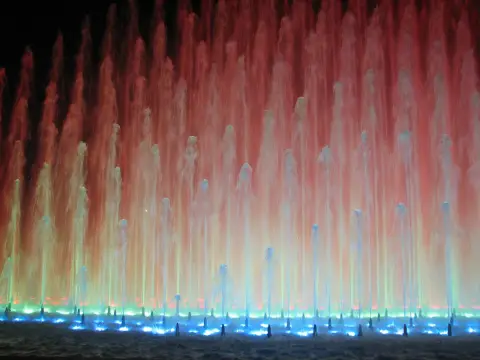
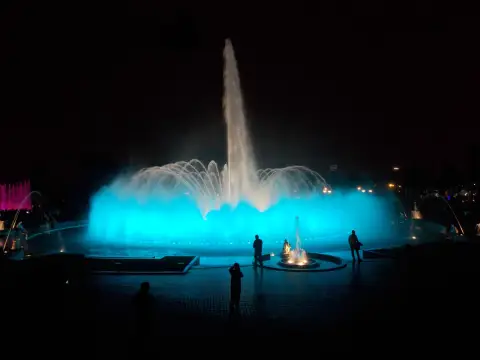
If you want something lighter afterwards, the Magic Water Circuit offers an evening contrast. For a base with easy access to the centre, Miraflores is where many visitors stay.
Where to sleep
-
Find hotels
Miraflores
Easy first base: restaurants, parks and the cliff-top walk
-
Find hotels
Barranco
Art, nightlife and a seaside feel, quieter by day
-
Find hotels
San Isidro
Calm business district with parks, close to Miraflores
-
Find hotels
Historic Centre
Colonial sights on the doorstep, busy by day and quiet at night
Frequently asked questions
How long does the San Francisco catacombs tour take?
Allow about 45 minutes to an hour for the guided tour, plus time for the ticket queue. The tour covers the church, cloister, library and crypt, so the underground section is only a part of it.
Can I visit the catacombs without a guide?
No, the normal format is a guided tour that moves through the complex as a group. Guides are usually available in Spanish and English, and sometimes other languages, so ask about the next departure.
Can I take photos in the San Francisco catacombs?
Photography is usually not permitted inside, especially in the crypt, and staff may ask you to put away cameras and phones. Rules can change, so check at the entrance.
Are the bones real, and why are they in patterns?
Yes, they are real human remains from the colonial burial ground. The patterns were arranged in modern times by people studying and presenting the crypt, not by those buried there.
Is the San Francisco catacombs visit suitable for children?
It depends on the child. The crypt is dim and enclosed and may frighten young children, while the library and cloister are easier. Parents can decide on the day, and may prefer to see the church and skip the crypt.
Is it safe to walk to the convent?
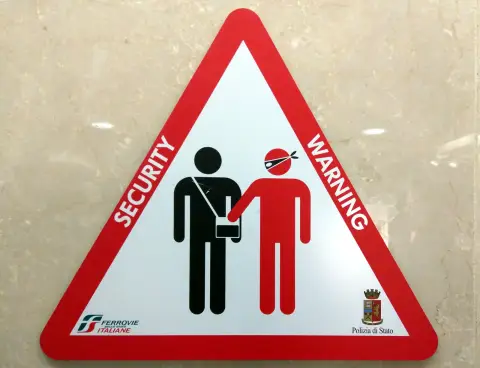
The area is part of the busy historic centre and is generally fine in daylight, though pickpockets operate in crowded places. Keep valuables out of sight and use a taxi at night. See the safety guide.
What else can I see nearby on the same morning?
The main square, the cathedral and streets with wooden balconies are within walking distance. The Lima historic centre page lists the usual stops.
Is the convent worth visiting if I only have a day in Lima?
It is a good use of an hour if you are already in the centre, because it combines art, a library and the crypt. If your day is mostly in Miraflores, you may prefer to spend it at a coastal site instead.