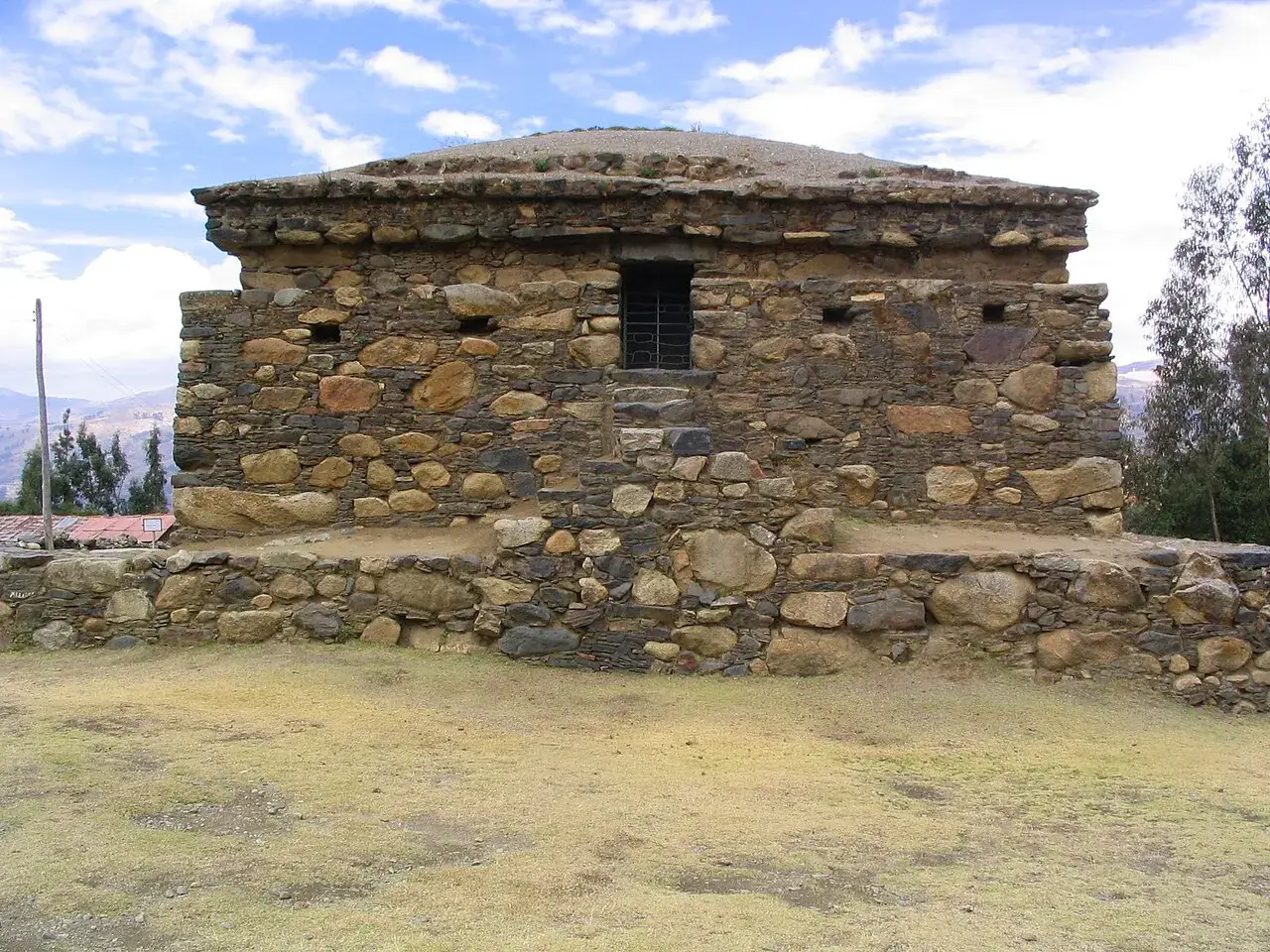
Wilcahuaín is an archaeological site of the Wari culture on a slope northeast of Huaraz, at about 3,400 m. Its main building is a three-storey stone structure, usually interpreted as a burial house for important people, and the visit takes one to two hours on site. It is a gentle half-day outing from the city, a good choice for your second or third day while you acclimatise.
Map
What Wilcahuaín is
Wilcahuaín (also written Willkawain or Huilcahuaín) is a ruin of the Wari culture, the highland state that spread from the southern Andes across much of Peru in the centuries before the Incas. The site stands on a hillside near the village of Paria, roughly 6 to 7 km northeast of Huaraz in the Callejón de Huaylas, at about 3,400 m.
The name is generally explained as Quechua, from *willka*, a word with sacred meanings, and *wayi*, house. What survives is a compact complex rather than a city: one large, well-preserved building, a few lower structures around it and, a short walk away, a smaller group of ruins. It is not a site of grand scale, and its appeal lies in the masonry and in the way the building was planned. The wider setting is described on the Huaraz page.
A short history
Wilcahuaín is attributed to the Middle Horizon, when Wari influence reached the northern highlands. Sources do not agree on the dates: figures between about 600 and 1100 AD are quoted, so treat any single date with caution. Some authors suggest the place had older roots in the local Recuay culture, which preceded the Wari presence in the valley.
The building is often called a temple, but most descriptions treat it as a chullpa, a stone burial house in which the bodies of ancestors or elite people were kept. Ancestors held a central place in Andean belief, and a tomb like this was a place of veneration, not just storage. Excavation and restoration work has been carried out by Peruvian institutions, and the site is protected as a national monument. Details of that work are better read from the on-site panels than from travel summaries.
Tours and activities
Bookable online, chosen for their traveller reviews.
-
Day trip From €29 per person
What you see at the site
The main building has three levels, each with its own entrance, linked inside by stairs and ramps. Descriptions count about 19 interior rooms spread over the floors. The walls are of fitted stone, and the roofing uses large flat slabs, a technique that explains why the upper floors have survived.
The feature that interests specialists is the ventilation. Narrow ducts and small openings run through the walls and galleries, and the usual explanation is that they kept the air moving so that the dead, laid in the chambers, stayed dry. Looking for the ducts and for the different doorways is the best way to spend your time, because the building rewards close attention and is easy to misread from a distance.
Near the entrance a small exhibition room has been reported, with pottery and panels on the Wari presence in the valley. Check whether it is open when you go. A smaller group of chullpas, usually called Ichic Wilcahuaín, lies a few hundred metres away and is worth the short extra walk if you have the time and the path is clear.
Getting there from Huaraz
The site is close enough to reach in several ways. The common choices are a shared minibus or colectivo from the city, a taxi, or a walk. Shared transport has been reported to leave from the centre of Huaraz, but the stop and the frequency change, so ask at your lodging. The last stretch of the road is rough, and taxis may wait for you for an agreed extra fee.
Walking is possible, since the distance is only about 7 km, along farm tracks and a rising road. Expect it to take a couple of hours going up, and prefer to go up on foot and come back by vehicle if your legs and lungs complain. A half-day trip with a guide is also sold by local operators, and choosing a trekking agency covers how to pick one. If you arrive from the coast, Lima to Huaraz describes the journey that gets you here.
How long, and when to go
Plan for one to two hours on site, with the journey adding to that. A full half-day, including a walk, a stop at the nearby ruins and a lunch break, is a sensible budget. The place is quiet most of the year, and there is seldom a queue.
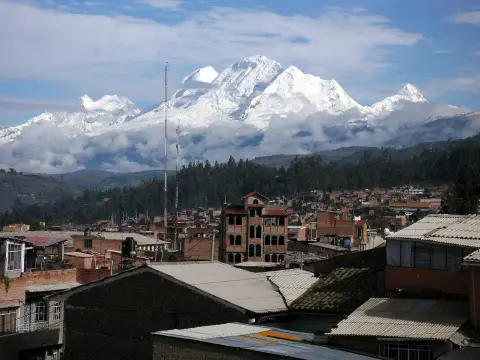
The dry season, roughly May to September, gives dry paths and clear views toward the white peaks, which show well from the hillside. The wetter months, roughly November to March, bring mud and afternoon showers. In any season go in the morning, when the sky is clearer and the light on the stonework is better for photographs. Opening days and hours have been reported as Tuesday to Sunday, and a ticket is required, so check both locally rather than relying on a printed figure.
Who it suits and what to combine it with
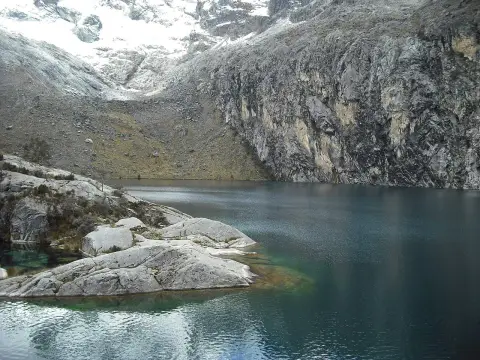
Wilcahuaín suits travellers who want a first outing at modest effort. It is one of the standard acclimatisation activities of the area, alongside the day walk to Laguna Churup, and it fits the schedule suggested in acclimatisation for trekkers. It also suits families and anyone curious about the pre-Inca history of the Andes, since few other places near Huaraz show it so clearly. It is less satisfying if you expect the scale of a Cusco-area site.
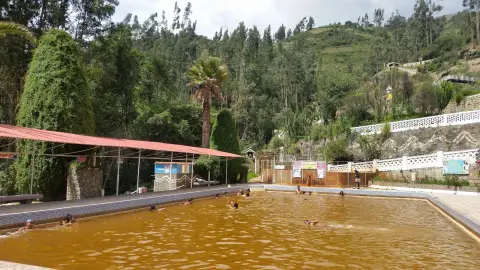
To fill a day, combine it with the town's central market in the morning or a soak at the Monterrey hot springs afterwards. For the wider list of outings, see things to do in Huaraz, and for the mountains seen from the hillside, the Cordillera Blanca guide. If you are picking a base, where to stay in Huaraz helps.
Where to sleep
-
Find hotels
Huaraz centre
Services, tour offices and restaurants for the Cordillera Blanca
-
Find hotels
Monterrey
Quieter spot north of town with thermal baths
-
Find hotels
Caraz
Small town closer to the northern lakes and trails
Frequently asked questions
Is Wilcahuaín worth visiting?
Yes, if you want an easy half-day and an interest in pre-Inca history. The building is small, but its three levels and ventilation ducts are unusual. If you can only do one archaeological trip from Huaraz, the larger site of Chavín de Huántar is a longer day.
How far is Wilcahuaín from Huaraz?
About 6 to 7 km northeast of the city centre, at roughly 3,400 m. By vehicle it is a short ride, though the last part of the road is rough. On foot it takes a couple of hours uphill.
Can I walk to Wilcahuaín from Huaraz?
Yes, along farm tracks and a rising road, and it is a popular acclimatisation walk. Go in the morning, carry water, and consider returning by minibus or taxi instead of walking down in the afternoon heat.
Who built Wilcahuaín and when?
It is attributed to the Wari culture of the Middle Horizon, but published dates vary, from about 600 to 1100 AD. Some authors think the place had earlier local roots from the Recuay period.
Was Wilcahuaín a temple?
It is often called one, but most descriptions treat the main building as a chullpa, a burial house for important people. The ventilation ducts are usually explained as a way of keeping the chambers dry.
Do I need a guide at Wilcahuaín?
Not for the visit itself, since the site is small and has information panels. A guide adds context on the Wari period and the ventilation, and a half-day tour from Huaraz also covers the transport. Prices should be agreed before you go.
Is Wilcahuaín suitable for the first day at altitude?
It is better on the second or third day. The site is higher than Huaraz and the road or path climbs. After a day or two of easy walking, it is a good test before higher hikes such as Laguna Churup.