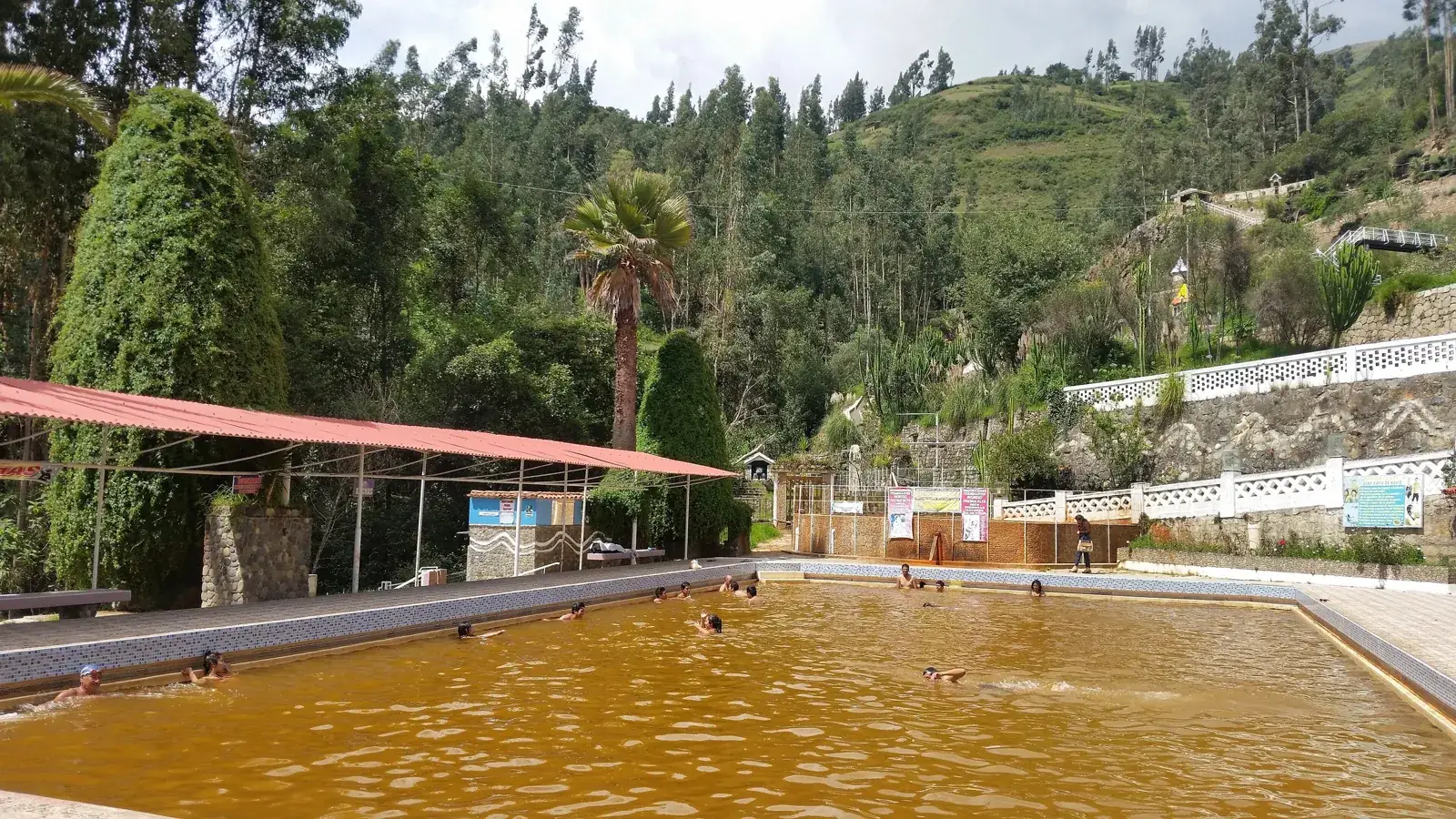
The Monterrey hot springs are a set of thermal baths in the Santa River valley, about 7 km north of Huaraz. The water is brownish from its iron content and comes out hot, and the baths are open-air pools plus private tubs. Allow half a day including the ride, and treat it as a rest-day activity rather than a sight: it suits the days between hikes, with a few precautions for hot water at altitude.
Map
What the baths are
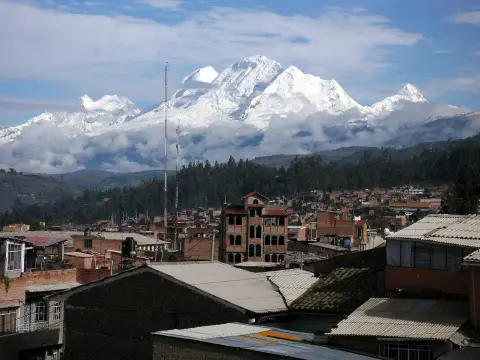
The Monterrey hot springs (Baños Termales de Monterrey) are the best-known thermal baths close to Huaraz. They lie in the village of Monterrey, on the floor of the Callejón de Huaylas, the long valley of the Santa River that runs between the Cordillera Blanca and the Cordillera Negra. The complex is privately run, and it is tied to an old hotel that stands beside the pools.
The water is iron-rich, so it looks orange-brown rather than clear, which surprises first-time visitors. It is the colour of the minerals, not a sign of dirt. Sources describe temperatures of up to about 49 °C at the spring, though the temperature in a given pool depends on how the water is mixed and cooled.
The setting is leafy and low-key: eucalyptus-covered slopes, a large open-air pool, and smaller private pools. Nothing here is a historic monument, so go for the soak, not for sightseeing.
Pools or private tubs
There are usually two ways to bathe. The first is the large communal pool, where you share warm water with other bathers, including families and local groups on weekends. It is cheaper, more social and louder.
The second is a private pool or tub, rented by the hour for two or three people, where you can often adjust the temperature. Reviewers mention that you may have to wait for a private tub on busy days, and that the water in some of them can be cooler than in the main pool, so ask to see the tub before paying.
Whichever you choose, check at the entrance what is currently offered and what the ticket price and opening hours are, as these change and are not reliably published. Bring a swimsuit, a towel and a small bag for wet clothes, and wear sandals, since the floors around the pools can be slippery. A restaurant on site has been reported, so a meal afterwards is possible, but do not count on it.
Tours and activities
Bookable online, chosen for their traveller reviews.
-
Day trip From €29 per person
Getting there from Huaraz
Monterrey is about 7 km north of the centre of Huaraz, so it is the easiest thermal bath in the area to reach. A taxi is the simplest option and is short enough to be inexpensive; agree the fare before you get in, and ask the driver to return at an agreed time or arrange another taxi from the entrance.
The cheaper route is a colectivo or local minibus going north along the valley road towards Carhuaz, which passes through Monterrey. Ask the driver or conductor to drop you at the baths, and expect to flag one down for the return. Timetables are informal, so confirm locally.
Plan for half a day in total: roughly 30 minutes each way, plus a soak of an hour or two. Several travel guides state that guests of the hotel at the baths enter free, but that is worth confirming before you rely on it.
Where it fits in a Huaraz week
The best use of the springs is between hikes. After a day on a steep path such as Laguna Churup or the long climb to Laguna 69, a soak helps tired legs. It also works as a calm afternoon on a day when the clouds have closed in over the peaks.
Do not use it as your first activity after arriving from the coast. Huaraz sits at about 3,050 m, and the sensible plan is to spend the first days on easy walks, as described in acclimatisation in Huaraz. Hot water can add to light-headedness when you are not yet adapted.
It is also less useful as a pre-trek activity the night before a multi-day route such as the Santa Cruz trek. Better to soak afterwards, when you are back in the valley and dirty, tired and happy to sit still.
For the wider menu of outings, see things to do in Huaraz.
Best season and time of day
The baths are usable all year, because the water is hot whatever the weather. The dry season, roughly May to September, brings clear days and cold nights, so a warm pool is at its most pleasant in the evening or early morning when the air is chilly. In the rainy season, roughly November to March, afternoons are often wet, and soaking in the rain can be enjoyable but the paths and floors become muddy.
Weekends and public holidays are the busiest times, when local families fill the large pool. A weekday morning is generally quieter, and gives the cleanest water and most space. If you want a private tub, arriving early also shortens the wait.
Whatever the season, bring a warm layer and dry shoes for the way out. The valley cools quickly once the sun drops behind the Cordillera Negra, and wet hair at that altitude feels colder than it does on the coast.
Who it suits and what to combine
The springs suit tired hikers, travellers with a free afternoon, and anyone who wants a local experience rather than a scenic one. They are less suited to people expecting a modern spa: the facilities are simple, and the water colour is part of the character. Families with children should watch them in the hot water and keep sessions short.
For a fuller day, pair the baths with a morning in town. Huaraz has its market and a regional museum, and the Huaraz where-to-stay guide helps you pick a base within easy reach of the valley road. The springs also fit well on a day without a mountain view, when a trip to a high lake would be wasted on cloud.
If you want a longer soaking trip, there are other thermal baths further along the valley, such as Chancos near Marcara, which are a separate outing. For the big picture of the area and how the valleys connect, read Cordillera Blanca.
Safety and common mistakes
The most common mistake is going too soon after arriving at altitude. Hot water, thin air and a recent flight from Lima are a poor mix, and a headache after the soak is easy to mistake for something worse. Read about altitude sickness first.
Another is leaving valuables unattended. Use a locker if there is one, or carry only what you need. General precautions are covered in safety in Peru, and they apply here as anywhere.
A third mistake is staying too long. Short sessions with breaks in cooler air are sensible; a long soak in very hot water can leave you faint when you stand up. Stand slowly.
Finally, do not rely on any medical claims made at the entrance. The baths are often described as therapeutic, but treat that as local belief, not a proven treatment.
Where to sleep
-
Find hotels
Huaraz centre
Services, tour offices and restaurants for the Cordillera Blanca
-
Find hotels
Monterrey
Quieter spot north of town with thermal baths
-
Find hotels
Caraz
Small town closer to the northern lakes and trails
Frequently asked questions
How far are the Monterrey hot springs from Huaraz?
About 7 km north of the town centre along the valley road. By taxi or minibus it is a short ride, so the real time cost is the soak itself.
How hot is the water?
Sources describe the spring water at up to roughly 49 °C, but the temperature in a pool depends on mixing and on the day. Private tubs usually let you adjust it, so test the water before getting in.
Why is the water brown?
The water is rich in iron and other minerals, which gives it an orange-brown colour. It is normal for these springs and is not a sign of pollution.
Can I go to the hot springs on my first day in Huaraz?
It is better to wait a day or two. Hot water and a sudden gain in altitude can make dizziness worse, so start with easy walks as described in altitude sickness.
Do I need to book in advance?
Usually not for the large pool. Private tubs may involve a wait on busy days, so arrive early at weekends and holidays, and ask on arrival rather than relying on a reservation.
Is it worth going if I am only in Huaraz for a few days?
Only if you have a spare half day, for example after a hard hike or when cloud hides the mountains. If your time is short, put the lakes of things to do in Huaraz first.
What should I bring?
A swimsuit, a towel, sandals, a warm layer for afterwards and some cash in small notes. Card payment may not be available, and a drink of water before and after the soak is sensible.