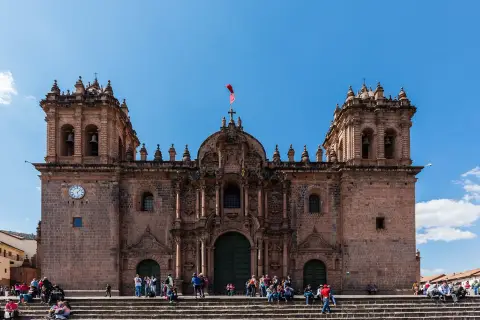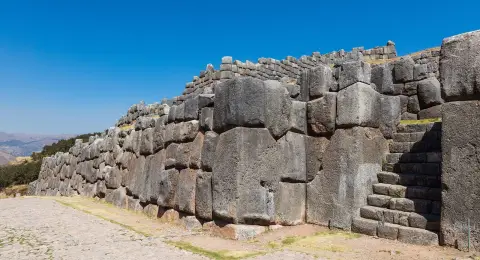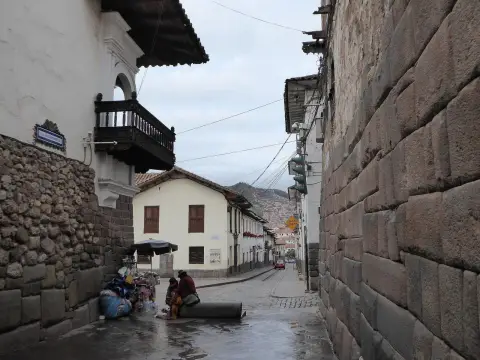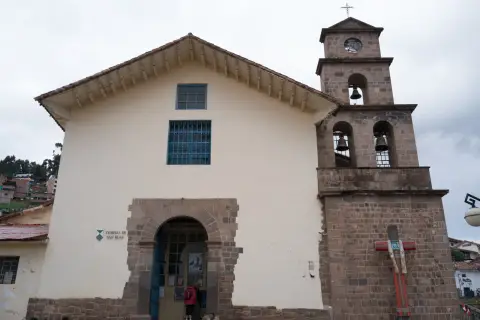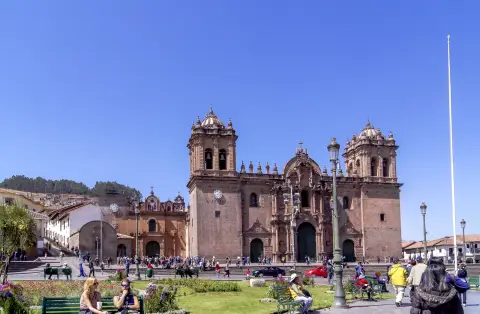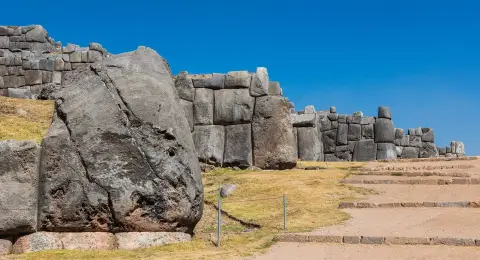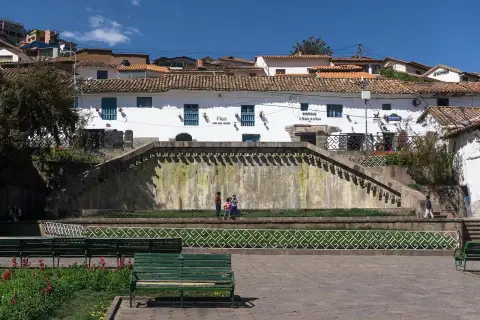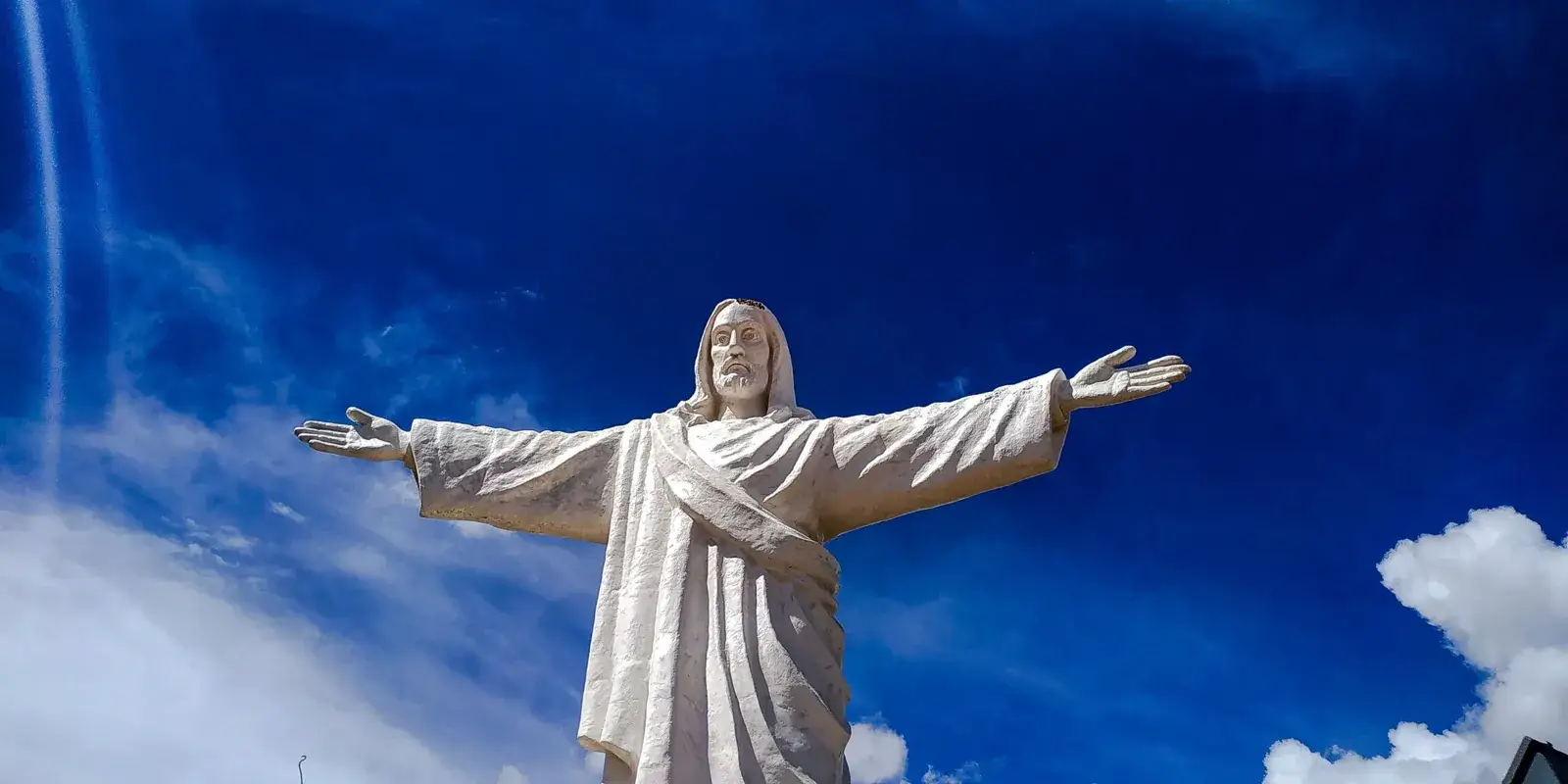
The Cristo Blanco is a white statue of Christ with open arms on a hill above Cusco, close to Sacsayhuamán. Its main value is the view: the whole city spread out below, the red roofs, the Plaza de Armas and the mountains around. Allow about an hour from the city centre by taxi, or longer if you walk up, and go in the late afternoon for the best light.
The hill is higher than the centre of Cusco, so take the climb slowly in your first days.
Map
What the Cristo Blanco is
The Cristo Blanco, or White Christ, is a statue of Christ standing on top of a hill on the northern side of Cusco, with its arms held out over the city. It is about eight metres tall, which sounds modest until you see it from the streets below, where its pale shape stands out clearly against the hillside, especially when it is lit at night.
It is not an Inca site and it is not a museum. It is a landmark and a viewing platform, and that is how most people use it. Visitors climb up, look at the city, take photographs and come back down, which is why it works so well as a short outing that costs little in effort or planning.
The hill is known as Pukamuqu, and it sits close to the great walls of Sacsayhuamán. The two are often seen on the same outing, but they are different kinds of place: one is a monumental Inca complex, the other is a twentieth-century statue chosen for its position.
Why it was built
The statue is usually dated to 1945, and the commonly told story is that it was a gift to the city from the Palestinian community that had found refuge in Cusco, offered as thanks for the welcome it received. Accounts differ on the details, such as whether the community built it or paid for it, and there is little firm documentation to settle the question, so treat the story as the accepted local explanation rather than a fully documented history.
What is easier to confirm is its place in the city's modern identity. Cusco is a city of many layers, with Inca foundations, a colonial centre and a strongly Catholic religious calendar, and the statue adds a twentieth-century layer on the hill above. Its silhouette is now part of the postcard view of the city, and many residents use it as a landmark when giving directions.
The figure is a simple, open-armed Christ in white. There are no inscriptions or exhibits to read, so the interest lies in the setting and in the view rather than in the sculpture itself.
Tours and activities
Bookable online, chosen for their traveller reviews.
-
★ Top rated From €23 per person
-
★ Top rated From €22 per person
-
★ Top rated From €23 per person
-
★ Top rated From €17 per person
The view from the hill
The reason to come is the panorama. From the platform at the foot of the statue you look down on the red-tiled roofs of the historic centre, the grid around the Plaza de Armas, the bell towers of the churches and the steep streets of the hillside districts. Beyond the city, the valley floor stretches towards the airport, and mountains close the horizon on every side.
It is a good place to understand how Cusco is laid out. The old centre sits in a bowl, the neighbourhoods climb the slopes around it, and the Inca capital's original shape, often compared to a puma, is easier to imagine once you see how compact the centre is. Do not expect to pick out a puma, but you can see why the city is organised the way it is.
The best time is the late afternoon, when the sun lowers behind the hills and the light turns warm on the roofs. After dark the city lights come on and the statue itself is illuminated. A morning visit gives clearer air and fewer people, but the light is flatter.
Getting up from the centre
There are three practical ways to reach the hill. The first is to walk from the centre through the San Blas district and up the steep streets towards Sacsayhuamán, then follow the signs and the stairs to the statue. It is a climb of well under two hours at an easy pace, mostly uphill and on stairs, and it is a pleasant way to see the old neighbourhoods if you are acclimatised.
The second is a taxi, which is the usual choice for people who have just arrived or have limited time. Ask for the Cristo Blanco, agree the fare before you get in, and say whether you want the driver to wait. Many drivers will wait for a short time or take you on to Sacsayhuamán.
The third is a tour minibus as part of a half-day circuit of the ruins above the city. These often stop near the statue for a short photo break. Tours from Cusco explains how to compare operators, and things to do in Cusco shows how the viewpoint fits into a two-day plan.
Altitude, weather and what to bring
The climb is short but steep, and the air is thin. The hill stands higher than the centre of Cusco, so visitors who arrived a day or two ago can find themselves breathless on the final stairs. Stop often, drink water and do not rush. The advice on altitude sickness explains how to pace the first days, and people with heart or lung conditions should ask a doctor before walking up.
The sun at this altitude is strong during the day, so bring a hat and sun protection. In the evening it becomes cold quickly once the sun goes down, and the exposed hilltop catches the wind, so a warm layer is more useful than it looks in the afternoon. A small torch or a phone light helps if you are walking down after dark.
During the rainy season, roughly November to March, afternoons can bring cloud and showers that hide the view. In the dry season the sky is usually clear but the nights are colder. Check the forecast before you set out for sunset.
Safety and common mistakes
The main practical point is to go up and come down in sensible conditions. The paths between the city and the hill are steep, and some stretches are quiet, so avoid walking them alone after dark. A taxi back from the viewpoint is the simplest choice at night, and arranging it before you go avoids waiting in the cold. General advice on staying safe in Peru and on common scams applies here as elsewhere in the city.
Keep your phone and camera close when you are taking photographs, and agree any taxi fare in advance rather than at the end. Informal sellers and people offering photographs near popular viewpoints are common, and you are free to decline.
The most common mistake is to treat the Cristo Blanco as a full outing. The stop itself takes perhaps half an hour. Another is to arrive at midday, when the light is harsh and the view is flat. The third is to underestimate the climb on the first day at altitude.
What to combine it with
The statue works best as part of a longer walk or a half-day above the city. The natural partner is Sacsayhuamán, which is close by and gives you the monumental stonework that the statue lacks. If you plan to see the other ruins on the same hills, the notes on the Inca sites near Cusco explain the usual circuit and the ticket question.
For a slow day, walk up through San Blas in the morning, see the ruins, stop at the viewpoint in the afternoon and come back down for dinner in the centre. If you are short on time, a taxi to the statue at sunset and a walk down into the old town works as a compact evening.
If you are still choosing where to sleep, a base in or near the old centre keeps the climb manageable, and where to stay in Cusco compares the districts. A trip from Cusco to the Sacred Valley is a better use of a full day than a long stay on this hill.
Where to sleep
-
Find hotels
Plaza de Armas and historic centre
Everything on foot, at the price of noise and crowds
-
Find hotels
San Blas
Artisans' quarter with steep lanes and views, a short walk uphill
-
Find hotels
All of Cusco
Compare every area and price level in one search
Frequently asked questions
How long does a visit to the Cristo Blanco take?
The viewpoint itself needs about half an hour. Add the time to get there: a short taxi ride, or a climb of an hour or more on foot from the centre. Most people include it as part of an afternoon above the city.
Is the Cristo Blanco free to visit?
The viewpoint is generally an open hilltop and has not usually required a ticket, unlike the ruins nearby. Access arrangements can change, so check locally. It is separate from the Cusco tourist ticket, which covers Sacsayhuamán and other sites.
Can I walk to the Cristo Blanco from the Plaza de Armas?
Yes. The route goes uphill through San Blas towards Sacsayhuamán and then up stairs to the statue. It is steep, so it suits people who have spent a couple of days at altitude. Take a taxi if you have just arrived.
What is the best time to go for the view?
Late afternoon, so that you see the city in warm light and can stay as the lights come on. Morning gives clearer air. Whichever you choose, bring a warm layer, because the hilltop becomes cold quickly after sunset.
Who gave the statue to Cusco?
The usual account is that it was a gift from the Palestinian community living in Cusco, dated to 1945. Details of who built or funded it vary between sources, so treat the story as the local tradition.
Is the Cristo Blanco close to Sacsayhuamán?
Yes, it is on a neighbouring hill and the two are easy to combine. The ruins need more time and are covered by the tourist ticket. See Sacsayhuamán for the details.
Is it safe to go up in the evening?
Go by taxi, return by taxi, and avoid walking the quiet paths alone after dark. The view at night is popular, but arrange your transport back before you set out. See safety in Peru for general advice.