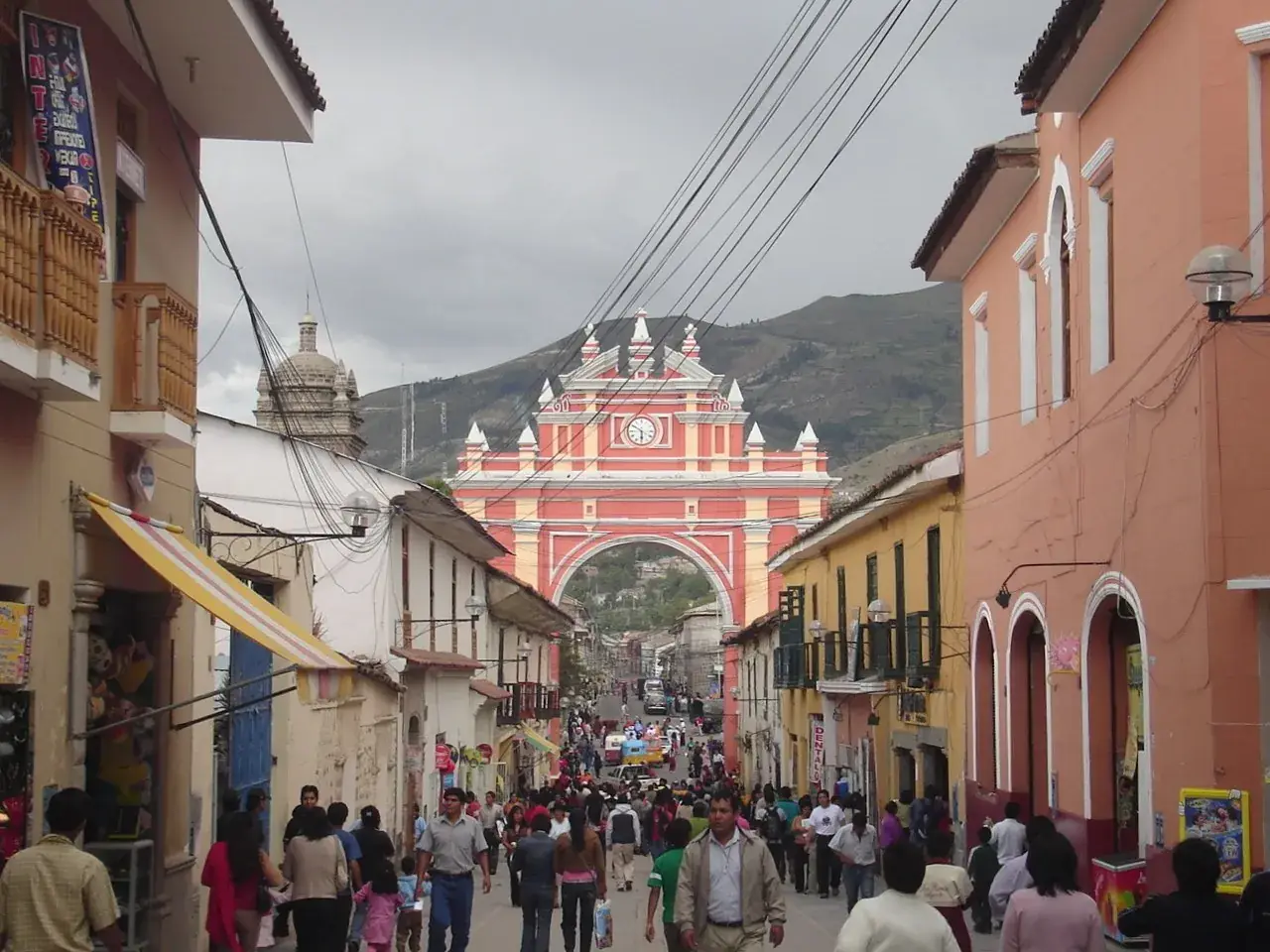
Santa Ana is a traditional neighbourhood of Ayacucho, a short walk or taxi ride from the main square, built around a small plaza and a church. It is best known for its family workshops, above all weaving, with stone carving and other crafts alongside. Give it one to two hours on foot, preferably in the morning, carry some cash, and treat it as a place to watch craftspeople at work and buy directly from them, not as a sightseeing stop with a fixed programme.
Map
What the quarter is
The Santa Ana quarter is one of the old neighbourhoods of Ayacucho, the highland city also called Huamanga. It lies south-west of the main square, roughly ten blocks away, on the way out of the colonial grid. Its heart is the Plazuela de Santa Ana, a small plaza with the neighbourhood church on one side and a row of workshops and galleries around it.
Unlike the arcaded centre, with its cathedral and mansions, Santa Ana is a working quarter. Families live above or behind their workshops, children play on the plaza, and visitors are a minority. The quarter is often described as a centre of Quechua culture and craftsmanship in the city, and that description fits what you see: looms in doorways, textiles hung out to be admired, and owners who will explain a piece if you show real interest. It is not a museum and has no entrance fee, so the experience depends on when you go and who is in.
A short history
The church of Santa Ana is usually dated to 1569, and tradition credits Andean migrants called the Andamarcas with building it, which gives the neighbourhood an indigenous origin inside a Spanish city founded only three decades earlier, in 1540. Early colonial Huamanga was organised around parishes of this kind, with a Spanish core and outlying quarters where native communities lived and worked.
That pattern explains why Santa Ana kept its identity. The neighbourhood stayed a place of artisans over the centuries, with skills handed down inside families. Today the church, the plaza and the surrounding streets are the part of the quarter most visitors recognise, and the trades practised around them are the reason to come. Dates and building details come from tourist and local sources of varying reliability, so treat them as the traditional account, not as settled history.
Weaving and the family galleries
Textiles are what Santa Ana is best known for. Several family-run galleries around the plaza sell woven rugs, wall hangings, shawls and bags, and many of the families say that weaving has been their trade for several generations. In a good workshop you can see a loom set up, watch the weaver at work, and hear how the wool is spun, dyed and woven, and how a design is chosen.
Ask before photographing people, and expect to be offered a look at the finished pieces afterwards. There is no obligation to buy, but a purchase is the usual way to thank people for their time. The patterns and colours differ from those of Cusco or the Colca valley, so it helps to look at several shops first. Whether a piece is hand-woven, machine-made or mixed with synthetic yarn is worth asking about politely, and souvenirs in Peru explains what to check.
Stone, retablos and other crafts
Weaving is not the only craft. Ayacucho is known for carving in Huamanga stone, a soft white alabaster that can be shaped by hand, and some workshops in and around the quarter make small carvings, church figures and decorative pieces from it. Organised walking tours of the neighbourhood often include a carving demonstration alongside the looms.
The famous retablos of Ayacucho, painted wooden boxes with miniature scenes, are mainly linked with the town of Quinua and with city workshops elsewhere, so do not expect the quarter to be a retablo district. A few shops sell them, and the craft is described in the Ayacucho guide. Which crafts are being made on the day you visit depends on the workshop, the season and the orders on hand, so treat any list as a guide and ask on arrival.
The church and the plaza
The church of Santa Ana is small and plain compared with the cathedral and the great convents of the centre, and it is worth a few minutes to look at the front and, if it is open, the interior. Opening hours vary and often follow the times of Mass, so do not plan around a fixed schedule. Dress modestly and keep quiet if a service is in progress.
The plaza itself is the real attraction. It is quiet in the morning, busier in the late afternoon when people come out after work, and it gives the best view of the quarter's low colonial houses, tile roofs and workshop signs. Religious festivals and Holy Week processions can pass through the neighbourhood, and during those days the plaza fills with local families; see festivals and holidays if you are timing a trip around them.
Getting there and when to go
From the main square the quarter is a walk of about fifteen to twenty minutes, mostly downhill on the way there and uphill on the way back, so many visitors take a short taxi ride one way. The streets are cobbled and uneven. Ayacucho lies at about 2,750 m, so even a short climb can leave you short of breath on the first day; altitude sickness has the general advice.
Go in the morning or mid-afternoon, when workshops are most likely to be open and the light is good for photographs. Many shops close at lunchtime, and some are quiet on Sundays and public holidays. The dry season from roughly May to September gives the most comfortable walking, while the rainy months make the cobbles slippery. To reach the city itself, see flying in Peru.
Buying fairly
Prices in the galleries are often marked or quoted without much room for bargaining, particularly for fine handwork, and pressing hard for a discount on a piece that took days to weave is poor form. A modest reduction on several items bought together is more acceptable. Ask for the total before you agree, and ask the weaver or the seller what the piece is made of.
Carry soles in small notes, since not every workshop takes cards and change for large notes can be hard to find; money in Peru covers cash machines and notes. If you want to support the craft, buy from the family that made the piece, avoid items that look mass-produced, and think about how you will pack a heavy rug. Responsible travel has more on buying crafts in a way that benefits the makers.
How long to stay and what to combine
One to two hours is enough to walk through the plaza, step into two or three workshops and visit the church. Add more time if you want a loom demonstration or to look at many textiles. The quarter fits easily into a half day in Ayacucho together with the cathedral, the main square and a lunch in the centre.
For a fuller day, combine it with the countryside sites outside the city, such as the Wari ruins and the Pampa de la Quinua battlefield described in the Ayacucho guide, and do the quarter in the cooler end of the afternoon. The neighbourhood is ordinary and lived-in, so use normal city sense, keep your phone and wallet out of sight, and read safety in Peru for the general picture.
Frequently asked questions
What is the Santa Ana quarter in Ayacucho?
It is a traditional neighbourhood south-west of the main square, built around a small plaza and a church, and known for family textile workshops. It is a lived-in working quarter, not a formal attraction with tickets.
Is Santa Ana the place for retablos?
Not mainly. Retablos are more closely linked with Quinua and with other workshops in the region, while Santa Ana is best known for weaving. A few shops may stock retablos, so ask if you are looking for one, and read the Ayacucho guide for the craft.
How far is Santa Ana from the main square?
About ten blocks south-west, a walk of roughly fifteen to twenty minutes on cobbled streets. A short taxi ride one way saves effort at about 2,750 m of altitude.
Do I have to pay to enter the workshops?
No entrance fee is usual, since they are shops and family homes. Buying something, or at least thanking the weaver sincerely, is the normal way to repay the time given. Always ask before taking photographs.
Can I watch weavers work?
Often yes, as several family galleries have looms set up and are used to visitors. Whether a demonstration is available depends on the day and the family, so ask politely on arrival.
Is it better to bargain or pay the price shown?
Handmade pieces are priced for the work involved, so bargaining hard is not appropriate. A small discount for several items is reasonable. See souvenirs for how to judge quality and fair prices.
Is the Santa Ana quarter safe to walk around?
It is an ordinary residential and commercial neighbourhood, and visitors normally walk it without problems in daylight. Keep valuables out of sight, take a registered taxi back after dark, and check safety for general advice.