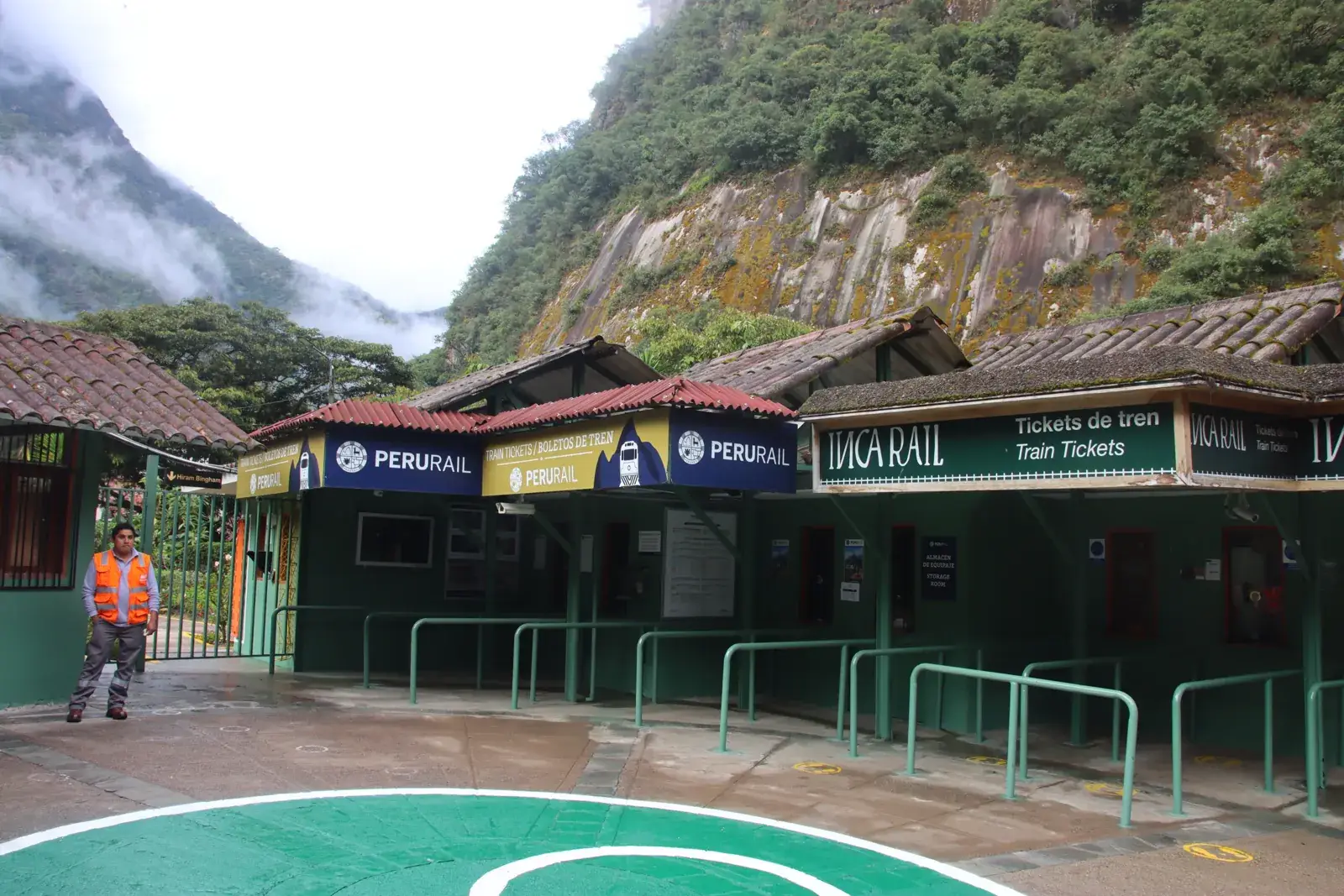
For most travellers the simplest choice is the standard-level service from Ollantaytambo: it is the shortest ride, the most frequent and the cheapest. A panoramic-window service is worth it for photographers and for anyone who wants a more comfortable ride, and the luxury Hiram Bingham service suits a special occasion rather than a practical need.
The two operators, PeruRail and Inca Rail, run broadly similar products. The choice that really matters is the departure station and the arrival time, because they have to fit your entry ticket slot and your night in Aguas Calientes.
What this page decides
The basic facts about stations, luggage and booking are on Machu Picchu trains and the wider rail picture is in trains in Peru. This page does something different: it gives decision rules for choosing between the services, the operators and the places to board, using the questions travellers actually ask.
Three decisions are involved. The first is the service level: a standard carriage, a panoramic one or a luxury one. The second is the operator, PeruRail or Inca Rail. The third is the departure point: Ollantaytambo, Poroy near Cusco, or occasionally Urubamba, depending on the service and season. None of these can be fixed without the other two, and all three depend on a fourth fixed point, the time on your Machu Picchu entry ticket.
Prices and timetables change by season and are not quoted here. Check them on the operators' own sites or on an agency before deciding, because the cheapest seat on a given day is not always on the service you would otherwise pick.
Service levels compared
The standard level, often sold as Expedition, has large windows on the sides and a fairly simple interior, with basic seats, a small snack service on some trains and the least expensive fares. It is the practical default for people who want to arrive without spending more than necessary.
The mid level, the one best known as Vistadome, adds extra windows or a glass roof panel, a more comfortable layout and a better onboard offer, usually a light meal or drink. The extra glass matters most on the stretch beside the river, where the valley narrows and the cliffs rise. Names and features differ between operators and have changed over time, so treat the category as an idea rather than a precise specification.
The luxury level, represented by the Hiram Bingham train, is a different kind of trip: a long, fixed-menu journey with onboard service and a lunch or dinner, sometimes paired with an organised visit. It is a destination in itself rather than a way of getting somewhere. It suits honeymoons and milestone trips; it does not suit anyone watching the budget or the clock.
Operators and departure points
PeruRail and Inca Rail both run on the same line and serve the same terminal at Aguas Calientes, so the difference is in the product more than the route. Compare the specific departure times, the carriage type, the luggage allowance and the change and refund terms, rather than assuming one company is better. Mixed return legs, with one operator out and the other back, are usually possible if the times suit.
On departure points, Ollantaytambo is the usual boarding point for most services and the shortest ride, which is why it dominates for visitors based in the Sacred Valley. See Ollantaytambo for the town. Boarding at Poroy, on the edge of Cusco, adds a transfer and a longer journey, but avoids a road trip to the valley and suits those who want to stay in Cusco until the morning of the trip. Boarding at Urubamba appears on some schedules and some seasons; confirm it on the operator's timetable rather than assuming it is available.
Which station is right depends on where you sleep the night before. A Cusco hotel plus an early train from Poroy, or a valley hotel plus a short transfer, are the two common patterns.
Journey length, windows and comfort
Journey times range from roughly an hour and a half from Ollantaytambo to well over three hours from Poroy, depending on the service and the day. Timetables change, so treat these as ranges and check the current one. What matters for the choice is that a longer ride is a longer part of your day, not a bonus.
The scenery from the left or right side, and whether the window reaches the roof, depends on the carriage. Panoramic windows help photographers and anyone with a view-first approach. Standard seats are adequate for a short ride and not a problem for most travellers. Families with young children often prefer a table seat and a snack service, which tend to be easier on the more comfortable services.
Comfort also includes the end of the journey. Everyone arrives at the same station in Aguas Calientes, and the bus queue to the site starts outside it. A premium seat does not shorten that queue.
Luggage and onboard rules
All services restrict luggage to a small bag, and the weight limit is lower than most airlines allow. Large suitcases are normally not accepted on board, so travellers leave them at their hotel in Cusco or the valley, or send them ahead. The exact weight, size and any fee should be checked on the operator's site before packing, because rules have tightened over the years and are enforced at the station.
A daypack with a change of clothes, rain layer and toiletries for one night is enough. Luxury services can be a little more generous, but not enough to make a difference for a standard trip. Bring the passport used for the entry ticket as well, because it is checked at the station and at the site.
Onboard service varies by level: usually a snack on the standard service, a more substantial offer on the mid level and a full meal on the luxury train. Dietary requests normally need to be made at booking, not on the day.
How the train choice fits your ticket and your night
The train has to fit your entry ticket time slot. Allow time to arrive, queue for the bus up the hill and reach the gate before your slot, with a margin. Booking an early train for a late slot wastes a morning; booking a late train for an early slot is a mistake. See Machu Picchu tickets for the slot system.
The second constraint is the night. Most visitors sleep in Aguas Calientes and visit the site the next morning, which means a mid-day or afternoon train in, a night in town and a return train after the visit. A same-day round trip is possible with an early departure and a late return, but it is a long day, and delays on the line can threaten the return connection. Longer stays in town make the logistics easier. See Aguas Calientes and where to stay near Machu Picchu.
Book the entry ticket first, then the train, because tickets are the scarcer item. Booking timing is covered in when to book.
Which service suits whom
Families: a service with table seats and some onboard food is easier with children, and a boarding point close to where you sleep avoids early transfers. Photographers: panoramic windows and a seat chosen for the river side. Budget travellers: the standard service from Ollantaytambo, with a daypack. Luxury travellers: Hiram Bingham or a premium service, ideally combined with a night in a lodge near the site. Short trips: the shortest ride and a same-day return only if the ticket slot and weather allow.
Seasonal disruption also matters. In the rainy months, landslides or river damage can interrupt the line, and the operators publish changes. Leave buffer before any international flight and read weather blocks route if the schedule is tight.
When a train is not the answer
The train is the quickest and most comfortable way to Aguas Calientes, but not the only one. A bus to the hydroelectric station followed by a walk along the track is the usual budget alternative; it takes longer, depends on the road and the walk, and is discussed in how to get to Machu Picchu. Multi-day trekking routes end at the site or at the town and replace the train on the way in. The choice between the train and a trek is covered in train or trek.
If your plan includes a trek, the train is usually just for the return, and a single-direction ticket is simpler to book than a round trip. If you are unsure, the cheapest approach is to fix the entry ticket, the night in town and the date, and then pick the train level that fits the remaining budget.
Frequently asked questions
Is Vistadome worth the extra over Expedition?
On a short ride, the standard service gets you there equally well, so the extra is about comfort, light food and more glass. It is most worth it for photographers and for those who want a more relaxed ride. Check what each operator currently includes in the category.
Is the Hiram Bingham train worth it?
It is worth it as an occasion, with its own service and a long fixed experience, not as a way of saving time. Anyone on a tight schedule or budget is better served by a standard or mid-level service.
Which is better, PeruRail or Inca Rail?
They run the same line and offer broadly similar levels, so compare the specific departure times, seat types, luggage and change terms for your dates. Choosing the one whose time fits your entry ticket is more useful than choosing a brand.
Should I take the train from Cusco or from Ollantaytambo?
Ollantaytambo is shorter and more frequent, and suits anyone sleeping in the Sacred Valley. Poroy suits those who stay in Cusco until the morning but the day is longer. See Sacred Valley or Cusco as a base for the wider trade-off.
How much luggage can I take on the train?
Only a small bag, with a weight limit lower than many airlines. Leave large cases in your hotel, and check the exact allowance on the operator's site before packing.
Can I visit Machu Picchu in one day by train from Cusco?
It is possible with an early departure and a late return, but it makes a very long day and leaves little margin for delays. Sleeping in Aguas Calientes is more relaxed and gives a better chance of an early entry slot.
Can I buy a train ticket before the Machu Picchu ticket?
It is safer to secure the entry ticket first, because tickets and slots are limited and the train time has to match them. Many train bookings can be changed, but terms vary, so check the flexibility before paying.