Chucuito is a village on the shore of Lake Titicaca about 18 km south of Puno, at roughly 3,875 m. Its main draw is Inca Uyo, an enclosure often called the fertility temple, where dozens of carved stone phalluses stand in a walled courtyard. Add the plaza and two colonial churches and the visit takes about two to three hours as a half-day trip from Puno, by taxi, shared van or an organised tour.
Map
What Chucuito is
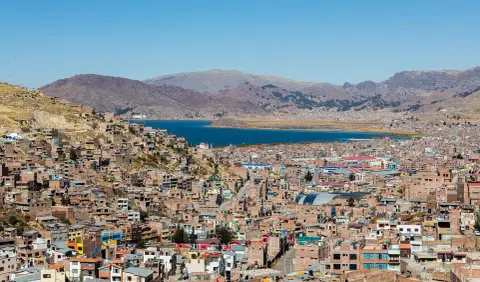
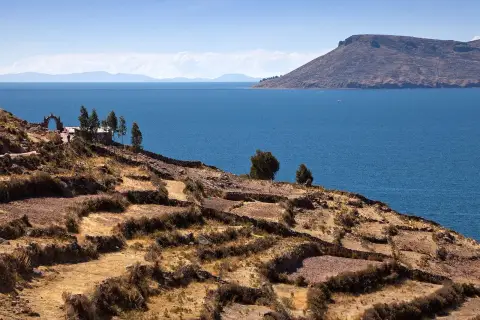
Chucuito is a small lakeside village in the province of Puno, on the road that follows the western shore of Lake Titicaca towards Juli and the Bolivian border. It lies about 18 km south of Puno and at roughly 3,875 m, a little higher than the city, so the cold, thin air and strong sun are the same as in town. The village has a plaza, a few streets of adobe and stone houses, and a lake front a short walk below.
Today it is quiet, which is much of its appeal after the busy harbour of Puno. It is not a place with a long list of sights. It is a half-day stop with one unusual archaeological attraction, two churches, and a sense of the lake shore away from the tour boats. The village is also a useful base only for travellers who want silence, since most visitors sleep in Puno, as covered on the where to stay in Puno page.
A short history of the place
Chucuito was an important place long before the Spanish arrived. Pedro de Cieza de León, the chronicler who travelled the Andes in the 1540s, wrote that local people told him it was the oldest site in the region, and the Inca continued to treat it as sacred. Regional historians describe it as the main seat of the Lupaca, one of the Aymara-speaking kingdoms of the Titicaca basin that were absorbed into the Inca state, though the details of that period are still debated.
Under Spanish rule it kept its standing for a time as the head of a province, and it has had at least two churches since the 17th century. Over the following centuries the political weight moved to Puno and Juli, and Chucuito became the small village it is now. That long, slightly faded history explains why the plaza feels larger than the village around it.
Tours and activities
Bookable online, chosen for their traveller reviews.
-
★ Top rated From €23 per person
-
★ Top rated From €23 per person
-
Day trip From €41 per person
-
From €8 per person
Inca Uyo, the fertility temple
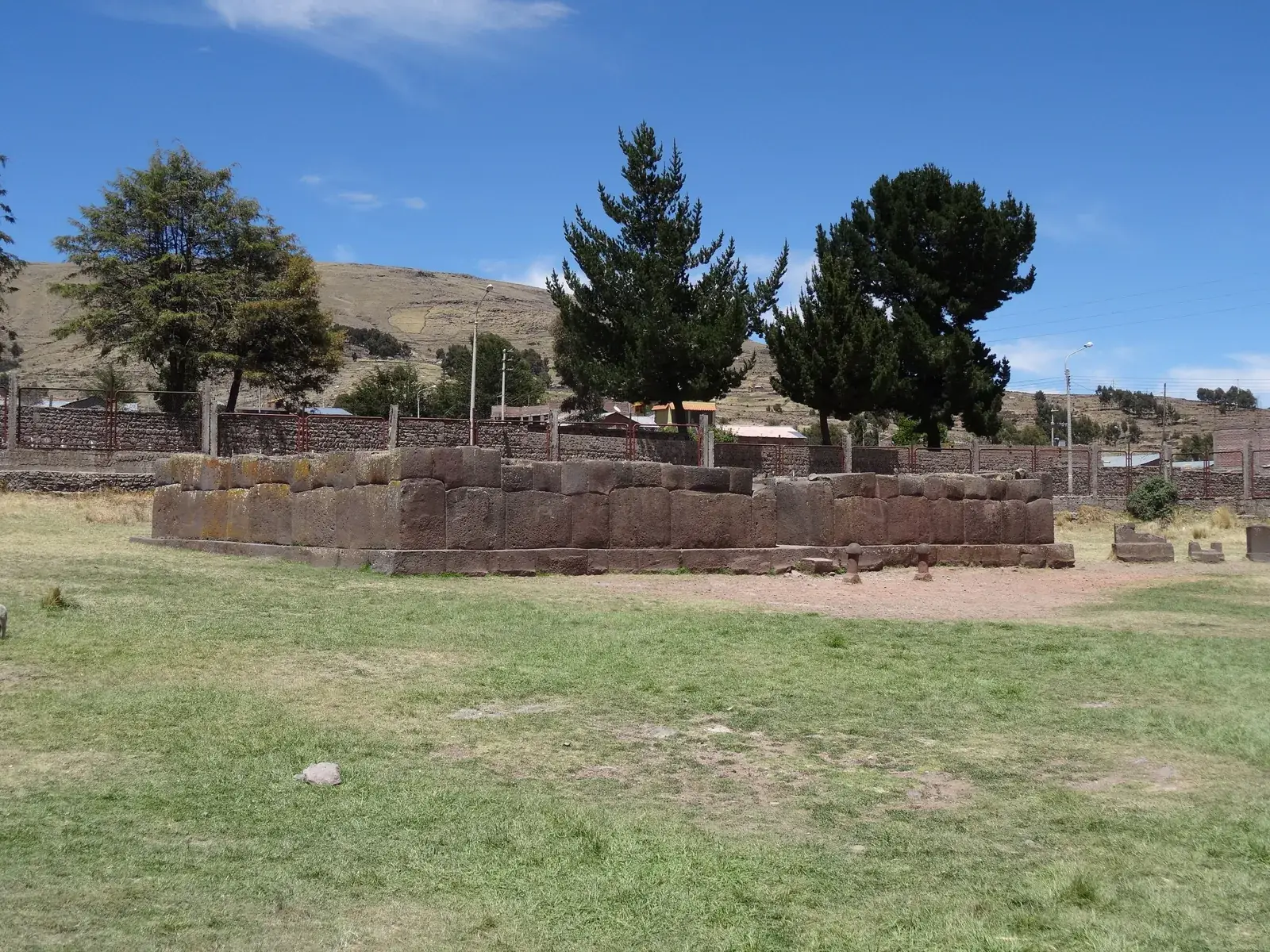
The reason most people come is Inca Uyo, also written Inka Uyu, a walled enclosure on the edge of the village. Inside stand many carved stones in the shape of phalluses, some small enough to carry and some taller than a person, set in rows and scattered around a courtyard with a low stone building on one side. Guides call it the temple of fertility, and the stones are said to relate to the earth, to crops and to the hope of children.
Counts vary from source to source, with figures from about fifty to more than eighty quoted, so treat any exact number as a guide's estimate. Take the interpretation in the same spirit. The fertility reading is the common one, and some guides add astronomical or ceremonial uses, but there is little firm evidence for how the enclosure was used or when each stone was placed. The setting itself is simple: grass, a stone wall, and the lake hills behind. Some visitors find it small, others find it memorable, and the honest advice is to arrive expecting an odd, modest site rather than a monumental one.
The plaza and the two churches
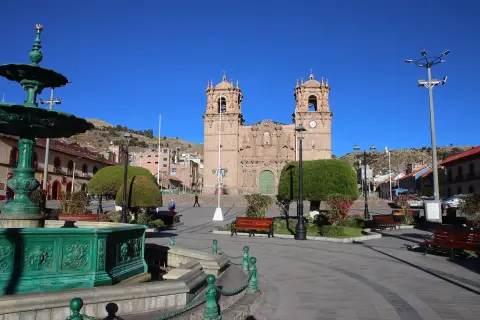
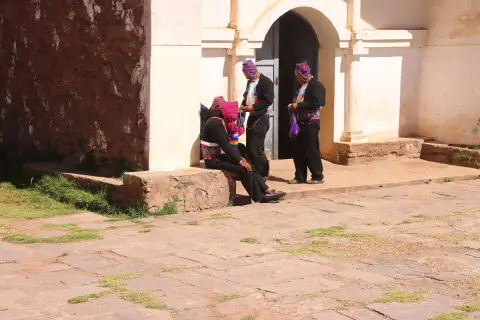
Beside the plaza stand the church of Nuestra Señora de la Asunción and the church of Santo Domingo, which together make up the colonial side of the visit. Both were listed in the 17th century as the village's churches, and the Asunción has long been known for the paintings it once held in large numbers. Tour operators often describe its architecture as a local variant of Andean Renaissance, with stone arches and columns.
Church interiors in small villages are open on no fixed schedule. A caretaker may unlock them for visitors, a service may be under way, or the door may be closed, so ask in the plaza and do not count on going in. If you do enter, dress modestly, stay quiet during services and ask before photographing. The exteriors and the plaza are worth a slow look in themselves, especially with the late-afternoon light on the stone.
Getting there from Puno
From Puno the village is a short drive on the lakeside road, roughly 20 to 30 minutes by taxi, and the road continues south towards Ilave and Juli. Shared vans and minibuses that run along the same corridor pass through Chucuito, and a local driver can drop you at the plaza or at the Inca Uyo gate. Ask the driver to wait or to agree a pick-up time, because services back to Puno can be irregular late in the day.
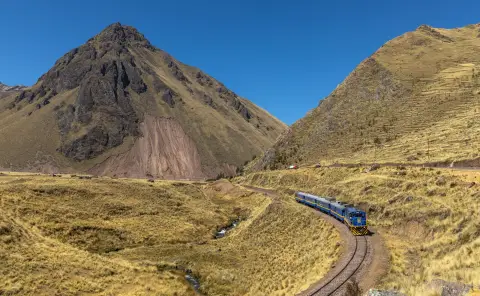
The other option is an organised half-day tour from Puno, which usually bundles the temple, the churches and a lookout over the lake. A tour removes the logistics and gives you a guide for the stones, but the interpretation you get depends entirely on the guide. The things to do in Puno page shows how Chucuito compares with the other half-day excursions, and the Cusco to Puno page notes that some tourist buses stop on the way into the city.
How long, when to go and the altitude
Allow two to three hours at Chucuito, including travel time on top, so a half day from Puno. The temple needs 30 to 45 minutes, the plaza and churches another hour, and a walk to the lake shore adds a little more. If you are driving yourself or sharing a taxi, you can fit it into a morning and still be back in Puno for lunch.
The dry season, roughly May to September, brings clear skies and cold nights, which suits a village visit: bright days and good light on the stone. The rainy season, roughly November to March, turns the courtyard muddy and the sky heavy, though the site is still open. Go in the morning rather than the afternoon, when wind often rises over the lake. At about 3,875 m the altitude is the main physical challenge, so walk slowly, drink water and read the altitude sickness page if you arrived in Puno only recently.
Combining it with other stops
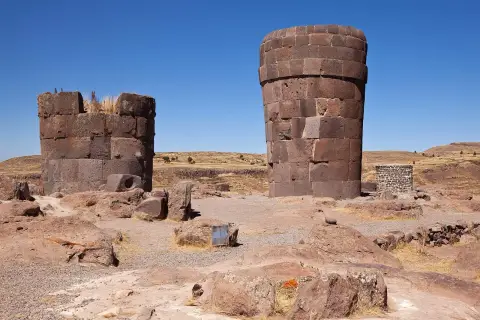
Chucuito pairs naturally with other places in the Titicaca basin. The most common combination is a full day heading south, but most visitors who have only one spare half day choose between Chucuito and the burial towers at Sillustani, which lie in the other direction, north-west of Puno. They are very different: Sillustani is monumental and windswept, while Chucuito is small, quirky and domestic.
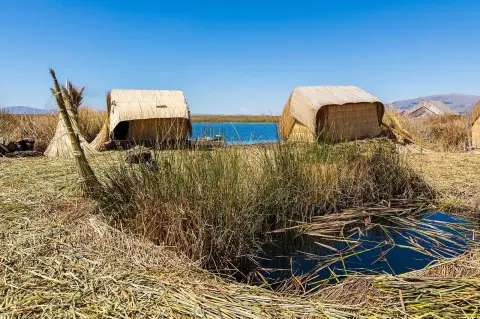
The lake itself is the bigger draw for most travellers, so Chucuito sits well alongside a visit to the Uros floating islands or a day on Taquile. For the wider picture of the water and its islands, see Lake Titicaca. If you care about how visits affect small communities, responsible travel has general advice on respect, photos and paying fairly.
Where to sleep
-
Find hotels
Puno centre
Walkable to the main square and the lake port
Frequently asked questions
Is Chucuito worth a visit?
Yes, if you have a free half day in Puno and like unusual sites. It is small, so the temple, the plaza and the churches fill a morning, not a day. If you only have time for one Puno excursion, compare it with Sillustani and the Uros islands.
What is Inca Uyo?
Inca Uyo is a walled archaeological enclosure in Chucuito, known as the temple of fertility for its many carved stone phalluses. The fertility explanation is the standard one, but its original purpose and date are not firmly established.
How far is Chucuito from Puno?
About 18 km, usually 20 to 30 minutes by taxi along the lake road. Shared vans heading towards Juli also pass through, which makes it a cheap trip if you are happy to wait for transport back.
Can I visit Chucuito without a tour?
Yes. Take a taxi or a shared van from Puno and ask for the Inca Uyo temple or the plaza. Agree the return before you set off, since late-day transport back can be sparse. A tour is easier if you want a guide, and the things to do in Puno page shows the options.
Are the stone phalluses real Inca work?
The site is called Inca Uyo, but guides and researchers disagree on how much of it is Inca and how much predates or follows them. The carved stones themselves are hard to date, so take any precise date or count with caution.
Is the temple suitable for children or families?
It is a short, flat, open-air visit, so there is little to tire anyone. The subject is explicit, and parents can decide how much of the fertility explanation to share. The bigger concern for children is cold and altitude at about 3,875 m.
Is there anywhere to stay or eat in Chucuito?
There are a few simple places and small restaurants, and some travellers like the quiet. Most visitors stay in Puno, where the choice is wider, as covered on the where to stay in Puno page.